Igniting Minds: Why Imagination is Education's Untapped Superpower for Creative Thinking
 Unleash the power of imagination to transform education.Image is for illustration purposes only
What if the very fabric of our educational systems, designed to prepare the next generation for an ever-evolving world, is overlooking its most potent catalyst for growth? What if the key to unlocking innovative minds and resilient spirits isn't more rote memorization or standardized testing, but something far more fundamental, far more human: imagination?
For too long, imagination has been relegated to the realm of childhood fantasy, seen as a delightful but ultimately non-academic pursuit. Yet, in an era defined by rapid technological advancement, complex global challenges, and an insatiable demand for innovation, creative thinking isn't just a 'nice-to-have' skill; it's a 'must-have' superpower. And imagination, dear reader, is its wellspring.
This post will delve into why imagination is not just essential, but arguably the untapped superpower of modern education. We'll explore what it truly means to cultivate imaginative thought in learning environments, why its absence is a critical deficit, and most importantly, how we can consciously spark and nurture it in students of all ages. Get ready to rethink what 'learning' truly entails.
The What and Why: Defining Imagination in an Educational Context
Beyond Daydreams: What Imagination Truly Means
When we talk about imagination, it’s easy to picture a child engrossed in a make-believe world with dragons and fairy tales. While this is certainly a beautiful manifestation, in an educational context, imagination stretches far beyond mere fantasy. It's about the ability to form mental images and concepts of things not present or not real; to conceive new ideas or possibilities. It’s the cognitive muscle that allows us to connect disparate concepts, to foresee outcomes, to empathize with different perspectives, and to generate novel solutions.
In essence, imagination is the foundation of creative thinking. It's the engine that drives:
- Divergent Thinking: The capacity to explore multiple possible solutions or ideas for a given problem, often going beyond obvious answers.
- Empathic Understanding: The ability to step into another's shoes, imagine their experiences, and understand their feelings.
- Future Prototyping: Visualizing potential scenarios, consequences, and innovations before they exist in reality.
- Problem Framing: Reimagining problems from different angles to uncover deeper issues and more innovative solutions.
It's not just about dreaming; it's about doing through mental exploration. It's the architect's vision before the blueprint, the scientist's hypothesis before the experiment, the writer's plot before the first word.
Why Imagination is Crucial for the 21st-Century Learner
The world our students are entering is fundamentally different from the one that shaped our traditional educational models. The industrial-age paradigm, focused on standardized outputs and predictable roles, is dissolving. We're now in the age of information, automation, and unprecedented complexity.
In this dynamic landscape, certain skills have become paramount, and at their core lies imagination:
1. Navigating an Unpredictable Future
Jobs that exist today may be obsolete tomorrow, while entirely new professions are emerging. Students need to be adaptable, resilient, and able to innovate on the fly. Imagination equips them to conceptualize new roles for themselves, to pivot their skills, and to envision solutions to problems that haven't even surfaced yet. They need to be creators of the future, not just consumers of it.
2. Fueling Problem-Solving and Innovation
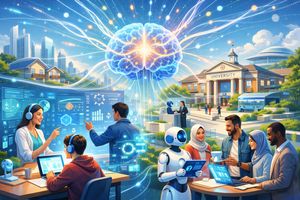
From climate change to social inequality, the challenges humanity faces are multifaceted and demand more than textbook answers. They require imaginative leaps – thinking outside the proverbial box. Students trained in imaginative thought are better equipped to identify novel approaches, synthesize information from diverse fields, and engineer solutions that are both effective and sustainable.  Hands-on projects empower students to explore and innovate creatively.Image is for illustration purposes only
3. Enhancing Critical Thinking
While often seen as distinct, imagination and critical thinking are deeply intertwined. Imagination allows us to generate a wide array of ideas, and critical thinking helps us evaluate and refine those ideas. Without imagination, critical thinking might become too narrow, merely analyzing existing frameworks. With it, critical thinking expands to question assumptions, explore alternatives, and envision better systems.
4. Fostering Empathy and Global Citizenship
In an increasingly interconnected world, understanding and appreciating diverse perspectives is vital. Imagination is the bridge to empathy, allowing students to mentally inhabit different cultures, histories, and viewpoints. This imaginative capacity cultivates global citizens who can collaborate across boundaries and approach complex social issues with compassion and insight.
The Current Deficit: How Traditional Education Often Stifles It
Despite its undeniable importance, many traditional educational systems inadvertently suppress imaginative thought. The emphasis on standardized testing, rote memorization, and prescribed curricula often leaves little room for divergent exploration or creative risk-taking. Here are a few ways this happens:
- Over-reliance on 'Right Answers': Education often rewards conformity to a single correct answer, discouraging students from exploring alternative solutions or challenging existing paradigms.
- Jam-Packed Schedules: Curriculum demands can leave little unstructured time for play, experimentation, or open-ended projects – activities crucial for imaginative development.
- Fear of Failure: A system that penalizes mistakes can make students hesitant to try new things, take risks, or think unconventionally, as these often involve trial and error.
- Lack of Interdisciplinary Learning: Separating subjects into rigid silos can prevent students from seeing the imaginative connections between different fields, limiting their ability to synthesize ideas creatively.
The result? Students who are well-versed in facts but less skilled in applying those facts creatively, less adept at adapting to unforeseen circumstances, and perhaps, less enthusiastic about learning itself. We are, quite literally, educating imagination out of them.
The How: Practical Strategies for Sparking Imagination
The good news is that imagination is not a fixed trait; it's a muscle that can be exercised and strengthened. Integrating imaginative practices doesn't require a complete overhaul of the system, but rather a conscious shift in pedagogical approach and a commitment to creating environments where curiosity can thrive. Here's how educators and parents can become champions of imagination:
In the Classroom: Cultivating Creative Learning Spaces
Teachers are on the front lines, with the power to transform classrooms into vibrant hubs of imaginative exploration. Here are some actionable strategies:
1. Embrace Open-Ended Projects and Challenges
Instead of assignments with predetermined outcomes, design projects that allow for multiple solutions and creative interpretations. For example:
- Design-Thinking Challenges: Present a real-world problem (e.g., "How might we reduce plastic waste in our community?") and guide students through empathy, ideation, prototyping, and testing phases.
- Future Scenario Planning: Ask students to imagine a world 50 years from now, describing its technologies, social structures, and challenges, then justify their imaginative predictions.
- Creative Writing Prompts: Go beyond simple story starters. Provide evocative images, sounds, or even a 'mystery object' and ask students to weave narratives around them.
2. Harness the Power of Storytelling and Role-Playing
Narrative is a fundamental human tool for understanding and making sense of the world. Encourage students to:
- Create and Tell Stories: Whether orally, in writing, or through multimedia, story-weaving helps develop sequential thought, character empathy, and imaginative world-building.
- Role-Play Historical Events or Fictional Scenarios: This allows students to step into different shoes, understand motivations, and explore alternative outcomes. Imagine students role-playing a UN debate on climate change, or characters from a classic novel making different choices.
- Improv Games: Simple, low-stakes improvisation exercises can significantly boost quick-thinking, adaptability, and the ability to build on others' ideas.
3. Integrate Arts Across the Curriculum (STEAM)
The 'A' for Arts in STEAM (Science, Technology, Engineering, Arts, Mathematics) is often the most overlooked yet vital component for imagination. Art isn't just about drawing; it's about expression, interpretation, and conceptualization:
- Visualizing Concepts: Ask students to draw or sculpt scientific processes, historical events, or mathematical theories. How would they visually represent the Pythagorean theorem or the water cycle?
- Performing Literature: Dramatizing scenes from a novel or writing and performing original music inspired by a historical period.
- Creative Problem Representation: Using dance, music, or visual arts to explore and represent complex ideas before articulating them verbally.
4. Foster a Culture of Inquiry and Curiosity
Imagination often begins with a question – 'What if?' 'Why not?' 'How could we?'
- Socratic Questioning: Engage students in deep, open-ended discussions that encourage them to question assumptions, explore implications, and consider multiple perspectives.
- 'Wonder Walls': Dedicate a space where students can post questions, observations, and ideas that spark their curiosity, encouraging collective imaginative exploration.
- Brainstorming Sessions: Regularly dedicate time for free-form ideation where all ideas are welcomed, no matter how wild, before moving to evaluation.
Curriculum Integration: Weaving Imagination into Every Subject
Imagination isn't a standalone subject; it's a lens through which all subjects can be viewed. It's about demonstrating how creativity is inherent in every discipline:
- Science: How did scientists like Einstein and Curie make their breakthroughs? Often through imaginative leaps, visualizing unseen forces or processes. Encourage students to design hypothetical experiments, imagine alien ecosystems, or invent future technologies based on scientific principles.
- Mathematics: Beyond formulas, math is about patterns and elegant solutions. Challenge students to discover multiple ways to solve a problem, visualize geometric concepts in three dimensions, or even design their own mathematical games.
- History: Instead of memorizing dates, ask students to imagine living in a specific historical period, writing a diary entry from a historical figure's perspective, or debating a past decision with modern knowledge.
- Language Arts: This is a natural home for imagination, but push beyond simple narratives. Explore poetry, creative non-fiction, scriptwriting, and even the imaginative use of language in advertising or journalism.
Teacher Training: Empowering the Facilitators of Imagination
Teachers can only lead students where they themselves are comfortable going. Therefore, professional development must prioritize:
- Creative Pedagogy Workshops: Training on design thinking, creative problem-solving techniques, and integrating the arts across subjects.
- Risk-Taking and Experimentation: Creating a safe space for educators to experiment with new imaginative approaches in their own teaching, without fear of reprisal.
- Personal Creative Development: Encouraging teachers to engage in their own creative pursuits, reminding them of the joy and challenge of imaginative work.
Parental Involvement: Fostering Imagination at Home
Learning extends beyond the classroom walls. Parents play a crucial role in nurturing their child's imaginative capacity:
- Prioritize Unstructured Play: Allow children ample time for free play with open-ended toys (blocks, craft supplies, natural materials) that encourage them to create their own worlds and rules.
- Read Aloud and Discuss: Engage with stories beyond the plot. Ask 'what if' questions about characters' choices or alternative endings.
- Limit Screen Time: While digital tools can be imaginative, excessive passive consumption can stifle the mind's ability to generate its own images and narratives.
- Encourage 'Curiosity Quests': Go on walks and ask children to imagine the lives of the animals they see, the history of a building, or what's inside a mysterious package.
- Model Creativity: Let children see you engage in your own creative hobbies, whether it's cooking, gardening, writing, or painting.
Tools and Resources: Leveraging Technology and Environment
Modern tools and intentional environments can amplify imaginative efforts:
- Digital Creation Tools: Software for animation, graphic design, music composition, and virtual reality can provide new mediums for imaginative expression and prototyping.
- Makerspaces: Dedicated areas with tools and materials for building, tinkering, and experimenting encourage hands-on imaginative problem-solving.
- Nature Play: The natural world is an endless source of inspiration. Spending time in nature encourages observation, wonder, and imaginative engagement with the environment.
The Impact: A Future Forged by Imagination
Investing in imagination in education isn't just about making learning more engaging; it's about cultivating a generation of individuals who are better equipped to thrive personally, professionally, and societally. The ripple effects are profound.
Benefits for Students: Resilient, Resourceful, and Ready
1. Enhanced Resilience and Adaptability
Students who regularly exercise their imagination become more comfortable with ambiguity and change. They develop a mental flexibility that allows them to pivot when plans go awry, to envision new paths, and to see setbacks not as dead ends but as opportunities for imaginative redirection. They learn that there isn't just one way forward.
2. Deeper Learning and Retention
When students are imaginatively engaged with material – by creating, questioning, or visualizing – they form stronger neural connections. Learning becomes less about surface-level recall and more about meaningful construction of knowledge, leading to deeper understanding and longer-lasting retention. Active imagination transforms passive consumption into active creation.
3. Cultivation of Empathy and Social-Emotional Intelligence
The act of imagining oneself in another's situation is a powerful driver of empathy. This emotional intelligence is crucial for building strong relationships, navigating social complexities, and contributing positively to communities. Imaginative play in early years, and imaginative narrative exploration in later years, are vital for developing a robust social conscience. 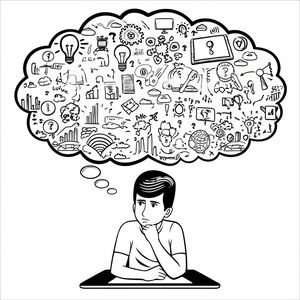 Imagination fuels divergent thinking, essential for tackling complex problems.Image is for illustration purposes only
4. Future Readiness for an Evolving Job Market
As automation handles routine tasks, human skills like creativity, critical thinking, complex problem-solving, and emotional intelligence become invaluable. These are precisely the skills nurtured by an imagination-centric education. Students become not just job-seekers, but job-creators and innovators, capable of defining their own professional futures.
Benefits for Society: Innovation, Adaptability, and a More Human-Centered World
The impact of an imagination-fueled education extends far beyond the individual, shaping the very fabric of society:
1. Driving Innovation and Economic Growth
Societies that prioritize imaginative thinking in their education systems are more likely to foster cultures of innovation. From scientific breakthroughs to artistic movements to entrepreneurial ventures, imagination is the spark for progress. A populace rich in imaginative capacity is a populace capable of generating new industries, solving grand challenges, and improving quality of life.
2. Fostering Adaptability to Global Challenges
Whether facing pandemics, climate change, or geopolitical shifts, the ability of a society to adapt and find creative solutions is paramount. An education system that cultivates imaginative, flexible thinkers prepares citizens who can respond to crises not with fear, but with ingenuity and collaborative problem-solving.
3. Building a More Empathetic and Inclusive Society
When citizens are encouraged to imagine beyond their immediate experiences, to understand diverse viewpoints, and to envision equitable futures, society becomes more just and compassionate. Imagination fosters the kind of civic engagement that leads to constructive dialogue, mutual respect, and collective action for the common good.
4. Cultivating a Culture of Lifelong Learning and Curiosity
Imagination makes learning an inherently joyful and intrinsically motivating process. When education sparks curiosity and encourages imaginative exploration, it instills a lifelong love of learning. This continuous pursuit of knowledge and new ideas is essential for personal growth and societal advancement in a rapidly changing world.
The Long-Term Vision: Education as a Catalyst for Imaginative Citizens
Imagine a world where every child is seen as an inherent creator, where classrooms are buzzing with 'what if' questions, and where failure is celebrated as a stepping stone to new imaginative pathways. This isn't a utopian fantasy; it's an achievable vision if we collectively commit to valuing and cultivating imagination as the bedrock of education.
The journey to integrate imagination more deeply into education requires courage – the courage to question established norms, to prioritize process over product, and to trust in the boundless potential of young minds. It demands a shift from seeing education as merely the transfer of knowledge to viewing it as the cultivation of capability – the capability to envision, to create, and to transform.
Conclusion: Unleash the Untapped Superpower
Imagination is far more than whimsical musing; it is the cognitive engine of innovation, empathy, and resilience. It is the very essence of human potential, and it is, without a doubt, education's most powerful, yet often untapped, superpower.
By consciously fostering imaginative thought in our schools and homes, through open-ended projects, creative expression, inquiry-based learning, and a supportive environment for risk-taking, we are not just teaching subjects; we are igniting minds. We are equipping the next generation not just to survive, but to truly thrive in an unpredictable world, to solve its grandest challenges, and to build futures we can only begin to imagine.
Let's unlock this superpower. Let's make imagination not a footnote in our educational goals, but its guiding star. The future, in all its complex, wondrous potential, depends on it.
Disclaimer: This article discusses educational topics for informational purposes only. The content is not intended to serve as professional academic counseling or career guidance. Please consult our full disclaimer for more information.