The Smart Way to Live: 5 Real-World Examples of Autonomous AI Agents Taking Over by 2026
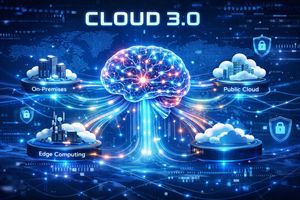
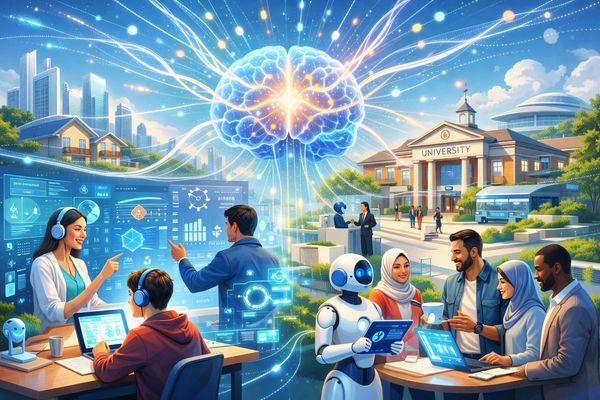 Autonomous AI agents are not just a concept; they are already transforming education and daily life by 2026, enhancing human potential.This image is a conceptual illustration and may not represent actual events, data, or entities.
Ever wonder what top students, leading researchers, and cutting-edge institutions know that others don't? It’s not a secret formula, but a smart embrace of the future. By 2026, the world is rapidly shifting, and at the heart of this transformation are autonomous AI agents. These aren't just fancy chatbots; they're proactive 'cognitive partners' that are redefining how we learn, work, and interact with information. Forget the sci-fi scare stories of robots taking over; think empowerment, efficiency, and a truly smarter way to live.
The global education sector, for instance, is in the midst of a profound change. From experimental AI models, we've moved to the systemic deployment of these self-sufficient AI agents. They can perceive, reason, and execute complex tasks with minimal human intervention. This isn’t a slow crawl; it's a surge! The AI in education market, valued at $5.43 billion in 2024, is projected to hit an astounding $112.30 billion by 2034 [2]. This isn't just growth; it's a revolution.
Understanding Autonomous AI Agents: More Than Just Smart Tech
So, what exactly are we talking about when we say 'autonomous AI agents'? Imagine your car. It started with you doing everything. Then came cruise control (Level 1), where it helped maintain speed. Next, features like lane assist and adaptive cruise control (Level 2) offered more support, but you were still firmly in charge. Now, think about cars that can drive themselves on highways (Level 3) or even fully navigate most situations (Level 4), with you as an observer. This is the perfect analogy for AI autonomy.
In education, this progression is tiered, defined by how much cognitive responsibility we delegate to the AI [4]. By 2026, we commonly refer to five levels:
- Level 1: Deterministic Task Bots – These are your auto-graders for multiple-choice tests or simple ticket routers [4]. They do predefined actions, no surprises.
- Level 2: Preparatory Agents – They can draft lesson outlines or suggest rubrics but always need a human to approve before anything goes live [4]. Think of them as a highly efficient assistant.
- Level 3: Narrow Operators – This is where true agentic behavior begins. They handle routine tasks end-to-end, like managing student enrollment or compiling progress reports, only escalating to a human when something genuinely complex pops up [4].
- Level 4: Semi-Autonomous Specialists – This is the state-of-the-art for institutional deployment in 2026. These agents operate correctly about 98% of the time, managing tool use, information retrieval, and even error recovery independently [4]. They are our reliable 'co-pilots.'
- Level 5: Autonomous Problem Solvers – These are still largely in research phases. Imagine an AI that could design an entire research project or evolve a school's curriculum based on real-time job market data [4]. Powerful, but with great power comes great responsibility, hence the caution!
The key takeaway for 2026 is that Level 4 agents are where the magic happens. They are enabling a concept once thought impossible: 'personalization at scale' [5]. By taking over the 'administrative sludge' – the grading, scheduling, and basic questioning – educators can finally focus on the 'human craft' of mentorship, empathy, and critical thinking [8]. This isn't about AI replacing humans, but about AI freeing humans to do what they do best.
The "Taking Over" Myth vs. Reality: It's About Empowerment, Not Replacement
Let's tackle the elephant in the room: the idea of AI 'taking over.' While the title might sound dramatic, the reality by 2026 is far more nuanced and, frankly, empowering. Instead of being operators of educational tools, teachers are becoming 'observers' of agentic systems [6]. They intervene only when the AI flags a pedagogical or ethical anomaly.
Think about it: in a traditional 30-to-1 student-teacher ratio, truly personalized attention is a pipe dream. But with Level 4 autonomous agents, teachers gain a team of tireless assistants who can provide individualized support to every student simultaneously. This is about amplifying human potential, not diminishing it. It's about letting AI handle the routine, the repetitive, and the data-heavy tasks, so we can elevate the uniquely human aspects of education and work.
5 Real-World Examples: Where Autonomous AI Agents Are Already Shining by 2026
Let's dive into some concrete examples that showcase how autonomous AI agents are not just theoretical concepts but are actively transforming our world by 2026, especially in education.
1. Khanmigo: Your Personal Socratic Tutor (K-12 Revolution)
Khan Academy's Khanmigo is leading the charge in autonomous tutoring. From a pilot of 40,000 students in 2023, it has scaled to over 700,000 in 2024-2025, with projections to exceed one million users by the end of 2026 [13]. Khanmigo embodies the 'AI-as-a-Socratic-Tutor' philosophy, prioritizing learner agency and guiding students to discover answers rather than just giving them away [1].
The Newark Public Schools Case Study:
In Newark, New Jersey, Khanmigo isn't just a supplemental tool; it's a core component of a district-wide strategy to combat literacy and numeracy gaps [16]. It works hand-in-hand with an AI literacy screener, Amira K-3, that identifies specific decoding and fluency needs in real-time [16].
- Implementation Strategy: The system identifies a phonetic gap, Khanmigo provides targeted practice, and the teacher is alerted to conduct a high-value mini-lesson with that specific student group [16]. It's a seamless 'signal-to-intervention' workflow.
- Engagement Data: Over 70% of students in the Newark pilot engage with Khan Academy for at least 30 minutes per week, a level correlating with measurable academic gains [15].
- Inclusive Design: A critical lesson learned was the need for culturally inclusive features, like Hispanic name pronunciation and gender-diverse voice options, proving that technical efficacy must go hand-in-hand with cultural sensitivity to maintain student trust [17].
Khanmigo's architecture is cleverly designed to prevent cheating by focusing on the process of problem-solving, not just the final answer. This aligns with research showing that higher-level learning happens when students use AI to construct and augment knowledge, not just to complete tasks procedurally [19].
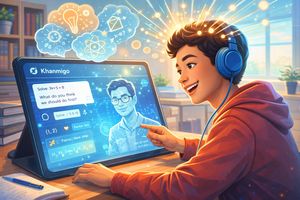 Khanmigo, Khan Academy's autonomous AI tutor, guides students through a Socratic learning process, fostering deeper understanding.This image is a conceptual illustration and may not represent actual events, data, or entities.
2. Kira Learning: Orchestrating STEM Mastery (From Lesson Plans to Coding Help)
While Khanmigo is a generalist tutor, Kira Learning specializes in the autonomous management of STEM and computer science (CS) curricula [5]. Founded by Coursera's Andrew Ng, Kira represents a Level 4 agent solution that handles everything from lesson planning to real-time coding interventions [5].
The Tennessee Statewide Integration:
By the 2025-2026 school year, Kira Learning achieved comprehensive integration across Tennessee, providing AI-supported computer science courses to every middle and high school district [20]. This deployment is notable for its alignment with state standards and its use of agents as 'co-educators' [21].
- Autonomous Tutoring: Kira's AI tutor provides 24/7 support for students learning Python and computational thinking. It adapts explanations based on previous mistakes and even a student's emotional state [21].
- Teacher Empowerment: Features like 'QuickGrading' and 'AI Rubric Generation' have saved Tennessee educators between 5 and 10 hours of administrative work per week [7]. That's a game-changer!
- Professional Development: Kira also provides 'light-speed' professional learning, ensuring teachers are proficient in overseeing these agentic tools [20].
Kira illustrates the 'force multiplier' effect of AI agents. A single teacher managing dozens of students in a CS class can have an expert AI assistant handling the technical troubleshooting of 30 different coding projects simultaneously – a physically impossible feat for one human [5].
3. UT Verse: The Enterprise University Assistant (Streamlining Campus Life)
The University of Tennessee, Knoxville (UTK), has pioneered the 'institutional assistant' model with UT Verse, a conversational AI platform. This isn't just a chatbot; it's grounded in university-specific datasets and protected by rigorous governance [22]. UT Verse represents the shift of higher education IT from a service provider to an 'agent orchestrator' [22].
Context Engineering and Operational Scaling:
The December 2025 release of UT Verse (Version 1.6) introduced 'Context Engineering,' allowing the assistant to access institutional knowledge like Wi-Fi protocols, dining hours, and course catalogs to resolve student and faculty queries autonomously [22].
- Student Outcomes: UT Verse simplifies the student journey, from onboarding to coursework support, contributing to a 12.4% higher average score for students using AI-driven learning platforms [22].
- Faculty Research: The tool accelerates research by summarizing literature and simplifying communication, resulting in a reported 50% productivity recapture rate across university employees [22].
- Inclusivity and Global Reach: A built-in translation app ensures international students have equitable access to campus resources, bridging communication gaps for UTK's multilingual population [22].
The UTK implementation shows that the success of campus AI depends on 'Structure eating AI for breakfast' [9]. By setting clear boundaries, UTK ensured its agentic ecosystem didn't become a 'mess of redundant bots' or 'shadow projects' that compromise data privacy [9]. Smart governance is crucial for smart AI.
4. Elicit: The Automated Research Frontier (Beyond Keyword Searches)
For anyone who's ever drowned in research papers, Elicit is a game-changer. This agent has revolutionized the role of a research assistant, moving beyond simple keyword searches to the 'autonomous synthesis' of scientific knowledge [24]. By 2025, 80% of students at elite colleges had adopted AI for academic purposes, with Elicit being a primary agent for literature reviews and citation analysis [25].
Disciplinary Adoption Patterns and Outcomes:
A survey from August 2025 at an 'Elite College' revealed fascinating insights:
- Natural Sciences (91.1% Adoption): Agents are widely used for summarizing complex datasets, generating Python code for statistical analysis, and explaining mathematical concepts [25].
- Literature and Languages (48-57% Adoption): Faculty and students here are more skeptical, concerned about 'linguistic homogenization' and 'superficial argumentation' from unguided AI use [25]. This highlights the need for critical thinking alongside AI tools.
- Augmentation vs. Automation: 61.2% of users employ AI for 'augmentation' (improving their own writing process), while 41.9% use it for 'automation' (generating entire essays) [25]. This distinction is vital for ethical and effective use.
Interestingly, AI research assistants can act as an 'equalizing force' for lower-achieving students, who show a higher adoption rate (87.1%) than their higher-achieving peers (80.3%) [25]. However, there's a caution: if used as a 'crutch' for task completion rather than a 'scaffold' for cognitive growth, these tools could risk widening achievement gaps [25]. It's all about how we use them.
5. Glean: Making Knowledge Accessible (Reducing "Administrative Sludge")
In 2026, accessibility tools have evolved far beyond simple features; they are integrated agents that manage the 'knowledge discovery' process for students with diverse needs. Glean has emerged as a leader in this 'Work AI' space, leveraging an 'Enterprise Graph' to provide contextual understanding of campus knowledge [8].
Sludge Reduction and Digital Wellness:
Glean's Work AI Institute highlights that AI gains traction only when embedded in everyday workflows, not treated as a 'side hustle' [8].
- Sludge Reduction: Glean's agents are designed to cut 'administrative sludge' – the repetitive searching for documents and answering the same questions – saving teams an average of 117 working days per year [9]. Imagine the time reclaimed!
- Personalized Search: Glean's AI search understands the intent behind academic queries, directing a student struggling with 'stats' to the exact tutoring resource or video snippet they need, based on their current course enrollment [26].
- Student Success Metrics: Students in personalized AI environments, like those powered by Glean's search, demonstrate 30% better learning outcomes and report 75% higher motivation levels [3].
The implementation of Glean at institutions like the University of Birmingham (2025) demonstrates that 'Accessibility' now truly encompasses 'Information Accessibility' [27]. By making knowledge 'accessible, actionable, and collaborative,' these agents ensure no student is left behind due to the 'fragmented information silos' typical of large university bureaucracies [9].
 Glean's Work AI agents are cutting through 'administrative sludge,' making institutional knowledge accessible and saving countless hours.This image is a conceptual illustration and may not represent actual events, data, or entities.
The Tech Behind the Magic: How AI Agents Got So Smart
The leap these autonomous AI agents have made is backed by some serious technical evolution. In 2026, measuring AI performance isn't about static benchmarks anymore. We've moved to 'agent-level' simulations that test an AI's ability to plan, use tools, and recover from failures in complex, open-ended environments [10].
The big shift has been the rise of 'reasoning models.' Unlike older generative models that produced text token-by-token, these new models (like OpenAI's o1 and o3) iteratively 'think through' their outputs, checking for logical inconsistencies before presenting a final answer [11]. This allows an agent to score 74.4% on International Mathematical Olympiad qualifying exams, compared to a mere 9.3% by simpler models in early 2024 [11]. That's a huge jump!
The 'GAIA Leaderboard' has become the definitive metric for agentic capability in 2026 [12]. For example, the Claude 4.5 model (September 2025) achieved 74.55% accuracy on tasks requiring long sequences of actions and multiple tools, enabling reliable execution of complex administrative and research tasks in a university setting [12]. This isn't just theory; it's proven capability.
Navigating the New Landscape: Regulations and Real Costs
With such powerful technology, governance is paramount. By early 2026, the global regulatory landscape is characterized by a dual-track approach: fostering innovation while enforcing strict 'high-risk' guardrails [23].
- The European Union: The EU AI Act is the most prescriptive, classifying educational AI systems for assessment, admissions, and student behavior monitoring as 'High-Risk' [23]. By August 2, 2026, general-purpose AI and high-risk obligations broadly apply across member states [29].
- The United States: While lacking a comprehensive federal statute, the 'White House Blueprint for an AI Bill of Rights' guides state-level regulations, focusing on minor protection and transparency [28].
- India: A global leader, India declared 2025 the 'Year of Artificial Intelligence' and mandated AI curricula from Class 3 onwards starting in the 2026-27 session [30]. Their approach emphasizes 'AI for Public Good' and ethical use.
Economically, institutions are shifting from 'per-seat' licensing to 'outcome-based' or 'conversation-based' pricing models for AI agents [31]. While 96% of enterprises reported higher-than-expected implementation costs due to data integration and 'multi-model orchestration' [32], the ROI is significant. Johns Hopkins University, for instance, saw an 84% decrease in research expenses by automating literature reviews with LLM frameworks [22]. The Open Institute of Technology (OPIT) achieved a 30% reduction in correction time, leading to a 21-month payback period on their AI investment [5].
The Human Element: Ethical Considerations and Digital Wellness
As we embrace this agentic future, the core challenge remains the 'preservation of human agency in a world of automation' [33]. AI agents excel at 'grunt work' and 'hyper-personalization,' but they lack the 'empathy, creativity, and nuanced understanding' of human educators [8].
There's an 'Empowerment-Alienation Paradox.' While 90% of companies see more efficient workflows, 50% of students feel less connected to their teachers [2]. This signals that efficiency, if it comes at the cost of the 'human touch,' can alienate the very learners it aims to support [8]. We also face risks like 'cognitive disengagement,' with 16.5% of students worrying AI negatively impacts their critical thinking skills and 48.2% expressing concerns over answer accuracy [18].
This means the 2026 educational model must be 'hybrid.' We must leverage AI's 10x faster feedback [3] while preserving the 'superior discussion-based inquiry' of human educators for deep analytical tasks [3]. We need to be mindful of automating the 'craft' and 'judgment' that fuel intrinsic motivation in teachers, ensuring they don't lose the 'window into the student's mind' [9].
Your Game Plan for 2026: Actionable Recommendations
So, what can you do to thrive in this new landscape? Here's your actionable game plan:
- Prioritize Data Readiness over Model Selection: The success of agents like Glean and UT Verse is 50% dependent on the quality of the underlying 'institutional graph' [9]. Cleaning 'data sludge' is the prerequisite for achieving Level 4 autonomy. Get your data house in order first!
- Implement Hybrid Assessment Models: To counter 'cognitive disengagement,' pair AI-driven formative feedback with 'proctored, agent-free summative assessments' to ensure true mastery [14]. This balances the best of both worlds.
- Embed AI Literacy in Every Grade: Following models from India and Tennessee, treat AI literacy as a 'basic universal skill' starting as early as Class 3 [30]. Focus on 'ethical use' and 'critical evaluation' rather than just tool mastery. We need smart users, not just users of smart tools.
- Establish Human-in-the-Loop Safeguards: Especially for high-stakes decisions in admissions and HR, human professional review remains the ultimate 'alignment' strategy [23]. Automation should support human judgment, not replace it in critical areas.
The 2026 landscape tells us that while the 'technological revolution' is well underway, the 'pedagogical revolution' – the reimagining of what it means to learn in the presence of autonomous intelligence – is only just beginning. Autonomous AI agents are not replacing schools; they are becoming the new 'infrastructure of inquiry' [1]. This demands a new standard of 'AI Literacy,' treating this technology not as an add-on, but as a core competency for the 21st century.
Embrace this shift with positive energy! Focus on daily habits that leverage these powerful tools. Learn, adapt, and become an integral part of this smart way to live. The future isn't just coming; it's already here, and it's full of incredible opportunities for those ready to engage with it intelligently.
Disclaimer: This article discusses educational topics for informational purposes only. The content is not intended to serve as professional academic counseling or career guidance. Please consult our full disclaimer for more information.