Unleash Your Genius: 5 Brain-Powered Routines for Next-Level Learning & Memory Mastery
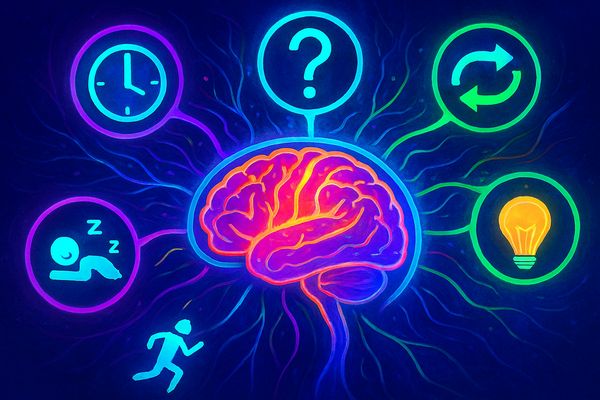 Unlock your brain's hidden power with these game-changing learning routines.This image is a conceptual illustration and may not represent actual biological processes or events.
Ever wonder what separates the top performers from the rest? It’s not just about raw intelligence; it’s about how they learn. While many students passively absorb information, truly effective learners engage with their brains in a way that fundamentally reorganizes their neural pathways. Think of it like this: are you simply putting gas in the tank, or are you upgrading the engine for a high-performance ride? This isn't about working harder; it's about working smarter, aligning your study habits with the incredible biological blueprint of your brain.
For too long, education relied on methods that felt easy but delivered fleeting results – endless rereading, highlighting, or rewatching lectures. These passive techniques create an illusion of familiarity, a short-term high that masquerades as genuine knowledge. But when the real test comes, that 'familiarity' often crumbles. Cognitive science, however, has unveiled the game-changers: routines that feel a bit challenging in the moment, what we call 'desirable difficulties' [3]. These are the strategies that actually force your brain to build robust memory networks for long-term retention and lightning-fast retrieval.
1. The Biological Blueprint of Learning: Your Brain's Incredible Power
To truly master learning, we need to understand the superstar orchestrating it all: your brain. The effectiveness of these routines isn't some abstract theory; it's rooted in observable, measurable changes within your central nervous system. This incredible adaptability is called neuroplasticity, your brain's superpower to change its structure and function based on every experience and learning stimulus [1].
1.1. The Cellular Basis: Long-Term Potentiation (LTP)
At its core, learning boils down to the tiny, mighty connections between your neurons – synapses. When you learn, these connections don't just magically appear; they strengthen. This lasting increase in the efficiency of synaptic connections is called Long-Term Potentiation (LTP) [5]. Imagine a path in a dense forest. The more you walk it, the clearer and easier it becomes to traverse. That's LTP for your memories!
This strengthening involves a complex dance of molecules. Specifically, receptors called AMPA-R get trafficked to the synapse, making the receiving neuron much more responsive to future signals [8]. Here's the kicker: LTP requires specific patterns of intense synaptic activity [1]. Passive methods simply don't generate the necessary neural effort to create these robust, durable connections. This is why effortful strategies are biologically superior.
1.2. Memory Architecture: Working Memory and Consolidation
Your brain isn't a single, giant storage unit. It has different memory systems working together. Think of Working Memory (WM) as your mental workbench, holding a small amount of information you're actively using right now [9]. Long-Term Memory (LTM), on the other hand, is the vast library where information is stored over a lifetime [9].
The hippocampus, a fascinating structure nestled deep in your brain, is the critical gateway for forming new, permanent memories. It's like the initial processing center, taking those short-term memories and consolidating them into LTM, moving them to other parts of your brain for long-term storage [10].
The five routines we're about to dive into are specifically engineered to exploit these precise neurophysiological mechanisms – driving LTP, forcing active recall, and optimizing that crucial consolidation process – to help you achieve next-level learning. Let's unlock your brain's secret weapon!
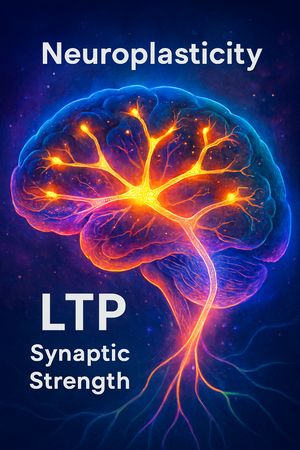 Witnessing neuroplasticity in action: Your brain's ability to adapt and strengthen connections through active learning.This image is a conceptual illustration of neuroplasticity and neural pathways, not an exact medical representation.
2. Routine 1: Spaced Practice—Weaponizing Time Against Forgetting
Have you ever 'crammed' for a test only to find the information evaporated shortly after? You've experienced the 'Forgetting Curve,' a concept introduced by Hermann Ebbinghaus in 1885 [13]. It shows that we lose new information rapidly if we don't make an effort to retain it. The good news? We have an antidote!
2.1. The Solution: The Spacing Effect
The antidote is Spaced Practice, a powerful strategy that leverages the 'spacing effect.' Instead of cramming all your study into one marathon session (massed practice), you distribute it over time [15]. Imagine trying to build muscle: one insane gym session won't do it, but consistent workouts spread over weeks will. Learning is the same! Studies consistently show that distributing the same total study time across multiple, shorter sessions dramatically boosts memory recall [16].
2.2. Mechanism: Forcing Effortful Retrieval
Why does spacing work so well? It's a prime example of a 'desirable difficulty' [16]. By creating a time gap between study sessions, your brain is forced to work harder to retrieve the fading information. That extra effort isn't a bug; it's a feature! It strengthens the retrieval pathway, making the memory more accessible next time [3].
Additionally, spaced practice introduces 'contextual recoding' [15]. Each time you review, the context (your mood, environment, what you've learned since) is slightly different. Retrieving the memory in varied contexts makes it more flexible and durable, preventing it from being tied to just one study session.
2.3. Implementation: Developing a Spaced Repetition System (SRS)
To really harness spacing, create a Spaced Repetition System (SRS). The idea is to systematically increase the time between your reviews. You want to revisit information just before you're about to forget it. This maximizes retrieval effort and learning gains [18].
Consider the impact of timing on retention:
| Time Since Initial Learning | Approximate Memory Retention (No Review) | Impact of Reinforced Retrieval/Spacing |
|---|---|---|
| 20 Minutes | ~58% | Immediate review (within 24 hours) counters steep initial decay [13] |
| 1 Hour | ~44% | Memory retention rates stabilize when recall is tested [19] |
| 1 Day | ~34% | Memory decay slows dramatically after initial active review [13] |
| 1 Week | ~21% | Retention remains high (80% recall possible) if spaced testing is employed [19] |
This table clearly shows the power of strategic review. Don't let your hard work fade away – space it out!
3. Routine 2: Retrieval Practice—The Testing Effect
While spacing tells us when to study, Retrieval Practice tells us how to study. This is often called the 'testing effect,' and it's a superstar strategy: actively trying to recall information, like taking a practice test, dramatically improves long-term retention compared to passive methods like rereading [2].
3.1. Comparison to Passive Rereading: The Illusion of Fluency
Here’s a hard truth: rereading your notes feels good. It feels like you're learning, right? But it often creates an 'illusion of fluency' – a false sense of security that you know the material [3]. A classic study by Roediger and Karpicke showed that while rereading led to better immediate test performance, students who engaged in retrieval practice (a free-recall test) showed superior long-term retention two days and a week later [2]. True mastery demands the challenging mental workout of recall.
3.2. Efficiency and Neurocognitive Mechanisms
Retrieval practice isn't just more effective; it's also incredibly efficient. Imagine being able to learn the same amount in a third of the time. One study found that for PharmD students, retrieval practice was three times more efficient than rewatching recorded lectures for the same long-term knowledge retention [2]. That's a huge return on your time investment!
The mechanism is elegant: each successful retrieval attempt strengthens the specific pathway used to find that memory [19]. It's like paving a dirt road into a superhighway for information. Brain imaging suggests testing strengthens relevant memory associations and even inhibits irrelevant ones, optimizing your brain's memory network [22].
3.3. Implementation: Test Yourself, Smartly
Make frequent, short, self-administered tests your new best friend. The American Psychological Association suggests testing yourself two or three times, spaced out over a study session [19]. Think closed-book quizzes, flashcards, or practice worksheets. And here's the crucial part: after testing, check your answers and focus your further study ONLY on what you got wrong. Don't waste time on what you already know! [19]
4. Routine 3: Interleaving—Mastering Conceptual Differentiation
So far, we've talked about when to study (spacing) and how to access single concepts (retrieval). But real-world learning often demands more: distinguishing between similar ideas and knowing which strategy to apply. Enter Interleaving, your secret weapon for conceptual mastery.
4.1. Definition and Contextual Interference
Interleaving means purposefully mixing different types of problems, topics, or materials within a single study session [4]. This is the opposite of 'blocked practice,' where you master one topic completely before moving to the next. Imagine a basketball player practicing dribbling, then shooting, then passing – all mixed up – instead of doing 100 dribbles, then 100 shots, then 100 passes.
Interleaving intentionally creates 'contextual interference' [24]. It feels harder in the moment because your brain is constantly switching gears. But this difficulty is desirable! It leads to far superior long-term retention, especially in complex areas like math or motor skills [23].
4.2. Mechanisms: Forced Strategy Selection and Differentiation
The magic of interleaving lies in forcing your brain to engage in active strategic selection [4]. When you use blocked practice, you can apply the same strategy repeatedly without much thought. But with interleaving, each new problem forces your brain to:
- Retrieve the correct strategy for this specific problem.
- Choose between multiple potential strategies.
- Differentiate between similar concepts.
This constant comparison and contrast strengthen the unique memory associations for each concept, protecting against interference between similar ideas [4]. At a neural level, interleaving enhances connectivity in your frontal cortex, improving the coordination needed to select and execute different mental operations [25].
4.3. Quantitative Performance Gains and the Perception Paradox
The results of interleaving are dramatic. In a study with seventh-graders learning about graphs and slope, students who used interleaved practice significantly outperformed the blocked practice group [26]:
- After 24 hours: Interleaved group scored 80% vs. 64% for blocked – more than a full letter grade difference!
- After one month: The interleaved group's performance was nearly double that of the blocked group (74% vs. 42%) [26].
Despite these powerful gains, there's a paradox: most students think interleaving is less effective [27]. It feels harder, less preferable, and more time-consuming [27]. This is where you override intuition and embrace the desirable difficulty. Trust the science!
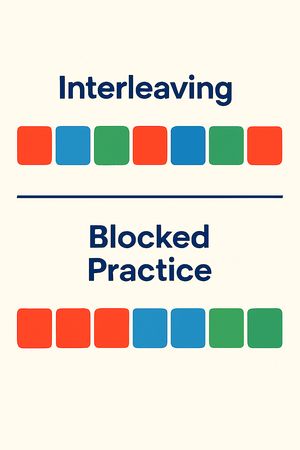 Interleaving (mixing topics) helps your brain differentiate and choose strategies more effectively than blocked practice.This image is a simplified visual representation of learning strategies and does not depict actual cognitive processes.
5. Routine 4: Elaborative Rehearsal and Self-Explanation
We've optimized timing and retrieval. Now, let's optimize the quality of your memories. Elaborative Rehearsal is a deep processing technique that helps you retain information long-term, far superior to just rote repetition [10].
5.1. Deep Processing through Semantic Encoding
Elaborative rehearsal is all about making strong associations and personal connections between new information and what you already know [10]. It’s about semantic encoding – attaching meaning to data [28]. Instead of just reading, you're:
- Translating new info into your own words.
- Explaining concepts to someone else (or yourself!).
- Creating vivid examples or analogies.
- Applying concepts to new problems [29].
By building these rich associative structures, you physically strengthen neural connections. This process effectively moves semantic memories into your neocortex for extended, potentially lifelong, storage [10].
5.2. The Feynman Technique: Simplify to Master
A phenomenal strategy that embodies elaborative rehearsal is the Feynman Technique, developed by Nobel laureate Richard Feynman [30]. It forces you to explain complex ideas in simple, teachable language, moving you from mere memorization to genuine understanding [30].
5.2.1. The Four-Step Iterative Process:
- Identify and Explain: Pick a concept. Pretend you're teaching it to a child or someone with no background in the subject. Write or explain it out loud, using the simplest language possible [30].
- Identify Gaps: Where did your explanation get complicated? Where did you use jargon? Where did you struggle? These are your knowledge gaps [30].
- Review and Refine: Go back to your source material. Focus only on filling those identified gaps. Don't just re-read everything [30].
- Simplify and Solidify: Explain it again, even more simply and clearly. Use analogies if it helps. Repeat this iterative process until your explanation is perfectly clear, logical, and concise [31].
5.3. Efficacy for Higher-Order Learning
Elaborative techniques aren't just for facts; they boost higher-order learning. They improve inference-making, integration of ideas, and the ability to transfer knowledge to new problems [33]. By creating highly resilient and interconnected memory structures, you build numerous "entry ramps" for future retrieval, making your Retrieval Practice (Routine 2) maximally effective [10].
6. Routine 5: Strategic Physiological Management—Sleep and Movement
All the cognitive engagement in the world won't matter if your brain's hardware isn't optimized. Physiological factors like sleep and exercise are absolutely essential, directly regulating neuroplasticity and memory consolidation.
6.1. Sleep: The Critical Phase of Memory Consolidation
Sleep isn't just downtime; it's an active brain state crucial for forming long-term memories [12]. Think of it as your brain's nightly cleaning crew and data transfer specialist. Sleep deprivation, even just a little, impairs memory and your ability to encode new information [34]. This is because sleep plays an indispensable role in memory consolidation – converting those shaky, short-term memories into stable, long-term representations [34].
Specifically, during Non-Rapid Eye Movement (NREM) sleep, your brain actively replays recently encoded information, especially from the hippocampus [12]. This replay drives memories from temporary storage to permanent neocortical stores [12]. The hours immediately after a lesson or study session are the most critical for this consolidation [36]. So, pulling an all-nighter after learning new material is literally sabotaging your memory.
6.2. Physical Exercise: Enhancing the Neural Hardware
Want a cost-effective way to boost your brainpower? Move your body! Physical exercise is a powerful intervention for improving cognitive function [37]. A key player here is Brain-Derived Neurotrophic Factor (BDNF), a crucial protein that promotes neuronal survival, growth, and synaptic plasticity [38].
Both acute (single session) and long-term regular exercise increase BDNF levels, with regular exercise leading to bigger, lasting boosts [37]. Aerobic and high-intensity exercises are particularly effective [38]. Exercise triggers a cascade of molecular events that promote neurogenesis (formation of new neurons) and synaptogenesis (formation of new synapses) by boosting BDNF, literally making your brain better equipped to learn [38].
6.3. Quantitative Evidence: Aerobic Exercise and Hippocampal Volume
The link between exercise and memory isn't just theoretical; it's structural. Aerobic exercise can even reverse age-related loss of hippocampal volume, which directly correlates with improved memory [39]. In one study, older adults doing aerobic exercise saw their hippocampus volume increase by over 2% in a year, while a control group experienced the expected decline [40]. This increase was directly linked to improvements in memory performance [40]. Your hippocampus, remember, is your brain's primary consolidation center! Exercise optimizes this neural hardware, with BDNF as the critical mediator, ensuring your brain can perform the intense LTP processes required by the cognitive routines [39].
7. Conclusion: Synthesis and Mastery
Next-level learning isn't a silver bullet; it's a powerful, synergistic system. It's about integrating these evidence-based routines to target every single phase of memory formation, from the first spark of encoding to the long-term solidification in your brain.
Here’s how these five game-changing routines work together to ensure your knowledge sticks and stays:
- Elaborative Rehearsal (Routine 4) builds a high-quality, deeply interconnected memory trace, ensuring the information you're learning is rich and meaningful.
- Interleaving (Routine 3) forces your brain to differentiate between similar concepts, strengthening unique pathways for strategy selection and preventing confusion.
- Retrieval Practice (Routine 2) reinforces the access routes to that high-quality memory trace, exploiting 'desirable difficulty' to drive robust synaptic strengthening (LTP).
- Spaced Practice (Routine 1) strategically leverages time, ensuring that your retrieval practice happens at optimal intervals, battling the forgetting curve and forcing recall from varied contexts.
- Strategic Physiological Management (Routine 5) – through adequate sleep and aerobic exercise – optimizes your neural machinery (hippocampal volume and BDNF levels) to actively perform the vital consolidation (NREM replay) and structural remodeling required by all that cognitive effort.
The common thread running through every high-efficacy method is effort [3]. You need to consciously override that comfortable but deceptive desire for 'fluency' and instead choose strategies that compel rigorous neural change. By embracing these scientifically verified, effortful routines, you're not just studying; you're actively programming your brain to convert fleeting information into permanent, accessible knowledge. Get ready to unleash your true learning potential!
Disclaimer: This article discusses educational topics for informational purposes only. The content is not intended to serve as professional academic counseling or career guidance. Please consult our full disclaimer for more information.