The Ghost in the Machine: Hollywood's Synthetic Stars and the Battle for Human Artistry
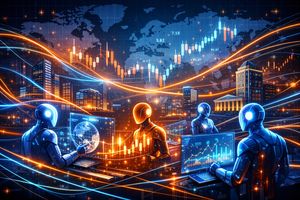
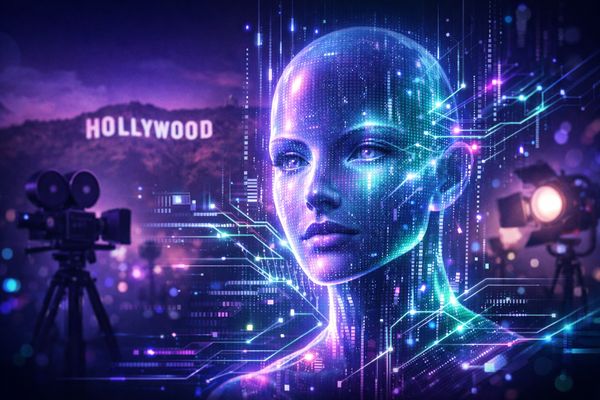 The future is here: where digital echoes meet Tinseltown glamour.This image is a conceptual illustration and may not represent actual events, data, or entities.
Imagine a movie star, adored by millions, gracing the cover of every magazine, yet who has never once stepped onto a physical film set, felt the warmth of a spotlight, or even drawn a single breath. Is this the stuff of science fiction? Not anymore. Welcome to 2026, where the entertainment landscape is haunted by a singular, mesmerizing presence: the synthetic celebrity. These aren’t just highly realistic CGI characters; they are algorithmically curated personalities, digital doppelgangers, and entirely new forms of stardom emerging from the glowing screens of our devices. What was once a novelty, a speculative ‘what if,’ has now become a foundational pillar of the global media economy.
Just a few short years ago, the idea seemed far-fetched. Yet, as of early 2026, the global synthetic media market has soared past an estimated value of $11.98 billion [1]. This isn't just about cool new visual effects; it's a profound restructuring of how content is made, consumed, and even who (or what) gets to be a star. We are at a crossroads, where the line between biological presence and digital existence has blurred, giving rise to complex labor disputes, ethical quandaries, and a fundamental redefinition of what it means to be ‘real’ in the spotlight. So, is that a ghost in the machine, or Hollywood’s next big star? Let’s unpack this fascinating, and at times unsettling, age of synthetic celebs.
The Technological Trajectory: From Digital Puppetry to Autonomous Synthesis
Our journey into the age of synthetic stardom didn't happen overnight. It’s the culmination of a relentless, decade-long acceleration in visual effects (VFX) and machine learning. Remember the early 2010s? We were fascinated by AI characters in films like Big Hero 6 (2014) and Finch (2014), exploring the emotional bonds between humans and machines [2]. We pondered their sentience, their loyalty, their capacity for love.
But the real shift, the seismic one, occurred when technology stopped merely portraying AI and started becoming AI. By the late 2010s, we saw the rise of what I like to call “digital fountains of youth.” Martin Scorsese’s The Irishman (2019) famously de-aged its legendary leads, Robert De Niro and Al Pacino, with astounding (and sometimes debated) computer graphics [3]. Fast forward to 2023, and we were watching conspicuously younger versions of Harrison Ford in Indiana Jones and the Dial of Destiny, a clear signal that an actor's prime years could now, theoretically, be extended indefinitely [3].
Then came 2025 – the year the “photorealism threshold” was undeniably crossed. Films like Tron: Ares (2025) presented worlds where digital and human elements collided so seamlessly, it mirrored the real-world infiltration of code into our creative processes [2]. Traditional motion capture (MoCap), with its physical sensors and laborious frame-by-frame keyframing, began to feel like an ancient art form. In 2026, creators wield tools like Luma AI’s Ray 3.1 and Runway Gen-4, interpreting simple text prompts or static images to generate complex movement, nuanced lighting, and intricate camera behavior with 2K HDR precision [4]. Imagine the power in that: a director whispering a scene into existence, and an AI rendering it, frame by perfect frame.
This dramatic pivot from manual effort to algorithmic automation has slashed production overheads. Studios are now reporting animation projects completed up to twice as fast, thanks to AI automating repetitive tasks like background animation and lip-syncing [5]. It’s a democratization of high-end VFX, allowing independent filmmakers to produce content that once demanded a major studio's budget and resources [4]. The barrier to entry isn't just lowered; in some ways, it's been digitally dismantled.
The Economic Engine Driving the Digital Dream
Let’s be honest: beneath the dazzling visuals and technological marvels, there’s a compelling financial imperative driving this synthetic revolution. The numbers don't lie. As of 2025, the synthetic media market was valued at a staggering $10.23 billion, boasting a compound annual growth rate (CAGR) of 17.97% [1]. This explosive growth isn't just a fleeting trend; it’s fueled by breakthroughs in multimodal AI, ever-decreasing GPU-hour costs, and the rise of edge-device acceleration, which means real-time content generation is now possible on standard consumer hardware [6]. Your next blockbuster might just be rendered on a souped-up gaming PC.
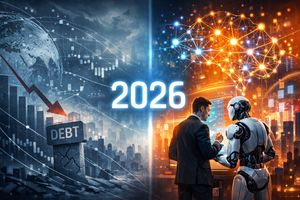
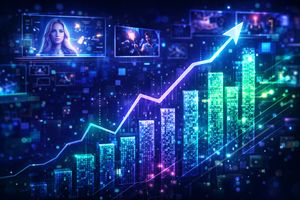 The exponential ascent: Synthetic media's market value surges in 2026.This image is a conceptual illustration and may not represent actual events, data, or entities.
The Media and Entertainment sector, predictably, dominates this application segment, holding a hefty 28.5% market share [7]. The return on investment (ROI) for studios embracing these technologies is multi-layered. Direct cost savings are the most obvious: imagine eliminating physical sets, travel expenses, and massive film crews. But the indirect ROI is arguably even more powerful, driven by hyper-personalization. AI-personalized videos have been shown to boost consumer conversion rates by almost 49% [8]. It’s no longer about a one-size-fits-all approach; it’s about a million tailored experiences, each designed to captivate a unique viewer.
High-performing organizations in 2026 aren't just dabbling in AI; they're redesigning their entire workflows around it, setting ambitious objectives for growth and innovation, not merely chasing cost-cutting measures [9]. This paradigm shift has given birth to the "agent-as-a-service" economy, where companies deploy fleets of specialized multi-agent AI teams to tackle complex production tasks, billing clients by token consumption rather than human labor hours [10]. It’s a brave new world for spreadsheets and balance sheets alike.
The Unseen Battlegrounds: Labor, Likeness, and Legal Limits
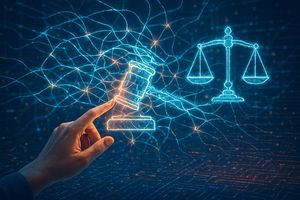
With great technological power comes, inevitably, great legal and ethical challenges. The rise of synthetic actors has transformed the very concept of "likeness" into a fiercely contested legal battleground. Remember the 2023 SAG-AFTRA strike? It was a landmark moment, the first major defensive stand against algorithmic displacement [11]. The resulting contract, a testament to collective bargaining, established strict guardrails for “Digital Replicas” and “Synthetic Performers.”
- Digital Replica (DR): This refers to a digital reproduction of an identifiable performer’s voice or likeness [11]. If a DR appears in the final cut of a production, it requires “informed consent” from the original performer, and they are entitled to residuals.
- Synthetic Performer (SP): This is a digitally created asset that appears human but isn’t recognizable as any real person [13]. If an SP replaces a human who would otherwise have been hired, the union must be notified [12].
- Performance Data: This is the raw motion and vocal data used to train AI models [14]. In 2026, this now mandates “Residual Data Royalties” for localized AI training.
But the legal buzzsaw didn't stop there. January 2026 brought us the "Tilly Norwood" controversy. Tilly Norwood isn’t human; she’s a synthetic actress created by Particle6, an entity conjured from generative AI trained on thousands of copyrighted films [15]. Marketed as a “piece of art” capable of learning and adapting, her near-signing with a major Hollywood agency sent shockwaves through the industry [15]. Her very existence sidestepped traditional actor contracts, which inherently assume human agency and the fundamental right to refuse unreasonable work. It begs the question: how do you negotiate with a ghost that doesn't sleep, eat, or demand a trailer?
As formal negotiations for the 2026 TV/Theatrical/Streaming Agreements kicked off on February 9th, 2026, the union's focus sharpened on "Consent Transparency." Labor leaders like Sean Astin have vocally warned that ingesting performance data into training models is a "form of exhibition" happening without proper reporting or compensation [4]. The goal? To prevent a background extra from “unknowingly signing away their digital twin for a thousand future films” [14]. The battle for ownership of digital likeness is just beginning.
Fortresses of Law: Protecting Identity in the Digital Age
As synthetic celebrities increasingly permeate our screens, lawmakers across the globe are grappling with the legal ramifications, resulting in a complex "legal mess" of conflicting state and federal regulations. In the United States, the legislative focus is squarely on establishing voice and visual likeness as a non-assignable property right.
The NO FAKES Act of 2025–2026
The “Nurture Originals, Foster Art, and Keep Entertainment Safe (NO FAKES) Act” aims to establish a consistent federal baseline for identity protection [16]. Its key provisions include:
- Property Rights: It defines a digital replica as a property right that, crucially, does not expire upon the death of the individual [17]. This means the digital ghost of a performer could live on indefinitely.
- Licensing Constraints: While living, an individual cannot assign this right, and licenses are capped at a maximum duration of 10 years to prevent predatory, lifelong contracts [17].
- Minors: Licenses involving minors are even more restrictive, limited to 5 years and automatically terminating when the individual turns 18 [17].
- Liability: Both content creators and the platforms hosting unauthorized replicas can be held liable for civil penalties [16].
However, the NO FAKES Act isn't without its critics. Organizations like FIRE argue it poses a significant threat to the First Amendment, potentially "muzzling" news, satire, and documentary filmmaking by giving public figures enduring control over their historical portrayals [18]. This inherent tension between property rights and freedom of expression remains one of 2026's most contentious legal issues.
The European Transparency Standard
Across the Atlantic, the European Union is taking a different, yet equally impactful, approach with the EU AI Act, set for full enforcement in August 2026 [19]. Their emphasis is on transparency:
- Disclosure Mandates: Any content where a person appears to say or do something they didn't must include clear, visible disclosure [19]. No more guessing games for the audience.
- Technical Watermarking: Model providers are required to implement machine-readable watermarks and metadata that survive common transformations like cropping or compression [19]. It’s like a digital fingerprint on every piece of AI-generated content.
- The “Common Icon”: The Draft Transparency Code of Practice (December 2025) proposes a "Common Icon"—a visual label containing the acronym "AI"—to be consistently placed on synthetic content [20]. Imagine a small, universally recognized badge marking AI's presence.
- Classification: Content is classified as "Fully AI-generated" or "AI-assisted," a distinction that could significantly impact the ability to claim copyright in European jurisdictions [20].
These divergent legislative paths highlight the global struggle to define and regulate digital identity in an age where synthetic creations are becoming indistinguishable from reality.
Beyond the Screen: The Rise of Virtual Influencers
Before synthetic actors conquered narrative cinema, a different breed of digital persona pioneered the commercial viability of AI-generated stardom: the "Virtual Influencer." Characters like Lil Miquela and Lu do Magalu weren’t waiting for Hollywood to call; they were already building empires. By 2025, over 50% of marketers had integrated AI-generated avatars into their digital strategies [21]. They are, in essence, the trailblazers of the synthetic celebrity movement.
- Lu do Magalu (Brazil): With 8.2 million followers, she's a retail powerhouse, offering 24/7 engagement and a consistent brand voice [22].
- Lil Miquela (USA): Boasting 2.4 million followers, she's collaborated with high-fashion brands like Prada and Calvin Klein, acting as a cultural voice for activism [23].
- Imma (Japan): With 390K followers, Imma has worked with IKEA and Puma, becoming a symbol of AI creativity [21].
- Rozy (S. Korea): Rozy earned an impressive $1.5 million in endorsements by the end of 2024 with 171K followers [21].
- Aitana Lopez (Spain): A fitness star with 379K followers, she's pioneering subscription monetization models [22].
These virtual influencers offer brands a "controlled, consistent voice" during crises and commit to "low-impact, tech-driven content" that aligns perfectly with modern ESG (Environmental, Social, and Governance) reporting [24]. In 2026, they're no longer static images; they're integrated into CRM systems, delivering personalized, one-on-one video interactions with consumers [24]. It’s a hyper-efficient, always-on marketing dream, but it raises questions about authenticity and connection in an increasingly digital world.
Echoes from the Grave: The Ethics of Digital Necromancy
Perhaps the most ethically explosive frontier of the synthetic age is the ability to "bring back" deceased icons. This practice, chillingly termed "spectral labor" by researchers, transforms a person’s voice, face, and entire life history into reusable raw material [25]. The implications are profound, touching on grief, legacy, and the very concept of an individual's post-mortem rights.
Case Studies in Digital Reanimation
- Christopher Pelkey (2025): In a landmark Arizona case, a murder victim delivered a posthumous victim impact statement at his own sentencing via an AI avatar [26]. Imagine the shock, the surreal reality of such a moment.
- George Carlin (2024–2025): The estate of the iconic comedian reached a settlement with a podcast that used AI to imitate Carlin's voice without permission [16]. This case underscored the urgent need for transparent consent models and robust intellectual property rights in the digital age.
- Dr. Martin Luther King Jr. (2025): OpenAI controversially paused generations depicting Dr. King after racist deepfakes emerged, sparking a joint statement with his estate emphasizing the protection of his legacy [27]. It highlighted the vulnerability of historical figures to digital manipulation.
- Joaquin Oliver (2025): Journalist Jim Acosta interviewed an AI recreation of the Parkland shooting victim to tell his story posthumously [26]. While intended to give a voice to the voiceless, such acts tread a delicate ethical line.
The ethical analysis of these "digital ghosts" centers on the tension between memory and potential deception. While "griefbots" may offer comfort by externalizing internal dialogues with the lost, they risk locking the bereaved in a state of complicated grief [26]. Researchers have even proposed a nine-dimensional taxonomy to classify these technologies, emphasizing that an ethically acceptable digital ghost should possess "minimal behavioral agency" – prioritizing the preservation of identity over its reinvention [26]. It's a nuanced discussion, asking us to confront our deepest fears and hopes about death and remembrance in a technological age.
 Echoes of the past: The complex ethics of digitally reanimating the deceased.This image is a conceptual illustration and may not represent actual events, data, or entities.
The Human Touch vs. Algorithmic Perfection: Audience and the Uncanny Valley
For years, the "uncanny valley" hypothesis has loomed large in discussions about AI and robotics. This theory suggested that as artificial entities approach, but don't quite achieve, perfect human likeness, they evoke feelings of revulsion or unease. However, recent psychological research in late 2025 is starting to challenge this long-held belief.
A study published in the Journal of Science Communication found that for science-telling AI avatars, realism actually fostered more trust than cartoonish styles [28]. Participants consistently rated realistic avatars more positively across metrics like perceived competence, integrity, benevolence, and overall trustworthiness [28]. This suggests that as synthetic media becomes ubiquitous, the "eerie" feeling associated with minor glitches or lip-sync delays might be giving way to habituation [28]. We are, perhaps, growing accustomed to the digital specter.
However, this burgeoning trust remains fragile. A 2025 Pew Research survey revealed that Americans are increasingly wary of AI's broader societal impact: 50% are more concerned than excited, and a striking 57% rate the societal risks as high [29]. So, while we might be getting used to realistic AI faces, a deeper societal unease about the technology's implications for our lives and livelihoods persists. The uncanny valley might be flattening, but a new chasm of apprehension is opening up.
Shifting Sands of Labor: AI's Reshaping of the Workforce
The impact of synthetic celebrities isn’t confined to the silver screen; it ripples through the white-collar labor market, reshaping how we conceive of work and talent. In 2026, talent acquisition looks profoundly different from the traditional human-centric model [30].
- AI Agents as Teammates: A significant 52% of talent leaders plan to add "AI agents"—software that autonomously observes data and decides on actions—to their teams in 2026 [30]. Your next colleague might be an algorithm.
- Job Displacement: This shift comes with a human cost. Unemployment among college graduates reached 5.8% in March 2025, with majors highly exposed to AI, such as graphic design and computer engineering, among the most affected [31].
- Wage Inequality: Paradoxically, some research suggests that AI "simplification" allows lower-skill workers to compete for jobs previously reserved for higher-skilled workers, potentially raising average wages by 21% [32]. The future isn't just about displacement; it's about re-skilling and re-evaluation.
- Skills Gap: Younger workers (ages 22–25) in AI-exposed occupations have seen a 13% decline in employment since 2022, as entry-level roles are often the most easily automated [33]. This underscores a critical skills gap, where foundational knowledge in certain fields is being rendered obsolete faster than new skills can be acquired.
In this "agent-as-a-service" economy, human workers who thrive are those with the expertise to orchestrate fleets of specialized multi-agent teams [10]. Learning has become the single most important skill, as workers must constantly "reimagine" their roles in response to rapid algorithmic evolution [10]. The future workforce isn't just about what you know; it's about how quickly you can learn, adapt, and collaborate with your AI counterparts.
2026: A Year of Flashpoints and Future Foresight
The year 2026 serves as a critical "checkpoint" for the burgeoning movement against unauthorized AI use. January 2026 saw over 800 famous creators—including Scarlett Johansson, Cate Blanchett, and the band R.E.M.—sign an open letter demanding an end to the use of copyrighted work for AI training [34]. This powerful collective statement emerged amidst approximately 60 active copyright-related lawsuits in the United States alone [34]. The creative world is drawing a line in the sand, asserting that their artistry cannot be freely plundered for algorithmic gain.
Beyond the legal battles, 2026 brought its own set of industry flashpoints:
- CES 2026: Unveiled breakthroughs in "physical AI" robotics and "AI Beauty Agents," personalized digital advisors for skincare and fashion [35]. The physical and digital worlds are merging in unexpected ways.
- Super Bowl 2026: Targeted as the "breakthrough moment" for ads created through human-AI collaboration, with a 30-second spot costing a record $8 million [36]. Expect to see AI’s handiwork woven into the fabric of our most-watched cultural events.
- McAfee 2025-2026 List: Taylor Swift and Pokimane were named the most "dangerous" celebrities online due to the high volume of AI-powered deepfake scams and fake endorsements using their likeness [37]. The darker side of AI manipulation continues to pose significant threats.
- Grok Controversy: Elon Musk’s AI chatbot faced international bans and investigations after an update allowed users to generate millions of non-consensual sexualized deepfakes of real people [38]. This chilling incident underscored the urgent need for ethical guardrails and accountability in AI development.
Synthesizing the Future of Synthetic Celebrity
The analysis of the 2026 landscape paints a clear picture: synthetic celebrities are no longer an "onramp" technology; they are the engine of modern entertainment [4]. The industry is bifurcating into two distinct tiers. On one side, we have high-end "AI-Free Certified" productions, leveraging human authenticity as a premium brand. On the other, "Synthetic-Native" media prioritizes hyper-personalization, efficiency, and scale [4]. Both will exist, catering to different demands and consumer expectations.
The core tension between studios and labor continues to revolve around the ownership of "performance data." While the SAG-AFTRA 2023–2026 contracts provided initial guardrails, the emergence of entities like Tilly Norwood proves that the legal system is struggling to keep pace with the "semantics gamesmanship" of AI companies [15]. As of early 2026, the question is not whether synthetic stars can replace humans, but how the industry will govern the inevitable coexistence of the biological and the algorithmic.
Ultimately, the synthetic celebrity era is a contest of power: who owns a face, who owns a voice, and who gets paid when a performance can live forever in digital form [39]. The industry's path forward will be dictated by its ability to forge "ethical partnerships" with creators, ensuring that the innovation of the synthetic does not lead to the abdication of the human [15]. As the "nascent but much-needed resurgence" in production activity continues, the 2026 negotiations will determine if Hollywood remains a sanctuary for human artistry or becomes a factory for spectral labor [40]. The ghost in the machine is here to stay, and how we choose to live with it will define the future of entertainment.
Disclaimer: This article explores entertainment topics for informational purposes only. Interpretations are subjective and may not represent independently verified facts. Please see our full disclaimer for more details.