AI in Finance: Cybersecurity as the Non-Negotiable Bedrock of Trust
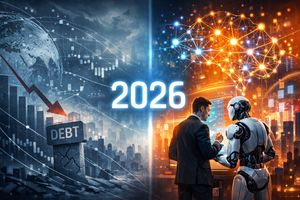
 Securing the future of finance against AI-driven threats.This image is a conceptual illustration and may not represent actual events, data, or entities.
The global financial infrastructure is currently navigating a period of profound architectural transition, where the arrival of artificial intelligence (AI) has moved from a speculative efficiency tool to the primary engine of both systemic innovation and existential risk. As financial institutions integrate advanced machine learning models into everything from high-frequency trading to retail customer service, they are simultaneously expanding their attack surfaces to a degree that traditional security paradigms can no longer defend. The industry is witnessing what regulatory leaders describe as a potential digital monoculture, where the reliance of thousands of institutions on a handful of base AI models creates a single point of failure that could lead to widespread economic heartbreak [1]. In this environment, cybersecurity is no longer an operational cost but the non-negotiable bedrock of institutional trust and market stability.
Rising Fintech Concerns: The New Frontier of AI-Driven Vulnerabilities
The rapid adoption of generative artificial intelligence (GenAI) has fundamentally altered the threat landscape for financial technology (fintech) firms, introducing vulnerabilities that exploit human psychology, institutional speed, and technical opacity. The evidence suggests that as defenders race to implement AI, adversaries are moving at a breakneck speed to weaponize the same technologies, creating a paradox where the tools intended to secure the system are being used to dismantle it [2].
The Proliferation of Deepfakes and Impersonation Fraud
The most visceral threat in the current era is the surge in AI-driven impersonation. Financial services reported a significant increase in deepfake incidents between 2024 and early 2025, a statistic that underscores the professionalization of AI-enabled crime [3]. Criminals have moved beyond simple phishing emails to sophisticated “vishing” (voice phishing) and deepfake video conferences that can deceive even highly trained financial professionals [3].
In a landmark case from 2024, a Hong Kong-based branch of the engineering firm Arup lost millions after an employee was lured into a video call featuring deepfake versions of the company’s CFO and other colleagues [3]. The employee, initially suspicious of an email request, found the visual and auditory cues of the video call so convincing that they executed multiple transfers to overseas accounts. This incident serves as a definitive warning that the human capacity to distinguish between authentic and synthetic media has been compromised [3].
Furthermore, the scale of these attacks is escalating. Research indicates that deepfake attacks are now occurring globally at a rate of one every five minutes [3]. The technical mechanism involves feeding only a few seconds of audio into freely available voice-cloning tools to replicate an executive's voice with enough emotional realism to bypass traditional social engineering defenses [3].
Synthetic Identity Fraud: The "Frankenstein" Threat
While deepfakes target the communication layer, synthetic identity fraud targets the core of the credit system. Described as the “Frankenstein” of identity theft, this scheme involves thieves blending stolen personal identifiable information (PII) with fictitious data to create entirely new personas [8]. AI facilitates this by generating realistic social media profiles and supporting documentation that allows these fake identities to achieve a “proof of life” within the banking system [8].
Fraudsters often use these synthetic identities to open credit accounts, acting as model customers who repay small amounts to build a high credit score. Once the financial institution extends a significant credit limit, the fraudster “busts out,” disappearing with the funds [8]. The impact on vulnerable populations is particularly acute; data suggests that children’s Social Security numbers are times more likely to be used in synthetic identity theft because they are rarely monitored by credit bureaus [5].
| Location | Fraud Type | Financial Loss | Core Mechanism |
|---|---|---|---|
| Hong Kong (2024) | Deepfake Video Call | Million | Impersonation of CFO and colleagues [3] |
| Singapore (2025) | Deepfake Zoom Scam | Replica of Group CFO for acquisition [3] | |
| New York (2024) | Synthetic Identity | Million | Mixing fake names with real SSNs [5] |
| Atlanta (2022) | Synthetic Identity | Million | Shell companies and mail shielding [5] |
 Synthetic identity fraud: AI's 'Frankenstein' threat blending real and fictitious data.This image is a conceptual illustration and may not represent actual events, data, or entities.
Privacy and the Hazard of Shadow AI
The internal adoption of AI tools within financial institutions has created a new category of risk known as “Shadow AI”—the use of unsanctioned AI models by employees [6]. In 2025, incidents involving shadow AI accounted for a significant percentage of all data breaches, adding an average of to the cost of a breach [31]. The primary danger stems from a lack of governance; a substantial percentage of organizations do not have a formal AI governance policy, and of those that experienced an AI-related breach lacked proper access controls [6].
When employees input sensitive institutional data or customer PII into public AI models, that data can be ingested into the model's training set or stored in unmanaged “shadow data” sources [6]. This unauthorized data flow circumvents established security perimeters, creating long-term privacy liabilities and regulatory exposure under frameworks like GDPR or the EU AI Act [31].
Operational Fragility and Systemic Monocultures
The financial sector's reliance on a handful of large-scale AI platforms and cloud providers has introduced a new form of systemic fragility. SEC Chair Gary Gensler has warned of the “monoculture” risk, where thousands of financial institutions depend on the same upstream base models for critical functions like trading, compliance, and risk assessment [1].
This concentration creates a “herd effect,” where an error or bias in a single base model could trigger simultaneous, correlated failures across the entire market [1]. Furthermore, an outage or a targeted attack on a major AI infrastructure provider would have cascading effects far beyond any single institution, potentially mimicking the 2024 CrowdStrike outage which paralyzed global systems through a single faulty update [8].
Proactive Defenses: Architectural Resilience and Autonomous Security
To counter the velocity of AI-driven attacks, the financial industry is moving toward a defense model that is as autonomous and intelligent as the threats it faces. This transition involves a shift from reactive detection to preemptive security, utilizing Explainable AI (XAI), Zero Trust Architecture (ZTA), and automated compliance engines.
Explainable AI (XAI): Solving the Black Box Problem
The use of AI in high-stakes financial decisions—such as loan approvals or fraud detection—requires transparency to maintain institutional trust and meet regulatory mandates for fairness. Traditional deep learning models often operate as “black boxes,” making it difficult for human analysts to explain why a specific transaction was flagged [9].
Explainable AI (XAI) addresses this by providing human-understandable justifications for AI-driven outputs. Techniques such as SHAP (SHapley Additive exPlanations) and LIME (Local Interpretable Model-agnostic Explanations) allow analysts to see which features—such as transaction frequency, geographic location, or spending patterns—contributed most to a specific risk score [9].
The technical performance of these models is significant. An ensemble-based model using XGBoost and LightGBM integrated with XAI tools achieved an AUC-ROC of on standard fraud detection datasets [10]. By bridging the gap between predictive accuracy and interpretability, XAI enables faster investigations and ensures that institutions can defend their decisions before regulators and customers [9].
Zero Trust Architecture (ZTA): The End of Implicit Trust
As financial networks become more decentralized through cloud adoption and remote work, the concept of a “secure perimeter” has become obsolete. Zero Trust Architecture (ZTA), as defined by NIST SP 800-207, assumes that no user or device can be implicitly trusted based on its network location [11].
The implementation of ZTA in finance rests on several core tenets:
- Per-Session Access: Every request for access to a resource (a database, an application, or a server) is evaluated individually and granted only for the duration of that session [11].
- Dynamic Policy Enforcement: Access decisions are made in real-time by a Policy Engine that considers user identity, device health, time of day, and behavioral anomalies [11].
- Micro-Segmentation: By dividing the network into small, isolated segments, ZTA limits the “lateral movement” of an attacker who has successfully compromised a single endpoint [12].
For institutions with legacy infrastructure, a “Hybrid ZTA” model is often adopted, where high-value data assets are protected by zero-trust principles while other systems are modernized over time [12]. The evidence shows that organizations with robust identity and access management (IAM) solutions—a cornerstone of Zero Trust—save an average of per year in breach-related costs [29].
Automated Compliance and Supervisory Technology (SupTech)
The sheer volume of transactions and the complexity of global regulations have made manual compliance monitoring impossible. Central banks and financial institutions are increasingly leveraging “SupTech” (Supervisory Technology) to automate the detection of systemic risks and financial crimes [17].
One prominent example is Project Aurora, led by the BIS Innovation Hub, which uses graph neural networks to identify money laundering patterns across multiple institutions [17]. By analyzing network behavior rather than individual flows, Project Aurora detected up to three times more money laundering cases while reducing false positives by [17]. Similarly, Project Raven utilizes AI assistants to help supervisors navigate thousands of pages of regulatory documents, improving oversight efficiency and ensuring that institutions remain compliant with evolving standards like Basel III and IV [17].
| Defense Mechanism | Primary Goal | Key Technology |
|---|---|---|
| XAI | Model Transparency | SHAP, LIME, Isolation Forest [9] |
| Zero Trust | Lateral Movement Prevention | ICAM, Micro-segmentation, Policy Engines [11] |
| SupTech | Regulatory Oversight | Graph Neural Networks, LLMs [17] |
| Automated Compliance | Real-time Auditability | Automated Moving Target Defense [25] |
The Regulatory Landscape: Global Hardening Against AI Risk
Regulators worldwide are responding to the dual nature of AI by introducing frameworks that mandate transparency, security, and accountability. These regulations are no longer just guidelines; they are becoming enforceable laws with significant financial consequences for non-compliance.
The EU AI Act: Risk-Based Categorization
The European Union’s AI Act, formally adopted in 2024, represents the most comprehensive AI regulation to date. It utilizes a risk-based methodology to classify AI systems, with several financial use cases designated as “high-risk” [16].
Under the Act, AI systems used for evaluating creditworthiness or establishing credit scores are considered high-risk because they directly impact an individual’s financial well-being [17]. Providers of these systems must:
- Establish a comprehensive risk management system throughout the AI's lifecycle [17].
- Ensure that training, validation, and testing datasets are representative and free of errors [17].
- Maintain detailed technical documentation and automatically record events (logging) to identify national-level risks [17].
The Act also prohibits certain harmful practices, such as AI-driven social scoring or emotion recognition in the workplace, which could lead to discriminatory outcomes in financial services [16]. Violations can result in fines reaching up to a significant percentage of a company’s annual global turnover [18].
The RBI and SEBI: India's Operational Resilience Mandate
The Reserve Bank of India (RBI) and the Securities and Exchange Board of India (SEBI) have issued detailed directions focused on cybersecurity and digital resilience. The RBI’s Master Direction on IT Governance, effective April 1, 2024, requires regulated entities to appoint a Head of IT Function and establish Board-level committees for IT strategy [19].
A critical component of the RBI's framework is the requirement for near-zero recovery point objectives (RPO) and rigorous incident reporting. Unusual incidents, including cyberattacks or critical system outages, must be reported to the RBI within six hours of detection [20]. For non-banking payment system operators (PSOs), the RBI mandates a “secure by design” approach, requiring that security principles are integrated into the software development lifecycle from the outset [21].
SEBI’s Cyber Security and Cyber Resilience Framework (CSCRF), notified in August 2024, consolidates multiple guidelines into a single umbrella for all regulated entities (REs) [22]. SEBI explicitly requires REs to maintain a Software Bill of Materials (SBOM) to manage supply chain risks and ensure that all data generated within India remains within its legal boundaries [23].
The SEC: Materiality and the War on "AI Washing"
In the United States, the SEC has focused on the intersection of AI and investor protection. Final rules released in July 2023 require publicly traded companies to disclose material cybersecurity incidents on Form 8-K within four business days [24]. This is intended to provide investors with timely and consistent information about the risks a company faces.
SEC Chair Gary Gensler has also cautioned against “AI washing”—making overly generalized or false claims about a company’s AI capabilities [25]. The SEC is particularly concerned with “boilerplate” disclosures that do not address the specific, particularized risks an institution faces from its AI models [26]. Research shows that while a significant percentage of S&P 500 companies mentioned AI in their 2024 annual reports, many of these disclosures lacked concrete details, leading to increased regulatory scrutiny [26].
 Global regulatory bodies establishing frameworks to manage AI risks in finance.This image is a conceptual illustration and may not represent actual events, data, or entities.
Future Outlook: AI vs. AI and the Road to 2030
As we approach 2030, the battle for financial security will be fought primarily between competing AI models. This “AI vs. AI” arms race will redefine the economics of cybersecurity and the structure of financial organizations.
The Rise of the Autonomous Cyber Immune System (ACIS)
Gartner projects a radical shift in cybersecurity spending by 2030, with preemptive security accounting for a substantial percentage of all IT security spending, up from a much smaller percentage in 2024 [25]. Traditional reactive models—which rely on detecting an intrusion after it has occurred—are becoming obsolete against the speed of AI-driven exploits [25].
The central concept in this new paradigm is the Autonomous Cyber Immune System (ACIS). Much like a biological immune system, ACIS uses agentic AI to anticipate, neutralize, and recover from threats autonomously [25]. Gartner predicts that the number of documented software vulnerabilities will exceed one million by 2030, a significant increase from 2025 levels, making automated, proactive defense a biological necessity for digital ecosystems [25].
Agentic AI and the Transformation of Finance Roles
The role of the finance professional is also set for a transformation. By 2030, agentic AI—systems capable of making decisions with minimal human input—will execute at least a significant percentage of daily finance decisions autonomously [27]. While transactional tasks will become highly standardized, finance professionals will transition from task execution to the oversight and coordination of AI agents [27].
This shift is partly driven by a talent crisis; between 2019 and 2021, approximately accountants left the industry in the U.S. alone [27]. To compensate for this loss of expertise, firms are turning to large language models (LLMs) to encode legacy knowledge and automate routine compliance and reporting tasks [27].
Investor Confidence and the Economics of Trust
The long-term success of the fintech sector depends on maintaining investor confidence in the face of rising cybercrime costs, which are expected to reach trillions annually by 2025 [28]. For financial institutions, the “economics of cybersecurity” has shifted: security is now a strategic investment that can drive profitability [8].
Data shows that firms using AI and automation for security save an average of millions per breach compared to those that do not [31]. As the global attack surface expands, the ability to demonstrate “cyber-agility”—the capacity to adapt quickly to new threats like quantum computing or AI-driven malware—will be the primary differentiator for financial brands [30].
| Feature of Finance 2030 | Projected Impact | Primary Driver |
|---|---|---|
| Preemptive Spending | of IT Security Budget | Fast-evolving AI-enabled attacks [25] |
| Autonomous Decisions | of daily finance tasks | Agentic AI deployment [27] |
| Vulnerability Scale | Million CVEs | Rapid expansion of attack surface [25] |
| Breach Cost Mitigation | Million Savings | Extensive use of security AI [29] |
Viral Elements: Insights from the Field and the "Digital Heartbreak"
The narrative of AI in finance is often captured in the stark warnings and high-stakes incidents that have defined the last two years. These elements provide a human context to the technical data.
The "Digital Heartbreak" Warning
SEC Chair Gary Gensler’s use of the term “digital heartbreak” serves as a provocative hook for the industry. He argues that the financial system's dependency on a handful of base AI models—what he calls “monocultures”—is the classic setup for a systemic crisis [1]. “Imagine it wasn't Scarlett Johansson [in the movie Her], but it was some base model or data source on which financial institutions were relying,” Gensler noted in 2024. “If they go offline or send a signal that everybody relies upon, AI may play a central role in the after-action reports of a future financial crisis” [1].
The Evolution of the Scam: From Voice to Identity
The human element remains the weakest link, as demonstrated by a 2025 case in Colorado. A woman received a panicked call from someone who sounded exactly like her daughter, claiming she had been abducted and demanding a large sum of money. The mother, convinced by the perfect voice match—a result of voice-cloning AI—wired the money immediately, only to find her daughter was safe at home [31]. In the corporate world, this same technology is used for Business Email Compromise (BEC), where fake voice notes from a CEO instruct subordinates to make urgent, confidential transfers [3].
Resilience Lessons from the US Treasury Incident
The 2023 ransomware attack on the primary US Treasury market highlighted the cascading risks of third-party dependencies [32]. When a key player's systems were shut down, it disrupted the clearing of trades across the entire sector, forcing traders to move to manual processes which increased costs and complicated regulatory reporting [32]. This incident taught the sector that Business Impact Analysis (BIA) must now include “mission-essential functions” that cannot tolerate even a few minutes of downtime without causing sector-wide instability [32].
Synthesis: Towards an Immune Financial System
The evidence gathered across global financial markets suggests that the era of “defensive perimeter” security is over. The arrival of AI has not only empowered attackers with the ability to create synthetic identities and deepfake personas at scale but has also created a systemic dependency on a few core technologies that could jeopardize macro-financial stability. However, the same technology offers a path forward. The integration of Explainable AI ensures that the “black box” of automated finance is opened for regulatory and ethical scrutiny. Zero Trust Architecture provides a roadmap for securing decentralized, cloud-native environments. And by 2030, the transition to Autonomous Cyber Immune Systems will allow financial institutions to defend against threats at the speed of the machine.
For financial leaders, the strategic takeaway is clear: cybersecurity is no longer a technical debt to be managed but a core competency to be mastered. The institutions that thrive in 2030 will be those that build their systems on the principles of transparency, resilience, and preemptive defense, ensuring that the “heartbreak” of a future crisis is averted through architectural immunity. The future of finance is a race between two forms of intelligence; the goal of the industry is to ensure that the intelligent defender always maintains the technological advantage.
Disclaimer: This article covers financial topics for informational purposes only. It does not constitute investment advice and should not replace consultation with a licensed financial advisor. Please refer to our full disclaimer for more information.