The 2025 Brain Rot Index: 10 Trends Gamers Can't Stop Talking About – AI Filters, Matcha, and What's Next for Your Feed
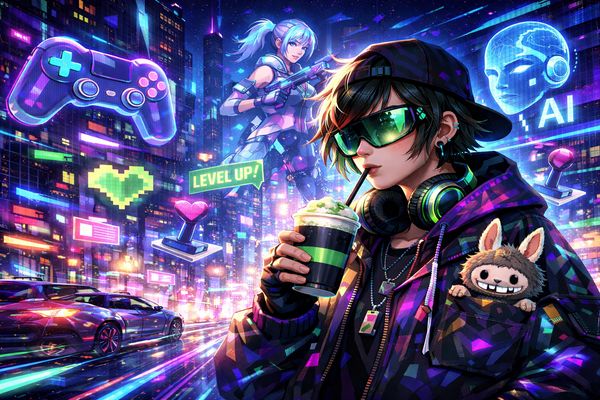 Navigating the wild, wonderful world of 2025 gaming trends.This image is a conceptual illustration and may not represent actual events, data, or entities.
Here’s what’s blowing up this week – actually, this year! Welcome, fellow internet dwellers, to the definitive rundown of everything that’s got gamers in a chokehold. We’re talking about the good, the weird, and the utterly viral. The year 2025 isn’t just another lap around the sun; it’s a full-throttle, meme-fueled sprint through a cultural landscape that’s shifting faster than your ping on a bad server. What was once a niche hobby has absolutely exploded, becoming the main event in youth entertainment, the blueprint for lifestyle trends, and even—dare I say it—the very language we speak. From the mind-bending magic of generative AI to the comforting ritual of a matcha latte, and the absolute chaos of user-generated content, the digital habits of Gen Z and young millennials aren't just playing games—they're changing the game, period [1]. This isn't just a report; it's your essential guide to navigating the digital currents, grounded in data that's as real as your opponent’s rage quit. Let’s dive deep into the ten most viral trends among gamers and online communities, because trust me, you’re gonna wanna know what’s coming for your feed next.
Trend 1: AI Filters & Generative AI – Game Dev’s New Cheat Code
Artificial intelligence—remember when that was just a buzzword? Well, in 2025, it’s the absolute backbone of gaming content creation. We’re not just talking about minor tweaks; AI-powered filters and generative tools are ripping up the rulebook on how games are built and how we experience them. It’s like watching a speedrun of innovation, and honestly, we’re here for it.
The numbers don't lie: the Game Developers Conference (GDC) State of the Game Industry 2025 report dropped some serious stats, revealing that a whopping 52% of surveyed developers are now working for companies that use generative AI tools. That's a massive jump from 31% in 2023 [2]. And it’s not just the big corps; 36% of developers are personally tapping into these tools, proving this isn't some corporate mandate, but a genuine, rapid adoption by the folks in the trenches [2].
AI filters, from real-time avatar customization that makes your character look cooler than you do, to dynamic environment rendering that crafts entire worlds on the fly, are now standard in your go-to platforms. Think Roblox, Fortnite, and Minecraft—they're basically AI playgrounds. Roblox, for instance, has unleashed AI-powered tools for automated avatar creation, real-time text translation (no more language barriers!), and a multimodal 3D foundational model that lets developers conjure entire environments from mere text prompts [3]. This isn't just convenient; it’s democratizing creation, lowering the barrier to entry for aspiring devs, and letting them rapid-prototype, generate assets, and cook up personalized experiences faster than you can say “GG.”
On the development front, generative AI is a total game-changer, automating those tedious, repetitive tasks that used to suck the soul out of coding assistance, concept art, and 3D model generation [4]. Ubisoft’s Ghostwriter tool? It’s basically scripting NPC dialogue variations, saving hundreds of hours per title. Hundred. Of. Hours [4]. And for us players, AI filters mean deeper, more immersive experiences. Imagine NPCs who actually hold unscripted conversations, remember your past actions, and adapt game difficulty in real time [4]. This isn’t just playing a game; it’s living in a dynamic, responsive world that keeps you hooked.
But hey, with great power comes great responsibility, right? The lightning-fast integration of AI has sparked a firestorm of ethical debates and new policies. The GDC report notes that 64% of developers’ companies now have internal policies for generative AI use, up from 51% in 2024 [2]. Concerns? Oh, they’re real: originality, job displacement, and the ever-present risk of bias creeping into AI-generated content. Countries like India are stepping up, with the Information Technology (Intermediary Guidelines and Digital Media Ethics Code) Amendment Rules, 2025, now requiring platforms to label synthetically generated information and proactively verify AI-generated content [5]. It’s a wild west out there, but at least there are some sheriffs arriving.
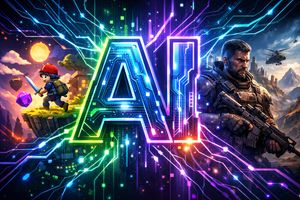
 AI: The ultimate cheat code for game developers, streamlining creation and pushing boundaries.This image is a conceptual illustration and may not represent actual events, data, or entities.
Trend 2: Matcha Mania – Gamers’ New Fuel of Choice
Hold up—who knew green tea would become the ultimate gamer fuel? Matcha, once relegated to niche wellness corners, has absolutely exploded into a lifestyle staple for urban millennials and Gen Z, not just in India but globally. It’s not just a drink; it’s a vibe, a statement, and frankly, it looks good on your Instagram feed.
The numbers tell a compelling story: the Indian matcha market, already valued at a cool $104 million (₹870 crore) in 2024, is projected to surge to $167 million (₹1,400 crore) by 2030, boasting a Compound Annual Growth Rate (CAGR) of 8.6% [7]. What’s driving this emerald wave? A potent mix of health consciousness (bye-bye, energy drink jitters!), aspirational social media aesthetics, and, of course, celebrity endorsements. Sanya Malhotra launching Bree Matcha? Iconic.
Matcha’s allure is multifaceted—it’s the ritual of preparation, the sustained, jitter-free caffeine release, and that undeniably Instagram-friendly green hue. It screams self-care, productivity, and a dash of “quiet luxury” that perfectly aligns with the post-pandemic digital wellness aesthetic [6]. It’s the perfect antidote to those intense gaming sessions, offering a calm focus without the crash.
And speaking of calm, parallel to the matcha madness is the meteoric rise of “cozy games” and gamified wellness apps. Cozy games—think Stardew Valley, Animal Crossing, and The Sims—are all about low-stress, wholesome experiences. It's the digital equivalent of a warm blanket and a good book, focusing on relaxation and everyday activities. Online mentions of “cozy games” shot up by over 50%, and Google searches hit a five-year high in December 2024 [6]. Then there are the wellness-focused games and apps like Ring Fit Adventure and Calm, which gamify fitness and mental health, dishing out achievements and milestones for taking care of yourself. This health and wellness gamification market is projected to hit a staggering $3.8 billion in 2025 [6]. So yeah, taking care of yourself is officially a trend, and we love to see it.
In India, matcha's growth is fueled by both online hustle and physical storefronts. In 2024, 41% of matcha sales happened on online platforms, with D2C (Direct-to-Consumer) brands absolutely crushing it on Instagram Reels and through influencer tie-ups [6]. The powdered form of matcha still reigns supreme, grabbing a 53.75% revenue share in 2024 [7]. Sure, there are challenges—it can be pricey, and the taste is unique—but the potential for “Made in India” matcha, sourced from places like Assam, Darjeeling, and Nilgiris, is massive.
Trend 3: Labubu & Designer Toys – From Niche to Must-Have Flex
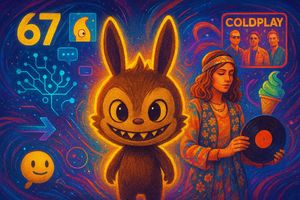
Alright, let’s talk about Labubu. If you haven’t seen this quirky little monster with wide eyes and a devilish grin popping up everywhere, you’re officially living under a rock. Created by Hong Kong artist Kasing Lung and brought to the masses by Pop Mart, Labubu has become a viral sensation and a bona fide global status symbol in 2025 [8].
Part of the original “Monsters” figurine series, Labubu has captivated Gen Z, influencers, and even A-list celebrities. Rihanna, Kim Kardashian, David Beckham—they’re all fans, and their endorsements have supercharged demand and resale values to insane levels [8]. These aren’t just toys; they’re collectible art. Labubu dolls are famously sold in blind boxes, adding that thrilling element of surprise. Standard versions retail for a cool $21.99 to $39.99, but if you snag a rare variant, you could be looking at up to $450 on resale platforms like StockX [8]. And get this: in June 2025, a life-size Labubu fetched a mind-boggling $150,000 at a Beijing auction, while the Labubu x Vans collaboration went for $10,503 on eBay [9]. That’s not just hype; that’s serious investment.
The market for Labubu is absolutely exploding. TikTok Shop sales hit $5.5 million in June 2025 alone—which is more than all of 2024 combined [9]. Pop Mart’s Labubu revenue? Up a staggering 668% in the first half of 2025, proving the demand is not just real, it’s ravenous [9]. Regional exclusives and limited-edition collaborations are driving insane price premiums, with those elusive secret/chase variants commanding up to a 1,718% ROI. Yes, you read that right. It’s basically digital gold, but in toy form.
Scarcity, celebrity influence, and a healthy dose of internet lore—including wild conspiracy theories and surreal edits—have transformed Labubu from a cute toy into a full-blown cultural artifact. It’s gotten so intense that Pop Mart even had to stop selling Labubu dolls in physical stores in the UK due to crowd control issues and, get this, theft [8]. It just goes to show you the sheer passion—and sometimes, madness—of collector culture in 2025.
Trend 4: AI-Generated Character Reels – The Cats Are Taking Over (Literally)
If you haven’t scrolled through your feed and stumbled upon an AI-generated cat reel, where have you been? These delightful, bizarre, and utterly viral videos have become one of the internet’s most captivating trends in 2025 [10]. We’re talking about animated feline characters with dramatic story arcs, complex emotions that rival Oscar-winning performances, and even villainous monologues that would make a Bond villain blush. It's purr-fection!
Initially aimed at kids, these reels have somehow captured a massive adult audience, flooding platforms like TikTok, Instagram Reels, and YouTube Shorts. You can’t escape the “cat chef” whipping up gourmet meals, the “cat DJ” dropping sick beats, or the “cat villain” plotting world domination from a cozy armchair [10]. It’s like a fever dream you can’t look away from.
The best part? You don’t need to be a VFX artist to jump on this trend. Tools like insMind, ChatGPT, Lando AI, and Pixverse AI let anyone generate these viral cat videos in minutes. No editing skills required—just a good dose of creativity and a killer prompt [10]. This trend thrives on novelty and speed, making it accessible for meme pages, individual creators, and even small businesses looking for that viral edge. The barrier to entry is practically non-existent, and the rewards? Potentially massive.
AI cat reels are the epitome of how meme culture and short-form storytelling have merged into a beautiful, chaotic symphony. The sheer surprise factor—placing ordinary household cats in the most extraordinary, dramatic scenarios—is what drives their virality and engagement. Creators are even building full-blown series, like “Chef Whiskers’ Cooking Show,” to keep viewers coming back for more [10]. And yes, there’s money in it. Channels dedicated to AI animal videos are raking in thousands of dollars monthly, all by optimizing content for platform algorithms and trending hashtags [10]. Who knew cats could be such profitable entrepreneurs?
Trend 5: ‘Pookie’ – The Slang That Ate The Internet
If you’re on social media, you’ve probably heard it. You might have even used it. “Pookie.” This endearing term, originally popularized by TikTok power couple Campbell and Jett Puckett, has transcended its origins to become the viral slang of 2025, infecting gamer lingo and online youth conversations globally [11].
What started as a sweet pet name has morphed into a universal nickname for practically anyone: friends, partners, your favorite celebrity, or even your beloved pet. “Pookie” is everywhere, and it’s spawned an entire universe of spin-offs: pookie playlists, pookie aesthetics, and even pookie ribbons—those pastel bows used to tag your favorite people online [11]. It's giving wholesome, it's giving affectionate, it's giving peak internet culture.
The Puckett couple’s videos, brimming with affectionate praise and playful banter, racked up millions of views and sparked countless parodies and memes across the digital landscape [11]. Now, “Pookie” isn’t just a word; it’s synonymous with authenticity, genuine affection, and the purest form of internet expression. It perfectly encapsulates Gen Z’s deep desire for connection and recognition in a crowded digital world [11]. It’s a low-key flex of endearment that just hits different.
Know Your Meme’s 2025 roundup—the authoritative source for all things viral—didn’t just mention “Pookie”; it highlighted it as one of the top slang terms that has successfully broken through the screen and infected real-life conversations [12]. Its widespread adoption in gaming communities underscores just how fluid and dynamic online language truly is, with terms leaping from niche platforms to mainstream usage faster than a new game drops. So next time you hear someone say "Pookie," just know you're witnessing internet history in the making.
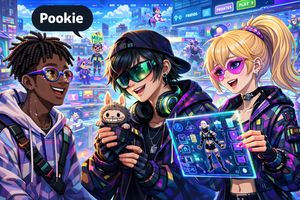 From 'Pookie' to pixel-perfect outfits: how gamers express themselves in 2025.This image is a conceptual illustration and may not represent actual events, data, or entities.
Trend 6: UGC Boom – Players Are the New Devs
Forget passive consumption; in 2025, user-generated content (UGC) isn’t just a feature—it’s the absolute cornerstone of gaming. Platforms like Roblox, Fortnite Creative, and Minecraft aren’t just places to play; they’re sprawling digital canvases empowering players to build, share, and even monetize their wildest creations [3]. It's a creator economy on steroids, and frankly, it's glorious.
The numbers speak volumes: Roblox absolutely crushed it, reporting bookings of $4.4 billion (+24% YoY) and a staggering 82.93 million daily active users (+21% YoY) in 2024 alone [3]. Meanwhile, Fortnite Creative saw a solid 15% YoY increase in average daily players, proving that giving players the tools to create their own worlds is a winning strategy [3].
Epic Games, always ahead of the curve, dropped the Unreal Editor for Fortnite, supercharging user creations with advanced tools. And let’s not forget the unsung heroes: modding platforms. CurseForge, Nexus Mods, and Mod.io all experienced download growth exceeding 40%. Overwolf’s CurseForge alone hit a mind-boggling 24 billion mod downloads (+60% YoY) [3]. That’s not just content; that’s a universe of player-driven innovation.
What’s even cooler? These UGC platforms are actually sharing the wealth. Roblox dished out a whopping $922 million to developers in 2024 (+25% YoY), and Epic Games distributed $352 million to Fortnite creators (+11% YoY) [3]. Roblox even launched a new paid access program, letting creators charge real money for experiences and unlocking up to a jaw-dropping 70% revenue share. It’s not just a hobby; it’s a legitimate career path for countless digital architects.
Brands, ever savvy, are increasingly embedding themselves in these popular UGC experiences. Why? Because it’s about authentic engagement, not forced advertising. The entire ecosystem is maturing, with agencies and studios popping up to offer creative and strategic support for brands navigating this new frontier. UGC isn't just extending the life of games; it's fostering incredibly strong communities. Platforms like Roblox and Fortnite have evolved into vibrant social hubs, where players form tight feedback loops, and viral hits emerge directly from user-made games. It’s a beautiful, chaotic, and incredibly powerful testament to collective creativity.
Trend 7: TikTok – The Ultimate Gaming Discovery Engine
If you’re looking for the pulse of gaming, you’re looking at TikTok. It’s not just an app; it’s the app. For the fourth year running, TikTok has reigned supreme as the #1 most downloaded app worldwide, boasting over 1 billion users and a mind-blowing 3.8 billion monthly views on the #gaming tag in 2025 [13]. Seriously, if gaming were a country, TikTok would be its capital.
Gaming has cemented its status as one of TikTok’s fastest-growing verticals. We’re seeing professional esports organizations and individual gaming creators rack up millions of followers, turning their passion into global phenomena. TikTok’s “For You” algorithm—that mysterious, hyper-personalized content delivery system—has become the undisputed primary discovery channel for Gen Z and Gen Alpha gamers. Internal research from TikTok itself reveals that a massive 59% of its gaming users discover new games directly on the platform [13]. That’s not just influence; that’s pure, unfiltered discovery power.
The dominance of short-form video continues its reign, with TikTok now supporting uploads up to 10 minutes, allowing for more narrative-driven content and extended gaming highlights. The vibe here is authentic, raw, and often hilarious. Polished, corporate ads? Nah, they’re out. Raw, user-generated gold? That’s in. The line between organic content and advertising is blurring faster than a frame drop during a boss fight.
Influencer marketing has predictably exploded, with campaigns featuring streamers and TikTok creators delivering insane conversion rates. And talk about mainstream recognition: TikTok even became an official partner of Gamescom 2024 [13]. That’s like getting the golden ticket to the biggest gaming party on the planet. While TikTok’s advertising policies remain strict, especially around gambling content, gaming and esports continue to thrive, powered by the platform’s unique algorithm and its vibrant creator ecosystem. TikTok isn't just a trend; it's central to how youth culture is shaped—from music to news, and especially, to gaming.
Trend 8: Community-Driven Events & Hybrid Festivals – India Leads the Way
If you want to see the future of gaming and pop culture convergence, look no further than India in 2025. The youth entertainment landscape here is a glorious mashup, where gaming isn’t just a side act—it’s the main event, seamlessly integrated with everything cool [14]. High-profile events like Comic Con India and DreamHack have evolved beyond mere conventions; they’re multi-format festivals, merging intense gaming tournaments with celebrity panels, epic music stages, and cosplay championships that would make Hollywood jealous. It’s a full-sensory assault in the best possible way.
Take the Hyderabad Comic Con x DreamHack India 2025, for example. This beast drew over 40,000 attendees, including more than 400 cosplayers, to the Hitex Exhibition Centre [15]. We’re talking international guests, massive gaming zones, cutting-edge VR experiences, and esports tournaments that kept the crowd on the edge of their seats. It’s a clear reflection of the booming overlap between gaming, comics, anime, and live entertainment—a cultural smorgasbord that caters to every kind of fan.
Bollywood celebrities are no longer just endorsing; they’re investing in the gaming scene, cementing its mainstream rise in India. Tiger Shroff is a BGMI brand ambassador, Amitabh Bachchan is diving into interactive storytelling, and Suniel Shetty is even getting into esports ownership [14]. This isn't just about faces; it's about genuine cultural integration. And then there's Riot Games' VALORANT, which partnered with Rolling Loud India 2025—the country’s first-ever collaboration between a major game publisher and a global hip-hop festival [16]. Mic drop.
It’s not just the big names either. Grassroots events, watch parties, and local organizers are building homegrown hubs of competition and camaraderie. Malls and cafés are transforming into pop-up arenas, fueling a vibrant community from the ground up. The fusion of gaming with music, festivals, and storytelling isn’t just a trend; it’s actively shaping the very future of youth culture in India.
And the industry is scaling at breakneck speed. India’s gaming scene welcomed LVL Zero, an incubator program offering a $100,000 equity-free grant pool for early-stage gaming startups. Studios are smartly moving beyond hyper-casuals, setting their sights on PC, console, and cross-platform titles, reflecting a maturing, ambitious creator base. India isn't just playing; it's building the future.
Trend 9: AI in Game Development & Personalization – Smarter Games, Tailored Experiences
Let’s circle back to AI, because it’s not just about flashy filters; it’s about making games fundamentally smarter and uniquely yours. In 2025, AI is the ultimate developer’s superpower, enabling everything from procedural content generation to predictive analytics and automated testing [4]. It’s streamlining the entire dev cycle and giving us experiences we never thought possible.
The GDC State of the Game Industry report confirmed it: 52% of developers are working at companies leveraging generative AI. We’re talking coding assistance that feels like magic, concept art that springs to life, 3D model generation that saves countless hours, and the automation of all those repetitive tasks that used to bog down creation [2]. Developers are no longer just coding; they're orchestrating.
Procedural generation, fueled by AI, is the secret sauce behind dynamic landscapes, labyrinthine dungeons, and sprawling cityscapes that ensure every playthrough is a unique adventure. Think about the infinite worlds of Minecraft, the boundless exploration of No Man’s Sky, or the unscripted narratives of AI Dungeon—these are all powered by AI algorithms crafting content on the fly [4]. It’s like having an infinite number of game masters, always creating something new just for you.
For players, this translates to wildly personalized gameplay. AI enables adaptive difficulty, meaning the game literally gets harder or easier based on your performance, tailoring missions, and dishing out personalized rewards based on your unique playstyle and behavior [4]. Smarter matchmaking ensures you’re always playing with folks at your level, and AI-powered anti-cheat systems are locking down fair and engaging online environments. Tools like Ubisoft’s Ghostwriter for scripting and GitHub Copilot for coding assistance are becoming standard issue for devs, making creation more efficient and innovative than ever before [4].
Of course, this technological leap comes with its own set of challenges. Developers are walking a tightrope, balancing the undeniable benefits of AI with legitimate concerns about originality, potential bias in algorithms, and the thorny issue of job displacement. But the industry is responding, with a clear move towards ethical AI practices and transparency. A significant 64% of companies have already implemented internal policies for generative AI use [2]. It’s a brave new world, and we’re all learning to navigate it.
Trend 10: Fashion & Avatar Aesthetics – Your Gamer Tag, Your Runway
Alright, listen up, because virtual drip is the new real-world flex. Video game fashion has absolutely exploded in 2025, blurring the lines between your in-game avatar and your actual wardrobe. It's not just about looking cool in-game; it's about bringing that style into the streets [17].
The data is clear: over 60% of Gen Z consumers are now more likely to buy apparel inspired by their favorite games [18]. This isn't just a casual interest; it's a full-blown movement. Major studios are teaming up with powerhouse fashion brands, driving double-digit annual growth in gaming lifestyle apparel. We’re talking about real money, real clothes, and real hype.
Luxury titans like Louis Vuitton, Balenciaga, and Gucci aren't just dabbling; they've gone all-in, partnering with games like League of Legends and Fortnite to create exclusive digital skins that cost a fortune and physical capsule collections that sell out in minutes [19]. Your avatar isn't just a character; it's a canvas for high fashion. Platforms like Roblox and Highrise are at the forefront, allowing players to customize their avatars with an insane level of detail and even sell creator-made designs. Highrise, for instance, just crossed $250 million in lifetime revenue in June 2024 [3]. That’s a whole lotta virtual threads.
Gaming communities are absolutely buzzing with bold fashion statements. Dedicated platforms are popping up for sharing designs, showcasing mix-and-match ensembles, and dissecting every pixel of in-game style. Comments and reactions highlight the crucial importance of representation and creativity, fostering deeper connections among players who bond over shared aesthetic sensibilities. Reddit forums, for example, are incubators for these trends, with users flexing their personal style inspired by in-game aesthetics. The market for gaming lifestyle apparel now spans everything from casual wear that screams "I game" to luxury statements that say "I'm rich and I game," all reflecting gamers’ deep desire for impact and identity expression [17].
The industry is integrating this trend at every level. Gaming companies are actively launching collaborations with top fashion designers, creating in-game items that don’t just look good but resonate with real-world trends. And get this: AI styling tools are now generating personalized gamer fashion, suggesting colors, cuts, and accessories based on your actual gameplay behavior [17]. Your fashion sense is literally evolving with your kill-death ratio. It’s wild, it’s fresh, and it’s undeniably the future.
Conclusion: What’s Next for Your Feed?
So there you have it, folks—the 2025 Brain Rot Index. What a ride! These ten trends aren't just fleeting fads; they're seismic shifts, reflecting a gaming culture that’s more diverse, creative, and interconnected than we ever could have imagined. AI filters and generative tools are tearing down creative barriers, making everyone a potential digital artist. Matcha mania isn't just about a healthy drink; it's redefining digital wellness, one green latte at a time. And collectibles like Labubu? They've transformed humble toys into global status symbols, sparking a frenzy that's both fascinating and, let's be real, a little bit insane.
Short-form storytelling, viral slang, and user-generated content platforms are completely reshaping how we discover, play, and even monetize games. TikTok's algorithm remains the undisputed king, dictating what blows up next. Community-driven festivals in places like India are proving that gaming isn't just an online experience; it's a vibrant, real-world spectacle. And as for our avatars? They've gone from simple pixels to full-blown fashion icons, driving a booming market that blurs the lines between virtual and reality.
As gaming continues its relentless march into mainstream pop culture, the big questions around regulatory frameworks and ethical considerations will only intensify. India's rapid digital transformation, its forward-thinking AI policies, and its incredibly vibrant youth communities are a microcosm of the global momentum behind these trends—a testament to innovation, connection, and identity in ways that were unimaginable just a decade ago. For gamers, for creators, for industry leaders—2025 isn't just another year. It’s a turning point. That "brain rot" of endless scrolling and meme consumption? It's now a cultural engine, powering everything that’s new, exciting, and absolutely essential for what’s next on your feed. Stay tuned, because the game has just begun.
Disclaimer: This article explores gaming topics for informational purposes only. Strategies, opinions, and experiences are subjective and may not apply universally. For additional context, please consult our full disclaimer.