Climate's Creeping Catastrophe: The Rise of Bizarre Skin Infections
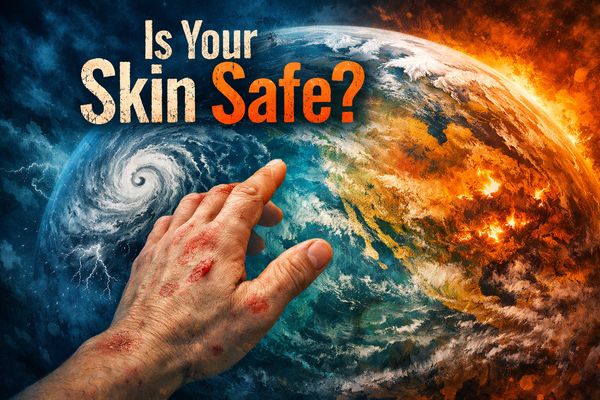 Our skin, a vital barrier, faces unprecedented threats from a rapidly changing climate.This image is a conceptual illustration and may not represent actual events, data, or entities.
Is Your Skin Safe? Understanding Climate's Bizarre Infections
Ever wonder why you still feel tired, or why that persistent rash just won't go away, even with treatment? What if the answer isn't just within your body, but in the world around us, subtly shifting, becoming warmer, and in turn, more hospitable to things that mean us harm? Our skin, the largest organ, is our first line of defense, a robust barrier designed to protect us from the outside world. But what happens when the outside world itself changes, bringing with it a new, more aggressive parade of threats? We’re not talking about your grandmother’s sunburn here. We’re delving into a "creeping catastrophe" [47] of climate-driven skin infections – bizarre, rapidly spreading, and often drug-resistant pathogens that are increasingly making headlines and, more concerningly, making people sick [1].
As a senior subject matter expert with over 15 years in health journalism, I've seen many health trends come and go. But this, the impact of climate change on our dermatological health, is not a trend; it's a profound, systemic shift. From flesh-eating bacteria migrating northward to ancient "zombie pathogens" thawing from permafrost, and even drug-resistant fungi adapting to human body temperatures, the stakes are higher than ever [3], [13]. This isn't just about tropical diseases staying in the tropics; it's about them moving to your backyard, your local beach, and even the air you breathe. It's time to understand these emerging threats and, more importantly, how you can protect yourself and your loved ones.
How Does Climate Change Break the Human Thermal Barrier?
For millions of years, the human body’s core temperature (around 98.6°F or 37°C) has served as a powerful defense mechanism, a kind of biological "thermal barrier" against most of the world's estimated one million fungal species. Most fungi prefer cooler environments—think soil, decaying wood, or even a damp basement. Our internal warmth was historically too hot for them to thrive [2].
However, the rapid and unprecedented escalation of global temperatures, with recent years shattering heat records, is putting immense evolutionary pressure on these organisms. It's a natural selection boot camp. Microbes are rapidly adapting to survive these intense heatwaves, effectively narrowing the temperature gap between their natural habitat and our bodies. When ambient temperatures frequently reach or exceed what was once normal, the fungi that survive these spikes are, in essence, "pre-adapted" to infect human hosts [2], [3]. This biological shortcut allows previously harmless organisms to bypass a defense mechanism that mammals have relied on for eons.
The implications are unsettling. It suggests that our protective biological insulation is being systematically dismantled by a warming planet. Scientists are already observing other fungal species in lab cultures developing increased tolerance for higher temperatures [2]. This indicates that what we're seeing with certain new pathogens is likely just the beginning. 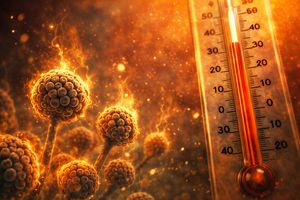 Fungi are rapidly adapting to higher environmental temperatures, bridging the gap to human body temperature.This image is a conceptual illustration and may not represent actual events, data, or entities.
What This Means for You:
In 2026, those "unusual" skin irritations shouldn't be dismissed as just a simple rash. Pay attention. Your skin barrier is your first line of defense against these newly heat-adapted environmental pathogens. Maintain its integrity, and don't hesitate to consult a dermatologist if something seems off.
Is Candida Auris the First True Climate-Induced Fungal Superbug?
When you hear "superbug," you probably think of antibiotic-resistant bacteria. But what about fungi? Candida auris is a prime example of a truly frightening, climate-driven pathogen. This enigmatic fungus suddenly appeared on four continents around the late 2000s, with no clear evidence of intercontinental transmission [2], [4]. This simultaneous, global emergence strongly points to a common environmental trigger: rising global temperatures [3], [13]. Unlike many other Candida species that live harmlessly on our skin, C. auris is believed to have evolved from a salt-tolerant fungus found in wetlands, now adapting to human hosts.
What makes C. auris so dangerous? Its "genomic plasticity" is a key factor. It possesses mutations that lead to multidrug resistance, meaning it's often resistant to all three main classes of antifungal medications [3], [15]. Furthermore, it overexpresses heat shock protein 90 (HSP90), which helps it withstand stress and high temperatures, making the jump from a wetland environment to a deadly human pathogen terrifyingly efficient [3]. The mortality rate for invasive C. auris infections can range from 30% to a staggering 60%, placing it among the most lethal fungal threats in modern medicine [2], [15].
An innovative study published in 2025 revealed a crucial "edge case" fact: C. auris persists on human skin by a cunning immune-evasion tactic. While Candida albicans triggers a protective Th17 immune response, C. auris uniquely induces a Th1 response, characterized by excess IFNγ. This excess IFNγ actually dampens the skin's protective IL-17 responses and increases dermal damage, allowing the fungus to colonize and persist long-term [14]. This, combined with its newfound ability to grow at human body temperatures, explains its rapid and devastating spread through healthcare facilities [2].
What This Means for You:
If you or a loved one are in a hospital, nursing home, or any healthcare setting, be vigilant. Demand rigorous adherence to hand hygiene and environmental disinfection. C. auris can spread like wildfire through an intensive care unit, colonizing an entire ward in just two weeks if not contained. Don't be afraid to speak up and ask about infection control protocols.
Why Are Flesh-Eating Vibrio Infections Migrating Northward?
The thought of a "flesh-eating" infection is terrifying, isn't it? Yet, bacteria like Vibrio vulnificus, naturally found in warm, brackish coastal waters, are now dramatically expanding their geographic reach [17]. This migration is directly driven by rising sea surface temperatures (SST) [8]. Historically, these infections were primarily confined to the Gulf of Mexico. Today, they are regularly reported as far north as New York, New England, and even the North Sea in Europe [8], [18]. Data shows the northern limit of V. vulnificus has shifted a startling 48 kilometers per year since the late 1980s, a trend that's accelerating as oceans absorb 90% of heat-trapping greenhouse gases [17].
The expansion becomes particularly aggressive after extreme weather events, such as hurricanes. In 2024, Hurricane Helene was linked to 82 cases and 19 deaths in Florida alone, nearly doubling the state's typical annual average [8]. Storm surges push contaminated brackish water into urban areas, exposing residents who might have minor skin lesions, cuts, or even new tattoos to this dangerous pathogen. The clinical progression of V. vulnificus is shockingly fast, often leading to fulminant sepsis and necrotizing fasciitis (the "flesh-eating" aspect) within just 24 to 72 hours of exposure [19].
An alarming "edge case" discovery is the detection of Lineage 4 (*L4*) Vibrio, previously restricted to the Mediterranean, in northern European waters [18]. This lineage is particularly virulent, possessing a complex array of MARTX toxins and multiple capsular genotypes that enhance its ability to cause sepsis and evade the host's immune system [18]. With continued coastal warming, predictive models suggest an additional 38,000 kilometers of suitable coastline for Vibrio growth by the end of the century [17]. 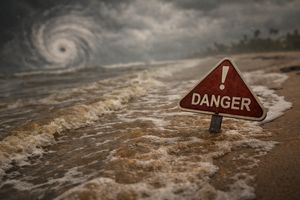 Warming coastal waters and extreme weather events accelerate the northward migration of dangerous pathogens like *Vibrio*.This image is a conceptual illustration and may not represent actual events, data, or entities.
What This Means for You:
This is critical: never enter coastal or brackish water if you have even a minor cut, scrape, or a fresh tattoo. If you develop a rapidly spreading red rash, intense pain, or fever after contact with seawater, seek emergency medical care immediately. Seriously, minutes can determine whether a limb needs amputation or if you survive.
Can Thawing Permafrost Release Ancient "Zombie" Pathogens?
Now, for something truly bizarre, almost science fiction: "zombie" pathogens. The Earth's permafrost—ground that has been continuously frozen for thousands of years—is melting. This thawing poses a unique and frightening dermatological threat as ancient microbes are released into our modern environment [21]. Permafrost is a natural "cold storage," preserving bacteria and viruses in an anaerobic, dark, and sub-zero environment, maintaining their viability for centuries [21]. As these "icy tombs" melt due to extreme Arctic heatwaves, pathogens to which modern humans may have little to no natural immunity are re-emerging.
A chilling illustration of this risk occurred in August 2016 on Siberia's Yamal Peninsula. An extreme heatwave thawed permafrost, exposing a 75-year-old reindeer carcass that had died of anthrax in 1941. The Bacillus anthracis spores were released into the soil and water, triggering a massive outbreak that killed over 2,000 reindeer and infected several dozen herders [21]. The primary manifestation in humans was cutaneous anthrax, characterized by painful, black necrotic skin lesions and high fever.
This isn't just about anthrax. The melting of glaciers could release a plethora of bacteria, fungi, and viruses dormant for millennia. Experts at the 2025 and 2026 climate summits warned that "zoonotic spillover" events will become more frequent as human activity extends into these newly thawed territories. This represents a "force multiplier" for infectious disease, as modern global travel could transform a remote Arctic outbreak into a global health crisis within days [23].
What This Means for You:
While the direct risk of encountering a "zombie" pathogen is currently localized to high-latitude regions, this phenomenon dramatically underscores the necessity for global "Early Warning Systems." Support environmental monitoring policies that track microbial shifts in thawing regions. Your awareness contributes to global health security.
How Is Sporothrix Brasiliensis Transforming the Urban Zoonotic Landscape?
You might have heard of "Rose Gardener's Disease," caused by the fungus Sporothrix schenckii, usually acquired from soil or plants. But meet its far more virulent cousin: Sporothrix brasiliensis. This pathogen has fundamentally changed the epidemiology of sporotrichosis. What's the "edge case" here? It has adapted domestic cats as its primary vector, leading to a massive, uncontrollable epidemic in Brazil that's now spilling into neighboring South American countries and has even been detected in Europe and the UK [9], [24].
The fungus typically enters the human body through a break in the skin, often from a cat scratch or bite, causing severe, ulcerative skin lesions [25]. In Manaus, Brazil, cases doubled between 2022 and 2023, with feline cases quadrupling in the same period [26]. This fungus's ability to survive "sapronotically" (in the environment without a host) combined with its high virulence in warm-blooded mammals makes it a formidable urban threat.
Climate change is a significant driver of this expansion. The "tropicalization" of urban centers creates a favorable environment for the fungus to adapt and resist high temperatures [24]. Coupled with socioeconomic factors like urban overcrowding, poor sanitation, and a lack of veterinary resources, the feline-to-human transmission cycle has gone largely unchecked in major metropolitan areas for years [9].
What This Means for You:
If you live in or travel to South America, exercise extreme caution and avoid contact with stray cats, especially those with visible skin wounds. For cat owners, early veterinary treatment of unusual skin lesions, "feline acne," or scratches that won't heal is absolutely essential to prevent zoonotic spread to your family.
Will Sandflies and Leishmaniasis Become Endemic Across North America and Europe?
Cutaneous Leishmaniasis (CL) is a parasitic skin disease transmitted by the bite of an infected female sandfly, causing chronic, disfiguring ulcers that can take years to heal and often lead to significant social stigmatization [28]. Historically considered a "neglected tropical disease," CL is now undergoing a dramatic geographic expansion. Modeling studies reveal that climate-driven shifts in temperature and humidity are allowing sandflies to thrive at much higher altitudes and latitudes than ever before [27].
Consider this "edge case": In Nepal, visceral and cutaneous leishmaniasis have moved from the lowlands into the high Himalayan regions, with sandflies now reported at altitudes up to 4,460 meters [29]. Projections under a pessimistic climate scenario suggest that the land area suitable for transmission in Nepal will increase to 43% by 2050 [27]. Similarly, in Morocco, Leishmania major is concentrated in southeastern regions but is projected to expand into the High Atlas and Rif regions as suitable habitats for sandflies and their reservoir hosts (gerbils) grow [30].
In the United States, Leishmaniasis is already endemic in Texas and Oklahoma and is slowly moving northward [31]. This is compounded by human migration, environmental disruption, and the ability of sandflies to survive milder winters [27]. The American Dermatological Association's 2025 policy statement emphasized that clinicians in the U.S. must now be prepared to diagnose and treat leishmaniasis as a "local" rather than "exotic" disease [7].
What This Means for You:
If you live in or are traveling through the Southern U.S. or Southern Europe, protect yourself from sandfly bites. Use insect repellent, wear long sleeves and pants, especially at dusk and dawn. If you develop a persistent "volcano-shaped" ulcer that doesn't heal after 4 weeks, consult a dermatologist and be sure to mention your location or travel history.
Are Rare Algal Infections Like Protothecosis the Next Aquatic Threat?
We've talked about bacteria, fungi, and parasites. Now, let's explore algae. Protothecosis is a rare, emerging infection caused by Prototheca, a genus of unicellular algae that, surprisingly, lack chlorophyll and behave more like opportunistic fungi [10], [16]. These algae are ubiquitous in nature—found in soil, sewage, and various water sources. However, they've recently begun causing more frequent human infections as environmental conditions shift [32]. A key "edge case" moment occurred in 2010 when a previously unidentified species, Prototheca cutis, was isolated from a chronic human skin ulcer, signaling the emergence of new pathogenic strains [10].
The infection typically presents in three forms: localized skin lesions, olecranon bursitis (inflammation of the elbow), or disseminated disease in immunocompromised patients [11], [33]. Most human infections, particularly those caused by Prototheca wickerhamii, are acquired through traumatic inoculation—where the algae are forced into a cut or scrape during contact with contaminated water or soil [11]. Because this disease is rare, it is frequently misdiagnosed, leading to years of ineffective treatment with standard antibiotics.
Climate change is emerging as a significant factor in these algal patterns. Rising temperatures and altered rainfall are promoting more frequent Harmful Algal Blooms (HABs) in both freshwater and marine environments [34]. While Prototheca is distinct from toxic cyanobacteria, the general increase in aquatic biomass and nutrient runoff provides a more hospitable environment for these achlorophyllous algae to flourish [34]. In 2025, dermatologists highlighted that exposure to these toxic blooms can also cause intense cutaneous inflammation and systemic toxicity.
What This Means for You:
Avoid contact with stagnant or visibly discolored water, especially if you have open wounds. If you have a persistent skin infection that has failed multiple rounds of standard treatment, advocate for a skin biopsy with "special stains" to specifically look for rare algae or fungi. Sometimes, the answer lies in looking beyond the usual suspects.
How Does Air Pollution and Wildfire Smoke Aggravate Chronic Skin Diseases?
While the "bizarre" infections often capture headlines, the most widespread impact of climate change on our skin health is the exacerbation of common chronic inflammatory conditions through increased air pollution and wildfire smoke [35]. Wildfire smoke, for instance, contains high concentrations of fine particulate matter (PM2.5) and polycyclic aromatic hydrocarbons (PAHs) [36]. These tiny particles can penetrate the skin barrier and induce oxidative stress, triggering an inflammatory cascade that worsens conditions like atopic dermatitis (AD), psoriasis, and acne [36].
During the 2023 Quebec wildfires, dermatologists in the Northeastern U.S. observed a significant "spike" in eczema and dermatitis flares, even in patients hundreds of miles away from the fires [36]. Research from cities like Seoul, South Korea, and Mexico City has also directly correlated elevated particulate matter with increased dermatologic clinic visits. Moreover, "forever chemicals" (PFAS) and microplastics are now being linked to the disruption of the skin's barrier and endocrine systems, potentially increasing the prevalence of AD and even melanoma [36].
Adding another layer of risk, the depletion of the stratospheric ozone layer—partially exacerbated by greenhouse gases—allows higher levels of Ultraviolet (UV) radiation to reach the Earth's surface [20]. This "double exposure" of pollution and UV rays significantly increases the risk of skin cancer. Experts estimate that a mere 1% decrease in ozone thickness leads to a 2% rise in melanoma incidence and a 3-5% increase in non-melanoma skin cancer cases [20].
What This Means for You:
On high-pollution or "smoke-haze" days, minimize outdoor activity. Use an occlusive moisturizer to create a physical barrier on your skin, much like you'd protect your lungs. Crucially, ensure you are using broad-spectrum SPF 30+ sunscreen daily, as heat can actually magnify the damaging effectiveness of UV rays, making proper sun protection more vital than ever.
Is Climate Change Altering the Very Microbes That Live on Our Skin?
Our skin isn't just a barrier; it's a bustling ecosystem of bacteria, fungi, and viruses known as the skin microbiome, a vital immunological shield [37]. Emerging research in 2025 and 2026 suggests that climatic factors like temperature, humidity, and atmospheric CO2 are fundamentally altering this delicate microbial balance [37], [38]. Studies on amphibian populations have already shown that warmer climates lead to a loss of microbial community diversity [41], and we're seeing similar trends in humans.
For example, urbanization and "heat island" effects are linked to increased fungal diversity on human skin, while colder, wetter climates tend to favor higher bacterial alpha diversity [37]. A "loss of microbiome robustness" is particularly pronounced in aging populations, where the skin community becomes more "fragile" and susceptible to opportunistic pathogens [42]. Another "edge case" is how higher temperatures can specifically encourage the growth of Staphylococcus aureus, a key driver of inflammatory flares in atopic dermatitis [43].
Even the seasons are losing their traditional microbial boundaries. While genera like Cutibacterium, Corynebacterium, and Streptococcus typically fluctuate with seasonal changes, milder winters diminish the traditional "cleansing" effect of cold weather [39]. This allows pro-inflammatory strains to persist year-round, contributing to the rising global prevalence of chronic skin disorders [37].
What This Means for You:
Focus on microbiome-friendly skincare. Avoid harsh antibacterial soaps and over-washing, which can strip away beneficial bacteria. Maintaining a healthy skin pH (around 5.5) [44] and using "prebiotic" moisturizers can help stabilize your skin's natural defenses in a warming world. Think of your skin as a garden that needs careful tending, not harsh chemicals.
What Are the Dermatological Risks for Children and Vulnerable Populations?
Children are truly the "disproportionate bearers" of climate-driven dermatological risks [12]. Their developing physiology makes them uniquely vulnerable: an underdeveloped sweat response, a higher surface-area-to-mass ratio, and an immature immune system that is more sensitive to oxidative stress from pollution [12]. Furthermore, children's natural behaviors—playing in soil, water, and spending more time outdoors—increase their exposure to vectors like ticks and sandflies [12].
Extreme weather events like floods and heatwaves also take a heavier toll on pediatric populations. Flooding, for instance, dramatically increases the risk of secondary bacterial infections like Vibrio or MRSA, and infestations like scabies, especially in overcrowded, displaced populations [12]. Meanwhile, extreme heat fosters heat-related dermatoses such as miliaria (heat rash) and Grover's disease [45]. Marginalized communities and those in low- and middle-income nations face even greater risks due to limited access to dermatologic care and a higher burden of neglected tropical diseases [12].
Elderly populations are similarly at risk. Age-related declines in skin barrier function and thermoregulation make them more susceptible to heatstroke and pollution-induced flares [12]. The 2025 AAD meeting highlighted an "edge case" statistic: adults over 65 are now exposed to twice as many heatwave days as they were in the 1980s, leading to a surge in chronic inflammation and skin cancer risk in the "Silver Tsunami" demographic [12].
What This Means for You:
Parents and caregivers should prioritize sun protection and hydration for children and elderly family members during heatwaves. If displacement occurs due to weather events, prioritize access to clean water for hand washing and hygiene to prevent "overcrowding" infections like ringworm or scabies. Being proactive can save lives and prevent severe illness.
How Can Healthcare Systems Adapt to the Shifting Geography of Tropical Diseases?
The primary challenge for 2026 and beyond is what's known as the "diagnostic gap." Clinicians in previously temperate zones often struggle to recognize "tropical" infections [47]. A physician in Chicago or London might not initially consider leishmaniasis or Sporothrix when presented with a chronic ulcer, leading to misdiagnosis and a "creeping catastrophe" of untreated disease [47]. This isn't just a health issue; it's an economic one, too. Untreated Lyme disease alone could cost health systems over half a billion dollars annually [22].
The American Academy of Dermatology (AAD) and other global bodies are now advocating for a multi-pronged response [6], [7]:
- Decarbonizing Care: Healthcare accounts for 5% of global greenhouse gas emissions [7]; dermatology is urged to reduce significant procedural waste and high energy consumption.
- Enhanced Surveillance: Moving beyond traditional "reportable" lists to include emerging fungal and waterborne threats in routine public health monitoring [46].
- Sustainable Practice: Utilizing tools like "My Green Doctor" to minimize the environmental footprint of medical offices and educating patients on the direct link between planetary and skin health [5], [6].
The 2026 goal for the medical community is the full integration of environmental and social vulnerability data into clinical care [7]. By recognizing that climate change is a "force multiplier" for health disparities, dermatologists can better support resilient and equitable outcomes for all populations [7]. This represents a paradigm shift in how we approach medicine.
What This Means for You:
When you visit a doctor for a skin issue, proactively share your travel history, recent exposure to extreme weather, or occupational environmental risks. This context is becoming as important as your family history in the age of "Climate-Informed Medicine." Being informed and open with your healthcare provider is a powerful tool in your health defense strategy. We are all in this together, and by understanding these profound shifts, we can better protect our most visible and vulnerable organ: our skin.
Climate Change and Dermatology: Key Questions Answered
How does climate change cause "bizarre" skin infections?
Can you get a "flesh-eating" infection from seawater?
What is the "thermal barrier" and why is it breaking?
Why are skin allergies and eczema worse during wildfires?
How can I protect my skin from climate-driven health risks?
Disclaimer: This article addresses health-related topics for informational purposes only. It does not constitute medical advice and should not replace consultation with a licensed healthcare professional. For complete guidance, please review our full disclaimer.