
Is Vegan Meat 3.0 Healthy? Unpacking Lab-Grown Protein for Your Wellness Journey
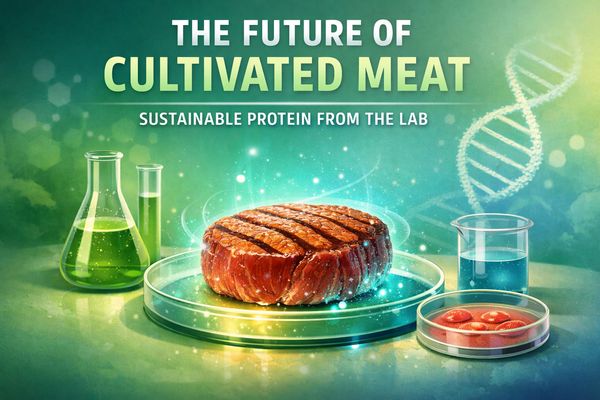 The future of food: A conceptual look at cultivated meat and its potential for wellness.This image is a conceptual illustration and may not represent actual events, data, or entities.
Ever wonder why you still feel tired, even after a good night's sleep? Or perhaps you've been increasingly concerned about the origins of your food, its impact on your health, and the planet. In a world grappling with these profound questions, a revolutionary answer is emerging from scientific laboratories: Vegan Meat 3.0, more formally known as cultivated meat. This isn't just another plant-based burger; it's a fundamental reimagining of how we produce protein, moving from the farm to the bioreactor. But what does this mean for your wellness?
The global food landscape is undergoing an unprecedented transformation. For decades, traditional livestock agriculture has been our primary source of meat. Then came the first wave of meat alternatives, focusing on familiar ingredients like fermented soy. The second wave brought us high-fidelity, plant-based patties that mimicked the taste and texture of conventional meat more closely. Now, we stand at the precipice of the third generation – Vegan Meat 3.0 or cultivated meat – which involves literally growing animal tissue in controlled, sterile environments. This isn't science fiction; it's happening now, with pioneering hubs like Singapore already leading the way in commercial sales [2]. As this technology moves from experimental labs to your grocery shelves, a rigorous examination of its implications for human wellness, biochemical safety, and environmental health is not just important – it's essential.
What Exactly Is Cultivated Meat? Beyond the Buzzwords
Before diving into its health aspects, let's demystify what cultivated meat actually is. Forget the image of a Frankenstein-like creation; think precision biology. The production of cultivated meat is rooted in established principles of regenerative medicine and tissue engineering. The core idea is to replicate the complex architecture of skeletal muscle tissue, complete with fat cells and connective tissues, but without needing a living animal [3]. It’s a multidisciplinary dance between cell biology, mechanical engineering, and food science, aiming to create a product that is molecularly identical to conventional meat.
The Science on Your Plate: How It's Made
So, how do scientists 'grow' meat? It starts with a few crucial steps:
1. Cell Line Selection and Proliferation: The Seed of Your Future Steak
The journey begins with isolating specific cell types from a donor animal through a minimally invasive biopsy or even a necropsy [1]. Producers primarily use muscle satellite cells, which are adult stem cells responsible for muscle repair in living organisms. These cells have an incredible ability to multiply and differentiate into mature muscle fibers [3]. Alternatively, pluripotent stem cells (like embryonic stem cells or induced pluripotent stem cells) can be used, offering the advantage of differentiating into various cell types, including the fat cells (adipocytes) and connective tissue (fibroblasts) that give meat its flavor and texture [6].
A key challenge here is ensuring genetic stability during long-term cultivation. While 20-30% of cells might show gene mutations after many generations, there's currently no direct evidence that these mutated cells pose a health risk to consumers [7]. Still, maintaining a stable genome and preventing cancer-like indefinite growth is a critical focus for food safety.
2. Feeding the Future: The Evolution of Growth Media
Historically, one of the biggest ethical and economic hurdles for cultivated meat was its reliance on Fetal Bovine Serum (FBS). This byproduct of slaughtered pregnant cows contradicted the "slaughter-free" ethos and introduced risks like exposure to viruses [6]. Thankfully, the industry has made monumental strides, pivoting to serum-free, chemically defined media. These formulations are like a gourmet meal for cells, providing the precise mix of amino acids, glucose, salts, vitamins, and growth factors needed for optimal growth [3]. In 2024, the cost of these serum-free formulations dramatically dropped to as little as $0.63 per liter, a massive reduction from the $200-$500 per liter previously seen in pharmaceutical-grade media [9].
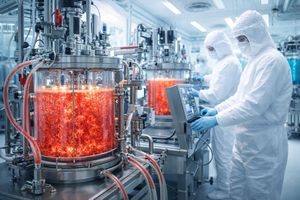 Inside the lab: Precision and control define the future of meat production.This image is a conceptual illustration and may not represent actual events, data, or entities.
3. Building Blocks: Scaffolding and 3D Tissue Engineering
To go from a mass of cells to something resembling a steak or a chicken nugget, a scaffold is needed. Think of it as the architectural framework that guides muscle fibers and fat tissue into a structured product with the desired texture and mouthfeel [8]. These scaffolds must be biocompatible, edible, and non-toxic, adhering to strict food regulatory standards [11].
Innovations are leaning towards plant-based and algae-derived polymers to keep the product animal-free throughout its production. Materials like cellulose, alginate, chitosan, and proteins from peas, soy, or wheat are engineered into porous 3D structures [11]. Interestingly, recent research has even shown aloe vera to be an effective cell scaffold [12]. These scaffolds are vital for nutrient and oxygen delivery to cells and waste removal, ultimately shaping the culinary and nutritional value of the final product [5].
The Hybrid Approach: Cultivated Meat 2.5 – A Bridge to the Future
While the vision of 100% cultivated meat is exciting, current cost and scaling constraints mean many manufacturers are adopting a "hybrid" strategy. These products combine plant-based proteins with a smaller percentage of cultivated animal cells or fermentation-derived fats [13]. For instance, Singapore saw the launch of a GOOD Meat product using approximately 3% cultivated chicken to enhance the flavor and sensory experience of a predominantly plant-based base [2].
Hybrid proteins aren't just a cost-saving measure; they allow for a "cleaner label" by reducing the need for excessive additives—like artificial colors, flavors, and texturants—often found in purely plant-based meat analogues [14]. By leveraging the unique compositions of mycelium or cultured cells, manufacturers can achieve a realistic meat texture with fewer ingredients, addressing growing consumer concerns about ultra-processed foods.
Beyond "Vegan": Understanding the Terminology and Consumer Trust
The term "Vegan Meat 3.0" might be catchy, but it also sparks an important debate. Since cultivated meat is molecularly identical to animal tissue and derived from animal cells, it doesn't strictly fit the traditional definition of "vegan" as purely plant-derived [8]. However, for many vegans motivated by animal welfare, cultivated meat is seen as an ethically acceptable alternative, offering a "slaughter-free" option [12]. The industry and regulatory bodies are largely moving towards terms like "cultivated meat" or "cell-cultured meat" to build trust and avoid confusion with conventional meat or purely plant-based products [1].
Consumer perception is critical. Some may find the technology behind cell-line innovations and genetic engineering complex, raising cognitive barriers [1]. Cultural barriers also emerge when animal-derived components, like the previously used FBS, are involved. Transparency in branding is paramount; Singapore, for example, requires labels to include terms like "cultured" or "cell-based" to ensure clarity about the product's origin [17].
Nutritional Powerhouse? Unpacking the Health Benefits
One of the most exciting promises of cultivated meat for your wellness is its potential to match or even surpass the nutritional density of conventional meat. Traditional meat is a powerhouse of high-quality protein, essential micronutrients like B12, highly bioavailable heme iron, zinc, and compounds like creatine, carnitine, and taurine [18]. Can cultivated meat deliver the same, or even better?
1. Superior Bioavailability: Heme Iron and Vitamin B12
A critical advantage of cultivated meat over many plant-based alternatives is the natural presence of heme iron. In conventional beef, heme iron is absorbed by the human body at a rate of 15% to 35%, significantly higher than the 2% to 20% absorption rate for non-heme iron found in plants [18]. Cultivated muscle cells naturally express myoglobin, which contains heme iron, potentially providing the same biological benefits as traditional red meat [18].
Similarly, vitamin B12, crucial for nerve function and red blood cell formation, is exclusively produced by microorganisms and accumulates in animal tissues. Plant-based diets often carry a higher risk of B12 deficiency. Cultivated meat producers can integrate B12 directly into the growth media or use precision fermentation to ensure the final product contains natural, bioavailable cobalamin, mitigating this common dietary concern [18].
2. Custom-Designed Nutrition: A Health Revolution on Your Plate
Here's where cultivated meat truly shines from a wellness perspective: the ability for "nutritional design." The controlled environment of cellular agriculture allows producers to actively adjust the lipid profile of the meat. Imagine replacing undesirable saturated fats with health-beneficial omega-3 fatty acids like EPA and DHA! This can be achieved by incorporating specific fatty acids into the culture media or by co-culturing muscle cells with fat cells (adipocytes) specifically engineered to optimize these fatty acid ratios [19]. This is a game-changer for heart health.
Furthermore, the use of edible scaffolds allows for the introduction of dietary fibers and antioxidants directly into the meat product. These are benefits entirely absent from conventional animal tissue and can support gut health and reduce oxidative stress, offering a truly enhanced nutritional profile [4]. This potential for tailored nutrition makes cultivated meat a fascinating prospect for preventative health and personalized diets.
A Shield Against Disease: Public Health Implications
The implications of shifting towards cultivated meat extend far beyond individual nutrition, offering significant advantages for global public health.
1. Battling Zoonotic Diseases and Pandemic Risk
Industrial animal agriculture, with its high animal density and genetic proximity, is unfortunately an incubator for zoonotic pathogens—microbes that jump from animals to humans [16]. This facilitates the rapid mutation and spread of viruses like avian influenza and coronaviruses [20]. Cultivated meat, grown in a sterile environment, eliminates the need for live animals, thereby drastically reducing the risk of transmitting diseases through handlers or contaminated meat [16].
2. Winning the Fight Against Antibiotic Resistance
Approximately half of all antibiotics globally are used in animal agriculture, often to promote growth or prevent disease in cramped conditions [16]. This overuse fuels the emergence of antibiotic-resistant bacteria, threatening the efficacy of life-saving human medicines. Cultivated meat production, conducted in sterile bioreactors, does not require antibiotics, helping to preserve these vital drugs for human health and reducing antimicrobial residues in the environment [16].
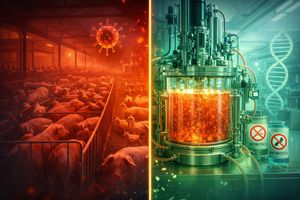 Cultivated meat: A step forward for global public health and reducing disease risks.This image is a conceptual illustration and may not represent actual events, data, or entities.
3. Safety First: Assessing Toxicological Risks
While offering many safety benefits, cultivated meat is not without its own considerations. Regulatory bodies like the European Food Safety Authority (EFSA) carefully examine potential chemical hazards, such as residues from growth media, including hormones like insulin and growth factors [7]. Residual concentrations of these compounds are strictly controlled at levels below 0.1 ng/mL [7]. Additionally, if genetic modification is used, careful oversight is required to prevent the unexpected expression of novel proteins that could act as allergens [7].
Navigating the Global Plate: Regulatory Pathways
The journey of cultivated meat to your plate is overseen by stringent novel food regulations worldwide. Singapore stands as a global leader, being the first to approve a cultivated meat product in 2020 and by 2024, allowing retail sales of hybrid chicken products [2]. In the U.S., the FDA and USDA share oversight, with several companies already receiving approvals [22]. Israel also made headlines in 2024 by approving the commercial sale of cultivated beef, a testament to extensive safety reviews [23]. The European Union and the UK classify it as a "novel food," requiring rigorous risk assessments, though applications are under review [17].
More Than Food: Socio-Economic and Religious Considerations
The integration of cultivated meat into society touches upon deeply ingrained cultural, religious, and economic systems.
1. Halal and Kosher: Meeting Religious Dietary Laws
For cultivated meat to gain widespread acceptance, it must comply with various religious dietary laws. In early 2024, Singapore's Fatwa Committee (MUIS) ruled that cultivated meat can be considered Halal if the source cells are from a Halal-permissible animal and all ingredients in production are free from non-Halal substances [24]. This requires careful consideration of the cell source and growth media. Similarly, Jewish law authorities have debated its Kosher status. The Orthodox Union (OU) granted its first certification to a product derived from a fertilized chicken egg. Intriguingly, Israel's Chief Rabbi David Lau even suggested that cultivated beef could be deemed "Pareve" (neither meat nor dairy) because it doesn't come from a slaughtered animal and lacks blood, potentially allowing it to be eaten with cheese—a significant departure from traditional Kashrut laws [15].
2. The Cost of Innovation: Market Trends and Price Parity
Cost has historically been a major barrier. In 2013, the first cultivated burger cost an astounding $325,000! [25] However, innovation moves fast. By 2025, production costs have plummeted to approximately $17 to $23 per pound, making it increasingly competitive with premium conventional meats [25]. The global market for hybrid meat alone is projected to reach $1.2 trillion by 2034, driven by a growing flexitarian population and increased sustainability initiatives [13].
Greener Pastures: Environmental Sustainability and Resource Efficiency
A primary driving force behind the development of cultivated meat is its potential to drastically reduce the environmental burden of food production. Traditional beef production, for instance, is notoriously resource-intensive [9].
1. Reducing Our Footprint: Life Cycle Assessments
Life Cycle Assessments (LCAs) indicate that cultivated meat has the potential to reduce greenhouse gas emissions by up to 96%, land use by 99%, and water usage by 82% to 96% compared to conventional beef [10]. To put that into perspective, producing 1 kg of cultivated beef might require just 3.1 square meters of land, whereas traditional beef can demand as much as 120 square meters [26]. However, it's crucial to note a caveat: these environmental benefits are largely contingent on using renewable energy sources for production. If cultivated meat relies on high-purity pharmaceutical approaches without green energy, its carbon footprint could be significantly higher than efficiently raised cattle [27]. The transition to food-grade media and sustainable power grids is therefore essential.
2. Land Sparing and Biodiversity
By drastically reducing the land required for protein production, cultivated meat can play a significant role in mitigating deforestation, a major driver of habitat loss [21]. This "land sparing" effect not only helps preserve biodiversity but also indirectly reduces the risk of zoonotic diseases by maintaining natural habitats and minimizing human-wildlife interaction [16].
The Bottom Line: A Nuanced Outlook for Your Wellness
The emergence of Vegan Meat 3.0 represents a monumental shift in human nutrition and a beacon of hope for a more sustainable food system. From a health perspective, its potential for biochemical optimization is transformative. Imagine meat that retains the highly bioavailable heme iron and B12 we need, while simultaneously reducing saturated fats and even incorporating beneficial omega-3s, dietary fibers, and antioxidants. The sterile, controlled production environment offers robust defenses against foodborne illnesses and the systemic risks of zoonotic pandemics and antibiotic resistance—challenges deeply embedded in conventional animal agriculture.
However, it's vital to remember that this industry is still in its nascent stages. Achieving true price parity with conventional meats and scaling bioreactor capacity to meet global demand will require sustained investment and continuous technological innovation. Moreover, the full environmental promise of cultivated meat is contingent upon a systemic shift towards renewable energy sources and the use of efficient, food-grade inputs. For the professional wellness community and conscious consumers alike, cultivated meat isn't just a substitute; it's a new category of "designed food." Its ultimate success will be measured by its ability to integrate into a food system that is sustainable, ethically sound, and nutritionally superior. As regulatory frameworks mature and consumer acceptance grows, Vegan Meat 3.0 stands poised to redefine the intersection of technology, our planet's health, and your personal wellness journey. Are you ready for the future of food?
Disclaimer: This article addresses health-related topics for informational purposes only. It does not constitute medical advice and should not replace consultation with a licensed healthcare professional. For complete guidance, please review our full disclaimer.