Tiny Habits, Big Health: The Gentle Art of Building Sustainable Wellness Routines
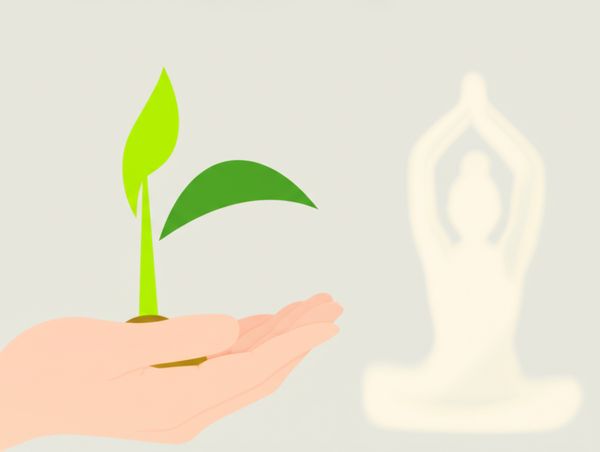 Small beginnings, significant transformations.Image is for illustration purposes only
In a world obsessed with grand gestures and overnight transformations, the idea of 'tiny habits' might sound, well, a little… underwhelming. We're bombarded with messages to revolutionize our lives, to embark on extreme diets, intense workout regimens, or demanding meditation retreats. While the intention behind these big leaps is admirable, the reality for most of us is often a cycle of enthusiastic starts and inevitable fizzles.
It's a frustrating, familiar dance: we set an ambitious health goal, powered by a burst of motivation, only to find our willpower wanes, obstacles appear, and we're back to square one, feeling like failures. But what if the path to vibrant health and lasting well-being wasn't about heroic efforts, but rather, about ridiculously small, almost imperceptible shifts?
Welcome to the gentle revolution of tiny habits. This isn't about willpower or motivation; it's about making sustainable, feel-good changes that stack up, quietly and consistently, to create profound health transformations. Think of it less like a sprint and more like cultivating a flourishing garden, one seed at a time. This approach, pioneered by Stanford behavior scientist B.J. Fogg, teaches us that the secret to lasting change lies not in massive overhauls, but in mastering the art of the miniature.
What Exactly Are Tiny Habits?
At its core, a tiny habit is an incredibly small version of a behavior you want to do consistently. It's so small, in fact, that it feels almost silly, virtually impossible to fail. The magic lies in its ease, making it highly repeatable, and repetition is the mother of all habit formation. Unlike traditional goal setting, where the focus is on the outcome, tiny habits focus on the *behavior* itself and making it frictionless.
Dr. Fogg's model simplifies behavior change into three key components: Motivation, Ability, and a Prompt (B=MAP). His groundbreaking insight is that to get a behavior to happen, you don't necessarily need high motivation. Instead, you can increase the *ability* to do the behavior (make it super easy) or enhance the *prompt* (the trigger that reminds you to do it).
Tiny habits intentionally dial down the motivation requirement by making the behavior so small that it requires almost no effort. It's about engineering success, not wrestling with your willpower. The structure is elegant in its simplicity:
- Anchor Moment: An existing, reliable routine or event you already do. This acts as your trigger.
- Tiny Behavior: The new, super-small action you want to perform immediately after your anchor.
- Instant Celebration: A positive feeling you generate immediately after performing the tiny behavior, which wires it into your brain.
For example, instead of aiming to 'exercise for 30 minutes every day,' a tiny habit might be: 'After I put on my running shoes, I will do one squat and celebrate.' It's not about the squat itself; it's about consistently pairing a new behavior with an existing one and creating a positive emotional reward.
The Deep-Rooted 'Why': How Tiny Shifts Rewire Your Brain and Boost Your Being
The power of tiny habits isn't just anecdotal; it's rooted in our psychology and neurobiology. Understanding *why* this gentle approach works can supercharge your commitment.
1. Bypassing Willpower Fatigue: Your Brain's Shortcut to Success
Willpower is a finite resource, like a battery. Every time we resist a craving, force ourselves to do something unpleasant, or make a tough decision, we drain that battery. Trying to make big, effortful changes every day quickly depletes our willpower, leaving us vulnerable to old patterns. Tiny habits, by contrast, require such minimal willpower that they conserve your mental energy. They glide under the radar of your internal resistance, making them sustainable even on your most drained days.
2. Leveraging Neuroplasticity: The Brain's Capacity for Growth
Our brains are incredibly adaptable, a phenomenon known as neuroplasticity. Every time we repeat a behavior, we strengthen the neural pathways associated with it. When you consistently perform a tiny habit, you're literally building new neural circuits in your brain, making the behavior more automatic over time. It’s like carving a gentle groove in soft clay; with enough repetition, that groove becomes a deep, undeniable channel. This move from conscious effort to subconscious habit is the ultimate goal.
3. Building Self-Efficacy and Momentum: The Win-Win Cycle
Every successful tiny habit is a small win. These small wins accumulate, building a powerful sense of self-efficacy – your belief in your ability to succeed. This positive feedback loop is crucial. Instead of feeling like a failure for not hitting a big goal, you constantly reinforce your capability with achievable micro-successes. This momentum encourages you to continue, and often, to naturally expand the habit over time.
 The ripple effect: how small, consistent actions build momentum.Image is for illustration purposes only
4. Identity-Based Habits: Becoming the Person You Want to Be
When you consistently perform a tiny habit, you're not just doing an action; you're casting a vote for the person you want to become. If you do one squat after putting on your shoes, you're telling yourself, 'I am someone who values movement.' If you take one deep breath before opening emails, you're affirming, 'I am someone who practices mindfulness.' These small votes, over time, shift your self-identity, making it easier to embody the healthier person you aspire to be.
5. The Power of Celebration: Wiring Joy into Your Routines
This is arguably the most overlooked yet critical component. When you celebrate immediately after performing your tiny habit, you create a positive emotional response. This 'feel-good' sensation releases dopamine, a neurotransmitter associated with pleasure and reward, which then tells your brain, 'Do that again!' This instant reward system is how habits are truly cemented. It's not just about doing the thing; it's about *feeling good* about doing the thing.
The Fogg Method in Practice: Your Personal Habit Blueprint
Ready to put these principles into action? Here's how to craft your own tiny habit blueprints across various facets of wellness. Remember, the key is to start ridiculously small and embrace the celebration.
Step 1: Identify Your Anchor Moment
Choose an existing, reliable routine or event that happens consistently in your day. This is your trigger, your built-in reminder. Good anchors are specific, frequent, and stable.
- Examples: After I brew my morning coffee; When I sit down at my desk; After I brush my teeth; When I get into bed; Before I open social media.
Pro-Tip: The more specific and automatic the anchor, the better. 'After breakfast' is okay, but 'After I finish my last bite of breakfast' is even better.
Step 2: Define Your Tiny Behavior
This is where most people falter, making their behavior too big. It needs to be so small that it feels effortless, even on your worst day. Think 30 seconds or less, one rep, one sip, one thought. The goal is consistency, not intensity.
Let's look at examples across different wellness domains:
Physical Health: Movement, Nutrition, Hydration, Sleep
- Movement:
- Anchor: After I stand up from my desk.
Tiny Behavior: I will do one wall push-up. - Anchor: After I get out of bed.
Tiny Behavior: I will stretch my arms overhead for five seconds.
- Anchor: After I stand up from my desk.
- Nutrition:
- Anchor: Before I eat my lunch.
Tiny Behavior: I will eat one baby carrot. - Anchor: After I finish my morning coffee.
Tiny Behavior: I will drink one glass of water.
- Anchor: Before I eat my lunch.
- Hydration:
- Anchor: When I turn on my computer.
Tiny Behavior: I will take three sips of water.
- Anchor: When I turn on my computer.
- Sleep Hygiene:
- Anchor: After I get into bed.
Tiny Behavior: I will read one paragraph of a physical book. - Anchor: When I turn off the kitchen light for the night.
Tiny Behavior: I will put my phone on silent.
- Anchor: After I get into bed.
Mental Well-being: Mindfulness, Gratitude, Stress Management
- Mindfulness:
- Anchor: After I open my email.
Tiny Behavior: I will take three deep breaths. - Anchor: When I wash my hands.
Tiny Behavior: I will focus on the sensation of the water for five seconds.
- Anchor: After I open my email.
- Gratitude:
- Anchor: After I brush my teeth.
Tiny Behavior: I will think of one thing I'm grateful for.
- Anchor: After I brush my teeth.
- Stress Management:
- Anchor: When I feel a stressful thought arise.
Tiny Behavior: I will place my hand on my chest and acknowledge the feeling.
- Anchor: When I feel a stressful thought arise.
Emotional Health: Connection, Self-Compassion
- Connection:
- Anchor: When I pick up my phone.
Tiny Behavior: I will send one positive text to a loved one.
- Anchor: When I pick up my phone.
- Self-Compassion:
- Anchor: When I notice I'm being critical of myself.
Tiny Behavior: I will offer myself a kind thought, like 'It's okay to make mistakes.'
- Anchor: When I notice I'm being critical of myself.
Crucial Consideration: Make sure the tiny behavior is something you *want* to do, not something you feel you *should* do. If it feels like a chore, it's too big or the wrong behavior.
Step 3: Celebrate Immediately
This is where the magic happens! After you perform your tiny behavior, immediately give yourself a genuine, positive emotional boost. This isn't just about feeling good; it's about telling your brain, 'That was a good job! Let's do that again!'
- Internal Celebrations: A silent 'Yes!', 'Good job!', 'I did it!', a fist pump, a small happy dance, a genuine smile.
- External (Optional) Celebrations: If you're alone, you might say 'Woohoo!' out loud, clap your hands, or even give yourself a physical pat on the back.
The celebration must be instant and make you *feel* successful. Don't underestimate this step; it's the glue that makes the habit stick. It wires pleasure to the new behavior, making it more likely you'll repeat it.
The Art of Scaling and Stacking: From Tiny Seed to Mighty Tree
Once your tiny habit is established and feels automatic, you'll naturally start to want to do more. This is the beauty of the system: it grows organically.
Scaling Up: Allowing Growth
You don't need to force your tiny habit to grow. Once doing 'one squat' after putting on your shoes feels completely effortless, you might find yourself doing two, then five, without even thinking about it. The key is to *allow* the growth, not demand it. If you ever feel resistance, simply revert to your tiny baseline. The goal is never to miss the habit, no matter how small.
- Example: After consistently doing one wall push-up, you might find yourself doing three, then five. Eventually, you might transition to full push-ups or add another exercise.
- Example: After drinking one glass of water with your coffee, you might start drinking two, or having water ready at other anchor points during the day.
Habit Stacking: Building a Wellness Tower
Once a tiny habit is solid, you can use it as a new anchor for another tiny habit. This is called 'habit stacking' and it's a powerful way to build increasingly complex routines without feeling overwhelmed.
- Initial Habit: After I brew my morning coffee, I will drink one glass of water. (Celebrate!)
- Stacked Habit 1: After I drink one glass of water, I will do one sun salutation. (Celebrate!)
- Stacked Habit 2: After I do one sun salutation, I will open my journal and write one word. (Celebrate!)
You're leveraging existing momentum to gently introduce new behaviors, creating a chain reaction of positive actions. This is how sophisticated wellness routines are built, brick by tiny brick.
Troubleshooting: When Habits Don't Quite Stick
Even with the gentle art of tiny habits, you might encounter bumps in the road. Don't view these as failures, but as data points for adjustment. The tiny habits philosophy is all about experimentation and iteration.
1. Is Your Habit Truly Tiny?
This is the most common pitfall. If you're feeling resistance, dread, or just plain forgetting, your habit is likely too big. Reduce it. Seriously, make it absurdly small.
- Too Big: 'After I wake up, I will meditate for five minutes.'
Tiny: 'After I wake up, I will take one deep breath and say 'ahhh'.'
2. Is Your Anchor Reliable?
If you're not consistently remembering your habit, your anchor might not be strong enough or specific enough. Choose an anchor that happens every single day, without fail, and at a precise moment.
- Vague Anchor: 'After work.' (What exactly happens after work? Too broad.)
Specific Anchor: 'As soon as I walk through my front door after work.'
3. Are You Celebrating Effectively?
Sometimes we perform the tiny behavior but skip the celebration. Without that instant positive emotion, the brain doesn't get the 'reward' signal to repeat the behavior. Make your celebration enthusiastic and immediate. Really feel that little surge of pride.
4. What's the Friction?
Is there anything making it harder to do the tiny habit? Even small obstacles can derail progress. Can you reduce friction?
- Example: If your tiny habit is 'After I finish dinner, I will floss one tooth,' but your floss is in a drawer across the room, you've created friction. Keep it next to the sink.
- Example: If your habit is 'After I open my laptop, I will do one minute of stretching,' but your mat is in the closet, leave it out.
5. Don't Judge, Just Adjust
The beauty of tiny habits is that they remove the pressure of perfection. If you miss a day, or a week, it's okay. Don't beat yourself up. Just go back to your tiny baseline and start again. Each attempt is a learning opportunity, not a failure.
 Your wellness journey begins with one tiny, intentional step.Image is for illustration purposes only
The Transformative Impact: A Lifetime of Wellness, Gently Built
The cumulative power of tiny habits cannot be overstated. While each individual action might seem insignificant, their collective impact over weeks, months, and years is truly transformative. Imagine:
- Physical Resilience: A few extra squats each day become stronger legs; a few sips of water become better hydration; a few minutes of stretching become increased flexibility and reduced stiffness. These small protective measures contribute to long-term physical health, mitigating the risk of chronic diseases and enhancing mobility as you age.
- Mental Fortitude: Daily deep breaths build resilience to stress; a consistent gratitude thought rewires your brain towards positivity; a moment of mindfulness enhances focus and reduces anxiety. These tiny mental habits cultivate a more robust and peaceful inner world.
- Emotional Balance: Regular micro-moments of connection or self-compassion foster stronger relationships and a healthier relationship with yourself, leading to greater emotional stability and happiness.
- Increased Self-Efficacy: Consistently achieving even the smallest goals builds a powerful belief in your own ability to create change. This self-efficacy spills over into other areas of your life, empowering you to tackle bigger challenges with confidence.
- Sustainable Change: Because tiny habits are designed to be effortless and rewarding, they are inherently sustainable. You're not fighting against your nature; you're working with it. This means less burnout and more consistent progress over the long haul.
You're not just adding a new action; you're cultivating a new identity, a new way of being. You become the 'kind of person' who moves their body, hydrates, practices mindfulness, and prioritizes rest – all through a series of gentle, achievable, and celebrated steps.
Conclusion: Your Gentle Path to Big Health Starts Now
Forget the all-or-nothing approach. Discard the guilt of missed workouts or abandoned diets. The path to big health, to truly sustainable wellness, is paved with tiny, intentional steps. It's a gentle art, a compassionate way to interact with your own desire for growth and change.
So, where will you begin? Choose just one area of your health you want to nurture. Identify one reliable anchor in your day. Craft one ridiculously tiny behavior, and decide how you will celebrate that small, yet significant, act of self-care.
The beauty of tiny habits is that you don't need motivation to start, just the willingness to experiment and the patience to celebrate. Start tiny, celebrate big, and watch as these unassuming actions quietly, profoundly, transform your entire well-being. Your journey to lasting health isn't about monumental leaps; it's about the consistent, joyful rhythm of small, gentle steps.
Disclaimer: This article addresses health-related topics for informational purposes only. It does not constitute medical advice and should not replace consultation with a licensed healthcare professional. For complete guidance, please review our full disclaimer.