
Your Lifespan in a Selfie: Unveiling the 2026 Health Game Changer, the Longevity Mirror
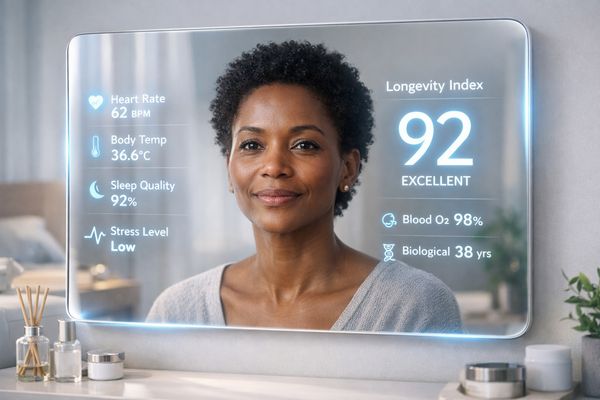 A glimpse into your future health, reflected in the NuraLogix Longevity Mirror.This image is a conceptual illustration and may not represent the exact appearance or functionality of the actual NuraLogix Longevity Mirror product.
Ever wonder why you still feel tired, despite trying all the latest wellness trends? Do you wish you had a crystal ball to glimpse your future health, not just what your body is doing today? For years, our healthcare system has been largely reactive – waiting for symptoms to appear before we seek help. We've tracked our steps, monitored our sleep with wearables, and tried to make sense of endless data, but what if there was a way to truly get ahead of the curve?
Imagine a world where your daily routine includes a quick glance in the mirror, not just to check your appearance, but to understand your deepest physiological secrets. A world where that reflection can tell you not just how you look, but how your body is truly aging, and even hint at health risks decades down the line. Sounds like science fiction, right? Well, welcome to 2026, because that future is already here, and it's called the NuraLogix Longevity Mirror.
The 2026 Consumer Electronics Show (CES) in Las Vegas marked a pivotal moment in global healthcare. It signaled a dramatic shift from clinic-centric, reactive medicine to a proactive, ambient approach seamlessly woven into our homes. At the forefront of this revolution is NuraLogix's Longevity Mirror, a device that makes high-level physiological assessment incredibly accessible through a simple, 30-second facial scan [1]. While previous years were all about the 'quantified self' with wristbands and rings, 2026 is defined by 'contactless monitoring,' removing the barriers between you and your biological data entirely [3].
The Longevity Mirror: Your Future, Reflected
The Longevity Mirror isn't just a fancy smart mirror; it's the first consumer-ready application of Transdermal Optical Imaging (TOI). This groundbreaking technology interprets sub-surface blood flow patterns in your face to predict your health trajectory up to twenty years into the future [3]. Think about that for a moment: twenty years! This isn't about counting steps; it's about understanding your biological destiny and empowering you to change it.
The Convergence of Affective AI and Longevity Science
This isn't an overnight marvel. The Longevity Mirror is the culmination of a decade of research into 'Affective AI' – where affective computing meets artificial intelligence [3]. NuraLogix, a Canadian digital health pioneer, initially developed its core imaging technology at the University of Toronto. Their early work focused on lie detection in children, observing subtle facial vascular changes linked to emotional states [6]. Fast forward to 2026, and this research has evolved into the sophisticated DeepAffex platform, a cloud-based AI engine that can process over 100 wellness indicators from a standard video stream [3].
The move from enterprise-only tools, like the Anura MagicMirror seen at CES in 2024 and 2025, to the consumer-facing Longevity Mirror reflects a booming demand for 'longevity tech' [1]. We, as consumers, are no longer content with retrospective data like how many steps we took yesterday. We crave predictive insights that give us the power to influence our future health. The Longevity Mirror delivers this by providing a 'Longevity Index,' a score from 0 to 100 that distills cardiovascular, metabolic, and psychological data into a single, easy-to-understand metric of biological aging [10].
Technological Foundation: The Magic of Transdermal Optical Imaging (TOI)
So, how does this mirror actually work its magic? At its heart is a proprietary form of Remote Photoplethysmography (rPPG) known as Transdermal Optical Imaging [1]. Our skin, believe it or not, is slightly translucent. This allows light to penetrate the outer layers and reflect off the tiny capillary beds just beneath the surface [12]. Hemoglobin in our blood has a distinct light absorption spectrum. As your heart beats, the volume of blood in these facial capillaries changes, causing the amount of reflected light to fluctuate in a rhythmic pattern [13].
The Longevity Mirror uses a high-resolution camera and integrated LED lighting to capture these minute fluctuations [2]. The system cleverly identifies specific 'Regions of Interest' (ROIs) on your face – areas with rich vascular density and minimal muscle interference – to extract a pure pulse signal [13]. This signal then travels to the DeepAffex cloud, where advanced machine learning models, trained on an enormous database of over 40,000 patients with diverse medical conditions, perform the intricate analysis [15].
 The science behind the selfie: Transdermal Optical Imaging interprets sub-surface blood flow patterns.This image is a conceptual illustration of Transdermal Optical Imaging technology and does not depict actual biological processes or imaging results.
Technical Specifications at a Glance:
- Primary Sensor: High-definition optical camera integrated behind two-way mirror glass [10]
- Lighting: Integrated LED side-strips for consistent illumination [1]
- Scan Duration: Just 30 seconds! [1]
- Processing: Cloud-based DeepAffex AI Engine [8]
- Interface: 21.5-inch embedded display panel [1]
- Multi-User Support: Up to 6 individual profiles with facial recognition [3]
- Connectivity: Wi-Fi and Bluetooth for companion app synchronization [2]
This seamless blend of hardware and software allows the mirror to measure dozens of parameters that would typically require specialized medical equipment. It essentially converts optical signals into digital biomarkers, estimating everything from blood pressure to blood glucose levels without a single needle prick or an uncomfortable arm cuff [15].
Comprehensive Health Metrics and the Longevity Index
The 2026 Longevity Mirror stands out from earlier 'smart mirrors' due to the sheer breadth of its physiological assessment. The data it collects is thoughtfully categorized into three main sub-indices: cardiovascular resilience, metabolic balance, and mental wellness [2]. These are then aggregated into that all-important 0–100 Longevity Index score, which acts as a powerful benchmark for your body's aging rate [5].
Cardiovascular Assessments: Your Heart's Story
The mirror offers a suite of cardiovascular data points that rival those found in a professional cardiology clinic. A key feature is the measurement of 'cuffless' blood pressure [6]. NuraLogix proudly states they've achieved an accuracy standard deviation of less than 8 mmHg, a feat often hailed as the 'Holy Grail' of contactless measurement [7].
Here’s what your reflection can tell you about your heart:
- Pulse Rate: Real-time heart rate monitoring with accuracy comparable to medical-grade sensors [10].
- Heart Rate Variability (HRV): Over 25 types of HRV measurements (e.g., SDNN, LF/HF) to assess your autonomic nervous system balance [8].
- Cardiac Workload: An estimation of your heart's energy expenditure and stress during each cardiac cycle [10].
- Vascular Capacity: An assessment of arterial stiffness and how well your blood vessels respond to blood flow changes [10].
- Irregular Heart Rate: Detection of arrhythmias, which can serve as crucial early warnings for stroke or heart attack [6].
These cardiovascular models underwent extensive validation, including a study of 554 subjects, demonstrating the technology's ability to perform across a broader population than previous iterations [18]. This is a vital step forward, as earlier rPPG tools sometimes faced criticism for higher error rates in individuals with diverse heart rates or physiological differences [18].
Metabolic and Blood Biomarker Risk: Unlocking Hidden Insights
One of the most innovative features of the NuraLogix platform is its ability to predict metabolic health risks, like Type 2 diabetes and high cholesterol, purely from a facial scan [15]. The AI models are trained to identify specific vascular signatures associated with elevated glycated hemoglobin (HbA1c) and fasting blood glucose [13].
Specifically, the models are tuned to predict whether a subject's HbA1c is greater than 5.7% or if their fasting blood glucose exceeds 5.5 mmol/L, both of which are clinical indicators of pre-diabetes [15]. In validation studies, these models achieved an Area Under the Curve (AUC) greater than 0.80, suggesting they are more predictive than traditional risk models like the Framingham score [21].
The mirror also provides assessments for:
- Hypercholesterolemia and Hypertriglyceridemia: Your risk levels for high cholesterol and triglycerides [6].
- Fatty Liver Disease: A risk assessment for non-alcoholic fatty liver disease (NAFLD) based on metabolic patterns [6].
- Body Composition Indices: While it won't tell you your exact weight, it estimates BMI, Body Shape Index, and Waist-to-Height ratio through advanced image analysis [6].
Mental Health and the Stress Index: The Mind-Body Connection
We all know stress impacts our health, and NuraLogix recognizes that mental state is a primary driver of biological aging [2]. That's why the Longevity Mirror includes a dedicated mental health assessment. By analyzing heart rate variability and other physiological signals, the mirror calculates a 'Mental Stress Index' [5]. The platform is also being explored for its ability to assess risks for depression and anxiety, though in early 2026, these remain classified as wellness indicators rather than clinical diagnoses [16]. It's a powerful reminder that our emotional well-being is intricately linked to our physical health.
The Science of Aging: Physiological vs. Chronological Age
The truly 'game-changing' element of the Longevity Mirror is its focus on physiological age – the age at which your body is actually functioning, rather than simply how many years you've been alive [22, 28]. In 2026, the distinction between chronological age (how long you've existed) and biological age (the state of your cells and organs) has become a primary focus of the longevity movement [24].
The mirror's AI interprets blood flow patterns and skin health to determine 'Facial Skin Age' and 'Physiological Age' [8]. This optical estimation offers a daily, non-invasive alternative to more expensive 'Epigenetic Clocks' [24]. While epigenetic clocks, which measure DNA methylation, are still considered the gold standard for predicting mortality, they require blood or saliva samples and aren't practical for daily monitoring [24, 25]. The Longevity Mirror provides a 'living dashboard,' allowing you to see how positive lifestyle changes – even a single week of improved sleep or nutrition – can immediately 'move the needle' on your physiological age [2]. How empowering is that?
Real-User Accuracy Tests and Hands-On Reviews
During the CES 2026 hands-on demonstrations, tech journalists and industry experts put the Longevity Mirror through its paces. The general consensus? While the device is 'borderline magical' in its convenience, its accuracy remains a 'mixed bag' for certain metrics [22].
User Experiences: A Glimpse into the Mirror
- Tom's Guide Reviewer: Reported a physiological age of 42 and skin age of 39 (the reviewer was 38). Noted that heart rate and pulse measurements were highly responsive [10].
- Stuff.tv Reviewer: Found the heart rate reading perfectly matched their Apple Watch, describing the experience as 'Star Trek-like' [11].
- CNET Reviewer: Highlighted the exceptional ease of use, confirming the mirror's ability to deliver data in precisely 30 seconds [1].
- Android Headlines Reviewer: Observed that blood pressure and age estimates were 'sometimes off,' suggesting that suboptimal lighting or unique facial structures might affect accuracy [22].
Common observations from real-world testing indicate that environmental factors play a significant role. For instance, a reviewer at CES mentioned that the harsh 'Vegas sun' likely impacted their skin age reading [10]. Interestingly, the mirror's ability to detect breathing rate was verified when a user intentionally held their breath during a scan, and the mirror accurately reflected this in its report [7].
Pros and Cons: Weighing the Reflection
Like any disruptive technology, the Longevity Mirror presents a complex balance of advantages and limitations. Its market entry in early 2026 has sparked conversations among healthcare professionals about its place in self-care versus clinical medicine [3].
Advantages (Pros)
- Passive Integration into Routine: Unlike smartwatches that need constant wearing and charging, or smart scales requiring barefoot standing, the mirror captures data during a routine act – simply looking in the mirror [2]. This drastically reduces 'measurement fatigue' and boosts long-term user adherence [3].
- Contactless and Non-Invasive: No needles, no cuffs, no sensors! This makes the device accessible for everyone, including those with mobility issues or sensitivities to physical contact [3].
- Predictive Long-Term Outlook: Most consumer devices give you 'state-of-the-body' data (current heart rate, current steps). The Longevity Mirror offers a 'trajectory,' helping you visualize your health 20 years into the future [3].
- Actionable AI Assistant: An integrated generative AI health assistant translates raw data into plain-language advice on sleep, stress, and nutrition, making the insights genuinely usable for the average consumer [1].
- Support for Multiple Users: With support for up to six individual profiles, one device can serve an entire household, making it a more cost-effective option for families [3].
Limitations and Disadvantages (Cons)
- High Initial Cost and Subscription Fees: Priced at $899, plus a $99 annual subscription (though the first year is free), the mirror is a significant financial investment compared to traditional health trackers [17, 22].
- Environmental Sensitivity: The technology relies on high-quality optical signals. Poor lighting or heavy makeup can interfere with the camera's ability to read sub-surface blood flow, potentially leading to less accurate readings [10].
- Not a Diagnostic Tool: NuraLogix is very clear that the mirror is a 'wellness tool' and not a substitute for professional medical advice [8]. This distinction can sometimes cause confusion for users who might interpret a high-risk score as a definitive diagnosis [23].
- Subscription Dependency: Many of the mirror's most advanced features, including long-term trend analysis and the AI assistant, are locked behind the annual subscription. This might disappoint users who prefer a 'one-and-done' purchase model [17].
- Data Privacy Concerns: Sending facial biometric and health data to the cloud for analysis is a valid concern for privacy-conscious users, even with NuraLogix's emphasis on encryption and GDPR/HIPAA compliance [8].
 Balancing innovation: The advantages and limitations of the Longevity Mirror.This image is a conceptual illustration representing the general advantages and disadvantages of health technology and does not directly reflect specific user experiences with the Longevity Mirror.
Clinical Validation and Peer-Reviewed Evidence
The credibility of NuraLogix's technology in 2026 is bolstered by a strong foundation of over 11 peer-reviewed publications [2]. These studies have appeared in reputable journals such as Blood Pressure Monitoring, Circulation: Cardiovascular Imaging, and Frontiers in Digital Health [15].
Key Clinical Findings:
- Video-based BP: A preliminary assessment in Blood Pressure Monitoring (2020) showed the Anura app met standard criteria for blood pressure measurement [32].
- Smartphone BP: Circulation: CV Imaging (2019) demonstrated that TOI technology can accurately measure BP using only a smartphone camera [32].
- HbA1c Prediction: The Journal of Natural Sciences (2021) indicated TOI's potential for contactless diabetes risk assessment, showing 66% classification accuracy and an AUC of 0.69 in early tests [13].
- Heart Rate Variability: DeepAffex research confirmed that TOI-derived HRV signals correlate significantly with FDA-approved medical devices [13].
Despite these publications, NuraLogix is still actively pursuing formal FDA 510(k) clearance for specific medical-grade metrics [10]. As of January 2026, pulse rate, breathing rate, and blood pressure are under review [10]. Until this clearance is finalized, the device remains in the 'wellness' category, which allows it to bypass the stringent regulations required for diagnostic medical devices [4].
The Socio-Technical Challenge: Addressing Skin Tone Bias
A persistent and critical concern in rPPG technology is 'demographic bias,' particularly concerning skin tone [20]. Melanin, the primary pigment in human skin, absorbs and scatters light in ways that can degrade the signal-to-noise ratio for individuals with darker complexions (Fitzpatrick scale V and VI) [20]. This is a serious issue that needs careful attention for equitable healthcare access.
Research in 2024 and 2025 revealed that many publicly available rPPG datasets were heavily skewed toward lighter-skinned individuals of European and East Asian descent [20]. NuraLogix has made conscious efforts to mitigate this by training its models on a diverse global population of 40,000 subjects [15]. Recent internal testing of NuraLogix's SDK suggests the technology maintains 'acceptable agreement levels' across all skin tones, but independent researchers in 2026 continue to monitor for 'clinically relevant accuracy gaps' [14]. This ongoing commitment to inclusivity is essential for any health technology aiming for widespread adoption.
Economic Landscape: Pricing and Competition
The 2026 Longevity Mirror enters a bustling field of health-tech devices. Its primary competition at CES 2026 included the Withings Body Scan 2, a smart scale measuring over 60 biomarkers [35], and various smart rings like the Amazfit Active Max [10].
Pricing Comparison: 2026 Health Tech Leaders
| Product | Retail Price | Annual Subscription | Primary Value Prop |
|---|---|---|---|
| NuraLogix Longevity Mirror | $899 [28] | $99 (1st year free) [16] | Passive, 30s facial scan [2] |
| Withings Body Scan 2 | $599 [29] | Included/Withings+ | Body comp, nerve health [25] |
| PanopticAI Vital Signs App | Software/SDK | Tiered/Usage-based | Smartphone-based vitals [30] |
| Samsung Galaxy Z TriFold | $1,800+ | N/A | High-end mobile ecosystem [1] |
NuraLogix's decision to charge a recurring subscription fee is part of a broader industry trend towards 'Health-as-a-Service' (HaaS) [4]. While this model ensures the AI algorithms are constantly updated with the latest clinical research, it might deter users experiencing 'subscription fatigue' in 2026 [2]. It's a balance between continuous innovation and consumer willingness to pay.
The AI Health Assistant and Human Concierge: Bridging the Gap
Knowing your health data is one thing; actually changing your health behavior is another. To bridge this critical gap, NuraLogix has integrated two tiers of support [2]. The first is the AI Health Assistant, included in the standard subscription, which provides immediate, automated coaching and personalized advice [1]. Think of it as your intelligent wellness companion, available 24/7.
For users who need a higher level of intervention, the 'One-Touch Health Concierge' service – available for an additional $399 per year – directly connects the mirror to human wellness coaches and nutritionists [5]. This reflects a growing trend in 2026 telehealth towards 'hybrid care,' where AI handles continuous monitoring and humans provide the empathetic, high-touch guidance necessary for significant lifestyle changes [3]. It's the best of both worlds: cutting-edge technology combined with genuine human support.
Privacy and Data Security in the Cloud
With such sensitive facial biometric data involved, user privacy is paramount. NuraLogix utilizes a sophisticated cloud architecture to ensure your data remains secure [6]. The DeepAffex platform employs 'Organization Silos,' meaning your data is partitioned and isolated to prevent any cross-contamination or leakage between different accounts or organizations [39].
Data is encrypted both during transit (SSL/TLS) and when stored, and NuraLogix adheres to 'Privacy-by-Design' principles [40]. One crucial technical detail that significantly mitigates privacy risk is that the device itself does not store the original video selfie. Instead, it only processes the extracted blood flow information, which is essentially a numerical representation of light fluctuations [1]. This thoughtful approach helps safeguard your personal health information.
Future Directions: The Dawn of Ambient Health Tracking
The Longevity Mirror is likely just the beginning of a future dominated by 'Ambient Health' [4]. At CES 2026, a clear theme emerged: health tracking is becoming 'less showy' and more deeply embedded in our everyday environments [4]. NuraLogix's SDK is hardware-agnostic, meaning the same powerful technology currently in the mirror could soon be integrated into smartphone cameras, laptop screens, or even car mirrors [8]. Imagine continuous, background health monitoring woven into your entire day, effortlessly. Your lifespan truly could be in your selfie, and your car's rearview mirror, and your laptop screen!
This 'ubiquitous monitoring' has the potential to transform every digital interaction into a health touchpoint, enabling the early detection of cardiovascular events or metabolic shifts long before you'd typically think to seek medical attention [1]. As AI continues to refine its ability to spot these early risk signals, our homes – and specifically, that seemingly ordinary bathroom mirror – are rapidly becoming the front line of preventative medicine [3].
Conclusions and Implications for 2026
The NuraLogix Longevity Mirror is a breathtaking convergence of optical physics, machine learning, and longevity science, pushing boundaries previously confined to science fiction. By successfully bringing Transdermal Optical Imaging into a consumer-grade appliance, NuraLogix has effectively reduced the friction of clinical-level health monitoring to zero [3].
The mirror's primary value isn't just in its individual metrics, like blood pressure or heart rate, but in its profound ability to synthesize all this data into a 20-year health forecast. This shifts our psychological focus from merely 'avoiding illness today' to actively 'optimizing longevity for tomorrow.' However, this technology stands at a critical juncture. Its ultimate success will hinge on achieving formal FDA clearance, consistently performing across diverse skin tones, and the market's willingness to embrace a premium-priced, subscription-based hardware model.
As we delve further into 2026, the Longevity Mirror stands as a preeminent example of how AI can transform a daily habit into a potentially life-saving intervention. For the consumer, the question is no longer whether they can know their future health, but whether they are truly willing to gaze into a mirror that reveals not just their reflection, but the intricate workings of their biological clock [3]. Are you ready to take that look?
Disclaimer: This article addresses health-related topics for informational purposes only. It does not constitute medical advice and should not replace consultation with a licensed healthcare professional. For complete guidance, please review our full disclaimer.