Beyond the Feed: Is Social Media *Really* Connecting Us, Or Just Keeping Us Busy?
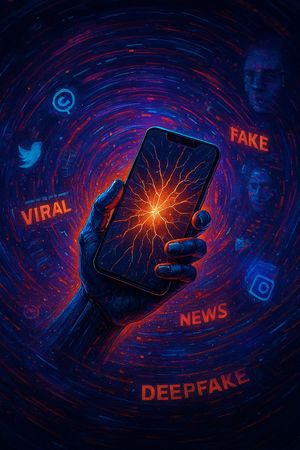
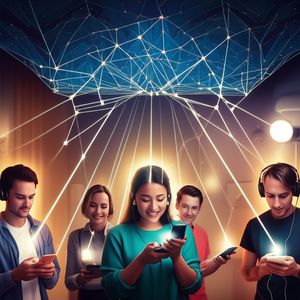
 Exploring the complex interplay between our digital lives and authentic human connection.Image is for illustration purposes only
Alright, folks, gather 'round—because here’s what’s blowing up this week, and it’s hitting right where we live… literally, in our screens. We’re talking about that always-on, always-scrolling, hyper-connected existence we all navigate. Social media, the internet, our smartphones—they promised to bring the world to our fingertips, to make us feel closer than ever before. But here’s the million-dollar question that’s been simmering on every digital-native’s mind: Beyond the likes, the shares, the fleeting comments… are we *actually* connecting in the digital age? Or are we just incredibly good at performing for an audience of digital ghosts?
It’s the paradox of our time, isn't it? We’ve got more friends, more followers, more “connections” than any generation before us. Our digital Rolodex could fill a small city. We see what everyone’s eating for breakfast, where they’re vacationing, how perfectly their lives are unfolding. Yet, for all this supposed intimacy, a creeping sense of isolation often lingers. That feeling of being alone in a crowded digital room? Yeah, you know the one. Let’s unfilter this, shall we?
The Illusion of Intimacy: Are We Just Performing Online?
Let’s be real. Our social feeds are meticulously curated highlight reels. We scroll through an endless parade of perfect selfies, aspirational travel pics, and perfectly worded hot takes. Every post is a performance, every story a snippet designed to elicit a reaction – a like, a heart, a laugh, maybe even a “same, girl.” It’s a game, and we’re all playing it, whether we admit it or not.
Think about it: when you post that stunning sunset pic, are you sharing a moment, or are you hoping for validation? When you craft that witty comment, is it to genuinely engage, or to prove your cleverness? The metrics—those little numbers beneath our posts—have become the new social currency. A thousand likes on your latest OOTD? Score! Three comments and crickets? Ouch. It’s a constant feedback loop that conditions us to seek external validation, rather than fostering internal contentment or, dare I say, *authentic* connection.
This performative aspect isn't inherently evil, but it creates an illusion. We *think* we know someone because we see their filtered existence. We *feel* connected because we double-tap their posts. But does a thousand likes truly equate to one real, vulnerable conversation? Does a virtual birthday wish carry the same weight as a heartfelt call or a shared meal? We’re building bridges made of pixels, and sometimes—often, actually—those bridges feel incredibly flimsy when the digital tide rolls out.
The curated self becomes the dominant narrative, both for us and for those we follow. We’re all architects of our digital personas, carefully selecting what to reveal and what to hide. This leads to a collective delusion where everyone seems to be living their best life, all the time. And guess what? That’s exhausting. For everyone.
The "Happy Trap" and Its Real-World Consequences
This constant performance creates what I like to call the “Happy Trap.” Everyone’s posting their wins, their glow-ups, their #blessed moments. Rarely do we see the messy middle, the struggles, the quiet moments of doubt or sadness. This creates a skewed reality where everyone else seems to have it all together, and if you don’t, well, you must be doing something wrong.
The consequence? A skyrocketing sense of inadequacy, FOMO (Fear Of Missing Out) on steroids, and a constant, low-grade anxiety that we’re not enough. We scroll, compare, despair, and then—ironically—we post our own perfectly polished moments to keep up with the digital Joneses. It’s a vicious cycle that leaves us feeling less connected to ourselves, let alone others. We’re so busy projecting an image, we forget to *be* present with the real people in our lives—or even with ourselves.
The Paradox of Proximity: More Connected, Yet Feeling Lonelier?
Remember those days when you’d call a friend just to chat, or drop by their place unannounced? Now, it feels like we communicate *around* each other more than *with* each other. We might know a friend is on vacation because their stories are popping off, but do we know how they’re *really* feeling about that new job, or that recent breakup? Often, not until we stumble upon a vague post designed to elicit concern, or a carefully crafted explanation that still feels a little… distant.
This is the great paradox: we are always online, always reachable, always “connected”—yet the sense of genuine, deep connection can feel incredibly elusive. We are proximity paradoxes, always near, never truly here. We might be in the same room as friends, but our eyes are often glued to our individual screens, scrolling through other people's lives. It’s a collective solitude, a shared isolation that’s become disturbingly normalized.
The “scrolling void” is real. It’s that endless, almost meditative act of swiping through feeds, consuming content, but never truly engaging in a way that nourishes the soul. It’s a dopamine hit, a fleeting distraction, but it doesn’t fill the human need for authentic interaction. It’s like eating junk food when your body craves a proper meal—you feel full, but you’re still hungry for something substantial.
We're witnessing a fascinating shift: our social circles have expanded exponentially, but their depth has, for many, shrunk. We have 'friends' we've never met, 'conversations' conducted solely through emojis, and 'relationships' defined by how often we interact with their content rather than with their actual human presence. This isn't inherently bad—it has its merits, which we'll get to—but it begs the question: what are we sacrificing for this breadth?
It’s like we've traded a few deep wells for a vast, shallow ocean. We're surrounded by water, but it's not always drinkable. This makes us thirsty for true understanding, empathy, and shared experience that goes beyond a 280-character tweet or a filtered photo. 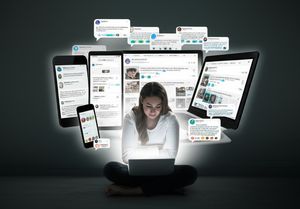 The paradox: Surrounded by digital chatter, yet feeling profoundly alone.Image is for illustration purposes only
Algorithms, Echo Chambers, and the Filter Bubble: Are We Talking *To* Each Other or *Past* Each Other?
Let’s pull back the digital curtain for a sec. It’s not just us—it’s the machines, too. The algorithms that power our feeds are designed to keep us engaged, to show us more of what we already like, what we already agree with. They’re incredibly good at it, too. This creates what we call echo chambers and filter bubbles.
In an echo chamber, our own beliefs are amplified and reinforced by others who share similar views. It feels comforting, validating. But it also means we're rarely exposed to dissenting opinions or diverse perspectives. We start to believe our worldview is the *only* worldview, simply because it’s the only one we see reflected back at us online.
The filter bubble is similar: it's the personalized universe of information that an algorithm creates for us. It decides what we see, what we read, what we engage with. While it sounds efficient, it can be insidious. We become isolated from information that challenges our preconceptions, making genuine dialogue—the kind where minds are opened and perspectives broadened—increasingly difficult.
The Erosion of Empathy in a Polarized World
When we're constantly fed information that confirms our biases, our capacity for empathy can erode. It becomes harder to understand, let alone connect with, those who think differently. Online debates devolve into shouting matches, fueled by anonymous profiles and the absence of eye contact. It's easy to dehumanize someone when all you see are their words on a screen, devoid of tone, body language, or context.
Are we talking *to* each other, trying to find common ground? Or are we just talking *past* each other, entrenched in our digital trenches, lobbing rhetorical grenades? The platforms that were supposed to connect us can, ironically, drive us further apart, creating fissures in society that are becoming harder to bridge. It's a sobering thought, but one we absolutely need to confront if we want to move beyond the superficial and reclaim genuine connection.
Beyond the Surface: Where Authentic Connection Hides (Or Doesn't)
Okay, so it’s not all doom and gloom. It’s crucial to acknowledge that the digital age isn't a total wasteland for connection. In fact, for many, it's a lifeline. Think about it:
- Niche Communities: Ever felt like an outsider in your local community because your hobby is, shall we say, a *little* unconventional? Online, you can find your people. Whether you’re into competitive obscure board games, a rare historical reenactment, or a very specific sub-genre of music, the internet allows you to connect with like-minded individuals across the globe. These niche communities can foster incredibly deep and meaningful connections, offering a sense of belonging that might be impossible to find offline.
- Bridging Distances: Long-distance relationships—be they romantic, platonic, or familial—have been utterly transformed. Video calls, instant messaging, and shared digital experiences keep us connected to loved ones who are physically far away. Grandparents can see their grandkids grow up in real-time, friends who moved across continents can still share laughs and commiserations, and families separated by borders can maintain strong bonds. This is a monumental win for human connection.
- Support Networks: For individuals facing unique challenges—chronic illness, mental health struggles, grief, or navigating identity—online support groups offer invaluable solace and understanding. Anonymity can provide a safe space to share vulnerabilities without fear of judgment, connecting people who truly understand what you're going through, often when real-world support feels insufficient or unavailable.
- Activism and Advocacy: Digital platforms have become powerful tools for collective action. Movements gain momentum, voices are amplified, and awareness is spread globally. This form of collective connection—uniting around a common cause—demonstrates a profound capacity for digital platforms to mobilize and connect people with a shared purpose.
So, the potential for authentic connection *is* there. It's not the tool itself, but how we wield it. The challenge lies in distinguishing between superficial engagement and genuine interaction—and then consciously choosing the latter.
Reclaiming Connection: Strategies for a More Meaningful Digital Life
Alright, so we’ve established that the digital world is a double-edged sword. It offers incredible opportunities for connection but also presents pitfalls that can leave us feeling more isolated than ever. So, how do we hack the system? How do we reclaim genuine connection in an age of constant digital noise? It's about being intentional, folks. Here’s the playbook:
1. Be a Mindful Scroller, Not a Mindless Zombie
Instead of aimlessly scrolling, practice mindful engagement. Before you open an app, ask yourself: “Why am I doing this? What do I hope to gain?” If it’s to genuinely connect with a specific person or topic, great. If it’s just to kill time or escape, maybe rethink. Engage with purpose. Instead of just liking a post, leave a thoughtful comment. Send a direct message. Spark a real conversation. Quality over quantity, always.
2. Set Digital Boundaries: The Power of "Do Not Disturb"
Your phone has a “Do Not Disturb” function for a reason—use it! Schedule specific times for checking social media or emails. Designate tech-free zones in your home (like the dining table or bedroom). Put your phone away during conversations with real-life humans. These small acts create space for actual presence and connection, both with others and with yourself.
3. Prioritize Deep Dives Over Shallow Skims
Instead of having 50 superficial online acquaintances, nurture a few deeper, more meaningful connections. Reach out to friends you haven't spoken to in a while for a video call. Plan a real-world meetup. Share something vulnerable with a trusted friend. True connection flourishes in authenticity and shared experiences, not just shared memes.
4. The Online-to-Offline Transition: Make it Happen!
Found someone interesting in an online group? Met a cool acquaintance on a networking platform? Don't let it stay purely digital! Suggest a coffee, a virtual co-working session, or a group activity. The magic often happens when digital ties translate into real-world interactions. This is where the rubber meets the road—or rather, where the pixels meet the people.
5. Cultivate Self-Awareness: Your Internal Compass
Pay attention to how social media makes you feel. Does it energize you or drain you? Inspire you or make you anxious? If certain platforms or accounts consistently leave you feeling worse, unfollow, mute, or take a break. Protect your mental space. Your connection with yourself is the foundation for connecting with others.
6. Embrace the Digital Detox (Even Small Ones)
This isn't about ditching your phone forever, but about strategic breaks. A weekend without social media, a day without checking emails, an hour where your phone is on airplane mode. These detoxes help you reset, refocus, and rediscover the world beyond the screen. You'll be amazed at how much more present you become—and how much richer your real-world interactions feel.
Think about it like this: your digital life should enhance your real life, not replace it. It should be a tool that helps you build bridges, not walls. It's about being the curator of your digital experience, not just a passive consumer.  Finding the balance: Digital tools can bridge distances, but real-world interactions deepen bonds.Image is for illustration purposes only
The Future of Connection: A Hybrid Model?
So, where do we go from here? Are we destined for a future where digital interactions completely eclipse face-to-face ones? Probably not—at least, not if we're smart about it. The future of connection is likely a hybrid model, a thoughtful integration of our online and offline worlds. It's not about choosing one over the other, but about creating a harmonious balance.
We're learning, slowly but surely, to be more discerning digital citizens. We're starting to understand the psychological impact of constant connection and the importance of intentional interaction. The buzz isn't just about what's trending, but about what's *meaningful*.
Imagine a world where:
- Online groups are primarily used to organize real-world meetups.
- Video calls are seen as a genuine substitute for in-person chats when distance is a factor, rather than a default.
- Social media feeds are less about performance and more about sharing authentic moments and fostering genuine dialogue.
- We use technology to learn, to grow, to explore—and then we bring that knowledge and those experiences back into our real-world conversations and relationships.
This isn't some utopian dream; it's an achievable goal if we all commit to being more mindful about our digital habits. It requires a collective shift in perspective, a re-evaluation of what 'connection' truly means to us. It means understanding that a like is a fleeting acknowledgment, but a shared laugh, a supportive hug, or a deep conversation is the bedrock of human relationship.
The Big Takeaway: Intentionality is Key
Ultimately, the question isn't whether social media *can* connect us, but whether we *choose* to let it connect us authentically. The tools are neutral; their impact is determined by our intent and our habits. If we use them mindlessly, we risk a shallow, performative existence. If we use them with purpose, with intention, and with an unwavering commitment to genuine human connection, then yes—they can absolutely enhance our lives.
So, next time you pick up your phone, pause. Ask yourself: Am I seeking genuine connection right now, or am I just looking for a quick hit of validation? The answer might just change the way you interact with the digital world—and perhaps, with the real world, too. Let's make sure our digital lives are enriching our human experience, not detracting from it. Because at the end of the day, a thousand likes won't hug you back. A real connection will.
Disclaimer: This article highlights social buzz and online trends for informational purposes only. Content may reflect public commentary or opinion rather than verified information. For additional context, please refer to our full disclaimer.