
Beyond the Headlines: Why Andrew Tate's 'Indians Better' Comment Ignited a Digital Inferno
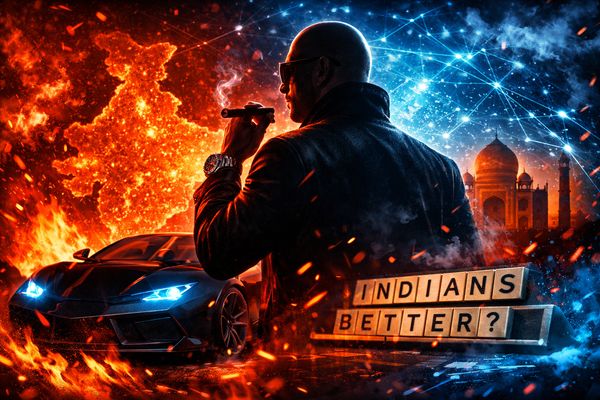 The digital inferno: Andrew Tate's 'Indians Better' comment sparked a global debate.This image is a conceptual illustration and may not represent actual events, data, or entities.
Here's what’s blowing up this week: Andrew Tate, the self-proclaimed 'Top G' and digital provocateur, once again managed to set the internet ablaze. This time, the spark wasn't just another controversial soundbite about women or wealth, but a seemingly innocuous phrase – his 'Indians Better' comment. Yet, it wasn't innocuous at all. It detonated a digital firestorm, ripping through online communities and revealing a complex tapestry of global misogyny, localized nationalism, and a deeply entrenched ‘Indian manosphere’ that’s been brewing beneath the surface. Trust us, it’s not just about the words; it’s about the whole system.
So, why did a few words ignite such a ferocious debate? It’s simple, really: Tate’s rhetoric, often cloaked in aspirational wealth and ‘alpha’ dominance, has found fertile ground in India, where existing patriarchal norms are being repackaged and amplified for the digital age. This isn’t just passive consumption of Western content; it’s an active, strategic integration that’s reshaping how masculinity, identity, and even national pride are understood by a generation of young men [1]. Let’s unravel this digital drama, shall we?
The Global Proliferation: Tate's Matrix Meets the Digital East
Andrew Tate. The name alone conjures images of fast cars, cigars, and bold declarations that challenge—or, depending on your perspective, reinforce—societal norms. His rise from kickboxer to the 'most Googled person' in 2022 and 2023 wasn't an accident. It was a masterclass in algorithmic manipulation and visual branding, a strategic deployment of high-arousal emotions like outrage, envy, and the insatiable desire for status [8].
Tate’s core narrative—the 'Matrix'—frames legal challenges and social deplatforming as a grand conspiracy by a global liberal order [2]. This narrative, a modern-day 'us versus them,' has resonated across continents, creating a potent ideological ecosystem that blurs geographic and cultural lines. But nowhere has it found a more receptive, and perhaps more dangerous, audience than in India. The 'Indian manosphere' didn't just passively consume Tate’s content; they actively leveraged it, adapting his 'Red Pill' philosophy—the belief that modern society is rigged against men—to buttress local traditionalist and nationalist agendas [1].
This isn't just about a foreign influencer making waves; it's about a symbiotic relationship where Tate provides the global branding and aspirational 'Top G' persona, and the Indian manosphere provides the local context, translating his often-misogynistic rhetoric into terms that align with existing patriarchal norms, caste dynamics, and even contemporary religious nationalism [1]. His 'Indians Better' comment, then, wasn't just a casual remark; it was a potent affirmation, a digital nod to a specific segment of his audience that craves validation within this complex cultural and ideological landscape.
Decoding the 'Indians Better' Firestorm: A Deep Dive into the Indian Manosphere
When Tate drops a phrase like 'Indians Better,' it hits differently in a context where a significant digital movement is already primed to receive and amplify such messages. The Indian manosphere isn’t just a fan club for Tate; it’s a localized digital ecosystem that actively mediates and adapts his ideology [1]. So, what makes this soil so fertile?
The Red Pill, Reimagined: Masculinity, Wealth, and Dominance
 Young men in India navigating the complex intersection of traditional values and new digital ideologies.This image is a conceptual illustration and may not represent actual events, data, or entities.
For many young Indian men, Tate’s 'Red Pill' philosophy offers a compelling, albeit deeply flawed, solution to anxieties about their economic futures and social status [3]. Research from 2025 in urban centers like Mumbai revealed that adolescent boys (12-19) deeply internalize Tate’s rhetoric. They associate masculinity with wealth, dominance, and emotional detachment—ideas that echo Tate’s provocative statements like 'women are property' [1]. His global 'Top G' branding provides a veneer of legitimacy to traditional gender hierarchies already present in their family and social structures [1].
So, when Tate says 'Indians Better,' it's not just a compliment; it's a powerful affirmation within this framework. It suggests that Indian or Eastern values are 'more masculine,' 'stronger,' or 'less feminized' than the West, directly feeding into a narrative of cultural and personal superiority. This isn't just about national pride; it’s about reinforcing a specific type of masculinity that aligns with a neoliberal Hindu supremacist authoritarianism, a blend that can be incredibly appealing in a rapidly changing world [1].
Hindutva Digital Subjectivation: A Pedagogical Pipeline
The fusion of Tate’s ideology with the Indian socio-political context has birthed something sociologists call 'Hindutva digital subjectivation' [5]. This isn't just a fancy term; it's a pedagogical framework, a layered system of ideological instruction targeting young Indian men online. Think of it as a digital pipeline, moving from insecurity to a sense of entitlement.
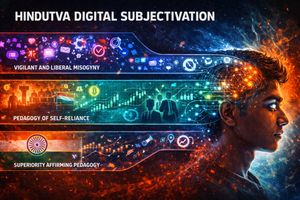 The multi-layered 'Hindutva Digital Subjectivation' pipeline shaping narratives for young Indian men.This image is a conceptual illustration and may not represent actual events, data, or entities.
- Superiority Affirming Pedagogy: This is where the 'Indians Better' comment really shines. It's all about constructing a narrative of cultural and personal superiority. Viral clips that champion Indian or Eastern values as inherently 'better' or 'more masculine' than the 'feminized' West are widely circulated. These aren't just feel-good moments; they're strategic tools to affirm national and individual pride, often aligning seamlessly with a neoliberal Hindu supremacist agenda [1].
- Pedagogy of Self-Reliance: Remember Tate’s 'Hustler’s University' or 'The Real World'? This digital pipeline mirrors that, emphasizing entrepreneurial success, often through high-risk digital activities like crypto-trading [2]. It paints financial success as the ultimate escape from the 'Matrix,' effectively monetizing male insecurity in an era of precarious employment [1].
- Vigilant and Liberal Misogyny: This final layer sees Indian 'manfluencers' adopting Tate’s tactics to pathologize feminism, framing it as a direct threat to the stability of the Indian family and the nation itself [1]. This narrative is particularly potent because it's delivered in short-form, algorithmic-friendly videos, bypassing critical reflection and embedding itself deep within the digital consciousness [1].
This digital ecosystem, facilitated by platforms like WhatsApp and Instagram, rebrands patriarchal narratives as 'Indian culture,' creating a powerful backlash against gender equality movements. It's not just a reaction to perceived Western influence; it's a strategic re-articulation of local dominance in a global digital age [1].
The Visual Game: How Tate's Image Feeds the Frenzy
You can't talk about Andrew Tate without talking about his visual brand. The man knows how to play the algorithm, and his image is meticulously crafted for maximum virality. A systematic image and transcript analysis of his videos—think Rumble, YouTube, even TikTok—reveals a consistent use of status symbols and physical dominance to establish authority [8].
- Cigars and Luxury: Appearing in 60% of analyzed videos, cigars aren't just about smoking; they're symbols of luxury, maturity, and 'old-school' masculine authority [8].
- Topless Displays and Physicality: Seen in 43% of videos, these emphasize physical strength and the 'warrior' archetype [8]. It’s about projecting unshakeable power.
- Luxury Sports Cars: A staple in 34% of his content, these are tangible proof of wealth and ‘Matrix-breaking’ financial success [8]. If you follow Tate, you too can achieve this level of 'freedom.'
- The 'Matrix' Narrative: Always present, framing any opposition—legal or social—as a systemic conspiracy [2]. This creates a powerful 'us vs. them' dynamic, drawing followers deeper into his worldview.
- Entrepreneurial Advice: High frequency, monetizing male insecurity through platforms like 'The Real World' [2]. It’s a business model built on aspiration and a promise of escape.
While his controversial views on women often grab the headlines, the broader appeal of Tate’s content is rooted in this pervasive display of wealth and the 'alpha' lifestyle [8]. His misogynistic rhetoric becomes aspirational; by adopting his views, followers believe they too can achieve his financial and social dominance [1]. This is the core of 'The Real World’s' business model: extracting subscription fees from those seeking to replicate his persona, all while recruiting them into the reproduction of patriarchal hierarchies [2]. When 'Indians Better' drops, it’s not just a comment; it’s an invitation to join this aspirational, 'superior' club.
The Generational Divide: Who's Buying What Tate's Selling?
The Andrew Tate phenomenon isn't a monolithic wave; its impact is filtered through vastly different demographic lenses. Surveys from late 2025 in the UK and internationally reveal stark divisions in how men, women, and different generations perceive him [7]. This isn't just fascinating; it's critical for understanding the 'firestorm' effect.
Teenage Boys: Awareness vs. Support
Let's be real: teenage boys know who Andrew Tate is. By 2025, a whopping 84% of boys aged 13-15 had heard of him [7]. That's almost universal awareness! But here’s the kicker: awareness doesn't always equal support. In fact, 63% of boys in that age group reported a negative opinion of Tate [7]. This suggests a significant degree of critical engagement and pushback among youth, which is a hopeful sign. They're not just blindly following; many are questioning.
Young Dads: An Unexpected Endorsement
Now, here's where it gets interesting—and a little concerning. More than half (56%) of 'young dads' (under 35) reported a positive view of Tate [9]. Compare that to just 19% of mothers in the same demographic [9]. This divergence raises serious questions for sociologists about the role parents play in mediating their children's exposure to digital misogyny [9].
Why the appeal to young fathers? Some might be drawn to his business and financial advice, seeking pathways to economic success in an increasingly uncertain world. But researchers warn that Tate’s 'violent misogynist rhetoric' is often so deeply embedded in his content that it's impossible to separate it from his motivational messaging [9]. This creates a challenging environment where children might receive conflicting messages about gender justice and online safety at home and in school [3]. When a public figure, who many young dads admire, makes a 'better' comment about a particular group, it reinforces existing biases and makes it harder to challenge harmful narratives.
The Broader Picture: Legal Limbo and Rhetorical Ammunition
It’s important to remember that all of Tate’s online antics and viral moments are playing out against a backdrop of serious legal challenges. As of January 2026, his primary human trafficking case in Romania is in judicial limbo, stalled due to 'multiple legal and procedural irregularities' [4]. A second investigation, launched in August 2024, includes allegations of trafficking minors and money laundering [4]. The UK has also pursued legal action, with an extradition request granted but deferred until Romanian proceedings conclude [4]. Although some criminal charges in the UK were not pursued due to evidentiary hurdles, a landmark 2027 civil trial is expected to examine coercive control laws [6].
These legal battles, while complex, provide Tate with rhetorical ammunition. He uses them to fuel his 'Matrix' narrative, claiming persecution and further cementing his image as an outsider fighting the system [4]. This 'victimhood' narrative only enhances his appeal to those who feel similarly disenfranchised, making comments like 'Indians Better' even more potent as a perceived pushback against a 'global liberal order' that they believe is unfairly targeting figures like him.
Beyond the Hype: Addressing the Digital Traditionalism Crisis
The firestorm sparked by Andrew Tate’s comments—and his broader influence—demands more than just deplatforming. While necessary to limit the reach of hate speech, platform bans can sometimes inadvertently reinforce the 'Matrix' narrative of censorship and victimhood [1]. So, what’s the real solution here?
Critical Digital Literacy is Key
Sociologists and educators are increasingly focusing on critical digital literacy [3]. This means equipping young people with the tools to understand the business models of influencers—how they profit from outrage, how algorithms normalize radical content, and how carefully curated personas are constructed. By helping students dissect Tate’s messaging before it becomes an ingrained ideology, we can empower them to think critically and resist manipulation [1].
Alternative Role Models and Open Dialogue
Another crucial step is to provide 'alternative role models' and foster open dialogues that address the genuine insecurities young men feel about their economic futures and social status [1]. Tate’s appeal often lies in offering simplistic, albeit harmful, answers to complex problems. By creating spaces where young men can discuss their fears and aspirations without judgment, we can offer them healthier, more constructive visions of masculinity.
Contextualized Interventions for India
In India, the challenge is amplified by the integration of digital misogyny with powerful nationalist narratives [1]. Addressing Tate’s influence requires school-based interventions that are sensitive to the local intersections of gender, caste, and religion [1]. It’s not a one-size-fits-all solution; it requires understanding the unique cultural context that makes certain messages resonate so deeply.
Sociologists stress that unless the underlying causes of male disillusionment—economic precarity, social isolation, and the pressures of modern masculinity—are genuinely addressed, the manosphere will continue to offer a 'compelling, if deeply flawed, solution' to contemporary crises [3]. The 'Indians Better' comment isn't just a blip on the radar; it’s a siren call, a reflection of deeper societal tensions that demand our urgent attention.
The Trajectory of Digital Traditionalism in 2026 and Beyond
The Andrew Tate phenomenon is more than just a passing trend; it’s a 'cultural mirror' reflecting the profound tensions within a global society grappling with rapid shifts in gender norms and digital communication [3]. As his legal battles continue to unfold, the true impact of the Tate phenomenon remains undeniably visible: the normalization of misogynistic tropes among adolescent populations and the alarming rise of localized 'manfluencers' who adapt his tactics for regional political ends [1].
The procedural delays in the Romanian courts and the nuanced decisions from the UK's Crown Prosecution Service have, ironically, provided Tate with temporary rhetorical ammunition, allowing him to claim persecution and further entrench his 'Matrix' narrative [4]. However, the scheduled 2027 civil trial in the UK and ongoing secondary investigations ensure that his legal challenges will remain a central point of discussion for years to come [4], potentially unraveling more of the web he has spun.
Ultimately, the global response to the manosphere, particularly in contexts like India where it intertwines with nationalist sentiments, must extend beyond mere legal and platform-level actions. We need to target the root socio-economic and psychological drivers that allow such ideologies to flourish, both in the West and the East [1]. The future of gender equality in the digital age hinges on the success of these institutional and educational efforts—efforts that must offer young men a vision of masculinity that is not predicated on dominance, exclusion, or the false promises of an 'alpha' lifestyle, but rather on respect, empathy, and genuine strength of character. Only then can we truly move 'Beyond the Headlines' and diffuse the digital infernos before they consume us all.
Disclaimer: This article highlights social buzz and online trends for informational purposes only. Content may reflect public commentary or opinion rather than verified information. For additional context, please refer to our full disclaimer.