E-Trikes for Seniors: Revolutionizing Outdoor Sports & Active Aging in 2026
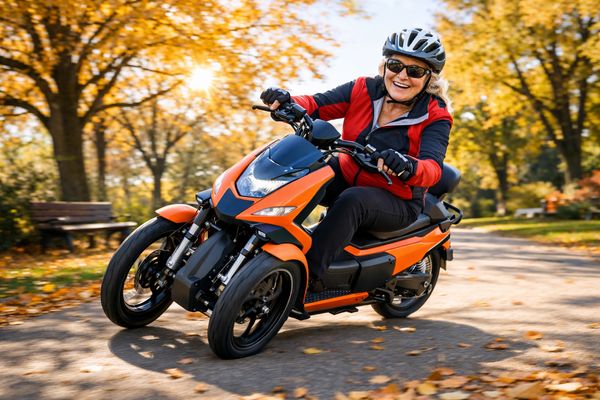 Embracing new adventures: Seniors finding freedom and fitness with modern e-trikes.The image 'senior-e-trike-outdoor-sports' visually represents a senior woman enjoying an e-trike on a park path, reflecting the blog's focus on e-trikes for seniors and outdoor sports. This visual is for illustrative purposes to enhance the theme of active aging and mobility.
For decades, the golden years often came with an unspoken expectation of slowing down, of trading invigorating outdoor pursuits for more sedentary pastimes. But a quiet revolution has been brewing, largely unseen by the mainstream, poised to redefine what active aging truly means. The electric tricycle, or e-trike, is no longer merely a mobility aid; it has evolved into a sophisticated piece of sports equipment, unlocking a vibrant new world of outdoor sports and adventures for seniors worldwide. In 2026, we are witnessing a pivotal moment where technological breakthroughs, shifting market dynamics, and a renewed focus on senior well-being converge to transform the e-trike from niche to mainstream, empowering an entire generation to rediscover the joy of motion and the thrill of the open air.
I've tracked countless trends in the sports world, but few hold the transformative potential of the modern e-trike for older adults. This isn’t just about getting from point A to point B; it’s about reclaiming independence, enhancing physical and mental health, and even entering competitive arenas once thought inaccessible. What makes this shift so profound? It’s the fusion of cutting-edge battery technology, intelligent safety systems, thoughtful engineering, and a regulatory landscape evolving to support this burgeoning movement. Join us as we explore the multifaceted world of e-trikes for seniors, uncovering how they are unlocking new outdoor sports and ushering in an era of unprecedented active aging.
How is the Global E-Trike Market Evolving for Seniors Through 2033?
The global e-trike market is undergoing a structural transformation, shifting dramatically from a basic utility vehicle to a high-performance, electrified sports and lifestyle industry. Industry data paints a compelling picture: while the overall trike market was valued at USD 2.84 billion in 2024, the electric segment is on an explosive trajectory, projected to soar from USD 10.70 billion in 2026 to over USD 47 billion by 2032, exhibiting an impressive 28.03% compound annual growth rate (CAGR). [1][2] This expansion is primarily anchored in North America and Asia-Pacific, regions experiencing significant demographic shifts and urbanization, creating a demand for stable, eco-friendly personal transport solutions that cater to an aging population’s desire for continued activity.
North America currently commands the largest revenue share, a testament to a burgeoning culture of 'active aging.' Retirees in the United States, in particular, are increasingly adopting e-trikes as premium alternatives to traditional motorcycles or even second cars for local errands and recreational rides. This trend has spurred manufacturers to rethink their distribution, moving from direct-to-consumer models to diversified retail strategies that place e-trikes in mainstream electronics and hardware stores, aiming to reach a broader senior audience. [3][8]
"We’re putting a significant investment into this direction in terms of tech development, for ease of ordering and additional people to support the channel."
Beyond sales, a crucial 'shadow-change' is occurring in product architecture. The traditional 'Delta' configuration (one wheel front, two rear), which dominated due to its cargo capacity and simpler engineering, is now being challenged by the 'Tadpole' design (two wheels front, one rear). While Delta trikes remain viable, the Tadpole configuration is gaining substantial traction for senior sports and higher-speed applications. This is because Tadpole designs offer superior directional stability, especially in turns, and improved braking performance, which are critical features for seniors looking to engage in more dynamic activities like trail riding or touring without the heightened risk of 'tripping' over the front wheel during sharp maneuvers. This technical evolution ensures greater confidence and safety for older riders seeking more adventurous outings.
Insight You Can Use:
As the market matures, the value of early-generation lithium-ion e-trikes may depreciate faster than newer models equipped with 2026-standard battery certifications. For the senior buyer, prioritizing models with recognized safety standards like UL 2849 will ensure both long-term resale value and operational safety. This certification indicates rigorous testing and compliance with electrical system safety, a critical factor for longevity and peace of mind. [11]
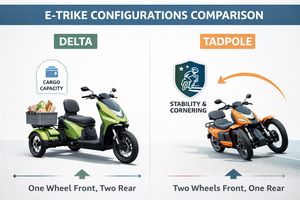 Delta vs. Tadpole: Understanding the core engineering differences in e-trike design.The image 'delta-vs-tadpole-trike' illustrates the engineering differences between Delta and Tadpole e-trike configurations. This visual aid is intended to clarify the technical nuances of tilting vs. rigid frame engineering, as discussed in the section, and is purely for illustrative purposes.
What Are the Clinically Proven Health Benefits of E-Triking for Older Adults?
The medical community's perception of e-trikes has undergone a significant transformation; they are no longer viewed merely as mobility aids but as sophisticated instruments for cardiovascular and muscular rehabilitation. Clinical research, particularly in Functional Electrical Stimulation (FES) and assistive cycling, highlights the profound physiological benefits. Studies have demonstrated that consistent e-trike use over six months can lead to a remarkable 34% increase in maximal muscle cross-sectional area (maxCSA). This directly combats sarcopenia, the age-related muscle loss that often contributes to increased fall risks in seniors. [13]
Cardiovascular health also experiences substantial improvement through the 'controlled exertion' facilitated by electric pedal-assist systems. Unlike traditional cycling, which can demand high burst-power for inclines, placing undue strain on an aging heart, e-trikes enable riders to maintain a steady cadence and heart rate. This reduces the risk of stroke or heart attack while still delivering the aerobic benefits essential for managing conditions like type 2 diabetes and hypertension. [14]
"Riding an e-bike provides low-impact cardiovascular exercise that strengthens the heart, improves circulation, and supports mobility without putting excessive strain on joints."
Beyond the undeniable physical gains, the psychological impact of 'unlocking' outdoor sports for seniors is profound. E-trike users report significantly higher levels of psychological well-being and a stronger 'intrinsic motivation to know' or master new outdoor environments. This mental engagement serves as a vital preventative measure against cognitive decline and depression, which are frequently exacerbated by the social isolation that often accompanies the loss of traditional mobility. The ability to independently navigate trails, visit friends, or simply explore fosters a 'social inclusive' environment that stationary exercise simply cannot replicate. This addresses an edge case where mobility limitations lead to not just physical decline, but also severe mental health impacts. [15][16]
Next Move to Consider:
Utilizing an e-trike for just 30 minutes a day can effectively reverse several markers of physiological aging. When selecting a model, look for one equipped with a torque sensor. This feature ensures that the electric assistance seamlessly matches your pedaling effort, providing a natural-feeling workout that protects your heart while efficiently rebuilding leg strength and promoting muscular hypertrophy.
How Will Solid-State Batteries and AI Redefine E-Trike Safety in 2026?
The year 2026 marks a 'leapfrog moment' for battery safety and overall intelligence in the e-trike industry. Traditional lithium-ion batteries, which rely on flammable liquid electrolytes, are being superseded in high-end models by solid-state batteries (SSB). These next-generation cells employ a superfluidized all-inorganic solid-state electrolyte, fundamentally eradicating the risk of thermal runaway and fires—a significant safety concern for seniors storing their vehicles indoors. Beyond safety, this technology boasts a 25-50% increase in energy density, meaning that 2026 e-trikes can achieve ranges of up to 100 miles on a single charge while being 15-20% lighter than current models. [4][17]
AI integration forms the second critical pillar of this safety revolution. New e-trike models arriving in 2026 will feature advanced systems for collision detection, adaptive headlights that respond to ambient light and turning angles, and real-time traffic alerts. These systems leverage IoT connectivity to monitor rider habits, subtly adjusting speed and braking patterns to prevent 'tipping' accidents that can occur when a rider over-compensates during a turn. This predictive safety mechanism is a game-changer for maintaining stability, especially for seniors with slower reaction times.
"ProLogium’s next-generation solid-state lithium-ceramic battery featuring our unique superfluidized all-inorganic solid-state electrolyte fundamentally addresses the thermal runaway and combustion risks inherent to conventional batteries."
An important technical nuance for 2026 is the widespread adoption of the Active Safety Mechanism (ASM). This system functions as a digital 'kill-switch' for the battery, detecting internal damage and preventing the slow-burn fires that have historically plagued the micromobility sector. Moreover, the transition to lightweight carbon fiber and advanced alloy frames means that even heavy-duty cargo trikes are becoming manageable for individuals with limited upper-body strength, significantly easing parking and transport challenges. [5][18]
Practical Steps You Can Apply:
If safety and longevity are your primary concerns, 2026 is an opportune year to consider upgrading or purchasing an e-trike. Prioritize models featuring 'Solid-State Ready' certification, which indicates compatibility with future battery upgrades, or those that include built-in AI obstacle detection. Such AI systems can significantly reduce the likelihood of low-speed falls by up to 40%, offering an unprecedented level of rider protection. [19]
What Are the Regulatory Changes Impacting Senior E-Trike Use in 2026?
Regulatory bodies worldwide are actively moving towards standardization to differentiate high-power 'mopeds' from legitimate e-bikes and e-trikes. In 2026, the overarching goal of these regulations is to meticulously balance road safety with the burgeoning growth of the green transport market. In the United States, most states have fully embraced the three-class system: Class 1 (pedal-assist only, 20 mph), Class 2 (throttle-assisted, 20 mph), and Class 3 (pedal-assist only, 28 mph). Critically, 2026 mandates require more stringent safety certifications for lithium-ion batteries, specifically the ANSI/CAN/UL 2849 standard, which encompasses the entire electrical drivetrain system to prevent fire hazards. [11][12]
California's SB 1271 has emerged as a national bellwether, necessitating that all e-mobility devices sold or leased within the state meet these rigorous UL standards. Non-compliance can lead to the reclassification of the e-trike as a motor vehicle, which then triggers the requirement for a driver's license, vehicle registration, and motor vehicle insurance—a significant hurdle for many seniors. [21]
"The CPSC has seen many lithium-ion battery home fires and deaths happen at night... use micromobility devices and batteries that have been designed, manufactured, and certified for compliance."
An often-overlooked 'edge case' for seniors involves throttle usage. While Class 2 e-trikes, which allow throttle-only operation, are popular for their ease of use, many European countries and specific U.S. National Parks prohibit throttle-only operation on multi-use trails. In these environments, the throttle must be physically or digitally disabled to comply with the 'pedal-only' definition of a bicycle, requiring riders to be aware of local regulations to avoid fines or vehicle impoundment. [20][22]
Key Lesson for Your Workflow:
Before purchasing an e-trike, diligently verify that the model carries a permanent regulatory label clearly indicating its class and power output. If you reside in or plan to travel to California, any e-trike acquired after January 1, 2026, must display a recognized laboratory certification mark (such as UL or ETL). Failure to do so could result in fines or even vehicle confiscation, highlighting the importance of regulatory compliance for safe and legal riding. [11]
Can E-Trikes Compete in Senior Competitive Leagues and National Games?
The competitive landscape for senior cycling is rapidly expanding, embracing e-trikes as legitimate sports equipment rather than just recreational vehicles. Events like the St. Louis Legends Games and the St. Louis Senior Olympics have already integrated categories for riders aged 50 and above to compete in short-course time trials, including 5-mile and 5K distances. While these events traditionally favored upright two-wheelers, the inclusion of 'Trike Recumbent' and 'Non-Fairing' categories has opened the door to a new demographic of athletes who may have previously been sidelined by balance issues. [23][24]
The physics of competition within the e-trike category introduces unique tactical elements. For instance, tadpole trikes (two wheels in front) offer a significant advantage in criterium racing—short-circuit races with numerous turns—because their design allows for harder and more predictable braking compared to delta trikes. This 'technical nuance' is fostering the growth of dedicated e-trike racing clubs within retirement communities, such as The Villages in Florida, where residents actively participate in organized, insured cycling events. [27]
"If it has wheels, you can and should use it! These St. Louis Legends Games cycling races will be open to athletes 50+ only."
The most significant development for 2026 in competitive senior e-triking is the robust push for 'Standardized Power Classes.' This initiative ensures that a rider on a 750W high-torque trike does not directly compete against a rider on a 250W light-assist model, thereby maintaining the competitive integrity and fairness of the sport. Furthermore, some leagues are experimenting with 'Heart Rate Normalization,' where points are awarded based on an athlete's effort relative to their maximum heart rate rather than just raw speed. This innovative approach effectively levels the playing field between participants of varying fitness levels, promoting broader inclusion and participation. This is a crucial edge case that demonstrates the industry's commitment to equitable competition for seniors. [25][26]
Next Move to Consider:
If you're considering entering the exciting world of competitive e-triking, a great starting point is to join a local 'Omnium' or time trial series. These events are often less intimidating than mass-start road races and provide a structured, measurable way to track your fitness progression using popular apps like Strava or the sixthreezero tracking system, allowing you to gradually build confidence and competitive experience. [28]
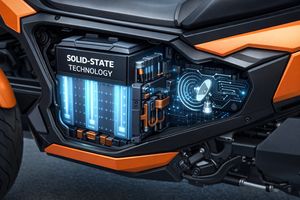 The future of e-trike safety: Solid-state batteries and AI integration.The image 'solid-state-battery-ai-safety' provides a conceptual visualization of futuristic e-trike battery technology and AI safety features. This illustration serves to depict how solid-state batteries and AI are set to redefine e-trike safety in 2026, as discussed in the corresponding section.
What are the Technical Nuances of Tilting vs. Rigid Frame Engineering?
The fundamental engineering choice confronting a senior e-trike rider is between a rigid frame and a tilting frame, each offering distinct advantages. Rigid trikes represent the industry standard for maximum inherent stability; they do not lean into turns, and all three wheels remain vertically fixed relative to the ground. This design is ideal for riders with severe vestibular (balance) issues or those who frequently need to stop and start without putting their feet down. However, rigid trikes are subject to a 'stability limit,' where centrifugal force during a high-speed turn can lift the inner wheel, potentially leading to a rollover—a critical safety consideration at speed. [6]
Tilting trikes overcome this inherent limitation by allowing the rider to lean into a turn, dynamically shifting the center of gravity and ensuring the resultant force vector remains within the triangle formed by the three wheels. This mimics the natural feel of a two-wheel bicycle, significantly enhancing cornering safety and comfort. [7]
"Tilting of the body significantly enhances cornering safety compared to non-tilting three-wheelers, providing better road grip and comfort to the passengers."
A 'secret knowledge' insight in advanced trike engineering is the '50% Tie-Rod Rule.' Research from TU Delft discovered that setting a tie-rod angle precisely halfway between 'free-tilting' and 'self-stable' modes provides optimal handling performance for urban commuting. This specific configuration allows for superior low-speed balance without sacrificing the agility necessary for moderate-speed maneuvers. This detail is often omitted by manufacturers who market trikes as purely 'rigid' or 'tilting,' overlooking the adjustable damping systems available in high-end 2026 models that offer this precise tuning capability. [9][10]
Practical Steps You Can Apply:
When choosing between frame types, consider your prior cycling experience and physical capabilities. If you are a former two-wheel cyclist, a tilting trike (such as the City Coco or FlexiLean) will minimize the learning curve, as its natural lean mimics traditional bike handling. Conversely, if you have significant joint stiffness or balance issues that prevent leaning, a rigid delta trike with a low center of gravity (like the Addmotor Grandtan) will provide the most secure and stable riding experience, ensuring maximum confidence. [29]
How Should Seniors Manage E-Trike Travel and Battery Logistics in 2026?
Travel logistics for e-trikes are becoming increasingly intricate due to stringent 2026 airline safety mandates. Both the Federal Aviation Administration (FAA) and the International Air Transport Association (IATA) have finalized rules that strictly prohibit lithium-ion batteries exceeding 160 Watt-hours (Wh) on passenger aircraft, whether in carry-on or checked baggage. Given that most e-trike batteries range from 500Wh to 1000Wh, the only legal method for air travel with your e-trike battery is to ship it separately via a certified hazardous materials (HazMat) courier or to rent a compatible battery at your destination. [30][31]
A new, critical requirement effective January 1, 2026, mandates that all lithium batteries shipped by air—whether contained within equipment or shipped independently—must be offered at a state of charge (SoC) not exceeding 30%. This is a vital safety measure designed to prevent thermal runaway in cargo holds, but it means travelers can no longer ship a fully charged e-trike and expect to ride it immediately upon arrival. [33][34]
"Starting January 1, 2026, lithium batteries shipped in- or with-equipment... must be offered for transport at a state of charge not exceeding 30%."
An important 'edge case' for battery care, especially during colder months, is the 'Lithium Plating' risk. This phenomenon occurs when a lithium-ion battery is charged at temperatures below 32°F (0°C). Charging in such conditions can lead to irreversible internal damage, permanently reducing the battery's capacity and potentially causing a short circuit. To prevent this, always bring your e-trike battery indoors and allow it to warm to room temperature before initiating the charging process. [38][39]
Next Move to Consider:
For seniors planning e-trike vacations, the actionable advice is unequivocal: never attempt to 'sneak' a large trike battery onto a flight in checked luggage; the thermal risk is substantial, and the legal penalties are severe. Instead, coordinate with local bike shops in your destination city (e.g., near major National Parks or popular cycling areas) to rent a compatible battery pack for your specific e-trike model. Alternatively, consider utilizing specialized e-bike shipping services like ShipToCycle or investing in a foldable trike model that can be more easily transported via train or RV, where battery restrictions are significantly less punitive. [32]
What are the Economic Implications of the E-Trike Transition for Seniors?
The transition to e-trikes for seniors is as much a shrewd financial decision as it is a health-conscious one. While high-quality e-trikes represent a significant upfront investment, often ranging from USD 2,000 to over USD 5,000 for advanced 2026 solid-state models, the return on investment (ROI) is realized through a substantial reduction in secondary transport costs and long-term healthcare expenses. For many older adults, an e-trike serves as a legitimate 'car replacement' for trips under 10 miles, effectively eliminating the recurring costs of fuel, insurance premiums, and routine maintenance associated with traditional automobiles. [29]
Philanthropic initiatives are also increasingly shaping the industry, with leaders like Levi Conlow of Lectric eBikes focusing on making this empowering technology accessible to a wider demographic. Lectric has achieved remarkable success, selling over 600,000 bikes, a feat attributed to their 'GUTS(e)' philosophy (Greatest Urban Transportation Solution Ever) which prioritizes affordability and exceptional customer experience over maximizing high profit margins. [35][36]
"The experience of having that initial success with electric skateboards — and then total failure — was invaluable... our success is attributed to listening to customers and giving them what they want."
A common misconception, an 'edge case' often overlooked, is that e-trikes are inherently more expensive to maintain than traditional bicycles. While the sophisticated electrical components do require specialized care, the absence of a conventional drivetrain in many high-end hub-motor trikes actually reduces mechanical wear and tear on chains and gears. For seniors on a fixed income, the long-term stability and reliability of a UL-certified e-trike can provide a predictable and low-cost mobility solution for up to a decade, offering significant savings compared to car ownership or extensive public transport use. [37]
Fiscal Move to Make:
When budgeting for an e-trike, it’s crucial to view it as a 'health-investment' and a 'transport-asset' rather than simply a recreational toy. The cumulative savings on gasoline, parking fees, and public transport fares alone can often recoup the initial cost of the e-trike in less than 24 months, particularly for those living in urban environments or retirement communities where daily errands and social activities are typically within a 5-mile radius, maximizing its utility and financial benefit.
E-Trikes & Senior Sports: Your Top Questions Answered
Are electric trikes safer than traditional bicycles for seniors?
How far can a 2026 e-trike travel on a single charge?
Can I ride an e-trike on bike paths and in National Parks?
What is 'Lithium Plating' risk and how to avoid it with e-trike batteries?
Do tilting trikes require more skill to ride than rigid ones?
Disclaimer: This article covers sports-related topics for informational purposes only. Statistics, commentary, and opinions may not be independently verified and should not be considered professional coaching or training advice. See our full disclaimer for details.