Cloud 3.0: Navigating Hybrid Ecosystems and AI's Next Frontier with Expert Insights
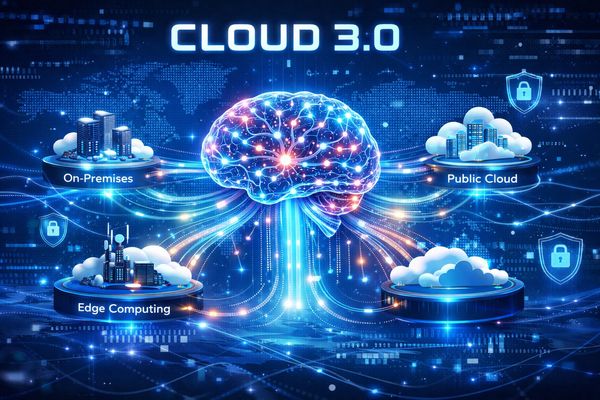 Cloud 3.0: The era of integrated hybrid ecosystems and AI-native intelligence.This image is a conceptual illustration and may not represent actual events, data, or entities.
The Dawn of Cloud 3.0: A Paradigm Shift in Digital Intelligence
The global digital economy stands at the precipice of a profound structural transformation, a seismic shift characterized by the powerful convergence of hyper-scale computing, agentic artificial intelligence (AI), and stringent sovereign data governance. This pivotal evolution, aptly termed Cloud 3.0, marks a significant departure from the centralized, general-purpose paradigms that defined the previous decade. It’s an era where the focus has irrevocably moved from mere cloud adoption to the sophisticated extraction of tangible cloud value, fundamentally reshaping how businesses operate and innovate.
The financial indicators underscore this transition with compelling clarity. By 2025, worldwide end-user spending on public cloud services surged to an impressive $723.4 billion, reflecting a robust 21.5% year-over-year increase [1]. This accelerated growth is largely propelled by the maturation of generative AI (GenAI) capabilities and the undeniable necessity for AI-native infrastructure. Projections from industry titans like Gartner and IDC further amplify this trend, forecasting that cloud spending will comfortably exceed $1 trillion by 2027 and ultimately reach a staggering $2.26 trillion by 2030, maintaining a formidable compound annual growth rate (CAGR) of 21.2% [1].
For executive leadership, the Cloud 3.0 era is defined not by the initial leap into the cloud, but by the strategic imperative of extracting profound value from these investments. While a remarkable 98% of organizations have embraced cloud-native techniques, a stark reality check reveals that only 10% have fully capitalized on the transformative potential of their efforts [3]. McKinsey's astute analysis identifies an colossal $3 trillion global value opportunity by 2030, with the overwhelming majority of these gains—approximately $2.3 trillion—originating from innovation-driven growth and accelerated product development, rather than a simplistic pursuit of IT cost reduction [5]. This fiscal reality has dramatically elevated infrastructure strategy from the server room to the boardroom, with research indicating that a commanding 72% of CEOs will assume primary decision-making roles for AI and infrastructure investments by 2026 [6].
The current technological transition is profoundly underpinned by what Deloitte terms “Inference Economics,” a pivotal shift where computational expenditure is increasingly directed from intensive model training to efficient model execution. By 2026, inference workloads are predicted to consume two-thirds of all AI computing power [7]. This critical shift mandates the adoption of a sophisticated, hybrid, and distributed architectural model that seamlessly integrates specialized hardware—such as NVIDIA Blackwell and Google TPUs—with autonomous orchestration mechanisms like Kubernetes and AI Agents, all while adhering to complex regional sovereignty frameworks such as GDPR, Gaia-X, and India's DPDP. This comprehensive exploration delves into these multifaceted drivers, offering a strategic roadmap for enterprises poised to conquer the next frontier of digital intelligence.
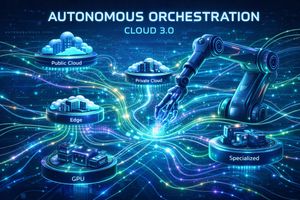 Autonomous orchestration: AI agents dynamically managing complex cloud environments for optimal performance.This image is a conceptual illustration and may not represent actual events, data, or entities.
Defining Cloud 3.0: Autonomous Orchestration and AI-Native Infrastructure
At its core, Cloud 3.0 is conceptually defined by an evolutionary leap: the transition from passive resource management to autonomous, intent-driven orchestration. Within this groundbreaking paradigm, the infrastructure layer transcends its traditional role as a static collection of virtualized resources. Instead, it transforms into a dynamic, self-regulating ecosystem meticulously engineered to host and scale the most demanding AI workloads [8]. This profound evolution is predominantly characterized by two seminal technical pillars: autonomous orchestration and the “AI Factory” architectural model.
The Mechanism of Autonomous Orchestration
Autonomous orchestration signifies the deployment of agentic AI systems that expertly manage the entire infrastructure lifecycle without necessitating manual human intervention. Unlike conventional automation, which rigidly follows pre-determined scripts, autonomous systems in the Cloud 3.0 paradigm operate with inherent intent. They ceaselessly optimize resource allocation in real-time, factoring in critical variables such as performance data, fluctuating costs, and even carbon intensity signals [7]. These sophisticated systems, frequently described as “cognitive digital brains,” possess the remarkable ability to dynamically juggle model selection, instance-type optimization, and even spot-versus-reserved pricing strategies to consistently maintain peak operational efficiency [7].
The burgeoning emergence of AI agents specifically designed for IT operations (AIOps) represents a monumental shift from a reactive monitoring posture to proactive, self-healing environments. These intelligent agents autonomously analyze capacity reservations and are capable of recommending intricate remediation strategies for complex failures that extend far beyond the scope of traditional IT playbooks [7]. By 2026, the market for autonomous AI agents is projected to reach an impressive $8.5 billion, emphatically underscoring their indispensable role as the primary interface for navigating the inherent complexities of hyperscale environments [7].
The AI Factory: A New Standard for Infrastructure
The architectural centerpiece of Cloud 3.0 is undoubtedly the “AI Factory”—a purpose-built data center environment meticulously engineered to meet the extreme power density and stringent low-latency requirements of large-scale neural networks [7]. Traditional “Cloud 2.0” data centers were conceived for general-purpose workloads, striking a balance between CPU-heavy processing and standard networking capabilities. In stark contrast, AI Factories are distinguished by a significantly higher ratio of GPUs to CPUs, frequently employing configurations where a single CPU coordinator orchestrates multiple high-performance accelerators that are co-packaged with high-bandwidth memory [6].
AI Factories leverage highly optimized networking protocols, such as InfiniBand and high-speed Ethernet, to drastically reduce tail latency—the inherent delay experienced by the slowest packets in a synchronized collective operation [10]. This advanced infrastructure maturity is absolutely essential for executing complex AI tasks, including “all-reduce” and “all-to-all” collectives, which form the foundational bedrock for training and serving transformer-based models [10]. As enterprises progressively transition toward these sophisticated models, the infrastructure itself evolves into a core component of the overarching business strategy, with a resounding 96% of C-level executives recognizing AI-native models as profoundly transformative for corporate decision-making [6].
Global Market Projections: Gartner and IDC Perspectives to 2030
The economic momentum driving Cloud 3.0 is truly unprecedented, with compelling market projections indicating that cloud computing will transcend its role as a mere technology disruptor and become a mandatory requirement for business survival by 2028 [1]. A meticulous analysis of data from Gartner, IDC, and Mordor Intelligence unveils a landscape characterized by high-velocity growth across all primary cloud segments.
Public Cloud Spending and Infrastructure Momentum
End-user spending on public cloud services is firmly on track to surpass $1 trillion by 2027 [1]. IDC’s 2025 analysis highlights a dramatic surge in cloud infrastructure spending, which witnessed an astonishing 99.3% year-over-year increase in late 2024 to reach $67.0 billion. This powerful momentum has seamlessly carried into a forecasted $271.5 billion for the full year 2025 [1]. Furthermore, Infrastructure-as-a-Service (IaaS) experienced robust growth of 22.5% in 2024, reaching $171.8 billion, as organizations strategically modernized their foundational infrastructure to accommodate demanding AI workloads [1].
Gartner research indicates that by 2029, a significant 50% of cloud compute resources will be dedicated specifically to AI workloads—a remarkable fivefold increase from 2024 levels [11]. This profound shift is actively driving a “cloud-first” strategy that now unequivocally dominates organizational planning across all sectors, with over 50% of enterprises leveraging industry cloud platforms to accelerate vertical-specific business initiatives [1].
Segmented Market Growth and CAGR Analysis
The Cloud 3.0 market is not expanding uniformly; rather, it is strategically segmenting into specialized domains that meticulously cater to specific AI requirements. Specialized providers, often referred to as “Neoclouds,” have rapidly emerged to deliver GPU-heavy, AI-optimized infrastructure precisely tailored to data-intensive needs [2].
Revenue opportunities are increasingly concentrated within Platform-as-a-Service (PaaS) offerings specifically designed for model training, fine-tuning, and inference [2]. A compelling example is Oracle’s cloud revenue, which is projected to skyrocket from less than $20 billion in 2024 to an astounding $144 billion by 2030, driven by an AI-driven contract backlog and massive capital projects, such as the visionary $500 billion Stargate data center [12].
Hybrid Interoperability: The Convergence of Kubernetes and Data Mesh
In the transformative era of Cloud 3.0, the concept of a “monolithic cloud” is rapidly being supplanted by a distributed, inherently hybrid ecosystem. The paramount challenge for modern architects lies in unifying disparate resources that span on-premises data centers, multiple public clouds, and increasingly vital edge locations. This intricate interoperability is achieved through the rigorous standardization of the container orchestration layer and the strategic decentralization of data ownership [13].
Kubernetes: The De Facto Operating System for AI
Kubernetes has transcended its origins as a niche tool for container management to become the fundamental backbone of modern enterprise infrastructure. According to the 2025 CNCF Annual Cloud Native Survey, a remarkable 82% of container users now deploy Kubernetes in production environments [4]. More significantly, 66% of organizations leverage Kubernetes to efficiently scale their AI inference workloads, firmly establishing it as the common denominator for achieving cloud-native stability and fostering innovation [4].
Kubernetes furnishes the “infrastructure-as-code” foundation indispensably required for Cloud 3.0’s autonomous systems. Leading organizations are enthusiastically adopting GitOps workflows, where both infrastructure and application configurations are meticulously stored in Git repositories and automatically synchronized to clusters. A substantial 58% of “cloud-native innovators” employ GitOps principles to guarantee consistency across their geographically dispersed deployments [15]. This robust standardization empowers enterprises to effectively circumvent vendor lock-in, enabling them to flawlessly run applications unmodified across AWS, Azure, Google Cloud, and even on-premises environments [16].
Data Mesh and Data Fabric: Unifying Distributed Information
To adequately fuel sophisticated AI models, data must be readily accessible irrespective of its physical location. To address this complex challenge, two complementary architectural patterns have prominently emerged:
- Data Fabric: This is a technology-centric approach that harnesses active metadata, advanced AI, and knowledge graphs to intricately weave together disparate data sources into a cohesive, easily accessible system [17]. It intelligently automates data discovery and governance, furnishing a “smart” data layer that consistently enhances both data quality and security [18].
- Data Mesh: Conversely, this is a process-centric approach that strategically decentralizes data ownership to specific business domains. In this innovative model, data is meticulously treated as a “product,” and individual teams assume full responsibility for the entire lifecycle and intrinsic quality of their respective datasets [14]. This paradigm effectively eliminates centralized bottlenecks, empowering organizations to scale their data operations at the precise velocity of their dynamic business domains [18].
By 2026, the prevailing industry standard is a sophisticated hybrid model that deftly combines the automation prowess of a data fabric with the domain-oriented ownership principles of a data mesh. This integrated approach ensures that AI agents are continuously supplied with a stream of cleansed, high-quality enterprise data [17].
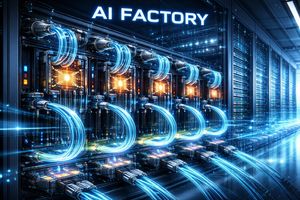 Inside the AI Factory: Liquid-cooled GPUs power the next generation of AI workloads.This image is a conceptual illustration and may not represent actual events, data, or entities.
AI Hardware Benchmarks: NVIDIA Blackwell vs. TPUs vs. Trainium
The intense competition for the “Silicon Crown” is a defining characteristic of the Cloud 3.0 transition. Hardware choices now directly dictate the economic viability and performance ceilings of AI products, as power consumption and memory bandwidth have become the primary constraints governing model performance [6].
NVIDIA Blackwell: The Standard for Universal Compute
NVIDIA’s formidable Blackwell GPU family (B100, B200) represents the current undisputed industry standard for raw, per-device compute power. The B200, in particular, offers an astounding 192 GB of HBM3e memory and a memory bandwidth of 8.0 TB/s, unequivocally positioning it as the preeminent leader for large language model (LLM) training and exceptionally complex scientific computing tasks [19]. For AI inference workloads, the B200 is reported to be an incredible 880% faster at half-precision compared to previous generations [20].
NVIDIA’s primary and enduring advantage lies in its comprehensive software ecosystem—CUDA, cuDNN, and TensorRT—which provides robust support for nearly all mainstream AI frameworks, making it the universal platform of choice for enterprise R&D [19].
Google TPU and Trillium: Scaling Through Coherence
Google Cloud’s Tensor Processing Units (TPUs), specifically the v5p and the upcoming Trillium (Ironwood) generations, approach AI compute from a distinctly cluster-centric perspective. While NVIDIA maintains a lead in single-device density, Google demonstrably dominates in cluster-scale throughput [19]. The Trillium generation is designed to achieve 4.6 petaFLOPS of FP8 compute per chip and leverages innovative optical circuit switching (OCS) to connect an astonishing 8,960 chips per pod, ultimately reaching multi-exaflop aggregate performance [19].
Historically, TPUs were exclusively confined to Google’s data centers. However, recent strategic shifts indicate that Google may soon offer TPUs for on-premise or co-location deployments, thereby positioning itself as a direct and potent alternative to NVIDIA in the highly competitive hardware market [21].
AWS Trainium: Energy Efficiency and Customization
Amazon’s Trainium and Inferentia chips are strategically focused on achieving superior price-performance and exceptional energy efficiency within the expansive AWS ecosystem. Trainium3, meticulously built on a 3nm process, boasts 40% greater energy efficiency than its predecessor and delivers an impressive 1.7x improvement in memory bandwidth [21]. AWS is also actively developing Trainium4, which is anticipated to offer a monumental 6x increase in FP4 performance and planned support for NVIDIA’s NVLink Fusion, facilitating the creation of heterogeneous compute clusters that seamlessly integrate AWS silicon with NVIDIA GPUs [21].
Regional Sovereignty Laws: Contrasting GDPR, Gaia-X, and DPDP
As digital infrastructure increasingly solidifies its position as a cornerstone of national power, regional laws are profoundly reshaping the global cloud architecture. Digital sovereignty is no longer merely a legal requirement; it has evolved into a critical architectural design constraint, dictating where “bits” reside and who possesses the authority to manage them [22].
Europe: From Privacy to Digital Autonomy
The European Union’s approach has evolved significantly, progressing from the foundational privacy protections enshrined in the General Data Protection Regulation (GDPR) to a far broader and more ambitious vision of digital autonomy [22].
- GDPR: This landmark regulation sets the global standard for data privacy and rigorously governs cross-border data transfers [23].
- Gaia-X: This is a federated open data infrastructure specifically designed to ensure that data sharing meticulously adheres to European values of sovereignty and transparency [24]. It intelligently integrates providers and consumers without the necessity for individual agreements, utilizing common standards for usage control [24].
- EU AI Act: This pioneering act provides a comprehensive, risk-based regulatory framework for AI, ensuring that systems are transparent, reliable, and trustworthy before they can enter the single market [25].
India: Democratization and Local Compute
India’s narrative intricately links AI to technology sovereignty and digital democratization. The Digital Personal Data Protection (DPDP) Act of 2023 mandates strict adherence to purpose limitation and consent, elevating sovereign cloud capabilities from optional to absolutely essential for regulated industries such as finance and healthcare [22]. India’s “IndiaAI Mission” is acutely focused on fostering domestic compute power, promoting the inclusion of local languages, and developing AI systems meticulously tuned to local realities rather than relying on imported assumptions [22].
In response to these evolving regulatory landscapes, enterprises are strategically creating “logically distinct zones” within their architectures. For instance, an “EU Sovereign Zone” might exclusively operate on EU-based data centers with carefully limited non-EU administrative access, while a “US & Global Zone” could permit more flexible cross-region training activities [22].
Sustainability Metrics: PUE, WUE, and Carbon-Aware Scheduling
The colossal energy and water demands inherent in Cloud 3.0 have propelled sustainability metrics to the forefront of operational strategy. By 2025, data center energy consumption is projected to reach 2% of global electricity usage, with a potential increase to a staggering 21% by 2030 [27].
Power and Water Usage Benchmarks
The industry standard for quantifying energy efficiency is Power Usage Effectiveness (PUE)—defined as the ratio of total power consumed by the facility to the power utilized by the IT equipment. Google’s data centers achieved an impressive average annual PUE of 1.09 in 2024, a figure significantly superior to the industry average of 1.56 [28]. Water Usage Effectiveness (WUE) is a parallel, crucial metric that focuses on the efficiency of water cooling systems. AI-native water treatment systems, such as Advanced Oxidation Processes (AOP), are being deployed to mitigate scaling and biofilm formation, enabling higher cycles of concentration and consequently reducing water waste [29].
Advanced Cooling: The Shift to Liquid
Traditional air cooling systems are proving increasingly insufficient for handling the 1.0 kW power draw of modern GPUs like the Blackwell B200 [20]. Consequently, Direct Liquid Cooling (DLC) and immersion cooling are rapidly becoming standard practices within AI Factories, delivering substantial energy savings ranging from 10% to 50% compared to legacy air cooling methods [29]. Liquid cooling is at least twice as energy-efficient as free air cooling and is absolutely critical for managing the intense heat generated by high-density server racks, which are projected to demand 50 times more power in 2027 than they did in 2022 [7].
Carbon-Aware Workload Scheduling
Carbon-aware computing involves strategically modifying the timing and geographical location of compute jobs to leverage the lowest-carbon energy sources available [30]. Cloud providers are actively implementing “Virtual Capacity Curves” (VCCs)—hourly limits that cap the resources available to real-time placement algorithms. This encourages the shifting of flexible, non-urgent workloads to periods characterized by high renewable energy availability [31].
- Time Shifting: This involves deliberately delaying workloads until the carbon intensity of the energy grid is at its lowest. For example, UBS and Microsoft successfully demonstrated a 15% reduction in software carbon intensity (SCI) by shifting risk analytics workloads to optimal execution windows [30].
- Spatial Shifting: This technique involves intelligently routing workloads among geographically separated data centers based on the availability of the greenest power supply [31].
Consultancy Insights: McKinsey, Deloitte, and Accenture on AI-Native Strategy
The world’s preeminent consultancies are in unanimous agreement: the infrastructure choices made during the critical 2025-2026 period will undeniably determine the competitive hierarchy for the next decade [6].
McKinsey: The $3 Trillion Value Opportunity
McKinsey’s extensive research emphatically highlights that while traditional IT savings contribute approximately $155 billion to cloud value, the true, colossal prize resides in innovation and accelerated product development, which collectively account for a staggering $2.3 trillion [5]. They identify a “cloud transformation engine” comprising three fundamental pillars: strategy and management, business-domain adoption, and the technical foundation [32]. Alarmingly, only 10% of organizations have fully captured this value, while a significant 40% have witnessed no material return on their cloud investments, often due to phenomena like “cloud sprawl” or stalled adoption initiatives [3].
Deloitte: The Rise of “Inference Economics”
Deloitte’s 2026 predictions underscore the pivotal shift from intensive model training to efficient model inference, which is projected to account for two-thirds of all AI compute power by 2026 [7]. They strongly advocate for a hybrid architecture, predicated on several critical “reckoning” factors:
- Cost Management: On-premises deployment often becomes more economically advantageous when public cloud costs surpass 60-70% of equivalent dedicated systems [7].
- Latency: Real-time AI applications, particularly in manufacturing or autonomous systems, demand response times of 10ms or less, thereby necessitating close proximity to data sources [7].
- IP Protection: Enterprises are increasingly engaging in “repatriating” workloads to safeguard sensitive data and invaluable intellectual property [7].
Accenture: The Age of Autonomy
Accenture’s “Technology Vision 2025” unequivocally declares this to be the transformative era of “AI-powered autonomy” [8]. A compelling 77% of executives concur that AI agents will fundamentally reinvent how their organizations construct digital systems [33]. Accenture identifies three foundational pillars for the technology landscape of tomorrow: Abundance (driving down cost), Abstraction (democratizing use), and Autonomy (self-governing systems) [33]. They posit that the most successful firms will be those that treat data as a “unifying asset” and proactively modernize their architecture to be inherently “AI-native” [9].
Diverse Case Studies with Quantifiable Outcomes
The practical and impactful application of Cloud 3.0 principles is vividly demonstrated across diverse global sectors, spanning from heavy industry to high-frequency finance.
APAC Manufacturing: Tata Steel and TSMC
Tata Steel ingeniously utilized advanced AI-driven analytics at its Kalinganagar plant to meticulously optimize energy consumption, throughput, and yield. This pioneering “digital steelmaking” initiative translated into an annual margin improvement of $10 million per plant [34]. Across its entire operational footprint, Tata Steel achieved remarkable savings of $1.4 billion by significantly reducing waste through the strategic deployment of AI and data analytics [35]. Crucially, every dollar invested in AI yielded an impressive $10 in value, demonstrating an outstanding 1:10 cost-benefit ratio [35].
TSMC (Taiwan Semiconductor Manufacturing Co.) exemplifies the profound power of hardware dominance. Propelled by its virtual monopoly on high-performance AI chips for industry giants like NVIDIA and Apple, TSMC recorded an astonishing 35% profit surge in late 2025, with net profits reaching $16.3 billion [36]. TSMC’s unparalleled ability to convert 54% of its revenue into profit is directly attributable to its undisputed leadership in advanced 3-nanometer and 2-nanometer processes, which are absolutely essential for Cloud 3.0’s cutting-edge hardware layer [36].
US Financial Services: JPMorgan Chase and Goldman Sachs
JPMorgan Chase commands the largest AI talent pool within global finance and has estimated a substantial $2 billion AI-related upside derived from back-office efficiencies and enhanced client-facing experiences [37]. During AWS re:Invent 2025, J.P. Morgan Payments showcased how AI, cloud technologies, and blockchain are being seamlessly combined to forge personalized payment journeys through their innovative “Payments Developer Portal” [38].
Goldman Sachs has successfully deployed a centralized “GS AI Platform” to over 46,000 global staff, with a primary focus on boosting task efficiency and overall productivity. This extensive rollout, following a highly successful 10,000-employee pilot, resulted in a significant 10-15% efficiency increase for complex tasks [39]. The platform operates within a meticulously firewalled environment, ensuring the utmost safety and confidentiality of proprietary client data while simultaneously accelerating model development [39].
EU Healthcare: Cancer Imaging and Precision Medicine
The European Union’s visionary “Cancer Imaging Initiative” aims to accelerate the deployment of AI solutions for personalized cancer treatment. By the close of 2026, the underlying infrastructure is slated to provide access to an impressive 60 million cancer images for research and development [25]. In both Germany and the UK, AI-driven diagnostics for pancreatic cancer and advanced drug sensitivity testing are actively contributing to improved remission rates by meticulously tailoring chemotherapy treatments to individual patient data [40]. The EU healthcare AI market is projected to reach an astounding $31.72 billion by 2030, a growth largely driven by the European Health Data Space (EHDS), which facilitates the secure secondary use of invaluable healthcare data [26].
Conclusion: Synthesizing the Cloud 3.0 Frontier
The transition to Cloud 3.0 represents nothing less than a fundamental redefinition of digital infrastructure—a profound shift from a “cloud-as-a-utility” model to a far more sophisticated “cloud-as-an-intelligence” model. Success in this complex new frontier is by no means guaranteed by the simple act of adoption; rather, it absolutely demands an integrated, holistic strategy that meticulously addresses the intricate interplay of specialized hardware, autonomous orchestration, and robust governance frameworks. The emergence of the AI Factory as the new standard for infrastructure unequivocally reflects the highly specialized nature of Cloud 3.0, where peak performance is intrinsically dictated by liquid-cooled GPUs and high-bandwidth memory architectures [7].
Organizations must skillfully navigate the intricate “Inference Economics” of the late 2020s, expertly balancing the immense scalability and agility of the public cloud with the crucial cost-efficiency and enhanced security offered by on-premises and sovereign environments [7]. As AI agents increasingly assume direct management of the very systems that host them, the critical role of human leadership will inevitably pivot toward essential functions such as judgment, ethical oversight, and strategic direction [41]. Those enterprises that successfully integrate these sophisticated hybrid ecosystems, while simultaneously adhering to burgeoning regional sovereignty laws and critical sustainability mandates, are uniquely positioned to capture the lion’s share of the projected $3 trillion value prize [5]. Cloud 3.0 is far more than a mere technical upgrade; it is the foundational infrastructure for a future where intelligence is ubiquitous, inherently autonomous, and meticulously governed by an evolving new set of global digital standards.
Disclaimer: This article discusses technology-related subjects for general informational purposes only. Data, insights, or figures presented may be incomplete or subject to error. For further information, please consult our full disclaimer.