Ethical AI & Beyond: Navigating Public Perception and Global Regulatory Responses
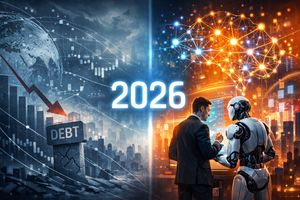
 Navigating the complex intersection of AI ethics, public perception, and regulatory frameworks.This image is a conceptual illustration and may not represent actual events, data, or entities.
Artificial intelligence (AI) has rapidly moved from research labs into everyday life, reshaping industries, societies, and individual experiences. Its diffusion has sparked a global dialogue about both its transformative potential and the ethical guardrails needed to ensure responsible use. According to Pew Research, a majority of adults across 25 countries have at least some familiarity with AI, but concern often outweighs excitement [1]. The Stanford AI Index reported that 55% globally now view AI as more beneficial than harmful, up from 52% in 2022 [2]. Meanwhile, 53% of people say AI has already changed their lives, and 67% expect further change within the next 3–5 years [3].
Public Awareness and Sentiment Worldwide
Surveys reveal high awareness but ambivalent attitudes. Pew’s global survey found concern about AI’s risks often outweighs excitement [1]. Ipsos reported an almost even split: 52% excited about AI-based products and services, versus 53% nervous [3]. Economic context plays a role—countries anticipating strong economic benefits, such as Thailand and Indonesia, tend to be more optimistic. In contrast, affluent nations are more cautious. Data from Stanford shows developing economies like China, India, Indonesia, and Kenya are unusually positive, with over 80% seeing benefits, compared to less than 40% in Western countries [2].
Trust in Institutions vs. Companies
Public trust in AI governance is fragile. Ipsos found 54% trusted their government to regulate AI, while only 48% trusted companies to safeguard AI uses and personal data [3]. Pew reported majorities in most countries want their government to regulate AI “to protect people” [1]. Yet confidence is tempered: in 2024, only about half of U.S. adults trusted major AI firms to handle data responsibly, down from 58% in 2016 [2]. Interestingly, Ipsos found 54% trusted AI not to discriminate, compared to 45% who trusted other people to be fair [3].
Use and Exposure
AI tool usage is growing but uneven. In the U.S., 50% of adults reported using at least one major AI tool, such as ChatGPT or an image generator [5]. Recognition outpaces use: 65% recognized ChatGPT, but only 37% had used it [5]. Usage is higher among younger, higher-income, and college-educated demographics [5][6]. Globally, 73% say they understand what AI is, but only 30% had heard of “deepfakes” [4].
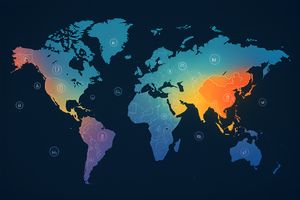 Regional disparities underscore the diverse global perspectives on AI's impact and potential.This image is a conceptual illustration and may not represent actual events, data, or entities.
Regional Variations in Attitudes
North America
In the U.S., 72% of Americans view national leadership in AI as important to national interests [7]. Yet Pew found 52% of workers worried about AI’s future in the workplace, compared to 36% hopeful, with 32% fearing job displacement [6]. Canadians show similar ambivalence, with privacy and job loss concerns alongside optimism.
Europe
Europeans have historically been cautious. In 2022, only ~35% saw more benefits than harms, compared to 80% in emerging economies [2]. Optimism has grown fastest in previously negative countries. Pew found 75% of Europeans aware of EU AI regulation drafting, with majorities supporting strong safeguards [1].
Asia-Pacific
China and Singapore show high enthusiasm—83% of Chinese respondents saw AI benefits in 2024 [2]. India shows moderate caution, with half trusting government regulation but worrying about misinformation [4]. Japan’s public supports government guidelines amid rising awareness of risks.
Latin America and Africa
Brazil and Mexico show high excitement about AI’s economic potential, though 67% expect job disruption [3][16][17]. In Africa, Kenya and Nigeria show strong interest in AI education, alongside calls for government oversight [19].
 Governments worldwide are implementing diverse regulatory strategies to govern the rapid advancement of AI.This image is a conceptual illustration and may not represent actual events, data, or entities.
Ethical Considerations and Public Concerns
UNESCO’s Recommendation on the Ethics of AI emphasizes human rights and dignity [8]. The OECD’s AI Principles call for transparency and accountability [9]. Key concerns include:
- Bias and Discrimination: AI can replicate or worsen inequalities, such as facial recognition errors.
- Privacy and Surveillance: Risks include scraping of social media images and emotion recognition cameras, banned under EU rules [10]. Surveys show majorities want regulation to protect privacy [1][3].
- Misinformation and Deepfakes: Only 30% globally had heard of deepfakes [4]. The EU AI Act targets AI-generated disinformation [11].
- Accountability and Transparency: 79% of people want companies to disclose AI use [3].
- Economic and Labor Impact: 36% of Americans think AI could replace their jobs within five years; globally, 60% agree AI will transform jobs [2].
Global Regulatory and Policy Responses
United Nations and Global Initiatives
In March 2024, the UN General Assembly adopted its first AI resolution, calling for safe and trustworthy AI systems [18]. UNESCO’s Recommendation and OECD’s Principles provide global baselines [8][9].
European Union
The EU AI Act, entering into force August 2024, categorizes AI systems by risk and imposes strict obligations on high-risk applications [11].
United States
The U.S. has no single federal AI law. President Biden’s 2023 Executive Order established guiding principles [12]. Colorado enacted the first comprehensive state AI law in 2024 [19].
United Kingdom
The UK’s 2023 White Paper outlined a pro-innovation approach [14]. In 2024, King Charles’ Speech announced legislation for powerful AI models [13].
Canada
Canada is crafting an omnibus law. The AI and Data Act (Bill C-27) is under parliamentary review; if passed, it would regulate “high-impact” AI systems and prohibit harmful uses such as scraping sensitive images without consent [15]. Until then, Canada relies on sector laws and guidance. Ontario in 2024 became the first jurisdiction to require employers to disclose AI use in hiring [15]. Federal agencies and provinces have issued non-binding guidance on generative AI and privacy, emphasizing consent and restrictions on harmful uses.
Latin America and Asia-Pacific
Brazil and Mexico are actively exploring AI regulation, with Brazil’s framework tracked by White & Case [16] and Mexico’s proposed bill detailed by FairNow AI [17]. In Asia-Pacific, countries like Singapore, China, Japan, India, and Australia have introduced frameworks or guidelines, with China requiring labels on AI-generated content and Australia issuing voluntary guardrails [19].
Middle East and Africa
Leading Middle Eastern states have adopted national AI strategies, such as the UAE’s National AI Strategy 2031 and Saudi Arabia’s Vision 2030. African countries including South Africa and Kenya are formulating national AI strategies and discussing regulatory approaches at regional forums, often in cooperation with UNESCO and the UN [19].
Building Public Trust through Education and Policy
Although large majorities claim to “understand AI” broadly, detailed knowledge is lacking [4]. Both governments and civil society are pushing for AI literacy initiatives: from school curricula to public information campaigns. UNESCO and the European Commission have funded educational resources on AI ethics [8]. Early evidence suggests education can shift attitudes: more tech-savvy respondents in surveys tend to be more optimistic about AI’s benefits [7], while lower-income or less-educated groups tend to express more fear [6].
In conclusion, global public opinion on emerging AI technologies is highly engaged but cautious. People recognize AI’s transformative power but demand ethical guardrails and transparency. Around the world, governments are moving to align policy with these public demands – codifying principles into laws like the EU AI Act, or into strategy documents like the U.S. executive orders. The interplay between public perception and regulation is two-way: public concerns drive the regulatory agenda, and effective regulation can bolster public trust. As AI continues to advance, maintaining this balance between innovation and ethical safeguards will be a defining challenge.
Disclaimer: This article discusses technology-related subjects for general informational purposes only. Data, insights, or figures presented may be incomplete or subject to error. For further information, please consult our full disclaimer.