
The 2026 'Whycation': Unlock Your Purpose with the Ultimate Travel Planner
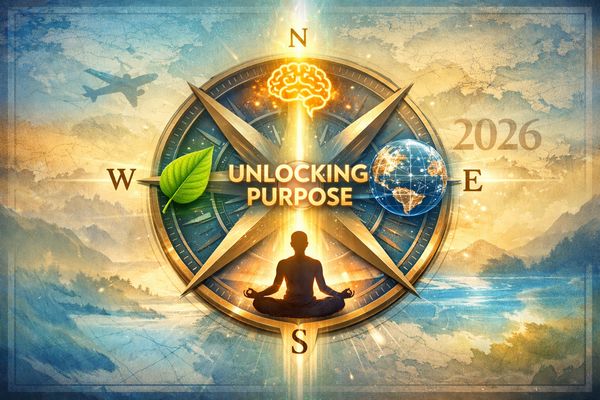 Unlock your next adventure with purpose: The Ultimate 'Whycation' Planner for 2026.This image is a conceptual illustration created for inspirational and editorial purposes only. It does not represent an official travel service, booking platform, or guaranteed travel experience for 2026.
Sarah had always been a planner. Her calendar was a vibrant tapestry of meetings, deadlines, and social engagements. Yet, as 2025 drew to a close, a subtle unease gnawed at her. The endless cycle of 'doing' left her feeling strangely empty, like a well-traveled path that led nowhere in particular. She yearned for something more than just a destination; she craved a profound reason, a deeper resonance in her journeys. Little did she know, the world was already shifting to meet her unspoken need – ushering in the era of the 'Whycation'.
For too long, travel has been defined by the 'where' and the 'what.' Where are we going? What will we see? But in 2026, a fundamental paradigm shift is underway, propelled by a global re-evaluation of human intention. The World Travel & Tourism Council (WTTC) reports a staggering $11.7 trillion global economic contribution, representing 10.3% of global GDP, a record-breaking zenith in the industry's recovery and expansion [1]. Yet, as fascinating as these economic metrics are, they merely scratch the surface of a deeper truth: the primary driver for travel in 2026 is no longer destination status but emotional intention. Recent research from Hilton reveals that travelers are increasingly planning journeys around specific purposes – rest, renewal, reconnection, and contributing to regenerative social models [2][3]. Welcome to the age of the Whycation, where every trip is an intentional step towards unlocking your deeper purpose.
The Whisper of the Soul: Why Purpose-Driven Travel is 2026's Hottest Trend
Think about it: when was the last time a trip genuinely changed you? Not just a pleasant escape, but a journey that rewired your perspective, ignited a new passion, or brought profound clarity? This isn't just a romantic ideal; it's a scientifically validated phenomenon. Emerging psychological research from 2024–2025 highlights the brain's profound response to novelty and distance, positioning travel as a powerful intervention for cognitive decline and emotional stagnation [4].
When Sarah, a corporate lawyer, first heard about this, she was skeptical. She’d always believed vacations were for de-stressing, not for deep personal work. But the concept of a 'Whycation' resonated with her growing unease. What if she could tailor her next trip to not just escape, but to evolve?
Neuroscience tells us that navigating unfamiliar environments—like a bustling foreign market or a city with a new language—triggers neuroplasticity, the brain's incredible ability to reorganize itself [35]. The brain releases dopamine, a neurochemical that enhances learning, memory, and synaptic plasticity in key areas like the hippocampus. Essentially, 'getting lost' or adapting to new social norms isn't just an adventure; it's a mental workout that forces your brain to think creatively and break free from habitual patterns [5]. Imagine the vibrant streets of Marrakech, the scent of spices, the kaleidoscope of colors – your brain isn't just observing; it's actively rewiring, building new pathways with every sensory input. This is not passive relaxation; it's active rejuvenation.
Beyond cognitive benefits, there's the profound state of 'awe.' Studies show that experiences of awe – gazing at a majestic mountain range or standing before an ancient monument – reduce self-focused brain activity and increase vagal tone, leading to lower inflammation and better emotional regulation [5]. For young adults, this 'awe-induced plasticity' is crucial for developing cognitive flexibility, fostering adaptability to diverse perspectives and complex global challenges [7]. Sarah realized her yearly beach retreat, while relaxing, rarely offered this profound sense of awe. Her next trip needed a spark, a catalyst for real change.
2026: A World Stage for Your Whycation
The year 2026 isn't just another year; it's a global tapestry woven with mega-events and transformative shifts, offering unparalleled opportunities for purpose-driven travel. Imagine synchronizing your personal quest with the pulsating rhythm of the world!
The Roar of the Crowd: FIFA World Cup 2026
For sports enthusiasts or those seeking cultural immersion through the universal language of football, the FIFA World Cup 2026 will be the largest in history. Featuring 48 teams and 104 matches across 16 cities in Canada, Mexico, and the United States, it’s an unprecedented logistical marvel [34]. The opening match on June 11, 2026, in Mexico City's Estadio Azteca, will kick off a month of unparalleled global camaraderie [34]. Consider transforming your love for the game into a 'Fan Voyage' – not just attending matches, but exploring the vibrant cultures of the host cities, from the historic charm of Mexico to the diverse metropolises of the U.S. and Canada. Philadelphia, for example, will align its five group matches and a Round of 16 game with the U.S. Semiquincentennial celebrations [9], offering a dual dose of national pride and sporting excitement.  The roar of the crowd: Experience the FIFA World Cup 2026 across North America.This image is a conceptual artistic representation created for illustrative purposes. It is not an official image of the FIFA World Cup 2026™ or affiliated with FIFA.
Winter Wonderland: Milano Cortina 2026 Winter Olympics
If the allure of snow-capped mountains and athletic prowess calls to you, the XXV Winter Olympic Games (February 6–22, 2026) in Northern Italy will be the most geographically widespread Winter Olympics to date [10]. Milan, Cortina d'Ampezzo, Livigno, and Bormio will host events, all united under the theme of 'Armonia' (Harmony) [10]. This is the first time two cauldrons will be lit simultaneously in different locations [10], a symbol of unity. Perhaps your 'Whycation' is about witnessing human endurance, exploring breathtaking Alpine landscapes, or experiencing Italy's rich cultural heritage in its winter glory. The focus on reusing existing arenas and iconic landscapes to minimize environmental footprint [11] also aligns perfectly with a regenerative travel intention.
Celestial Spectacle: The Total Solar Eclipse
For those seeking profound experiences of awe, mark your calendars for August 12, 2026. Mainland Europe's first total solar eclipse since 1999 will sweep through Russia, Greenland, Iceland, Spain, and Portugal [12]. The maximum totality of 2 minutes and 18 seconds will occur just off Iceland's western coast [14]. Imagine standing under a darkened sky, feeling the sudden chill, and witnessing the sun's ethereal corona – an experience that profoundly reduces self-focused brain activity and boosts emotional well-being [5]. Northern Spain and Portugal are predicted to offer the highest probability of clear skies [13], making them prime 'Whycation' destinations for this celestial marvel.
Celebrating a Nation: America250
The United States will celebrate its 250th anniversary on July 4, 2026. Philadelphia will be the epicenter, but events will unfold across Washington D.C., New York, and all 50 states [9]. For those seeking to reconnect with national identity, explore history, or engage in community celebrations, America250 offers a powerful 'Whycation' opportunity. Flagship events like the 'Red, White, & Blue To-Do' in Philadelphia and 'America's Field Trip' provide rich opportunities for engagement [9].
Navigating the Digital Borders of Tomorrow
While the 'Why' defines your trip, the 'How' is increasingly digital. 2026 marks a significant transformation in global border management, moving away from physical documentation towards seamless, digital verification. The European Union is at the forefront of this shift, with the full implementation of the Entry/Exit System (EES) across all 29 Schengen countries by April 10, 2026 [15]. This system replaces traditional passport stamps with digital biometric records, including facial scans and fingerprints [15]. While your first entry might take a few extra minutes, it's designed for long-term efficiency and security.
Later in 2026, the European Travel Information and Authorisation System (ETIAS) will become mandatory for approximately 1.4 billion people from 59 visa-exempt countries [16]. This pre-travel authorization, linked to your passport, is valid for three years. For your 'Whycation,' this means planning ahead to ensure a smooth, friction-free journey into Europe's heartland.
Complementing these systems, the World Health Organization (WHO) is advancing the Global Digital Health Certification Network (GDHCN). This network allows countries to verify health certificates, like the International Certificate of Vaccination, securely and privately [17]. Over 80 countries have already joined [17], ensuring that health checks remain efficient and privacy-protected, even in an interconnected world.
The Nomad's Horizon: Your Office is Where Your Purpose Is
For many, 2026 offers not just a vacation but a complete lifestyle re-evaluation. The rise of digital nomadism has reached a critical mass, with over 66 countries now offering dedicated visas for remote workers [18]. This isn't just a trend; it's a core pillar of wellness tourism and real estate [23], allowing professionals to integrate work with their 'Whycation' goals.
Imagine starting your day with a morning surf in Portugal before diving into your work, or exploring ancient ruins in Thailand after a productive afternoon. Popular digital nomad hubs like Spain offer attractive 'Beckham Law' tax incentives [20] and a pathway to permanent residency, while Portugal requires a minimum monthly income of €3,680 and a 12-month accommodation contract [18][21]. Thailand's Destination Thailand Visa (DTV) offers a 5-year program with a flat fee and financial evidence [22]. The UAE continues to attract with zero-tax jurisdictions and high-quality infrastructure [23]. These opportunities mean your 'Whycation' can extend far beyond a few weeks, allowing for deep immersion and sustained purpose-driven living.
Beyond Tourism: Becoming a Regenerative Traveler
The 'Whycation' movement is deeply intertwined with regenerative tourism – a conscious choice to not just visit, but to restore the environments and communities you encounter. This sector is growing at an impressive 11–15% annually [23], significantly outpacing conventional travel. It’s about leaving a place better than you found it.
Sarah once volunteered at a local animal shelter, feeling a deep sense of fulfillment. What if her travels could evoke a similar, profound impact? This realization led her to explore destinations celebrated for their regenerative practices.
Consider Bhutan, the land of Gross National Happiness. Its 'High Value, Low Volume' policy is backed by a Sustainable Development Fee (SDF) of $100–$200 per day, directly funding carbon-neutral infrastructure and community projects [23]. In 2026, Bhutan is even focusing on 'Regenerative Wellness,' blending traditional healing with Buddhist philosophy [24]. It's a country where every visitor is an active participant in its ecological and cultural preservation.
Costa Rica, with its 'Pura Vida Roadmap,' has moved beyond sustainability to regeneration through its Certification for Sustainable Tourism (CST) [25]. The 'Huella del Futuro' (Footprints for our Future) initiative allows travelers to plant trees in biological corridors [26], directly contributing to ecosystem restoration. Hotels actively adopt local schools and reforest degraded land [25], transforming tourism into a vehicle for healing.
Slovenia, a global leader in green tourism, boasts the 'Green Scheme of Slovenian Tourism' (GSST). In 2025, eight Slovenian destinations were recognized in the Green Destinations Top 100 Stories for their 'zero-waste' event management and local supply chain projects [27]. A 'Whycation' here means immersing yourself in a country where every aspect of tourism is designed to support the local economy, socio-cultural fabric, and natural environment [28].
The Wellness Revolution & Your AI Concierge
The wellness tourism sector is booming, projected to jump from $830 billion to over $1.3 trillion by 2028 [23]. This growth is fueled by 'The Rise of Neurowellness,' a recognition that regulating our nervous system is the next frontier of health [29]. For Sarah, who often found herself on the verge of burnout, this was a revelation. Her 'Whycation' could be about proactive mental and physical restoration, not just reactive recovery.
Mental wellness, driven by a younger generation prioritizing well-being, grew at an annual rate of 12.4% over the last five years [30]. This isn't just about spa treatments; it's about deep, internal work, often facilitated by novel environments. Imagine a retreat focused on 'Hushpitality' – silence and digital detox to recharge your nervous system [31] – or a journey to explore your ancestral roots through 'Inheritourism,' a growing trend with 52% of families planning such trips [3].
And how do you plan such a deeply personal, purpose-driven journey amidst the logistical complexities of 2026? Enter Artificial Intelligence. AI has moved beyond simple recommendations to become 'agentic' – capable of booking and managing complex itineraries. Expedia, for instance, is integrating its lodging inventory with Amazon Alexa+ [32], allowing you to simply ask your assistant to suggest, compare, and book accommodations. Expedia's Trip Matching uses generative AI to convert social media content into specific trip recommendations [33]. And Comet, a new AI browser from Perplexity in partnership with Expedia [32], is designed for deep travel exploration and verification. Your 'Whycation Planner' can now be a sophisticated AI companion, handling the friction so you can focus on the purpose. 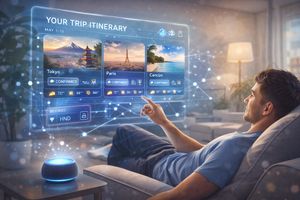 Your ultimate travel concierge: AI agents transform complex itineraries into seamless 'Whycations'.This image is a conceptual illustration created for creative and editorial purposes. It does not represent a real product, platform, or specific AI service.
The Ultimate 'Whycation' Planner: Charting Your 2026 Purpose
So, how do you operationalize this vision for 2026? How do you transform the abstract desire for purpose into a tangible, life-changing journey? The answer lies in a strategic synthesis of intention, logistics, and conscious engagement.
Step 1: Define Your Intention – The Heart of Your Whycation
This is the most crucial step. What is your deep 'why' for traveling? Are you seeking 'Hushpitality' for profound rest and digital detox, or a 'Fan Voyage' to immerse yourself in a cultural event like the FIFA World Cup or a local festival [31]? Do you yearn for personal renewal, cognitive flexibility, or to contribute to a greater good? Be specific. Your intention will be the compass guiding all subsequent decisions.
Step 2: Select Your Regenerative Hub – Where Purpose Flourishes
Align your intention with destinations that actively support your 'why.' If environmental stewardship is key, choose destinations with verified certifications like Slovenia Green Gold or Costa Rica's CST hotels, where your travel dollars directly fund ecological restoration [25]. If cultural immersion and peace-building resonate, consider areas supported by UN Tourism's initiatives, which leverage travelers as global ambassadors for dialogue [34].
Step 3: Optimize with AI Agents – Your Friction-Free Journey
Once your intention and destination are clear, let AI handle the logistical heavy lifting. Utilize tools like Alexa+ for booking accommodations or Expedia's AI initiatives to streamline complex itineraries [32]. This frees your mental energy to focus on the transformative aspects of your journey, rather than the mundane details of planning.
Step 4: Incorporate Cognitive Novelty – Rewire Your Brain
Actively seek out experiences that challenge your brain. This could be learning a traditional craft from local artisans, participating in a local harvest, or simply navigating a new public transit system in a foreign city [5]. These activities aren't just fun; they trigger the neuroplastic benefits of travel, enhancing your cognitive flexibility and memory.
Step 5: Monitor Health and Security – Seamless Global Mobility
Ensure your journey is smooth by staying compliant with 2026's new border requirements. Familiarize yourself with the EES and ETIAS for European travel and secure your GDHCN digital health certificate to ensure seamless movement across international borders [17].
The Journey Within, The Journey Beyond
The 2026 'Whycation' is more than a trend; it's a definitive answer to a world characterized by both exhaustion and a profound search for meaning. The $11.7 trillion travel and tourism sector is no longer just an economic engine; it's a primary driver for global well-being and neuro-cognitive health [1]. As IATA projects 5.2 billion air travelers globally in 2026 [35], and the wellness sector climbs towards its $10 trillion target [30], the focus shifts towards 'Universal Principles': leaving no one behind, decoupling growth from emissions, and ensuring that every contribution matters [34].
For Sarah, that initial whisper of unease transformed into a roar of purpose. Her 'Whycation' to Slovenia, focused on regenerative volunteerism and culinary immersion, not only rejuvenated her but left her with a profound sense of connection to the planet and a newfound clarity in her career. She returned home not just rested, but fundamentally rewired.
The ultimate 'Whycation Planner' for 2026 isn't merely a document; it's a mindset – a commitment to travel with purpose in a world that finally values the 'Why' as much as the 'Where.'
Disclaimer: This article discusses travel-related topics for informational purposes only. Travel conditions, costs, and availability are subject to change without notice. For further details, please see our full disclaimer.