The Shocking Blueprint: Why EVERYTHING Blows Up in 2025 – From Labubu Chic to Retro '67 Vibes!
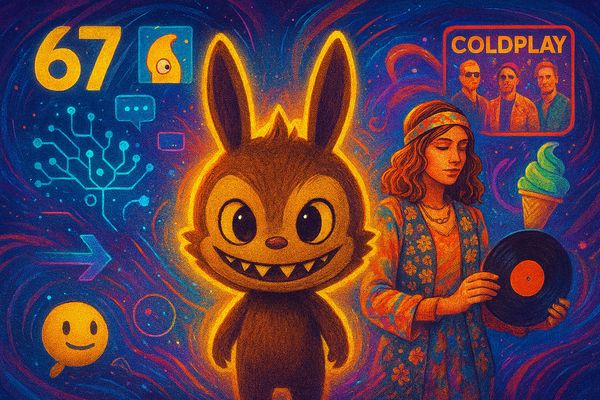 Unlocking the secrets of virality in 2025: Where past aesthetics meet future tech.This image is a conceptual illustration and may not represent actual events, data, or entities.
Alright, fam, buckle up! We're diving headfirst into the wild, unpredictable, and frankly, kinda shocking world of virality in 2025. Remember when going viral felt like a lucky accident? A one-in-a-million shot? Yeah, nah. That’s ancient history. In 2025, everything—and we mean everything*—has a blueprint for blowing up. From those irresistibly 'ugly-cute' Labubu figures taking over your feeds to the unexpected resurgence of '67 Summer of Love aesthetics, there's a method to the madness. It's not magic; it's meticulously engineered, and we’re about to spill the tea on how it all works.
So, what's blowing up this week? The global cultural and commercial landscape of 2025 is a whole new beast. We're talking about a radical reorganization of how information, aesthetics, and even consumer products achieve ubiquity. The old guard—your 'social graph' with its friend-and-family networks that once ruled the internet—is officially D-E-A-D. It’s been totally superseded by the 'interest graph,' an algorithmic architecture that's all about content relevance and behavioral affinity, ditching those dusty interpersonal connections [1]. This seismic shift? It’s birthed a phenomenon where hyper-niche intellectual properties, like the adorable (and slightly mischievous) Labubu vinyl figures, and specific historical revivals, such as the '67 Summer of Love vibe, can achieve multi-billion-dollar global status in a blink. Seriously, in a matter of months! [2] The secret sauce? It’s a meticulously engineered confluence of predictive AI modeling, celebrity catalysts (hello, Lisa!), and a whole new era of 'Newstalgia' that’s bridging the generation gap through tactile, emotional experiences [4]. Let’s break it down.
The Great Algorithmic Migration: From Social Networks to Interest Clusters
Listen up, because this is the core of the 2025 viral economy: the fundamental flip in social media architecture. Platforms have done a complete 180, transitioning from people-centric environments to hyper-focused, content-centric discovery engines [6]. In this brave new world, visibility isn't earned by how many followers you've got. Nope. It's all about the intensity of engagement signals. This 'meritocracy of relevance' means that a creator with, like, zero followers can still hit millions if their content triggers those specific algorithmic weighting factors – think sky-high completion rates and immediate rewatch behavior [7]. It's all about the hook, baby!
Here’s a quick peek at how the algorithmic weighting has flipped:
| Ranking signal | Relative weight (social graph) | Relative weight (interest graph) | Impact on virality |
|---|---|---|---|
| Follower count | 85% | 15% | Decreasing relevance of audience size |
| Watch time (first 3s) | 10% | 45% | Critical for the “hook” economy |
| Rewatch rate (loops) | 5% | 30% | Signal for “hyper‑engagement” |
| Share‑to‑view ratio | 25% | 50% | Primary driver for platform amplification |
| Keyword relevance | 15% | 40% | Foundation of the “keyword revolution” |
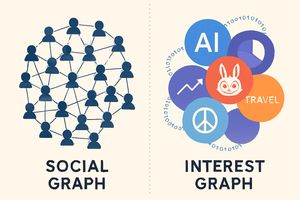 The great algorithmic migration: From 'who you know' to 'what you love.'This image is a conceptual illustration and may not represent actual events, data, or entities.
This architectural glow-up is best seen in the 'TikTokification' of legacy platforms. By December 2025, even Instagram and Weibo had fully integrated 'intent modeling' and 'interest-based graph' logic into their core feeds [9]. Instagram's December 2025 update, in particular, was dubbed the 'Keyword Revolution,' where searchability via captions, alt-text, and spoken audio completely replaced hashtags as the go-to discovery mechanism [8]. This isn't just a tweak; it’s a total overhaul. It lets platforms statistically construct 'neighborhoods' or interest clusters, grouping users based on their latent behavioral affinities rather than those old-school explicit social ties [6]. It's about what you *do and like, not who you know.
Labubu Chic: A Case Study in IP Scaling and the Scarcity Engine
Now, let's talk about the undisputed queen of 2025 physical product virality: Labubu. This mischievous character from 'The Monsters' series by Pop Mart is the definitive case study [2]. Labubu's journey from a niche art toy to a global obsession? Pure magic, fueled by what we’re calling the 'Lisa Effect.' In April 2024, Lisa of BLACKPINK—yeah, that Lisa—posted a photo with her Labubu keychain, instantly globalizing a trend that was previously chilling in East Asia [3]. That organic exposure to her gargantuan follower base? It activated the 'interest graph' across every platform, driving a mind-blowing 1,828% sales surge on TikTok Shop alone [12]. Insane, right?
Pop Mart's financials tell the story:
- Total Revenue (H1 2024 vs. H1 2025): 6.3 Billion RMB to 13.876 Billion RMB – a massive 204.5% growth!
- Operating Profit (H1 2024 vs. H1 2025): 1.23 Billion RMB to 6.044 Billion RMB – nearly 500% growth!
- The Monsters (Labubu) Sales (H1 2024 vs. H1 2025): ~620 Million RMB to 4.81 Billion RMB – a staggering 668% growth!
- Plush Category Revenue (H1 2024 vs. H1 2025): 446 Million RMB to 6.139 Billion RMB – an astonishing 1,276.2% growth!
- Overseas Revenue (H1 2024 vs. H1 2025): 1.35 Billion RMB to 5.593 Billion RMB – 439.3% growth! [13]
 Labubu: The 'ugly-cute' phenomenon fueled by celebrity and calculated scarcity.This image is a conceptual illustration and may not represent actual events, data, or entities.
But Labubu’s commercial success isn’t just about a celeb shout-out; it’s powered by a sophisticated 'scarcity engine.' Pop Mart uses a 'Blind Box' model, gamifying the whole consumer experience. Buyers snag a mystery figure, praying they’ll land a super rare 'secret' or 'chase' edition [12]. The odds? Sometimes as low as 1-in-144. This insane scarcity creates a speculative secondary market where a standard $27.99 figure can resell for over $2,000! [14] And just to show you how wild it got, in June 2024, a life-sized Labubu doll went for over $170,000 at an auction in Beijing. Yeah, you heard that right. It’s not just a toy anymore; it’s a luxury asset [11].
The Financial Mechanics of Viral Expansion
To really get why 'everything goes viral' in 2025, you’ve gotta look at the operational efficiency behind these trends. Pop Mart’s H1 2025 report revealed a crazy acceleration in cash flow, with inventory turnover days plummeting from 102 to just 83 days [13]. This speed is CRUCIAL. It lets them capitalize on viral moments before the cultural window slams shut. Their globalization strategy? Aggressive, to say the least. International revenue now makes up almost 40% of their total earnings [15].
The surge in the Americas—an eye-watering 1,142.3% revenue increase in H1 2025—screams about the efficiency of the interest-based discovery model in fresh markets [13]. And here’s the kicker: Pop Mart maintains a repeat purchase rate of 50.8% among its 59.12 million members [13]. This isn't just a viral 'hook'; it’s a full-on conversion into long-term brand loyalty. That’s the real flex.
Newstalgia and the '67 Throwback: The Aesthetic of Authenticity
While Labubu is all about the 'Chic' of the now, the '67 Throwback' trend is hitting us with a deep cultural yearning for the past. This movement is basically the aesthetic of 1967—the legendary 'Summer of Love'—reimagined for our digital generation [16]. We’re seeing kaleidoscopic patterns, intricate artisanal crochet, and flowy bohemian silhouettes. It's pure 'Newstalgia,' blending retro charm with a fresh, modern sustainability twist [5].
Here’s a quick glance at how aesthetic revivals are evolving:
- '67 Summer of Love: Think crochet, floral 'Flower Power.' Driven by a desire for community and 'Free Love.'
- 70s Bohemian: Wide-leg denim, sheer fabrics. All about comfort and effortless cool.
- 80s Power: Exaggerated shoulders, neon. Screaming confidence and optimism.
- 90s Minimal: Slip dresses, neutral tones. The OG 'Quiet Luxury' and simplicity.
- Y2K Revival: Butterfly clips, low-rise everything. Digital nostalgia and pure playfulness. [17]
The '67 revival is hitting different because it syncs up perfectly with our growing skepticism about the 'AI-polished' world. With 59% of people worried about AI bias and 54% stressing about inaccuracy, the tactile, imperfect vibes of 1960s-inspired fashion feel like a genuine return to 'truth' [7]. Plus, it’s a big win for the sustainable fashion movement; products with sustainability claims soared by 28% over five years, totally outperforming non-sustainable options [20]. That '67 aesthetic, with its emphasis on embroidery and durable construction, is basically a visual shorthand for this ethical glow-up [18].
The Miami Hurricanes Case Study: Micro-Virality and Aura Points
Wanna see a fascinating micro-expression of the '67 trend? Peep the sports world, specifically the 'Miami Hurricanes '67 Throwback' uniforms. This niche viral moment, a hot topic in fan communities, shows how legacy brands are strategically using specific historical years to rack up 'aura points' with a younger audience [4]. The debates among fans about those 'fatigue' or green-shaded jerseys? That's the power of 'Micro-Virality' in action—content generating intense engagement within a specific fandom, eventually spilling over into the broader interest graph [10].
The concept of 'Aura Points' is a huge deal for toymakers and fashion brands in 2025. It’s all about the perceived 'coolness' or cultural capital a brand earns through personalized play and customized experiences [4]. For the Hurricanes, those historical jerseys aren't just a nod to tradition; they're a calculated move to grab the attention of digital natives who live for that 'Newstalgic' blend of past and present [4]. It’s all about feeling authentic, even if it's a throwback.
The AI Content Supply Chain: Fueling the Viral Fire
The sheer, breathtaking speed of 2025 trends? It’s all thanks to a revolution in the 'content supply chain.' Brands aren’t just reacting to trends anymore; they’re using 'Agentic AI' to anticipate and shape them [21]. We’re talking autonomous agents performing 'concierge-like' functions, like proactive shopping assistants that literally add items to your cart based on predicted preferences [21]. Wild, right?
AI's impact on marketing ROI is massive:
- Content Creation: 73% of marketers are adopting, seeing a 264% increase in organic traffic.
- Data Analysis: 30% adopting, leading to enhanced predictive accuracy.
- Workflow Automation: 20% adopting, resulting in 50% faster ideation cycles.
- Personalized Search: 15% adopting, optimizing for 'AI Overviews.'
- Brand Concierges: 10% adopting, creating a unified customer experience. [19]
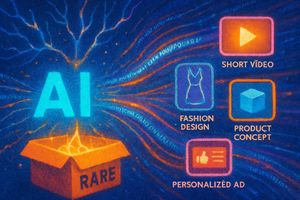 AI: The 'Copilot' scaling content creation and anticipating future trends.This image is a conceptual illustration and may not represent actual events, data, or entities.
Generative AI has become the 'Copilot' of content production, letting teams scale their output while keeping that high level of personalization [21]. Take Mattel’s Future Lab, for example. They're using AI to iterate on product ideas and validate them at lightning speed, creating a 'loop' where consumer feedback is integrated into design in real-time [21]. This speed is absolutely non-negotiable for maintaining virality; in the 2025 algorithm, the 'Momentum Multiplier' gives a ranking boost to subsequent content for a solid 24–48 hours if an initial post crushes it [8]. It’s all about riding that wave!
Digital Anthropology: The Rise of Micro-Communities and the Trust Gap
The 2025 viral landscape? It’s defined by a serious 'Trust Gap.' While a whopping 80% of consumers are shopping online and using social media for discovery, influencers have become the 'least trusted source of information' [22]. Ouch. This skepticism, fueled by the explosion of AI-generated images and paid sponsorships, has paved the way for the rise of micro-communities—exclusive, super-engaged groups on platforms like Discord or private WhatsApp chats [22].
Here’s the breakdown: Micro-Community vs. Mass Marketing Paradigm:
- Focus: Mass Marketing (Legacy) = Reach and Impression; Micro-Communities (2025) = Trust and Retention.
- Platform: Mass Marketing = Public Feeds (FB/IG); Micro-Communities = Private Hubs (Discord/WhatsApp).
- Communication: Mass Marketing = One-to-Many; Micro-Communities = One-to-Few (Peer-to-Peer).
- Engagement: Mass Marketing = Passive (Likes); Micro-Communities = Active (Collaborative).
- Trust Source: Mass Marketing = Influencer/Brand; Micro-Communities = Peers/Brand Advocates. [23]
Brands like Chanel and Rolex are now using private WhatsApp groups to give VIP customers early access to new collections, creating a sense of exclusivity that public viral campaigns just can't touch [23]. This shift is vital in a world where 90% of consumers trust peer recommendations over traditional ads [23]. Labubu’s success? Inextricably linked to these communities, where collectors trade, review, and display their figures, generating organic buzz that’s way more credible than any corporate marketing stunt [14]. It's about authentic connections, not just impressions.
The Psychology of 'Collectible Cravings' and Emotional Branding
The emotional magnet of Labubu and the '67 aesthetic? It’s deeply rooted in their 'imperfect' design. Labubu is often described as 'ugly-cute,' an outsider character that totally mirrors real human traits like mischievousness and charm [14]. This 'emotional resonance' is what transforms a casual buyer into a full-blown collector. In 2025, toymakers have moved from MESH (mental, emotional, and social health) to STEAM (science, tech, engineering, arts, and math), prioritizing toys that help both kids and adults regulate emotions and de-stress [4].
We can even model this 'Emotional Equity' (EE) mathematically:
EE = R∙A ∕ S
Where EE is Emotional Equity, R is Resonance (authenticity), A is Aesthetic appeal (imperfect/human), and S is Saturation (scarcity). High resonance and high aesthetic appeal, when perfectly balanced against controlled scarcity, unleash the highest emotional equity and viral potential [2][14]. It’s a delicate dance, but when it clicks, BOOM!
The Future of Virality: 2026 and the 'Human Touch'
As we peek into 2026, the viral blueprint is set to evolve even further, with 'unplugging' becoming the ultimate luxury [7]. The future of content isn't about shouting louder; it’s about feeling more human. The 2025 data backs this up: 69% of senior executives are boosting spending on talent, not replacing it with AI [21]. They know technology should enhance, not erase, human creativity. It’s all about finding that sweet spot.
Strategic Imperatives for the 2025/2026 Viral Blueprint:
- Master 'Micro-Virality': Stop chasing mass exposure. Focus on crushing it within specific, high-intent interest clusters [10].
- Operationalize the Interest Graph: Distribution is now tied to engagement velocity. Your content needs to hook viewers in the first 3 seconds, or you’re headed straight to '300 view jail' [8].
- Embrace 'Newstalgia': Mash up historical aesthetics with modern sustainability to tap into that collective craving for authenticity [5].
- Build Owned Communities: Ditch the public platforms for private, exclusive groups. It’s essential for building trust and keeping folks around long-term [23].
- Humanize Through AI: Let AI handle the 'content supply chain' for efficiency, freeing up human talent to focus on 'emotional resonance' and strategy [21]. It's about synergy, not replacement.
The shocking truth about virality in 2025 is that 'Everything goes viral' because the old barriers between interest, discovery, and commerce have been absolutely obliterated. Whether it's a $170,000 vinyl doll or a groovy 1960s crochet top, the underlying mechanism is the same: a perfect alignment of algorithmic precision, rock-solid community trust, and a deep, intuitive understanding of the human need for connection in our increasingly digital world.
The Geopolitical and Regulatory Constraints of Virality
Now, it’s not all sunshine and viral rainbows. The 2025 landscape has its risks. The U.S. mandate for ByteDance to divest TikTok's U.S. operations? That’s a massive, unquantifiable risk to the current viral blueprint [10]. Marketers are already playing it smart with a 'twin-engine' strategy, making sure content is compatible across both TikTok and Meta properties (think Reels/Shorts) to cushion any potential fallout from bans [10]. Plus, deepfake-related fraud is up a terrifying 1,200% in the U.S., meaning we need more robust AI labeling and provenance tagging to protect both brands and us consumers [19].
Regional Market Insights and Risks for 2025:
- Mainland China: Key driver is live-streaming commerce & theme parks. Risk: Regulatory shifts in digital gaming.
- Southeast Asia: Celebrity catalysts (Lisa/K-Pop) are huge. Risk: Infrastructure strain from viral sales.
- North America: Interest-based 'Newstalgia' reigns. Risk: TikTok divestiture mandate.
- Europe: Sustainable 'Local' brands are trending. Risk: Privacy restrictions (Cookies/GDPR). [10]
The Role of Video SEO and Multimodal Discovery
As we roll into 2026, the 'Keyword Revolution' is only going to get deeper. Marketers aren't just optimizing for text anymore; they're all about 'multimodal ranking,' where AI indexes video, text overlays, and spoken content simultaneously [9]. This means your 'audio choices' as a creator are just as crucial as your visual hook. Original audio? Prioritized for building that creator-specific audience. But 'low-use trending audio'? That’s the sweet spot for discoverability without getting lost in the noise [8].
Short-Form Video Strategy in 2025:
- TikTok: 15–60 seconds, focus on interest-based 'Micro-Virality.'
- Instagram Reels: 7–15 seconds, aim for a connected/unconnected reach mix.
- YouTube Shorts: 15–90 seconds, use as a TEASE/Teaser for long-form content.
- Weibo Video: 30–120 seconds, integrate with search & hot topics. [8]
The 2025 algorithm also loves 'binge-watching' behavior. It flags users who watch multiple pieces of content from the same creator in one go [8]. How? By creating 'content clusters' that are topically related, allowing the algorithm to brand the creator as a 'topic authority' [8]. For brands like Pop Mart, every Labubu unboxing video isn't just a video; it’s a gateway to the entire 'The Monsters' universe, creating a self-reinforcing loop of discovery and purchase. Genius!
The Cultural Significance of the 'Ugly-Cute' and Imperfect
In 2025, both 'Labubu Chic' and the '67 Throwback succeed by doing one thing perfectly: embracing weirdness over polish [14]. The 'Ugly-Cute' (Kimo-kawaii) aesthetic is a direct, in-your-face challenge to the sterilized perfection of traditional luxury branding. This shift screams that the future of branding lies in characters and aesthetics that 'transcend language and geography' to forge deep emotional connections [2]. As personalization keeps taking over, niche interest communities become the prime spots for successful brand management, transforming members into loyal advocates who truly feel 'seen, valued, and connected' [41]. It's about genuine belonging.
So, there you have it. The 2025 viral blueprint is a sleek, closed loop: Algorithmic precision spots the interest → Creative AI scales the content → Micro-communities validate the trust → Scarcity engines drive the commercial value. Within this loop, absolutely anything—from a mischievous monster figure to a vintage green jersey—can become the next global obsession. It's a testament to the sheer power of Asian creativity, strategic retail, and algorithmic transformation. The next big thing won't just emerge from Silicon Valley or Hollywood; it’ll likely pop out of an art studio with a mischievous grin and a deep, deep understanding of the global interest graph [3]. The fusion of art, emotion, and tech has birthed a world where culture moves at warp speed, and the only constant is the relentless pursuit of the next 'secret' in the blind box of global trends. Ready to join the craze?
Disclaimer: This article addresses trending topics and current events for general informational purposes only. The content may reflect public interest or opinion and has not necessarily been independently verified. For complete details, please review our full disclaimer.