
UN Report: Climate Tipping Points Unpacked – Is Your Future Beyond 2026 Already Decided?
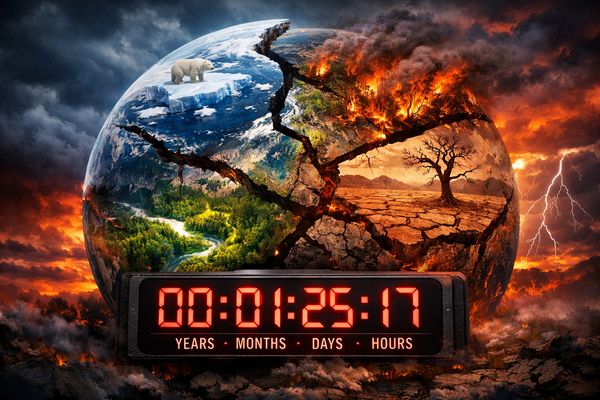 The clock is ticking: Our planet faces irreversible changes beyond 2026.This image is a conceptual illustration and may not represent actual events, data, or entities.
Here’s What’s Blowing Up This Week: UN Reports Declare “Danger Zone” for Planet Earth!
Alright, climate crew, buckle up. If you thought climate change was a slow burn, think again. The latest UN reports from 2024 and 2025? They’re not just a warning; they’re a full-blown emergency flare. We’ve officially transitioned from “gradual change” to “systemic instability”—and honestly, the vibe is less ‘mild concern’ and more ‘planet on the brink’ [1].
We’re talking about authoritative assessments from the World Meteorological Organization (WMO) and the UN Environment Programme (UNEP) dropping some heavy truths. 2024? Warmest year ever. 2025? Set to be the second or third hottest [12]. The mean near-surface temperature for January to August 2025 was approximately 1.42±0.12°C above pre-industrial levels, meaning that dreaded 1.5°C threshold isn't some far-off date on a calendar—it’s an imminent physical reality, right now [2].
What’s the real kicker? The Earth’s Energy Imbalance (EEI) has doubled since 1975, reflecting a massive heat accumulation everywhere from our atmosphere to the deep, dark oceans [3]. And this, my friends, is why we’re talking about climate tipping points. These aren't just buzzwords; they’re critical thresholds where a tiny bit more thermal stress triggers a nonlinear, abrupt, and typically irreversible change. Think dominoes, but for the entire planet [7].
The landmark Global Tipping Points Report 2025 pulls no punches: humanity has entered a "danger zone" [4]. What does that mean? It means self-sustaining feedback loops could kick off, leading to irreversible transformations of Earth’s life-support systems. And get this—the widespread mortality of warm-water coral reefs? It’s already happening, with over 80% of reefs globally experiencing bleaching-level temperatures between 2023 and 2025 [6]. That’s not a projection; that’s a reality. A grim one.
The Inevitable Overshoot: 1.5°C and Beyond – What’s Left of Our Carbon Budget?
So, we hear a lot about 1.5°C. Is it still achievable? According to the UNEP Emissions Gap Report, sixteenth edition, ominously titled “Off Target,” a temporary overshoot above 1.5°C is now, regrettably, inevitable [13]. We’re talking about the multi-decadal average expected to blow past this benchmark by the early 2030s. Even with new climate pledges, global warming projections for the end of the century are still chilling: 2.3°C to 2.5°C if we actually implement everything. If we just stick to current policies? We're on track for a whopping 2.8°C of warming [13][14].
And our carbon budget—that precious allowance of CO2 we can emit to keep a 50% chance of staying at 1.5°C? It’s draining faster than a leaky faucet. The IPCC estimated 500 gigatonnes of CO2 at the start of 2020. Fast forward to 2025 assessments, and if emissions stay at 2024 levels, that budget will be gone in roughly three years [3]. To hit those 1.5°C pathways by 2035, global emissions need to plummet by 55% relative to 2019 levels. That's "unprecedented and rapid" action—something our current geopolitical climate is, let's be real, struggling to deliver [14].
Every fraction of a degree past 1.5°C jacks up the probability of crossing even more tipping points. Think polar ice sheets disintegrating, the Amazon rainforest dying off—these are changes that get "locked in" [16]. And relying on large-scale carbon dioxide removal (CDR) to bring temperatures back down to 1.5°C by 2100? That’s a gamble, risky and uncertain. To reverse just 0.1°C of overshoot, we’d need to permanently remove and store approximately five years of current global annual emissions [13]. Talk about a tall order.
Here’s a quick snapshot of where we stand with thermal exceedance probabilities for 2025-2029 [21][22]:
- At least one year > 1.5°C: 86% chance (significant increase!)
- Five-year mean > 1.5°C: 70% chance (up from 32% in 2023)
- At least one year warmer than 2024: 80% chance (highly likely)
- At least one year > 2.0°C: 1% chance (first time above zero in models!)
Regional Crisis Module 1: Arctic on Fire—From Atlantification to Rusting Rivers
The Arctic, fam, is ground zero. It’s heating up at more than double the global average rate since 2006 [1]. The 2025 Arctic Report Card paints a picture of total ecosystem metamorphosis [25].
The Mechanics of Atlantification and Sea Ice Loss
One major culprit? "Atlantification." This is where warm, salty Atlantic waters are making a run for the central Arctic Ocean, messing with the water column and letting deeper heat reach the surface, which then—you guessed it—prevents sea ice from forming [25]. In March 2025, Arctic sea ice hit its annual maximum at 13.8 million km2—the lowest maximum extent in 47 years of satellite records [2]. The old, thick "multi-year" ice? Over 95% gone since the 1980s [25]. This shift to seasonal ice? It kicks off a regional albedo feedback loop: dark open water replaces reflective ice, the ocean absorbs more solar radiation, and the whole darn region (and planet) just keeps warming [2]. It’s a vicious cycle.
The Greenland Ice Sheet and the ‘Rusting’ of the Tundra
Greenland’s ice sheet is still doing its thing—losing mass and beefing up global sea levels. In 2025, it shed an estimated 129 billion tons of ice [25]. While that was less than the 2003-2024 average (thanks, above-average snowfall!), the long-term trend of net loss is locked in [25]. Glacial discharge rates into the ocean? Way above the 1991-2020 average in 2024 and 2025 [26].
And then there’s the tundra. Permafrost thawing is literally altering the landscape. We’re seeing "rivers rusting," where iron and other minerals, once trapped in frozen soil, are now pouring into watersheds, turning pristine rivers a terrifying shade of orange [25]. This has been observed in over 200 Alaskan watersheds, threatening local water supplies, messing with aquatic ecosystems, and potentially—wait for it—releasing ancient pathogens [1]. Yikes.
 The Arctic's "rusting rivers"—a chilling visual of permafrost thaw and ecosystem collapse.This image is a conceptual illustration and may not represent actual events, data, or entities.
Regional Crisis Module 2: West Antarctica’s Melting Heartbeat – MISI and Sea Ice Plunge
The West Antarctic Ice Sheet (WAIS) is basically on life support. Its stability is the focal point for global sea-level rise projections beyond 2026. Scientists are saying parts of the WAIS might have already crossed a tipping point, committing us to multi-meter sea-level rise over centuries [6].
Grounding Line Retreat and MISI Dynamics
Why is WAIS so vulnerable? It’s all about its bedrock geometry—much of it sits below sea level and slopes downwards toward the continent’s center [28]. This sets off Marine Ice Sheet Instability (MISI), a positive feedback loop where the grounding line retreats, ice gets thicker there, and then even more ice flows into the ocean [28]. 2025 modeling indicates that current ocean thermal forcing is already enough to deglaciate huge chunks of the WAIS, with the Thwaites and Pine Island glaciers basically in a "collapse in motion" [28]. No chill.
Regional Warming and Sea Ice Plunge
The Antarctic Peninsula? It's warmed by about 3°C since the mid-20th century—five times faster than the global average [30]. This extreme warming has caused floating ice shelves to collapse; these shelves used to act like "buttresses," slowing down the flow of land-based glaciers [30]. February 2025 saw Antarctic summer sea ice tie for the second-lowest minimum extent on record, hitting a shocking 1.98 million km2—30% below the 1981-2010 average [32]. Is this just a phase, or is it the "new norm" for the Southern Hemisphere? Scientists aren't sure, and that's unsettling [32].
Regional Crisis Module 3: Amazon Rainforest – From Carbon Sink to Savannah?
The Amazon rainforest, our planet’s colossal lung, is dangerously close to a tipping point. It could shift from a vibrant carbon sink to a degraded, savannah-like ecosystem [9]. This "savannization" is driven by a toxic combo of global climate change and local deforestation [9].
The Hammer and the Domino Effect
Yale scientists and the Science Panel for the Amazon highlighted two brutal pathways to forest collapse in 2025 [38]. The "hammer effect"? That’s repeated, direct human disturbances—like clear-cutting for cattle (which, BTW, accounts for 80% of regional deforestation), mechanized soy farming, and fragmentation—slowly chipping away at the forest's resilience [38]. Then there’s the "domino effect"—the breakdown of the forest's own internal moisture recycling system. The Amazon generates roughly 50% of its own rainfall through transpiration. Lose the trees, lose the rain, lengthen the dry seasons, and you get a self-amplifying cycle of drought and tree mortality [9]. It’s a grim feedback loop.
Critical Thresholds for 2026 and Beyond
Scientists estimate the Amazon's tipping point could be triggered by a 2°C to 4°C global temperature increase or the loss of 20% to 25% of its forest area [9]. As of 2022, about 26% of the forest was already deforested or highly degraded, meaning we're teetering on the edge of an irreversible transition [39]. A 2025 study in Nature Climate Change warned that even a temporary overshoot of 1.5°C would unleash a "significant" risk of dieback, with 37% of simulations showing forest loss by 2100, jumping to 55% by 2300 [40].
And in 2024? A record-breaking drought, supercharged by El Niño, led to a sixfold increase in forest loss from fire in the Brazilian Amazon [39]. For the first time, emissions from fire and degradation exceeded those from direct deforestation, proving that climate-driven shocks are now the main destructive force [41]. This isn't just about chainsaws anymore.
Regional Crisis Module 4: The Great Conveyor Belt is Slowing – AMOC in Peril
The Atlantic Meridional Overturning Circulation (AMOC)—think of it as Earth’s planetary heat regulator, pushing warm tropical waters north and sending cold, dense water back south [43]. This "ocean conveyor belt" is under serious threat, mostly from the fresh water pouring in from melting Arctic ice and increased high-latitude precipitation. That fresh water reduces salinity and density, stopping the surface waters from sinking, which slows the whole thing down [43].
Shutdown Scenarios and Subpolar Gyre Collapse
The 2025 Global Tipping Points Report dropped another bombshell: the AMOC and its related Sub-Polar Gyre (SPG) could collapse with less than 2°C of global warming [6]. While most models predict a gradual weakening of 18-43% through the 21st century, some suggest a full-on collapse of deep winter mixing in the North Atlantic could happen before 2050 [11]. A total AMOC shutdown would be a "regime shift" of epic historical proportions, with the heat released into the North Atlantic plummeting to less than 20% of its current value [43]. That's not a minor tweak; that's a planetary system reboot.
Asymmetrical Impacts on Europe and North America
The fallout from an AMOC weakening wouldn't be evenly distributed. Northwest Europe would face a "trend reversal," meaning brutal, prolonged winters and bone-dry summers, with regional cooling potentially hitting 10°C despite overall global warming [4]. Meanwhile, the U.S. East Coast would see water "pile up," leading to accelerated sea-level rise beyond global averages [47]. And globally? Tropical rainfall belts would shift southward, threatening the stability of the West African and Indian monsoons—jeopardizing food security for billions [4]. A truly global ripple effect.
Regional Crisis Module 5: Sub-Saharan Africa – Desertification and a Paradoxical Greening?
Sub-Saharan Africa, especially the Sahel region, is one of the world's most intense climate vulnerability hotspots [1]. It's currently in a "chronic hunger emergency," with extreme weather, land degradation, and conflict displacing almost four million people—a 66% increase in five years [1].
The Desertification Crisis in the Sahel
Approximately 40% of Africa is already battling desertification—land degradation in arid and semi-arid areas [50]. UN assessments warn that if current trends of overgrazing and climate-induced rainfall shifts continue, two-thirds of Africa's arable land could be gone by the late 2020s [50]. In Senegal, the rainy season, which used to start in July, now often delays until September, leaving crops utterly vulnerable to extended dry spells [50]. These environmental pressures are literally pushing people out of their homes, with the World Bank estimating up to 86 million Africans could become internal climate migrants by 2050 due to water scarcity and crop failure [52].
Paradoxical Greening and the ‘Green Sahara’ Potential
But here’s a twist: some 2025 studies hint at a potential for moisture-induced greening in parts of the Sahara and Sahel [54]. Rising global temperatures allow the atmosphere to hold more moisture, which, combined with shifting atmospheric circulation patterns, could lead to a 75% increase in Sahara rainfall by the end of the century [4]. A westward shift in the Indian Summer Monsoon has already been linked to greening in the Thar Desert and parts of the African Sahel [54]. However, this isn't a silver bullet; these benefits are highly uncertain and geographically inconsistent, with southwestern Africa, for example, expected to get drier [21]. It’s a complex, unpredictable situation.
 The Amazon rainforest teeters on the brink of savannization, a critical tipping point.This image is a conceptual illustration and may not represent actual events, data, or entities.
Regional Crisis Module 6: South Asia – The Terrifying Reality of Wet-Bulb Thresholds
South Asia is becoming a terrifying frontline for heat-related mortality. The region’s sky-high humidity—often over 80%—supercharges the physiological stress of extreme heat by making our body's primary cooling mechanism (sweat evaporation) totally useless [57].
Redefining the Survivability Threshold
For ages, climate science pegged a "wet-bulb" temperature (Tw) of 35°C as the absolute limit of human survivability [58]. At that point, a healthy person can't lose heat even chilling in the shade, leading to fatal hyperthermia in about six hours [59]. But hold up—empirical physiological studies from 2022 and 2024 have dropped "bombshell" implications: the actual survivability threshold is much lower than we thought. For young, healthy adults, the "uncompensable" heat limit hits between 26°C and 31°C Tw [61]. For the elderly or anyone with thermoregulatory issues? That threshold can be as low as 21.9°C Tw [60]. This is a massive downgrade to our resilience.
South Asia as a Window into the Future
The implications for the 2 billion people living in the Indus and Ganges river basins are staggering. Projections suggest that by 2100, 70% of the Indian, Pakistani, and Bangladeshi populations could be exposed to heatwaves exceeding survivability limits [62]. Cities like Jacobabad, Pakistan, have already seen brief spikes in Tw above 35°C [64]. Under high-emission scenarios, nearly 1.1 billion urban dwellers in South and Southeast Asia could face extreme heat lasting over 30 days per year by 2080 [65]. This thermal pressure is already driving climate migration from rural agricultural zones to urban centers that are themselves unprepared for the heat—a "recipe for disaster," if you ask me [62].
The Global Economic Reality: GDP Collapse and Planetary Insolvency
Climate economists and risk analysts are increasingly calling out current financial models as totally inadequate because they fail to factor in the catastrophic shocks of tipping points [66]. The Institute and Faculty of Actuaries (IFoA) warned in early 2025 about "planetary insolvency"—a state where Earth's systems are so degraded they can't even support stable societies or economies anymore [66]. Talk about a wake-up call.
The 50% GDP Loss Projection
Here’s a number that should make you sit up: if global temperatures hit 3°C or more by 2050, triggering multiple tipping points, the global economy could stare down a jaw-dropping 50% loss in Gross Domestic Product (GDP) between 2070 and 2090 [66]. To put that in perspective, the 2008-2009 financial crisis caused a 5.5% contraction in the EU economy; this climate-driven hit would be a permanent recession, effectively ending current economic systems in several regions [48]. Not a good look.
And the social cost of carbon (SCC)—the economic damage from emitting one more ton of CO2—is projected to jump by at least 25% when tipping points are factored into models [68]. There's even a 10% chance that interactions between these tipping elements could more than double the SCC, reflecting the wild uncertainty and potential for "black swan" events in our climate system [68]. We're not just playing with fire; we're playing with the entire global economy.
Governance and the Decisive Decade: The AR7 Process and "Deep Change"
As we head toward COP30 in Belém, Brazil, dealing with Earth system tipping points has rocketed to the top of both scientific and political agendas. The Intergovernmental Panel on Climate Change (IPCC) has kicked off its Seventh Assessment Cycle (AR7), and for the first time ever, it’ll include a dedicated chapter on abrupt changes and tipping points [73].
Deepening Mistrust and Timeline Disputes
Despite the urgency, the AR7 process is plagued by "unprecedented" mistrust [76]. Governments can't even agree on a publication timeline. Emerging economies, spearheaded by China and Russia, are pushing for a slower timeline stretching into 2029 to avoid overlapping with UNFCCC meetings. Meanwhile, small-island states and developed nations are shouting for a faster schedule to inform the Second Global Stocktake in 2028 [76]. This bureaucratic deadlock is "stressful" for scientists and could damage the IPCC’s credibility, with planning now happening annually—a scenario IPCC Chair Jim Skea calls the "worst option" [76]. Not exactly inspiring confidence, is it?
The Theory of Deep Change
To bust out of this cycle of superficial "surface-level fixes," the UN University’s Institute for Environment and Human Security (UNU-EHS) has rolled out the "Theory of Deep Change" [77]. This framework outlines five systemic shifts we absolutely need to avert planetary collapse:
- Rethink Waste: Ditching the "take-make-waste" model for a circular economy [79].
- Realign with Nature: Moving from a "we’re superior" mindset to one of harmony and coexistence [79].
- Reconsider Responsibility: Shifting from individualistic "me" thinking to collective "we" action [77].
- Reimagine the Future: Prioritizing the well-being of future generations over immediate political or financial gratification [77].
- Redefine Value: Transitioning from GDP-focused wealth to holistic planetary health [77].
Positive Tipping Points: Pathways to Rapid Transformation
Okay, I know, it all sounds pretty bleak. But here’s the good news—or at least, some good news. The Global Tipping Points Report 2025 also highlights "positive tipping points" [4]. These are self-reinforcing shifts in tech, policy, and human behavior that could actually drive change at the speed and scale we desperately need. Think of them as the good kind of domino effect.
The Renewable Energy and Transport Revolution
We’ve already crossed positive tipping points in global solar and wind power deployment. In the first half of 2025, renewables actually surpassed coal as the world's largest source of electricity [19]. Onshore wind costs? They’ve plummeted, going from 23% more expensive than fossil fuels in 2010 to a whopping 53% cheaper in 2025 [19]. Same goes for electric vehicles (EVs)—adoption has tipped in leading markets, creating a self-perpetuating uptake through economies of scale. Once a polluting tech gets replaced by a cheaper, better alternative, that transition becomes unstoppable [18]. It’s economics, baby!
Strategic Leverage and Social Contagion
Governments can supercharge these shifts by pinpointing "super-leverage points"—coordinated actions across sectors like power, heating, and transport [18]. Policy mandates, like bans on new internal combustion engine vehicle sales, are proving more effective than subsidies alone for triggering rapid transitions [84]. Plus, "social contagion" effects mean small, determined groups can spark massive behavioral shifts—like cutting down on meat or changing travel habits—which then become the new societal norm [6]. It’s about making the sustainable choice the easy, cool, and ultimately normal choice.
Conclusions: The Future Beyond 2026 – A Red Alert and a Call to Action
So, what's the TL;DR? The era of "business as usual" is officially over. Caput. Done [8]. The planet has already hit its first thermal threshold for coral reef survival, and we’re terrifyingly close to irreversibly destabilizing the West Antarctic and Greenland ice sheets [6]. The inevitable temperature overshoot past 1.5°C in the early 2030s? That means the next decade is high stakes. The longer and higher we overshoot, the more dire the fate of our global climate system for the next millennium [13].
The regional impacts are a stark reminder: "rusting" rivers in the Arctic, savannization in the Amazon, unbearable heat stress in South Asia, permanent recession in Europe—no region is safe from the cascading risks of tipping points [25]. But here's the twist: the same nonlinear mechanics that threaten Earth's stability also offer the potential for rapid, positive transformation. The crashing costs of renewables and the explosion of self-sustaining green industries prove that a future of inclusive prosperity is still technically on the table [14].
The action we need isn't just tweaking existing policies; it's a fundamental overhaul of global financial and governance architectures to prioritize planetary health [14]. As the world zeroes in on COP30, the "Red Alert" is blaring loud and clear: prevention is our only viable risk management strategy, and that window for effective intervention? It’s closing faster than you can say "climate emergency" [4]. The choices we make in the next five years will literally define the environmental, economic, and human rights landscape for centuries to come [4]. Let’s make them count. Seriously, let's.
Disclaimer: This article addresses trending topics and current events for general informational purposes only. The content may reflect public interest or opinion and has not necessarily been independently verified. For complete details, please review our full disclaimer.