
WrestleMania 42 Preview: The Structural Fusion of Sports, Technology, and High-Yield Entertainment
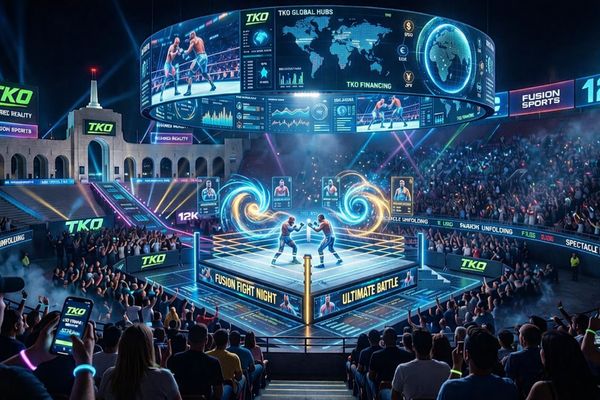 WrestleMania 42 epitomizes the ultimate fusion of sports and entertainment, powered by cutting-edge technology.Image for illustrative purposes only, inspired by WrestleMania 42's fusion of sports and entertainment.
WrestleMania, often dubbed "The Grandest Stage of Them All," has always existed at the fascinating intersection of athletic competition and theatrical spectacle. However, WrestleMania 42, returning to Las Vegas on April 18–19, 2026, isn't just another annual event; it's a profound case study in the structural fusion of sports, cutting-edge technology, and high-yield entertainment. This year's iteration signifies a pivotal moment where traditional models are being aggressively re-engineered, driven by TKO Group Holdings' strategic financial shifts and an unwavering commitment to immersive fan experiences. What we're witnessing is not merely an evolution, but a calculated disruption designed to maximize every revenue stream and engagement point, redefining what a global sports-entertainment juggernaut can be.
The return to Las Vegas for a second consecutive year, an anomaly in WrestleMania's history, is a clear indicator of this new paradigm. It's a testament to a data-driven approach that prioritizes economic incentives, logistical efficiency, and technological integration over traditional geographical rotation. From the granular details of ticket pricing to the macro-strategies of global broadcasting via Netflix and the innovation of 12K Shared Reality experiences, WrestleMania 42 is a meticulously constructed ecosystem. This deep dive will dissect the complex layers that contribute to its unparalleled spectacle, offering insights into the future of live events.
The TKO Merger and Netflix Deal: Reshaping Wrestling's Financial Structure
The financial bedrock of professional wrestling has undergone a seismic shift, transforming from a regional touring enterprise into a global, rights-driven media behemoth under TKO Group Holdings. This transformation is dramatically underscored by the unprecedented US$5 billion distribution agreement with Netflix, a deal that has irrevocably globalized the WWE brand and fundamentally altered the valuation metrics for premium live events (PLEs) [2]. WrestleMania 42 serves as the ultimate showcase for this new fiscal reality, where the long-standing pay-per-view model has been supplanted by high-margin licensing fees and strategic cost synergies meticulously engineered between the WWE and UFC segments [7].
TKO Group Holdings' robust fiscal 2025 report, revealing total revenue of US$1.709 billion for 2025—a remarkable 22% increase—is largely attributable to this influx of media rights income and record-breaking live event gates [2]. This financial stability has empowered an aggressive capital return strategy, notably a planned US$1.0 billion share repurchase program commencing in March 2026, signaling immense confidence in WrestleMania 42's projected revenue trajectory [7]. The 'shadow-change' in WWE's business model at WrestleMania 42 is a strategic pivot from merely prioritizing audience volume to an acute focus on maximizing ticket yield per attendee. This is starkly evident in the record-high ticket prices, with ringside combo packages soaring to US$14,149.20 [9]. This pricing strategy isn't solely about boosting gross revenue; it's a deliberate defensive maneuver to reclaim the 'unrealized revenue' previously siphoned off by third-party brokers and scalpers [3]. By initially setting prices at the anticipated secondary market ceiling, WWE now retains the profit margin that previously went to external resellers [3].
"The revenue and profitability of the company, the cost synergies, the revenue synergies between WWE and UFC in particular and now Zuffa Boxing are phenomenal, so if you want to do a sponsorship deal with one, maybe you have to do a sponsorship deal with all,"
Optimize Brand Alignment:
Brand managers and corporate sponsors should align their activations with the 'WWE-UFC-Zuffa' triad to strategically leverage the cross-platform synergies that TKO is now mandating for premier partnership deals [8].
Las Vegas: WrestleMania's New Permanent Residency and Logistical Efficiency
The decision to host WrestleMania 42 at Allegiant Stadium in Las Vegas for the second consecutive year fundamentally deviates from the company's long-standing tradition of geographical rotation [1]. While WrestleMania 42 was initially slated for the Caesars Superdome in New Orleans, the overwhelming financial success of the 2025 event in Las Vegas prompted a strategic re-evaluation of the host-city approach [1]. Las Vegas presented an undeniably superior financial incentive package, including a crucial US$4.3 million in transferable film tax credits, solidifying its position as the most lucrative option for TKO [2]. The economic impact of the 2025 WrestleMania 41 weekend in Las Vegas was audited at US$65 million, with projections for WrestleMania 42 reaching US$75 million, reinforcing the city's status as the undeniable "Sports and Entertainment Capital of the World" [2].
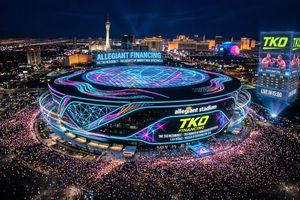 Allegiant Stadium, Las Vegas, serves as the historic back-to-back venue for WrestleMania 42, solidifying its place as a premier sports-entertainment destination.Image for illustrative purposes only, inspired by Allegiant Stadium's role in WrestleMania 42.
A technical nuance of this Las Vegas residency model is the significant "residency logistical efficiency" gain. By returning to Allegiant Stadium, WWE's extensive production teams can effectively reuse architectural alignments and pre-existing 3D mapping data collected during the 2025 setup [1]. This critical reuse drastically reduces the 'preliminary assessment' and 'technical design' phase costs, which are typically substantial when adapting to a new stadium environment annually [11]. Furthermore, Las Vegas's high-density hotel infrastructure efficiently supports a 5-day "WWE World" fan convention at the Las Vegas Convention Center, mitigating the transportation bottlenecks commonly observed in less sprawling urban centers [1].
“WrestleMania returns to Las Vegas this weekend, just a year after one of the most successful WrestleMania weekend’s in history,” and WWE President Nick Khan remains “bullish on the market.”
Prioritize Early Booking for Travel:
Travel agencies and hospitality providers should prioritize securing high-end hotel blocks near Allegiant Stadium at least 12 months in advance, as data indicates 90.2% of attendees are non-residents who require lodging [10].
12K Shared Reality Technology: Transforming the Remote Fan Experience
WrestleMania 42 marks a profound pivot point for immersive broadcasting, driven by a multi-year partnership with Cosm to deliver Premium Live Events (PLEs) in a ground-breaking "Shared Reality" format [4]. Fans attending these specialized events at dedicated Cosm venues in Los Angeles and Dallas are virtually transported ringside, experiencing the action within 87-foot-diameter 12K+ LED domes [4]. This revolutionary technology effectively eliminates the isolating experience of traditional VR headsets while simultaneously delivering a high-fidelity, 360-degree immersion that authentically makes fans feel as though they are seated directly at the apron of the ring in Allegiant Stadium [4].
The technical specifications of these cutting-edge venues are meticulously engineered to bridge the experiential gap between physical attendance and remote viewing [4]. The 12K resolution domes offer an unparalleled level of visual clarity that far surpasses standard 4K home broadcasts, facilitating a true "Shared Reality" where groups can collectively eat, converse, and absorb the electric atmosphere of a live crowd [12]. This is particularly crucial for WrestleMania 42, which employs high-quality drones and cinematic rigs to capture breathtaking "one-take" superstar entrances, specifically optimized for these immersive wraparound displays [11]. An edge case within the Cosm partnership is the "production decoupling" strategy, where Cosm produces content for its domes using its own specialized camera arrays on-site. This approach allows them to offer a unique visual perspective that intentionally differs from the main Netflix broadcast [15]. Consequently, a fan at a Cosm venue in Dallas might experience a wide-angle, fixed-perspective view of the entire ring for the duration of a match, while a home viewer sees the director-cut version. This "user-directed" viewing experience is a technical nuance specifically designed to cater to the "purist" fan who demands a constant, holistic view of the ring dynamics [15].
"Cosm is redefining the future of fan experience. WWE Premium Live Events are larger than life, and with such an innovative partner in Cosm, we will collectively bring the energy of our biggest moments to an expanded WWE universe,"
Implement Dual-Feed Production:
Technical directors for large-scale sporting events should consider adopting "Dual-Feed Production" models, optimizing one feed for standard television broadcasts and another for high-resolution immersive domes to effectively capture distinct market segments [15].
Navigating the Roster Evolution: Generational Shift and Narrative Investment
In the run-up to WrestleMania 42, WWE leadership, spearheaded by Paul "Triple H" Levesque and Nick Khan, undertook a comprehensive demographic audit of the roster, revealing a critical insight: nearly all top-tier male superstars were aged 40 or older [16]. This realization catalyzed a strategic "Next Gen" pivot, intentionally shifting away from an over-reliance on established legends towards the accelerated development of NXT talent, such as Oba Femi and Trick Williams [16]. The overarching objective is to forge "long-term storytelling" bridges, enabling younger stars to share the grand stage with icons like Roman Reigns and Cody Rhodes, thereby facilitating a deliberate "passing of the torch" [16].
This generational shift is vividly reflected in the WrestleMania 42 match card, exemplified by Oba Femi's high-stakes encounter against Brock Lesnar [1]. This particular booking serves as a strategic "stress test" for the new generation, thrusting them into the unforgiving spotlight of a stadium environment to meticulously gauge audience reaction and merchandise potential [16]. WWE has also proactively increased the touring schedule for NXT talent, providing them with invaluable opportunities to perform before diverse crowds beyond the controlled environment of the Performance Center, accelerating their "ring generalship" and character depth [16]. A common misconception is that this generational shift will alienate older fans who grew up watching the legends. However, the technical nuance of "long-term storytelling" involves an "Ebbing and Flowing" strategy, where legends are strategically utilized as "A-plus boosters" during peak seasons like WrestleMania, while younger stars consistently carry the weekly television workload [17]. This delicate balance ensures that the "Ratings, Revenue, and Relevancy" (the Three Rs) remain stable even as the roster undergoes a significant demographic transition [6].
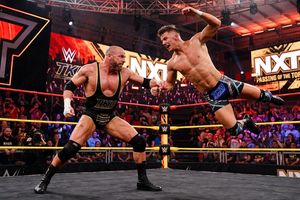 WrestleMania 42 showcases a pivotal generational shift, with rising NXT stars challenging established legends for the future of WWE.Image for illustrative purposes only, inspired by the generational shift in WrestleMania 42's roster.
"Triple H and I got together and we said, 'Okay, let's take a look at the future,' Let's look at our top male superstars… they're all 40 years or older... So we said, 'All right, we got to make sure we're preparing for the future here,'"
Utilize Veterans as Gatekeepers:
Creative directors should strategically use "Veterans as Gatekeepers," booking legends in competitive matches against rising stars to transfer the "Relevancy" of the older generation to the newer one through shared screen time and narrative progression [16].
The 'Ticket Yield' Model: Redefining Fan Access
WWE is currently pushing the financial boundaries of its devoted fanbase by aggressively transitioning from a volume-based ticket model to a sophisticated "yield-maxing" approach [9]. At WrestleMania 42, the entry-level "nosebleed" seats are priced at approximately US$738.75 to US$785.86 for a two-day combo [9]. This effectively re-categorizes WrestleMania as a luxury "bucket-list" event, positioning it alongside exclusive spectacles like the Super Bowl or the Formula 1 Las Vegas Grand Prix [9].
This calculated pricing strategy is a direct countermeasure to the "unrealized revenue" that was historically lost to secondary market brokers [3]. By setting primary ticket prices remarkably close to the anticipated secondary market ceiling, WWE ensures that it, rather than the scalper, captures the inherent surplus value of high-demand inventory [3]. While this strategy undeniably boosts the company's gate revenue—hitting a record US$66 million for the 2025 event—it carries the inherent risk of excluding middle-income fans who have traditionally constituted the core of the audience [2]. An edge case in this pricing model is the "Priority Pass" phenomenon. These high-end packages, exclusively sold through TKO’s OnLocation division, experienced a remarkable 75% surge in demand during 2025 [2]. These premium packages encompass perks like meet-and-greets, exclusive hotel access, and prime floor seats, with prices frequently commencing in the mid-four figures [9]. This "VIP Residency" model vividly illustrates that a substantial segment of the audience views WrestleMania not merely as a wrestling show, but as a comprehensive, luxury travel experience [9].
Monitor Secondary Market Decay:
Budget-conscious fans should diligently look for "secondary market decay" in the 72 hours leading up to the event, as brokers frequently slash prices to US$200–$300 for nosebleed seats to mitigate total loss on unsold inventory [3].
The Role of Secondary Market Brokers: Data Point to Dynamic Yield
The perception and strategic utility of third-party ticket brokers have fundamentally transformed for WWE's revenue management teams; they are no longer merely a nuisance but a critical data point [3]. Nick Khan has explicitly articulated that the company views secondary market prices as the "actual marketplace" value of their tickets [3]. For WrestleMania 42, WWE has implemented a sophisticated "Dynamic Yield" approach, deliberately pricing tickets higher upfront to prevent brokers from quickly acquiring low-cost inventory and subsequently flipping it for exorbitant profits [3].
This strategy is particularly aggressive for the "upper bowl" or family sections [3]. In 2025, WWE initially attempted to price these seats at approximately US$35.00 [3]. To counteract broker exploitation, the 2026 pricing for the upper deck now starts at US$266.80 for a single night, effectively pricing out the amateur scalper and ensuring that the initial "buy-in" more accurately reflects true market demand [9]. A technical nuance of this strategy is "shadow-holding" inventory [3]. WWE often deliberately holds back significant blocks of tickets, releasing them in strategic "waves" as the event date draws nearer [3]. This allows them to dynamically adjust the price of subsequent waves based on the speed of previous sales, ensuring they never inadvertently underprice demand [3]. Furthermore, this tactic forces brokers to exercise greater caution, as they cannot predict if a new, potentially cheaper wave of primary tickets will be released, which could significantly devalue their existing stock [3].
"As soon as we put them on sale, the upper bowl was sold out in three minutes. It wasn't sold out to families. It was sold out to third-party ticket brokers... So the marketplace dictates the ticket price,"
Monitor Wave Releases:
Consumers seeking primary market tickets should monitor "Wave Releases" on Ticketmaster, particularly on Wednesday mornings in the month leading up to the show, as these often include previously "held" tickets at primary prices lower than current secondary market rates [18].
AI and Data-Driven Insights: Enhancing Live Event Production
WrestleMania 42 stands as the most technologically advanced event in WWE's history, leveraging artificial intelligence for "predictive atmosphere management" [11]. The production team employs sophisticated AI-based systems to analyze billions of real-time data points—including live crowd noise, social media sentiment, and second-screen app engagement—to dynamically adjust the pacing of matches and the intensity of lighting cues [11]. This "closed-loop" feedback system empowers the production truck to execute micro-adjustments, thereby maximizing "viewer retention" and emotional investment throughout the intensive 5-hour broadcast [5].
On the operational front, AI is strategically deployed to optimize "game scheduling" and logistical flow for the estimated 124,000 fans converging on Allegiant Stadium [19]. This includes AI-driven heat maps of the stadium concourses, designed to efficiently manage food and beverage wait times, and predictive analytics to anticipate potential equipment failures in the massive 12K LED stage infrastructure [11]. These behind-the-scenes AI tools, while largely invisible to the casual fan, are absolutely critical for maintaining the seamless "Spectacle" and preventing routine operational tasks from impeding the production flow [19]. An edge case of AI in 2026 is "simultaneous translation for international audiences" [11]. For the first time, fans physically attending the live event in Las Vegas can utilize a wearable AR device or a dedicated mobile app to receive real-time, AI-powered translations of in-ring promos into 14 different languages [13]. This crucial innovation effectively eliminates the language barrier for the 22% of international attendees, ensuring that the critical "storytelling" aspect of the matches resonates with non-English speakers [10].
"I think the future of sports will be highly personalized. It'll be predictive and participatory. Fans won't just watch the game. They'll interact with it in real time, powered by AI,"
Invest in Spatial Scanning:
Event organizers should proactively invest in "Spatial Scanning" of their venues months in advance. This provides the essential data for AI crowd-flow and technical alignment tools, potentially reducing on-site labor costs by up to 15% [11].
Indianapolis: A Unique Host-City Strategy Beyond the Residency Model
While Las Vegas has firmly established itself as WWE's high-yield "residency" hub, the multi-year agreement forged with Indianapolis represents an entirely distinct and "first-of-its-kind" package deal [20]. Unlike the majority of cities that bid for a singular WrestleMania event, Indianapolis strategically secured all three of WWE's major Premium Live Events—the Royal Rumble, SummerSlam, and WrestleMania—within a single, comprehensive contract [20]. This innovative "Legacy Program" strategy enables the city and the state of Indiana to cultivate long-term brand equity with the extensive "WWE Universe," simultaneously guaranteeing a combined economic impact exceeding US$300 million over the duration of the deal [21].
The deal's uniqueness is further amplified by its strategic focus on Lucas Oil Stadium for the major stadium shows, while concurrently bringing auxiliary programming—Raw, SmackDown, and NXT—to smaller arenas spread across the state, including Fort Wayne and Evansville [21]. This ingenious "Hub-and-Spoke" model ensures that the economic benefits are thoughtfully distributed throughout the entire region, rather than being concentrated solely within the primary host city [21]. While the precise financial terms were not disclosed, analysts estimate the package cost the city tens of millions in incentives, a cost offset by saving billions through the utilization of existing stadium infrastructure rather than constructing new venues [20]. A technical nuance of the Indianapolis deal is the "site fee record" [22]. Sources suggest that this partnership includes the largest site fee ever paid for a Royal Rumble, demonstrating WWE's success in applying the WrestleMania "Super Bowl" bidding model to its other "tentpole" events [2]. This represents a "shadow-change" where the company is no longer solely a content producer but a highly coveted "location-based entertainment" asset that cities must now actively compete for with the same intensity seen for events like the NCAA Final Four [2].
WWE’s multiyear deal with Indianapolis is “one of the biggest sporting event announcements in the city's history,” according to James Briggs of the INDIANAPOLIS STAR. He wrote maybe "the biggest. Bigger than the Super Bowl. There, I said it.”
Adopt Package Proposals:
Municipal sports commissions should pivot away from single-event bids and embrace "Package Proposals" that secure multiple marquee events over a 3–5 year window to maximize return on investment and reduce per-event logistical overhead [20].
Celebrity Integration: From Cameos to Cross-Platform Engagement
Celebrity involvement at WrestleMania 42 has evolved far beyond mere cameo appearances, transforming into integral roles within both the narrative fabric and the technical production [23]. For Night 1, rapper Lin-Manuel Miranda masterfully narrated the cold open, while social media influencer IShowSpeed made his much-anticipated professional wrestling debut in a six-man tag match [1]. This strategic integration is meticulously designed to capture "fragmented attention" across diverse social platforms, effectively drawing in Gen Z viewers who may not typically engage with traditional weekly wrestling programming [19].
Furthermore, celebrities function as potent technical "force multipliers" on second-screen applications [5]. For instance, during Night 2, Joe Jonas is slated to perform the national anthem, but his performance will be significantly augmented on the second-screen app with "exclusive backstage content" and interactive polling [1]. This innovative approach keeps the audience deeply engaged across multiple devices, encouraging them to move "fluidly between watching, interacting and playing" without ever feeling disconnected from the overarching WrestleMania ecosystem [5]. A technical nuance here is the "Celebrity Brand Story" synergy [14]. In 2026, creators and brands are increasingly leveraging high-quality cameras and 360-degree rigs to produce "bite-sized" brand story videos showcasing celebrities interacting authentically with WWE superstars backstage [14]. These compelling clips are specifically optimized for vertical viewing on platforms like TikTok and Reels, generating a viral "trail" that skillfully guides fans back to the primary broadcast [14]. This ensures that the grand spectacle of WrestleMania transcends the "die-hard core fan base" and becomes an integral part of the weekend's broader "cultural story" [24].
"WWE has demonstrated that audiences want to react, share and influence the moment as it happens... participation (rather than observation) now defines modern digital entertainment,"
Focus on Tournament-Relevant Storytelling:
Marketing agencies should prioritize "Tournament-Relevant Storytelling," integrating celebrity influencers into the event's narrative through multi-stage social media campaigns leading up to the live show, rather than just isolated appearances [24].
WrestleMania 42 is more than just a wrestling show; it's a meticulously crafted fusion of sports, technology, and high-yield entertainment. From TKO's strategic financial restructuring and the innovative 12K Shared Reality experiences to the dynamic roster evolution and sophisticated pricing models, every aspect is engineered for maximum engagement and profitability. The event serves as a living laboratory for the future of live events, demonstrating how data-driven decisions, advanced technology, and integrated celebrity involvement can create an unparalleled spectacle. As the lines between traditional sports and pure entertainment continue to blur, WrestleMania 42 stands as a testament to the power of a holistic, forward-thinking approach, setting new benchmarks for the industry at large.
WrestleMania 42: Your Top Questions Answered
What are the dates and location for WrestleMania 42?
Who are the key participants on the WrestleMania 42 match card?
How much do tickets cost for WrestleMania 42?
Why did WWE choose Las Vegas for WrestleMania 42 again?
How does 12K Shared Reality technology enhance the remote viewing experience for WrestleMania 42?
Disclaimer: This article covers sports-related topics for informational purposes only. Statistics, commentary, and opinions may not be independently verified and should not be considered professional coaching or training advice. Images are for illustrative purposes only and may not reflect actual matches or events. See our full disclaimer for details.