Seek Your Sanctuary: 2026 Wellness Travel | Future Restorative Retreats to Ignite Inner Calm
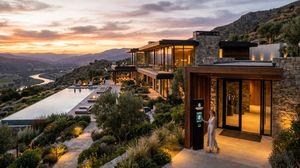
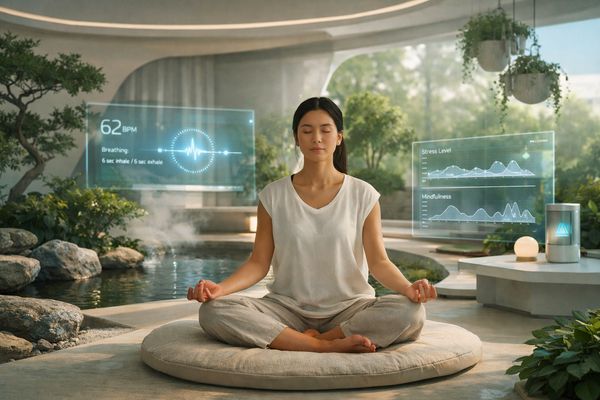 Embracing future wellness: AI-integrated sanctuaries meet serene natural retreats for ultimate calm.This image is a visual representation.
The quest for inner calm, once a personal endeavor, has evolved into a global economic force, fundamentally reshaping the travel industry. By 2026, wellness travel is no longer a niche pursuit but a mainstream imperative, driven by a collective yearning for restoration in a perpetually connected world. This deep dive explores the transformative shifts, emerging destinations, and cutting-edge technologies that define the 2026 wellness landscape, offering a definitive guide to finding your true sanctuary amidst the dynamic currents of modern life.
The global wellness economy, a once fragmented collection of luxury services, has undergone a structural transformation. It has blossomed into a cohesive, high-velocity economic engine that now dictates the trajectory of international travel. Surpassing major sectors such as Information Technology and traditional Tourism, wellness now represents a formidable 6.1% of global GDP [1]. This isn't just growth; it's a disruptive reorientation. As we navigate 2026, the sector has bifurcated into two distinct, yet equally compelling, paths: the 'hardcare' sector, characterized by medical-grade longevity programs and AI-integrated sanctuaries, and the 'softcare' movement, which prioritizes emotional repair and analog disconnection [2]. Understanding this duality is crucial for any traveler seeking to navigate the future of restorative journeys.
The Redefined Landscape of Wellness Travel in 2026
The recovery of wellness tourism post-pandemic has been nothing short of explosive, with the sector surging by 13.8% annually and wellness-specific travel spending projected to hit $1.4 trillion by 2027 [1]. This unprecedented velocity is fueled by a profound shift in consumer psychology: travelers no longer view wellness as a mere 'vacation add-on' but as the primary motivation for the journey itself [4]. This paradigm shift has led to the emergence of 'Smart Travel,' where personalization and efficiency, often powered by generative AI, are now the baseline expectations. Euromonitor reports that 60% of travel operators anticipate AI will fundamentally alter their operations [4].
"In the last few years, the wellness travel market has not only clocked eye-opening growth, but it has also changed significantly, with far more diverse, specific and sophisticated offerings,
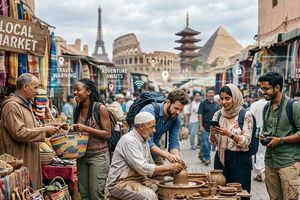
McKinsey's analysis further refines this understanding, noting that while the post-pandemic surge in adventure travel has stabilized, revenue in the wellness segment continues its upward trajectory [3]. This resilience is attributed to the 'multipurpose travel' trend, where digital nomads and multigenerational families seamlessly integrate work, leisure, and health practices into single, extended itineraries. This blending of purpose demands highly adaptive and integrated wellness offerings, moving beyond standalone spa treatments to comprehensive well-being ecosystems.
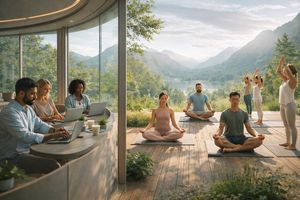 The rise of 'multipurpose travel': seamlessly blending work, leisure, and well-being into one enriching journey.This image is a visual representation.
Optimize Your Wellness Itinerary:
Prioritize destinations that offer integrated 'hardcare' and 'softcare' options, ensuring both advanced health diagnostics and opportunities for genuine digital detox and emotional repair. Look for resorts leveraging AI for hyper-personalized experiences, from dietary plans to bespoke fitness regimens, without sacrificing authentic human connection.
Regional Power Shifts: Sovereign Wellness & Professionalized Heritage
The global wellness map has seen a radical realignment, with the Middle East and Asia-Pacific regions emerging as formidable new epicenters. Driven by ambitious sovereign 'Vision' plans, particularly in the GCC, the Middle East has transformed from a traditional luxury market into a global laboratory for preventative healthcare and futuristic tourism [2].
Saudi Arabia stands as a top growth leader among the 25 largest wellness markets, expanding at an annual rate of 12.2%—double the global average [6]. This growth is anchored in the Public Investment Fund’s (PIF) colossal infrastructure projects. NEOM and Red Sea Global (RSG) are not merely resort developments; they are visionary ecosystems designed to seamlessly integrate human health with sustainability and cognitive technology [7]. In 2026, the Kingdom has pivoted towards 'operational readiness,' as evidenced by the strategic handover of Sindalah, NEOM’s luxury island, to Red Sea Global, signaling a commitment to placing 'signature' assets under proven operators [8]. Sindalah is being positioned as the Mediterranean's yachting gateway to the Red Sea, combining Stefano Ricci-designed yacht clubs with advanced smart-technology infrastructure [7]. Simultaneously, AMAALA is debuting its first phase of luxury resorts, including the Equinox Resort and Residences, which emphasize 'high-performance' health through offerings like magnesium vitality pools and hyperbaric chambers [10]. This focus on medical-grade amenities within a luxury setting is a prime example of the 'hardcare' sector in action.
Meanwhile, the Asia-Pacific (APAC) region is projected to be the fastest-growing wellness market through 2031, with a valuation reaching $310.56 billion [12]. The prevailing narrative here is one of 'Professionalization'—the meticulous process of taking ancient cultural practices, such as Muay Thai, Onsen therapy, and Ayurveda, and backing them with medical-grade data and institutional investment [12].
"Visitors can experience Muay Thai to train themselves to be healthy. And our wellness ranks among the top five in the world because of the heritage and culture that we have - the herbal medicine, the Thai massage, etc.,"
Thailand's wellness tourism market, for instance, has achieved unprecedented velocity, growing at an astonishing 36.4% annually—three times the global average [13]. The Thai Ministry of Tourism and Sports' 2026 strategy is firmly centered on 'experiential and wellness tourism,' targeting high-value markets by enhancing infrastructure and safety standards [15]. A critical success factor is the collaboration between hospitality giants and medical institutions. In destination spas across Phuket and Koh Samui, medical screening is now routinely bundled with traditional yoga retreats, forging a 'credible healthcare' formula that appeals significantly to Western and Chinese travelers alike [14]. This demonstrates a sophisticated approach to integrating ancient wisdom with modern medical rigor.
India, a rising powerhouse in APAC, records the highest projected CAGR in the region at 11.14%, largely propelled by the government’s supportive 'AYUSH Visa' policies [12]. This specialized visa category facilitates travel for traditional medicine treatments, establishing India as a global magnet for holistic health seekers. Spending in India’s traditional and complementary medicine sectors has surged, positioning it as the 7th largest wellness market globally [6]. This 'professionalization of heritage' is a significant edge case, showing how ancient practices are gaining global credibility and economic momentum through strategic government support and medical integration.
Plan Your Cultural Wellness Immersion:
When considering destinations in the Middle East or APAC, look beyond conventional resorts. Investigate Saudi Arabia's NEOM and AMAALA for cutting-edge 'hardcare' longevity programs. For culturally rich experiences, explore Thailand's integrated medical-spa retreats or India's AYUSH visa-supported traditional medicine centers, ensuring a balance of authentic heritage and evidence-based wellness.
The European Paradox: Purpose, Policy, and Practicalities
Europe continues to be a bastion of 'softcare' and 'purpose-driven' travel, projecting a 7.0% CAGR through 2030 [5]. Travelers in the UK, Germany, and the Netherlands are leading a defining shift towards journeys that profoundly align with their personal identities and values [4]. This trend signifies a deeper engagement with travel, where introspection and personal growth are prioritized over mere sightseeing. However, this growth is not without its logistical complexities, particularly with the impending launch of the European Travel Information and Authorization System (ETIAS).
A critical hurdle for 2026 European wellness travel is the full implementation of the ETIAS in late 2026 [16]. This online pre-authorization system will be mandatory for visa-exempt nationals from 59 countries, including the US and UK, introducing a €20 fee and requiring detailed background declarations, including criminal history and health status [17]. For wellness seekers, the 'medical purposes' clause of ETIAS technically allows for short-term treatment stays of up to 90 days. However, this is an edge case with potential pitfalls: any automated flag during the typically 10-minute application process can trigger manual reviews and significant delays, transforming a planned serene retreat into a bureaucratic headache [16]. This highlights the delicate balance between facilitating travel and upholding stringent border security measures, a challenge that wellness travelers must proactively navigate.
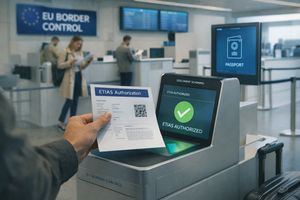 Navigating the new European Travel Information and Authorization System (ETIAS) for seamless wellness journeys.This image is a visual representation.
Navigate European Wellness Travel with Precision:
If planning a wellness retreat in Europe for late 2026 or beyond, apply for your ETIAS authorization at least three months in advance to mitigate potential delays from manual reviews, especially if your itinerary includes medical treatments. Research your chosen destination's approach to 'purpose-driven' tourism to ensure it aligns with your personal values for a truly enriching experience.
Venture Capital's New Frontier: AI, Longevity, and Women's Wellness
The venture capital landscape in 2025 and 2026 paints a 'tale of two markets' within digital health and wellness. While overall deal counts have seen a decrease, the capital raised by 'AI-native' startups has reached unprecedented levels [18]. Digital health startups collectively raised $14.2 billion in 2025, with AI-enabled companies capturing a significant 54% of that total. These firms commanded a substantial 19% premium on average deal size ($29.3M vs. $20.7M in the previous year) [18]. This funding is increasingly concentrated in clinical workflow and 'neurowellness' tools that leverage AI to personalize nervous system regulation [19].
The longevity sector, once on the fringes of science fiction, has now moved into the core of biotech investment. Companies like Altos Labs, with $3 billion in financing, and Retro Biosciences, backed by over $180 million from Sam Altman, are pioneering 'epigenetic reprogramming' [21]. These ventures are developing sophisticated computational models to analyze cellular resilience, with the audacious goal of restoring a 'youthful state' to cells [22]. By 2026, these startups are poised to bridge the gap between clinical biotech and consumer wellness through advanced nutraceuticals and precise bio-tracking devices [21], fundamentally altering how we perceive and pursue extended healthspans.
An illuminating edge case here is the emergence of a highly specialized 'women’s lane' within the longevity revolution [20]. Research now posits the ovary as 'command-central' for female systemic aging, influencing everything from cardiovascular health to cognitive function [20]. The 2026 market has pivoted from merely managing menopause symptoms to directly addressing ovarian aging itself. Clinics and resorts, such as SHA Wellness and Six Senses Ibiza, are integrating 'ovarian health' protocols, utilizing personalized diagnostics and sleep science to support hormonal equilibrium across every life stage [20]. This represents a significant shift from generalized wellness to precision health tailored to specific biological realities.
This niche is further exemplified by Kyma Health, a London-based startup founded in 2024. Kyma Health epitomizes 'Precision Wellness' for women by focusing on biomarker testing specifically for female hormones and health stages. This directly addresses a historical research gap where women's health data was often extrapolated from male-dominated studies [20]. Such targeted approaches indicate a maturing wellness market that recognizes and invests in granular biological differences.
Invest in Your Long-Term Wellness:
Explore wellness programs that incorporate AI-driven diagnostics for nervous system regulation and personalized health insights. For women, specifically seek out retreats and clinics that offer 'ovarian health' protocols and biomarker testing, recognizing the critical role of hormonal balance in overall longevity. Consider the long-term benefits of 'longevity residences' that integrate medical diagnostics and bio-tracking into daily living environments.
The AI Sanctuary and the Over-Optimization Backlash
The 2026 wellness traveler often finds themselves in a state of 'chronic low-grade fight-or-flight,' a direct consequence of digital saturation and pervasive global uncertainty [20]. This pervasive stress has given rise to the 'Rise of Neurowellness'—a critical new frontier that focuses on the proactive regulation of the nervous system before pathology even has a chance to manifest [20]. Unlike traditional mental health care, neurowellness draws upon cutting-edge neurotechnology and somatic practices to 'train' the nervous system, empowering individuals to achieve profound states of calm and resilience.
"We're living in this constant fight or flight mode. Neurowellness is not about mental health. It's not about brain health; it's about whole body health through the regulation of the nervous system, and it's really the master switch. You flip it, and everything changes,"
AI-integrated sanctuaries now offer 'Neuro-Feedback' sessions, an advanced edge case in personalized wellness. During these sessions, travelers can visualize their brainwaves in real-time, learning to consciously shift from high-stress beta states into restorative alpha or theta states through expertly guided breathwork and sound healing [20]. This technology-enabled self-regulation represents the pinnacle of 'hardcare' in emotional well-being, offering tangible tools for mental mastery.
However, a significant counter-trend has emerged—the 'Over-Optimization Backlash' [20]. Many consumers are reporting a 'wellbeing paradox,' where the relentless pursuit of health has transformed into a demanding performance, constantly measured by sleep scores, glucose graphs, and activity trackers. This digital tyranny of data can paradoxically increase anxiety rather than alleviate it. In response, 2026 marks a crucial shift towards 'regulation over results' and 'sensation over scores' [20]. Travelers are increasingly seeking 'Analog Wellness' destinations that actively enforce digital disconnection, emphasizing 'emotional repair' and 'embodied care' over the relentless pursuit of peak physical performance [2]. These sanctuaries offer dark-sky certifications and mandatory device-valet services, ensuring a genuine break from the digital tether. This pivot highlights a growing desire for authentic, unmeasured well-being, making it a critical consideration for those seeking true peace.
Achieve Digital Detox and Nervous System Harmony:
Seek out 'Analog Wellness' retreats that enforce digital disconnection and offer neuro-feedback sessions for nervous system regulation. Prioritize experiences that emphasize 'sensation over scores' and 'regulation over results,' moving away from constant self-measurement towards genuine emotional and mental repair. Look for 'Dark Sky' certified locations for deeper relaxation and sleep benefits.
The GLP-1 Disruption: Reshaping Luxury Hospitality and Dining
The rapid adoption of GLP-1 medications (such as Ozempic, Wegovy, and Mounjaro) has sent profound shockwaves throughout the luxury hospitality sector. With an estimated 100 million Americans eligible for weight-loss therapies, this is no longer a niche medical trend but a fundamental reset of consumer behavior, directly impacting high-margin sectors like hotel bars and gourmet dining [23]. GLP-1 users consume 30-40% fewer calories and significantly reduce their alcohol intake [23], creating a 'consumption deficit' that demands innovative responses from the industry.
"Casual dining has experienced the largest increase among weight-loss users. Some foodservice operators are experimenting with GLP-1 menus and finding success,"
In response, 2026 restaurants and luxury hotels are introducing the 'Micro-Fuelling' paradigm—an essential edge case for modern hospitality. This involves offering nutrient-dense 'mini-meals' that prioritize protein and fiber over volume [24]. Hotels like the Equinox in Saudi Arabia are reimagining room service with 'GLP-1-friendly' mini grain bowls and high-protein snack sets [10]. This strategic culinary adaptation acknowledges the changing dietary needs of a significant portion of their clientele.
The ethical debate surrounding GLP-1 usage centers on the 'social challenge' of dining while on these therapies. Users often report feeling judged for their reduced appetite [25]. This has led to the rise of 'discreet menu design,' where hotels employ neutral language like 'wellness portions' to support these guests without stigma [24]. Furthermore, the 'Great Wealth Transfer,' where women are set to inherit $40 trillion, is compounding this trend. Affluent women are shifting their spending from traditional luxury items towards 'form-fitting apparel' and active, wellness-driven experiences [23], making adaptable hospitality offerings even more critical for capturing this powerful demographic.
Dine Mindfully and Without Judgment:
When booking luxury travel, inquire about 'Micro-Fuelling' options or 'wellness portions' on menus, particularly if you are managing dietary needs. Don't hesitate to request discreet accommodations; the industry is increasingly adapting to diverse guest needs. Embrace destinations that prioritize experiences over excessive consumption, reflecting the evolving priorities of wellness-focused travelers.
The Science of Sanctuary: Validating Efficacy in Nature and Tech
As wellness offerings become increasingly 'medicalized,' the industry is demanding robust proof of efficacy. 2025 and 2026 meta-analyses provide a clear, albeit nuanced, picture of what truly works in the pursuit of well-being.
A 2025 umbrella review of 16 systematic reviews confirms that forest bathing (Shinrin-Yoku) is a proven complementary practice for psychological well-being [26]. Walking in a forest environment for at least two hours a week significantly reduces anxiety (Grade 2A) and improves mood [26]. Physiologically, empirical studies on older adults with essential hypertension found that a three-day forest intervention significantly lowered systolic blood pressure and reduced inflammatory markers like hs-CRP [27]. However, researchers caution that while evidence for its therapeutic effect on organic diseases is growing, it should be viewed as a 'complementary' rather than 'primary' treatment [26].
The efficacy of Hyperbaric Oxygen Therapy (HBOT), conversely, is more contested. A Cochrane review confirms its benefit for late radiation tissue injury (LRTI) in the head, neck, and bladder, noting significant improvements in quality of life [28]. However, the same review found 'no consistent evidence' that HBOT slows the progression of Multiple Sclerosis or improves outcomes in traumatic brain injury beyond reducing the risk of death, potentially leaving survivors with severe disability [29]. This disparity highlights the importance of critical evaluation when considering advanced wellness therapies.
"Forest medicine should be developed into a new preventive medicine and new clinical medicine for some lifestyle-related diseases such as hypertension, heart diseases, depression, sleep disorders, and some cancers. Forest medicine also should be applied to rehabilitation medicine. However, this requires more evidence"
The cultural adoption of wellness practices also varies significantly. While Western medicine is 'evidence-based' and focuses on molecular targets, Eastern medicine (like Traditional Chinese Medicine and Ayurveda) is often 'intuitive' and centered on holistic harmony [30]. Shinrin-Yoku, for instance, is highly structured and silent in Japan, whereas 'Western Forest Bathing' is often more flexible, incorporating social discussion and journaling [31]. 2026 marks a pivotal 'integration' of these two paradigms, where the 'energy perspective' of the East offers a rich foundation for the molecular unraveling by the West [30]. This synergy represents a more comprehensive and culturally sensitive approach to validated wellness.
Validate Your Wellness Choices:
Before committing to any wellness therapy, particularly advanced medical-adjacent treatments like HBOT, cross-reference resort claims with reputable, peer-reviewed meta-analyses or Cochrane reviews. Embrace complementary practices like forest bathing for proven psychological benefits, understanding their role as supportive, not primary, treatments. Seek destinations that thoughtfully integrate Eastern holistic philosophies with Western evidence-based approaches for a balanced and effective wellness journey.
Logistical Resilience: Navigating Borders, Climate, and Smart Architecture
The physical reality of 2026 travel is increasingly defined by the complex intersection of border security and environmental volatility. Beyond the European ETIAS, Thailand’s 'Long-Term Resident' (LTR) visa has become a blueprint for 'Wellness Residency' [32]. This visa offers four streams, including 'Wealthy Global Citizens' and 'Wealthy Pensioners,' each requiring health insurance of at least $50,000 [32]. In a significant social and logistical update, Thailand has also recognized same-sex marriages for dependent visa eligibility in 2026, broadening its appeal for diverse high-net-worth families seeking extended wellness stays [33].
Climate resilience is no longer a luxury but a core requirement for high-end wellness resorts, epitomizing the mantra 'Ready is the New Well' [20]. The 'Genesis Marina' project in Brisbane, California, serves as a masterclass in this 'Regenerative Travel' ethos. By observing 100-foot setbacks and elevating essential infrastructure (MEP systems, laboratory spaces) to higher floors, the campus is meticulously designed to remain functional even if sea levels rise by 7 feet [35]. This proactive, disaster-proof architecture is a critical edge case, showcasing a commitment to long-term sustainability and guest safety in an era of escalating environmental challenges.
Innovative materials such as 'Cross-Laminated Timber' (CLT) and 'High-Performance Concrete' (HPC) are increasingly being utilized for their enhanced durability in the face of hurricanes and earthquakes [34]. In wildfire-prone regions, resorts are implementing 'defensible space' landscaping and installing mesh-screened vents to prevent ember ingress [34]. This 'Regenerative' approach ensures that wellness destinations are not just sustainable, but inherently resilient—capable of protecting guests and maintaining operations during and after extreme weather events [20]. For the discerning wellness traveler, this commitment to robust, future-proof design is becoming as important as the therapeutic offerings themselves.
Ensure Your Journey is Secure and Sustainable:
Research visa requirements for extended wellness stays well in advance, particularly for new systems like ETIAS or long-term residency programs. Prioritize wellness resorts that demonstrate clear commitments to disaster-proof architecture and sustainable practices, viewing 'safety' and 'sanctuary' as inextricably linked. Look for certifications and visible efforts in climate resilience as indicators of a truly future-ready destination.
The investigative consensus for 2026 Wellness Travel points towards a 'Sovereign Realignment' [2]. The global center of gravity has shifted from the traditional Western spa to the Middle Eastern 'mega-resort' and the APAC 'professionalized heritage' hub. AI has transitioned from a backend tool to a core guest-facing utility, powering everything from 'Neurowellness' regulation to 'Precision Eating' menus [19]. However, the industry’s ultimate resilience lies in its ability to balance 'Hardcare' with 'Softcare'—to offer the hyper-optimized longevity of a Silicon Valley lab alongside the soul-deep silence of an Italian dark-sky sanctuary [2]. As travelers navigate the logistical complexities of ETIAS and the behavioral shifts induced by GLP-1s, the most successful destinations will be those that provide not just health, but resilience—the ability to remain 'fully alive' in a fragmented and volatile world [11].
2026 Wellness Travel FAQs: Your Journey to Inner Calm
Will the ETIAS background check reveal my psychiatric medical history for wellness travel?
Can a hotel refuse service to a GLP-1 user who wants a 'Micro-Portion' of an expensive steak?
Is forest bathing truly more effective than medical treatments for hypertension?
Are longevity residences a safe investment given climate change?
What is 'Neurowellness' and how does AI enhance it in wellness travel?
Disclaimer: This article discusses travel-related topics for informational purposes only. Travel conditions, costs, and availability are subject to change without notice. Images are illustrative and may not reflect current or exact locations. For further details, please see our full disclaimer.