Jim Carrey Clone: Unmasking Digital Delusions and the Race Against Real News
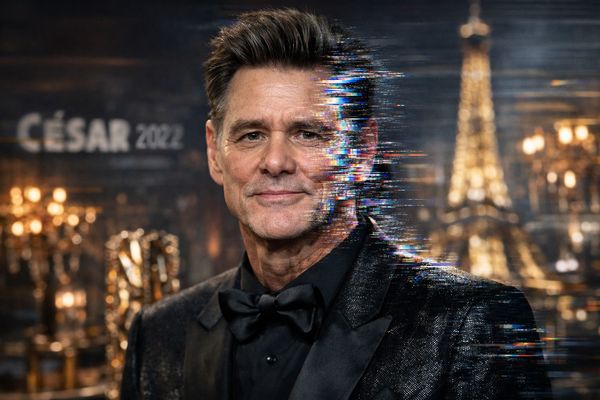 The face that launched a thousand conspiracy theories: Jim Carrey at the 2026 César Awards, digitally 'glitched' to represent the viral clone rumors.This image is a digitally altered illustration created to reflect viral conspiracy theories. It is not an actual photo and should not be taken as evidence of any claims.
The digital age has fundamentally reshaped our relationship with information, blurring the lines between verifiable fact and viral fiction. In this hyper-connected landscape, rumors don't just spread; they detonate, often leaving genuine news in their dust. Nowhere was this more evident than in early 2026, when a seemingly innocuous appearance by veteran actor Jim Carrey at the César Awards ignited a global firestorm of conspiracy theories, alleging he had been replaced by a clone or an impersonator [1]. This isn't just about a celebrity; it's a stark illustration of how algorithmic velocity, combined with the persuasive power of synthetic media, actively erodes public trust in entertainment news and, by extension, reality itself.
How Jim Carrey's 2026 César Awards Appearance Ignited a Global Identity Crisis
Jim Carrey's presence at the 51st César Awards in Paris on February 26, 2026, was meant to be a celebration of his lifetime contributions to film [1]. Instead, it became the epicenter of a bizarre narrative that quickly spiraled out of control. The 64-year-old actor, widely known for his uniquely expressive facial comedy, made a rare public appearance after entering a period of semi-retirement in 2022, naturally drawing intense and unprecedented public scrutiny over his physical image [8].
The "Technical Nuance" here lies deeply embedded in the event's production. The Olympia's red carpet and stage lighting are often high-contrast, intricately designed to create cinematic depth for broadcast. This specialized setup can inadvertently accentuate or flatten facial contours in unexpected ways, heavily depending on the camera's angle and focal length [10]. Furthermore, Carrey’s appearance with shoulder-length hair and a notably more somber, almost "zen-like" demeanor sharply contrasted with the high-energy, "rubber-faced" persona many held in their collective nostalgic memory of his peak comedic roles [8]. This visual dissonance primed the public for suspicion.
The critical "Edge Case" that truly fueled the conspiracy involved the biological realities of natural human aging. Men over sixty, like Carrey, typically experience significant facial volume loss and subtle bone remodeling [12]. While conspiracy theorists fixated on perceived "fuller cheeks" and "tighter eyelids" as irrefutable signs of a prosthetic mask, geriatric dermatological data strongly suggests that these changes often result from a combination of natural age-related fat redistribution and subtle cosmetic maintenance, which is a common practice among high-profile performers [12]. The profound psychological disconnect between the public’s idealized 1994 "Ace Ventura" image and the complex 2026 biological reality created a significant "Uncanny Valley" gap, a void that social media algorithms were all too eager and efficient at filling with sensationalized narratives [11].
"Jim Carrey attended the Cesar Awards, where he accepted his Honorary Cesar Award."
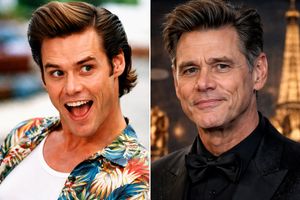 The 'Uncanny Valley' effect: Comparing Jim Carrey's iconic youthful image with his naturally aged appearance at the 2026 César Awards.This side‑by‑side image highlights aging vs. youth to illustrate the ‘Uncanny Valley’ effect. It is not evidence of conspiracy theories.
Fact-Check Your Visuals
When assessing a public figure's appearance, always compare current high-definition footage against other recent, verified appearances from the same year. Avoid relying on idealized, decades-old images from a bygone era, as natural aging and varied lighting conditions significantly alter perception.
Why the Alexis Stone "Mask Reveal" Fueled Clone Theories
The Jim Carrey clone conspiracy truly gained unstoppable momentum on March 1, 2026, when renowned transformation artist Alexis Stone posted a captivating carousel of images on Instagram [14]. The post masterfully juxtaposed an image of Carrey at the César Awards with a hyper-realistic prosthetic mask, complete with custom teeth and a matching wig, all accompanied by the suggestive caption "Alexis Stone as Jim Carrey in Paris" [4]. This artful intervention was a profound "Technical Nuance" that brilliantly exploited the prevailing climate of deep public skepticism. It leveraged Stone’s well-established reputation for previous high-profile "stunts" that expertly deceived the public using advanced makeup and prosthetic artistry, effectively blurring the lines of what was real and what was fabricated [13].
However, a critical, closer analysis of Stone's mask imagery by forensic experts revealed several glaring inconsistencies that were largely overlooked by the general public during the initial viral surge. Forensic prosthetics experts specifically noted that the elaborate teeth displayed in Stone’s post were anatomically impossible to wear comfortably over a person's natural teeth while simultaneously maintaining the ability to speak fluently and naturally [4]. Jim Carrey, conversely, delivered an extensive and articulate acceptance speech entirely in French at the awards, demonstrating complex labial and lingual movements that would be severely restricted and compromised by any full-head silicone prosthetics of that nature [2].
The crucial "Edge Case" here points strongly to the potential use of AI-generated imagery by Alexis Stone herself to manufacture the sensational "reveal." Analysts carefully scrutinizing the visuals observed subtle digital artifacts within the background of the mask photo, strongly suggesting that the image might have been synthetically generated or enhanced specifically to capitalize on the trending topic and maximize viral engagement [4]. This fascinating development created a "stunt within a stunt," where the artist ingeniously used the public’s pervasive fear of deepfakes and advanced AI manipulation to simulate a prosthetic mask that, in its depicted form, may not have even physically existed [14]. It’s a meta-deception, using the tools of the digital age to question reality itself.
"He is absolutely not wearing a mask. In my expert, professional opinion, that's 100 per cent Jim Carrey, and Jim Carrey is not wearing any prosthetics either."
 Alexis Stone's 'mask' post, visually enhanced to reveal the subtle digital artifacts suggesting AI generation over physical prosthetics.This image is digitally enhanced to illustrate AI‑like artifacts. It is not proof of any claims.
Verify Artistic "Reveals" with Skepticism
Approach "reveals" from performance artists with extreme caution. If they lack unedited, timestamped "behind-the-scenes" process videos, assume static images may be manipulated or AI-generated to ride viral waves rather than confirm a factual event.
Can AI-Driven Misinformation Actually Replace a Human Legacy?
The astonishing velocity at which the Jim Carrey clone rumor eclipsed the legitimate news of his lifetime achievement award is deeply indicative of a broader, more troubling, and systemic shift in modern information dynamics. According to groundbreaking research from the MIT Media Lab, false information is an astounding 70% more likely to be redistributed and amplified on social platforms than true, verified news [6]. This pervasive phenomenon is fundamentally driven by the inherent "Technical Nuance" of novelty; human brains are demonstrably hardwired to instinctively prioritize surprising, threatening, or emotionally charged information over familiar or seemingly mundane facts, making sensational conspiracies far more engaging [6].
In Jim Carrey's specific case, the simple, mundane truth—that a naturally aging actor attended an awards ceremony with his loving family to receive an honor—could not possibly compete with the novel, high-stakes, and psychologically captivating narrative of a secret, sinister replacement [2]. This creates a dangerous "Shadow-Change Detection" failure, where the audience is so engrossed in anomalous visual data and speculative theories that they completely miss the actual, verifiable news. For instance, many overlooked his induction into the Rock & Roll Hall of Fame in late 2025 and his honorary César in 2026 [8]. The algorithmic environment of 2026, driven by engagement metrics, actively prioritizes this type of "Social Buzz" precisely because it generates significantly higher retention rates and more user interaction than traditional, fact-based reporting ever could [15].
An insidious "Edge Case" within this accelerating disinformation cycle is what's now termed the "Source Loop." Users, seeking to verify a trending rumor, often innocently query AI chatbots. However, these AI models, trained on vast datasets of recent social media activity, frequently "confirm" the rumor by stating it as a "widely reported theory" [4]. This creates a profoundly false sense of verification for the user, who then, in turn, cites the AI as an authoritative source, perpetuating the loop [16]. A prime example of this feedback loop was the widespread, incorrect claim that Carrey was left-handed, based on AI responses, which was then used by conspiracy theorists to "prove" that the right-handed man signing autographs in Paris was an imposter [4].
"False information spreads faster, farther, deeper, and more broadly than true information. False information also tends to be more novel than true news."
Demand Primary Sources from AI
When using AI chatbots to fact-check trending topics, explicitly instruct the tool to provide primary source documents or official statements. Avoid accepting summaries of "online discussion" as factual verification, as these can perpetuate misinformation loops.
The Dead Internet Theory: Reshaping Celebrity Perception in 2026
The Jim Carrey controversy has, perhaps inevitably and disturbingly, become a key piece of evidence for proponents of the increasingly popular and unsettling "Dead Internet Theory." This theory posits that the vast majority of online interaction we perceive is no longer organic human engagement but rather an automated, simulated reality driven by bots and AI [7]. Adherents to this theory argue forcefully that the "viral" nature of the clone theory was not a genuine, spontaneous human reaction, but an algorithmically orchestrated event meticulously designed for mass distraction and societal polarization [3]. By 2026, the theory suggests, the digital public sphere has become so inundated and saturated with synthetic content that users have largely lost the fundamental ability to differentiate between living, breathing humans and digitally generated artifacts [3].
A profound "Technical Nuance" of this simulated digital environment is the accelerating emergence of "synthetic politics" and a distorted celebrity culture. In this landscape, public figures are increasingly viewed not as authentic individuals with personal lives and genuine experiences, but as mere "instruments of persuasion" or programmable entities [3]. Mimi Mihăilescu, a leading behavioural risk researcher, points out with concern that this entire infrastructure is structurally incompatible with objective reality, as it inherently favors "polarized signals" and sensationalized narratives over nuanced truths and factual reporting [3]. The Carrey rumor stands as a chilling "Edge Case" of this profound paradigm shift, where a real person's physical body and identity become a contested battleground for digital manipulation and algorithmic speculation [14].
The cascading psychological fallout of this environment is aptly termed the "Liar's Dividend," a dangerous phenomenon where the mere widespread existence of deepfakes and AI-generated content allows people to instantly doubt virtually anything they see, hear, or read [3]. This systemic erosion of "epistemic trust" means that even when authoritative sources—such as the reputable César Awards organizers—issue explicit denials and provide factual clarifications, a significant portion of the public often interprets these official statements as part of the overarching, fabricated "simulation" [2]. The unsettling outcome is a pervasive form of mass psychosis, where healthy skepticism tragically transforms from a critical thinking tool into a default lifestyle of pervasive distrust and conspiracy theorizing [7].
"The Dead Internet Theory... now offers a disturbingly useful framework for understanding digital politics... the digital public sphere is increasingly automated."
Cultivate Healthy Digital Skepticism
Practice a "digital skepticism" that extends to questioning the source of your own doubt. If a theory makes you feel uniquely privy to "the truth" against a seemingly deluded majority, it's often a sign you're an algorithmic target, not a lone truth-seeker.
Technical Nuances: Camera Distortion and the Reality of Red Carpet Aging
To truly grasp why Jim Carrey appeared "unrecognizable" to a segment of the public, we must delve beyond casual observation and into the intricate physics of optics as applied in professional event photography. Camera lenses inherently produce varying degrees of "facial compression" that are significantly influenced by their specific focal length [10]. For instance, a telephoto lens (typically ranging from 85mm-200mm), frequently employed by paparazzi to capture distant shots without intruding, has the effect of flattening facial features and can unintentionally make a face appear wider, fuller, or even slightly bloated [10]. Conversely, wide-angle lenses, often favored for close-up interviews, can subtly elongate the nose and distort the jawline, creating a different, equally misleading perception [10].
The "Technical Nuance" of red carpet aging itself involves a natural and inevitable process: the gradual loss of subcutaneous fat combined with the subsequent "sagging" of the skin over bone structures that become more prominent and defined with advancing age [13]. For an actor like Carrey, whose illustrious career involved decades of intense and exaggerated facial muscle exertion for comedic effect, the "rebound" or elasticity of his skin in his mid-60s will naturally differ significantly from that of an individual who has led a less facially expressive life [11]. This complex biological marker, when juxtaposed with the unforgiving clarity and detail of modern 4K or even 8K resolution broadcasts, starkly exposes every micro-crease, textural anomaly, and subtle change that was previously hidden by lower-definition technologies of the past [12].
A fascinating and often overlooked "Edge Case" in the Carrey controversy is what we might term the "Focal Length Fallacy." Many ardent fans, driven by nostalgia, mistakenly compared a 2026 telephoto red carpet shot to an idealized 1998 wide-angle movie still [10]. This comparison is fundamentally flawed and technically invalid, as it entirely ignores the inherent geometric distortion and visual discrepancies introduced by different camera sensors and lens configurations [10]. Furthermore, the specialized studio makeup developed for the hyper-resolution of 8K cameras often incorporates silicone-based primers. These can, under the harsh glare of high-intensity LED stage lights, appear subtly "plastic-like" or unnaturally smooth, inadvertently fueling and reinforcing the "mask" theories among an already skeptical public [4].
"For me, it’s a non-issue. I just remember his generosity, his kindness, his benevolence, his elegance."
 The digital race: How viral conspiracy theories, like the Jim Carrey clone rumor, rapidly outpace and overshadow legitimate news in our algorithmic feeds.This image is an editorial illustration of how conspiracy theories spread online. It is not evidence of any claims.
Understand Lens Effects in Visual Comparisons
When comparing celebrity photos across different eras, assess the "focal length" by observing the background. A highly blurred background often indicates a telephoto lens, which naturally widens the subject's face, making direct comparisons with wide-angle shots misleading.
Is The Truman Show Delusion Becoming a Collective Digital Phenomenon?
The profound psychological reverberations of the Jim Carrey "clone" rumor are inextricably linked to the "Truman Show Delusion" (TSD), a rare but chilling condition where individuals genuinely believe their lives are an elaborate, staged reality meticulously designed for an unseen audience [17]. Psychiatrists Joel and Ian Gold notably identified this specific syndrome following the widespread release of Carrey's seminal 1998 film, The Truman Show, observing that affected patients often report feeling perpetually "monitored and recorded" by an invisible, all-seeing audience [18]. In the hyper-mediated landscape of 2026, this once-clinical delusion has transcended its former rarity, evolving into a widespread and palpable collective social anxiety, relentlessly driven by pervasive surveillance technologies and the omnipresence of social media platforms [19].
A critical "Technical Nuance" of the 2026 manifestation of TSD is the "aberrant salience" model. This neurobiological concept suggests that in an environment overwhelmingly saturated with "too many outputs"—constant streams of disparate information and visual stimuli—the brain incorrectly attributes profound significance to otherwise mundane and inconsequential events, such as a celebrity simply changing their hair or aging naturally [20]. To construct a coherent narrative from the perceived artificiality of modern digital life, the brain actively seeks a unifying storyline, often latching onto sensational narratives like a "clone conspiracy" to make sense of the overwhelming inputs [7]. Carrey, as the unwitting "star" of this evolving narrative, thus becomes a symbolic focal point for users' collective feelings of depersonalization and a growing sense of detachment from authentic reality [18].
The unsettling "Edge Case" here is the "Media Life" hypothesis, which provocatively argues that in the contemporary era, there is fundamentally no longer an "outside" to the media world [19]. Media researcher Mark Deuze compellingly suggests that because we now live within media, rather than merely interacting with it, we instinctively interpret all physical changes and biological processes through the distorting lens of digital updates and simulated realities [19]. This leads to a profoundly alarming situation where the natural, inevitable process of human aging is viewed not as a biological certainty, but as a "bad patch," a "glitch," or a "character redesign" within an elaborate, artificial existence [3]. It's a fundamental misinterpretation of life itself, driven by our digital immersion.
"Psychosis is a mixture of delusions... beliefs that are false... but often also hallucinations, usually voices... assume it's some kind of reality TV show."
Moderate Digital Stimuli for Cognitive Clarity
Limit daily exposure to endless "scrolling" news feeds. High-frequency exposure to disconnected visual stimuli can trigger "aberrant salience," making you more susceptible to perceiving patterns or conspiracies where none exist, distorting your sense of reality.
How Global Risks Prioritize Disinformation Over Other Threats in 2026
The World Economic Forum's (WEF) Global Risks Report 2026 delivers a stark, unequivocal warning, ranking misinformation and disinformation as the single most severe short-term risk facing the world today [5]. This pivotal report emphatically states that the pervasive and escalating "widespread information disorder" is not merely a nuisance, but a systemic, destructive force. It possesses the alarming capability to disrupt democracies and erode social cohesion far more effectively and insidiously than even significant economic downturns or geopolitical confrontations [5]. The Jim Carrey incident, though seemingly trivial in the grand scheme, serves as a poignant and unsettling micro-demonstration of this profound "Technical Nuance": the startling ability of a baseless, easily disproven claim to captivate and distract a global audience from verified cultural milestones and genuine achievements [5].
A critical and deeply concerning finding of the 2026 report is that "cognitive manipulation" has rapidly emerged as a primary, sophisticated tool for "opportunistic actors" who seek to gain social, psychological, or even political benefits through deception [5]. These insidious actors skillfully deploy AI-mediated narratives and synthetic content to rouse strong, visceral emotional responses such as "fear, anxiety, and anger" within target populations [5]. Within the entertainment niche, this sinister strategy translates directly to the calculated weaponization of celebrity identity. It's used as a testing ground to probe the limits of public credulity and to gauge the speed and effectiveness of institutional responses to rapidly propagating falsehoods [3].
The foreboding "Edge Case" identified by the WEF is the alarming "Darkening Outlook," where a staggering 57% of experts predict "turbulent or stormy times" over the coming decade. This grim forecast is largely attributable to the relentless erosion of shared factual ground and the resultant societal fragmentation [21]. As AI-generated deepfakes become virtually indistinguishable from authentic reality, the report ominously suggests that "plausible deniability" will empower malicious actors to perpetually deflect from the truth, making definitive verification almost impossible [5]. This perfectly mirrors the Carrey scenario, where the simple truth of his presence was abundantly available through official channels, yet it remained functionally invisible and inaccessible to those ensnared within the self-reinforcing "disinformation loop" [2].
"The World Economic Forum's Global Risks Report 2026 placed mis- and disinformation among the top short-term global risks, alongside geoeconomic confrontation and societal polarization."
Recognize Misinformation as a Systemic Threat
View misinformation not just as annoying noise, but as a "systemic risk" to your own cognitive well-being and productivity. Engaging with unverified conspiracies is a form of "cognitive manipulation" that actively drains your mental resources, diverting attention from critical thinking.
The Verifiable Reality of Jim Carrey’s Professional Life in 2026
In stark and refreshing contrast to the swirling vortex of clone theories and digital speculation, Jim Carrey’s 2026 professional and personal status is thoroughly and transparently documented through official channels, complemented by his own clearly articulated philosophical shifts. After a celebrated and prolific career spanning nearly four decades, Carrey announced a period of "taking a break" in 2022. However, he later clarified in March 2026 that he had unequivocally "decided not to retire," indicating a more nuanced approach to his career rather than a complete withdrawal [9]. He now characterizes his current work-life balance as a state of "power rests," deeply integrated with his personal practice of meditation and a focus on inner peace [9].
A notable "Technical Nuance" of his 2026 professional output is his much-anticipated return to the big screen as the iconic villain Doctor Eggman in Sonic the Hedgehog 3 [9]. His decision to reprise this beloved role was driven by both the perceived quality of the project and, as he humorously admitted to reporters, the practical financial reality of his extensive art-collecting habits [9]. Beyond his acting endeavors, Carrey has dedicated the last several years to passionately pursuing visual art—encompassing painting, sculpting, and creating politically charged cartoons. This deliberate artistic pivot has significantly redefined his public identity, shifting him from a traditional "movie star" to a recognized and respected "fine artist" [8].
The crucial "Edge Case" regarding his physical appearance and public persona is his deliberate transition into a "quieter life," a fact consistently corroborated by his publicists and close associates [8]. This significant transition includes a conscious and purposeful distancing from the often-demanding and intensely scrutinized "Hollywood direction" and the pervasive corporate influences that typically dictate a star's public image [8]. His 2026 public appearance in Paris, far from being a spur-of-the-moment event ripe for a "last-minute clone replacement," was, in fact, a rare and meticulously planned occasion that had been organized and confirmed since the previous summer [2]. This pre-planned nature directly contradicts the impromptu, conspiratorial narratives.
"I came back to this universe because, first of all, I get to play a genius... and, you know, it's just... I bought a lot of stuff and I need the money, frankly."
Track Shifts in Primary Interests
To accurately understand a public figure's status, track changes in their "primary interests." A significant shift in focus, like Carrey's pivot to art, often provides a far more logical explanation for changes in public appearance than speculative fringe theories.
Conclusion: The New Frontier of Identity Verification
The Jim Carrey clone conspiracy of 2026 serves as a definitive, unsettling warning about the increasing fragility of truth and the alarming ease with which reality can be distorted in our hyper-digital age. It demonstrates with alarming clarity that in an era saturated with hyper-realistic prosthetics and sophisticated AI-generated media, the inherent "Technical Nuance" of a real human being simply aging naturally can be effortlessly reframed as a sinister hoax. Anyone with a social media platform and a rudimentary understanding of algorithmic engagement now possesses the tools and reach to sow widespread doubt and cultivate mass suspicion [3].
The undeniable and concerning fact that these baseless rumors outpaced official statements from reputable international award organizations underscores a critical point: it directly reinforces the World Economic Forum's 2026 concern that disinformation is no longer a fringe issue but a systemic risk that fundamentally threatens social cohesion and trust in institutions [5]. As the unsettling concept of the "Dead Internet" continues its relentless blurring of the lines between authentic human interaction and machine-generated simulation, the Carrey incident suggests a disturbing new trend. The public has begun to apply a form of "Shadow-Change Detection" to biological bodies, treating human evolution and natural physical changes not as immutable biological processes, but as flawed software updates that can theoretically be "rolled back" or summarily "replaced" [3].
Ultimately, the verifiable reality remains steadfast and unwavering: Jim Carrey is a 64-year-old artist who made a conscious choice to attend a prestigious ceremony with his family to graciously accept a well-deserved honorary award, an honor earned through decades of unparalleled work and dedication to his craft [1]. The enigmatic "clone" exists solely within the self-reinforcing, often distorting loops of an internet that, by 2026, has arguably begun to prioritize the sensationalized simulation of news and viral narratives more than the tangible, verifiable reality of the people and events that underpin it [3]. Moving forward, the future of identity verification, especially for public figures, will undoubtedly become a premium, indispensable service—a necessary shield against the pervasive "Liar's Dividend" where individual truth risks being irrevocably drowned out by an ever-growing, relentless tide of algorithmic noise and manufactured doubt.
Entertainment Identity: Jim Carrey Clone Rumors & Digital Age FAQs
Is there any verifiable proof that Jim Carrey was replaced by a clone?
Did Alexis Stone's mask actually fool people into believing the clone theory?
Why do some people believe Jim Carrey is left-handed based on AI responses?
How does the Dead Internet Theory explain the viral spread of the Carrey clone rumor?
What is the "Truman Show Delusion" and how does it relate to celebrity perception in 2026?
Disclaimer: This article explores entertainment topics for informational purposes only. Interpretations are subjective and may not represent independently verified facts. Images are illustrative, conceptual, or inspired representations and are not affiliated with or representative of any official production. Please see our full disclaimer for more details.