Miranda Priestly's Enduring Reign: How 'The Devil Wears Prada 2' Redefines Fashion's Power Elite
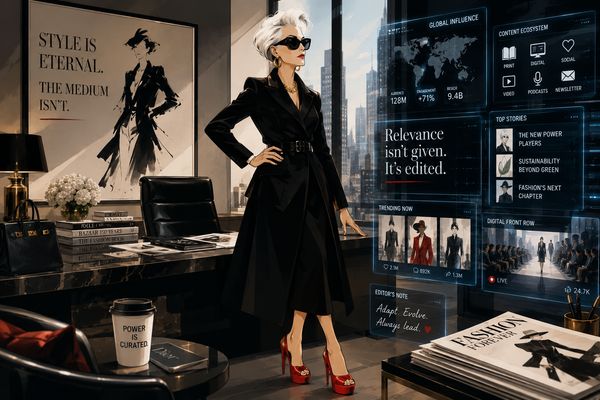 Miranda Priestly, ever iconic, navigates the complexities of modern fashion and media in 'The Devil Wears Prada 2.'Image for illustrative purposes only, depicting Miranda Priestly as she navigates contemporary fashion and media themes in 'The Devil Wears Prada 2.'
Twenty years after defining the cutthroat world of high fashion, 'The Devil Wears Prada' returns with a sequel that doesn't just revisit beloved characters but plunges headfirst into the seismic shifts reshaping media and the luxury sector. 'The Devil Wears Prada 2,' released to global acclaim with a staggering $233.6 million opening weekend [1], isn't merely a nostalgic trip down memory lane; it’s a sharp, incisive commentary on whether the autocratic, top-down cultural authority once wielded by Miranda Priestly, brilliantly reprised by Meryl Streep, can endure in a world dominated by algorithms, digital content farms, and relentless cost-cutting. This deep dive explores how Miranda's reign has less evaporated and more profoundly evolved, adapting to survive in an unrecognizable landscape.
The genesis of this cinematic return can be traced back to 2024, when screenwriter Aline Brosh McKenna, director David Frankel, and Meryl Streep themselves discovered a compelling conceptual framework for a sequel. They realized the time was ripe to address the seismic structural changes that have reshaped media and workplace culture over the past two decades [5]. The film, directed by David Frankel and written by Aline Brosh McKenna, offers a narrative microcosm of real-world dilemmas, particularly the decline of traditional print publishing and the rising pressure on legacy brands to convert into digital content mills [6]. It forces us to confront an uncomfortable truth: in an era of instant gratification and viral trends, is there still space—or even a need—for a singular, powerful tastemaker like Miranda Priestly? The sequel argues yes, but with a critical caveat: power today is less about dictatorial pronouncements and more about strategic preservation, a fight for the very soul of discerning taste. 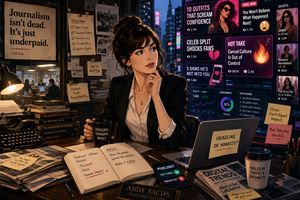 Andy Sachs returns to Runway, confronting the tension between ethical journalism and digital media's relentless pace.Image for illustrative purposes only, depicting Andy Sachs's professional journey within 'The Devil Wears Prada 2.'
The New Face of Fashion Gatekeeping: From Autocracy to Adaptation
In the original 'Devil Wears Prada,' Miranda Priestly's power was absolute, her pronouncements on fashion trends shaping global wardrobes and careers. Her withering 'Florals? For spring? Groundbreaking' [12] wasn't just a critique; it was a decree, an unchallengeable pronouncement that reverberated through the industry. The sequel, however, paints a very different picture. Miranda is no longer the undisputed ruler but a creative leader fighting a defensive war against a corporate, metric-focused strategy [6]. This marks a profound shift in the very nature of 'gatekeeping' within the fashion industry, moving from an offensive, trend-setting posture to a more strategic, preservationist stance.
A key technical nuance explored in the film is the transformation of print publications from curated editorial bastions into 'content farms.' This shift isn't just about the inevitable move to digital; it's about the fundamental reorientation of content creation from quality and depth to sheer volume and clickability. Publications like Runway are shown to have gutted print budgets, forcing staff to churn out an endless stream of scrollable, short-form digital content just to maintain minimal profit margins [6]. This devalues the very essence of editorial integrity that Miranda once embodied, pushing against the idea that a singular vision can dictate taste when algorithms curate individual feeds, fragmenting influence into a thousand tiny streams.
"Both director and actress were game for a sequel if the right idea came along, and Brosh McKenna began writing"
It's a common misconception that Miranda Priestly's authority has been completely obliterated by the digital age. While her absolute creative power to dictate trends has undoubtedly diminished due to fragmented influence, her strategic power to preserve institutional value has actually evolved, becoming perhaps more nuanced, more vital. She’s no longer just telling you what to wear; she’s fighting for the very existence of the platform that tells you what to wear, making her a different kind of power broker altogether [6]. The film posits that true influence in 2026 isn't about being the loudest voice, but the most resilient and strategically adept in navigating systemic disintegration, a testament to the fact that even in chaos, a strong vision can find a way to anchor itself [3].
Future-Proofing Your Brand in a Fragmented Media Landscape:
To thrive in today's fragmented media, brands must shift from dictatorial trend-setting to strategic value preservation. Invest in diverse, quality content, and embrace adaptive strategies that integrate human curation with digital reach, rather than solely chasing ephemeral viral trends. This isn't about sacrificing digital presence, but about ensuring that presence serves a deeper, more meaningful purpose.
Corporate Devolution and the Battle for Runway's Soul
The sequel opens with Andrea "Andy" Sachs as a respected reporter at The Vanguard, a position of journalistic integrity starkly contrasted by her subsequent abrupt layoff via text message during an awards gala [3]. This dramatic opening sequence serves as an 'edge case' representation of the harsh reality of corporate downsizing that has plagued the digital media industry, a grim echo of newsrooms across the globe. Andy's impassioned viral speech on media ethics and the future of journalism, born from this brutal experience, becomes her unlikely ticket back to Runway, this time as Features Editor [3].
Her recruitment by Irv Ravitz, chairman of Elias-Clarke Publishing, occurs notably without Miranda Priestly's consent [3]. This corporate mandate to restore Runway's credibility after a public relations disaster—a glowing feature on "Speed Fash," a rapid-production clothing brand exposed for unethical sweatshop labor [8]—highlights another critical 'technical nuance': the decline of traditional fact-checking and editorial vetting in favor of fast-paced commercial partnerships. This dynamic epitomizes the ongoing conflict between journalistic ethics and commercial pressures, a battle that countless publications are fighting for their very existence.
According to Wikipedia’s plot summary for The Devil Wears Prada 2, Jay Ravitz assumes control of Elias-Clarke following Irv Ravitz’s death and introduces aggressive cost-cutting measures.
Upon her return, Andy finds Runway a shadow of its former self, haunted by the ghosts of glossy pages past. The physical magazine is drastically reduced in size, print budgets slashed, and the staff relegated to producing scrollable, short-form digital content and clickbait [6]. This internal decline is further accelerated by the arrival of Jay Ravitz, Irv’s finance-bro son, who, devoid of his father’s sentimental attachment to fashion publishing, institutes aggressive cost-cutting measures, placing Miranda's promised promotion to Global Head of Content on indefinite hold [3]. This scenario underscores a common misconception that legacy brands can simply 'go digital' without fundamentally restructuring their operational philosophy and grappling with the clash between creative and financial priorities. The pressure on Andy to drive digital traffic even forces her to lie about securing an exclusive interview with Sasha Barnes, a reclusive billionaire philanthropist, illustrating the desperate measures taken for clicks [8]. The workplace culture itself has shifted, with Miranda's current assistants—the hardworking Jin Chao, first assistant Amari Mari, and second assistant "Charlie the Chair"—now attempting to manage Miranda's demands within modern administrative boundaries, a stark contrast to the absolute subservience of yesteryear [6].
Prioritizing Editorial Integrity in a Digital Age:
Businesses, especially in media, must actively safeguard editorial integrity against the allure of quick commercial gains. Implement robust fact-checking, diversify revenue streams beyond purely commercial partnerships, and champion content that offers genuine value to readers, not just ephemeral clicks. This builds trust and long-term brand equity, which, let's be honest, is far more valuable than short-term virality.
Cinematic Grandeur and Real-World Industry Restructuring
The production of 'The Devil Wears Prada 2' itself mirrors the macroeconomic realities of the modern entertainment industry, operating with a budget tripled compared to its predecessor, soaring to an impressive $100 million [3]. This massive financial investment allowed for unprecedented access to high-profile locations, including the Dior boutique on 57th Street, the Waldorf Astoria lobby, and even the lavish Villa del Balbiano on Lake Como [3]. The scale visually represents the financial consolidation and investment required to produce AAA blockbusters in 2026, where only the biggest studios can afford such opulence.
Production designer Jess Gonchor's vision for the Runway office sets at Kaufman Astoria Studios further exemplifies a critical 'technical nuance.' The sets were constructed eight times larger than the original, creating a vast, echoing workspace designed to emphasize the isolation of the characters and the hollowed-out corporate landscape of modern media [3]. This artistic choice powerfully conveys the emotional and professional toll of working in an industry undergoing such rapid and brutal restructuring, making the characters seem almost lost in the cavernous, impersonal space.
"Annie clocked it too and she made a beeline to the producers about it, securing promises that the models in the show that we were putting together for our film would not be so skeletal!"
An 'edge case' that underscores the film's commitment to modern social standards involved Anne Hathaway's direct intervention with producers regarding the skeletal frames of runway models during Milan Fashion Week. She secured formal guarantees that models cast for the film's internal fashion sequences would not be alarmingly thin [11]. This real-world ethical consideration is mirrored in the film's dialogue, where Miranda Priestly delivers a scathing critique during a fashion shoot review, asking her editors if the models had been encouraged to "mill around like starving goats in a parking lot of a methadone clinic in New Jersey" [11]. This highlights a common misconception that fashion media is solely about glamour, often overlooking the ethical implications of its visual representations and the human cost behind the veneer of beauty. Even the filming process itself generated substantial public disruption, with massive crowds and paparazzi creating physical altercations during key scenes, a testament to the public's enduring fascination with the franchise and its stars [10].
Ethical Production in a High-Stakes Industry:
In creative industries, prioritize ethical standards alongside artistic vision. From casting choices to labor practices, ensure production aligns with modern social responsibility. Proactively address potential ethical dilemmas and use your platform to advocate for positive change, thereby building integrity and audience trust. It's not just about what you produce, but how you produce it.
Character Trajectories: Wardrobe as a Window to Power Shifts
The characters in 'The Devil Wears Prada 2' are more than just familiar faces; they serve as symbolic entry points into the complex sectors of the contemporary fashion and media landscape. Their evolving professional roles and personal journeys are subtly yet powerfully communicated through their costume design, expertly managed by Molly Rogers [3], whose choices speak volumes without a single line of dialogue.
Miranda Priestly's wardrobe, deliberately simplified by Meryl Streep and Rogers, sheds the "floopy" elaborate styling of the first film for a direct, stark, and classic silhouette [26]. Her signature angular black sunglasses and red satin peep-toe platforms now convey a defensive standing, mirroring her professional vulnerability [6]. She's no longer just making a statement; she's making a stand, her clothing a quiet armor against the encroaching digital barbarians. This 'technical nuance' in costume design subtly signals her shift from an offensive power player to a defensive strategist, a queen guarding her dwindling, yet still formidable, empire.
"You're not a visionary, you're a vendor,"
Emily Charlton, now a senior corporate executive at Dior, exemplifies the ascendance of corporate brand power. Her evolved executive styling, complete with literal "DIOR" branding on her shirts, reflects how power has shifted from traditional publishers to luxury brands themselves [3]. Her cutting dismissal by Miranda – "You're not a visionary, you're a vendor" [3] – highlights an 'edge case' often overlooked: the commodification of once-creative roles into purely transactional ones, where even former protégés become mere conduits for brand advertising budgets. Emily's ambition and survivalist nature are evident, bringing back iconic lines like: "May the bridges I burn light my way" and "Shared carbs have no calories" [12], a testament to her enduring, ruthless pragmatism.
Nigel Kipling, Miranda's longtime art director, undergoes an emotional awakening. Despite years of fierce loyalty and Miranda's often brutal disregard, his arc culminates in Milan, where Miranda yields the podium to him, allowing him long-overdue public recognition [3]. This serves as a poignant reminder that even within the most cutthroat industries, loyalty and creative contributions can eventually be recognized, challenging the common misconception that only ruthless ambition thrives. Sasha Barnes, the reclusive billionaire philanthropist, emerges as a potential "benevolent billionaire" savior of legacy journalism, representing a glimmer of hope for traditional media [3], while Benji Barnes, the tech tycoon, represents the invasive, optimizing threat of AI-driven media consolidation, a future where human curation might be entirely supplanted [3]. These character trajectories offer a captivating roadmap through the labyrinthine shifts in power and values defining our current media landscape.
Crafting Your Professional Narrative Through Style:
Consider your professional wardrobe as a strategic asset. Each piece can communicate your evolving status, priorities, and values. Whether it's a subtle shift towards streamlined sophistication or a bold embrace of brand identity, ensure your visual narrative aligns with your professional trajectory and aspirations. Dress for the job you want, yes, but also for the industry you're shaping.
Macroeconomic Realities: Fashion in Flux in 2026
The fictional struggles of Elias-Clarke and Runway to maintain viability in a changing publishing landscape are not isolated incidents; they are directly aligned with real-world macroeconomic disruptions plaguing the global fashion and media sectors in 2026 [7]. According to McKinsey and The Business of Fashion's State of Fashion 2026 report, the luxury retail industry is facing low, single-digit growth, economic uncertainty, and a marked reduction in consumer confidence, with 46 percent of executives expecting conditions to worsen [14]. This widespread slowdown has triggered severe cost volatility, forcing brands and media conglomerates to abandon outdated operational models, a brutal culling of the inefficient [16].
The challenges depicted in 'The Devil Wears Prada 2' find a direct parallel in Condé Nast's dramatic restructuring in April 2026 under CEO Roger Lynch. This 'technical nuance' reveals a corporate strategy focused on consolidating capital around its largest, most commercially viable marquee brands, such as Vogue and The New Yorker, while systematically dismantling smaller, unprofitable digital properties [7]. Crucially, Condé Nast shuttered SELF, a 47-year-old health and wellness publication, as a standalone digital property, folding its assets into Allure and Glamour [7].
"Condé leadership, at Lynch’s direction, is steadily restructuring the company around a small group of dominant brands within the portfolio, including Vogue and The New Yorker, while continuing to scale back titles that have struggled to adapt to the digital era"
This decision highlights an 'edge case' in the digital media landscape: the saturation of digital coverage in niches like beauty, health, and wellness, where independent social media influencers now capture the majority of brand advertising budgets, diverting them away from legacy publications [7]. This phenomenon directly challenges the common misconception that simply having a strong digital presence is enough for legacy media to survive; it's about market relevance and the ability to compete with agile, creator-driven content. The restructuring extended globally, with Glamour's physical operations wound down in Germany, Spain, and Mexico, alongside WIRED's operations in Italy, leading to significant job cuts across major outlets [7]. This aligns eerily with the film's depiction of Runway's decline and the brutal cost-cutting imposed by Jay Ravitz, a chilling reflection of our own industry’s harsh realities. 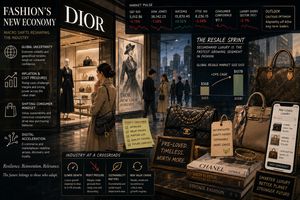 The luxury fashion sector adapts to economic uncertainties and the digital transformation, mirroring themes from 'The Devil Wears Prada 2' and McKinsey's report.Image for illustrative purposes only, reflecting the economic and digital challenges faced by the fashion industry as discussed in 'The Devil Wears Prada 2' and related reports.
The McKinsey report further outlines key themes for 2026, many of which are mirrored directly in the film's narrative. For instance, "Efficiency Unlocked," focusing on sourcing shifts and margin protection, finds its cinematic counterpart in Jay Ravitz's management consultants executing severe cost cuts [17]. The "AI Shopper" theme, exploring AI integration in e-commerce and automated recommendations, is strikingly represented by Benji Barnes pitching an automated, AI-driven, highly optimized Runway [18]. Even "Tariff Turbulence," discussing rising import duties, connects to the film's sourcing scandals that force publications to evaluate ethical supply standards [16]. It's a sobering reminder that 'The Devil Wears Prada 2' isn't just fiction; it's a mirror reflecting the very real, very complex challenges facing the fashion and media world.
Navigating Industry Restructuring: Strategies for Survival:
To survive industry-wide restructuring, businesses must rigorously evaluate core competencies and consolidate resources around their most viable assets. Diversify revenue models beyond traditional advertising, embrace agile content strategies, and analyze competitive landscapes, particularly the impact of independent creators, to maintain market relevance. Don't just adapt; anticipate and innovate, or risk being swept away.
The "Slow Digital" Counter-Movement: A New Blueprint for Print's Survival
While legacy media conglomerates like Condé Nast are consolidating and pivoting towards digital metrics, a distinct counter-movement has emerged, offering a different blueprint for survival. This 'technical nuance' is best exemplified by Edward Enninful, the former editor-in-chief of British Vogue, who launched his new media venture, EE72, and its print flagship, '72' [23]. Enninful’s strategy deliberately rejects the traditional volume-driven publishing model, advocating for a "slow digital" philosophy, a breath of fresh air in a breathless industry [24].
The underlying philosophy of this counter-movement rests on the preservation of print as a physical, collectible art form [23]. Enninful argues that while digital platforms prioritize fleeting notifications and fast-paced distribution, high-quality physical print demands time, focus, and sensory engagement [22]. Independent publications like '72,' 'Violet Papers,' and '032c' differentiate themselves by offering what digital screens simply cannot replicate: tactile weight, premium paper stocks, advanced typography, and long-form, intentional storytelling, transforming a simple magazine into an experience, a statement piece [22].
An 'edge case' in Enninful's business model for '72' directly addresses the editorial compromises depicted in 'The Devil Wears Prada 2': the first issue was released with zero traditional advertising pages, preserving absolute creative freedom and rejecting standard "pay-for-play" commercial arrangements that can so easily compromise integrity [24]. Instead, the revenue model relies on three-channel brand partnerships across digital, high-quality print integrations, and exclusive experiential events [24]. By launching with capital-city events partnered with brands like Moncler, Levi's, and Google Shopping, Enninful demonstrates that print can operate as a highly premium, independent luxury product, a testament to its enduring value [24]. This model proves a critical point: print is not dead, but has evolved from a mass-market commodity into a curated, collectible luxury experience [22]. The common misconception here is that print is an outdated medium, when in fact, it's undergoing a renaissance as a premium product for those who truly appreciate depth and artistry.
Strategies for Independent Publishers and Creators:
Independent publishers and creators should embrace a 'slow digital' philosophy, prioritizing quality, depth, and tactile experiences over volume. Develop multi-channel revenue models through experiential brand alliances rather than traditional advertising, leveraging your unique voice and curated content to attract a discerning, loyal audience. Don't chase fleeting trends; create lasting value.
The Recalibration of Gatekeeping and Miranda's Evolved Authority
The strategic choices made by the characters in 'The Devil Wears Prada 2' ultimately reveal that while Miranda Priestly’s traditional, top-down gatekeeping has declined, her authority has not been destroyed; it has simply evolved, becoming more resilient and arguably, more vital [3]. In the era of the 2006 film, her power was creatively absolute, dictating aesthetic choices to a captive, print-reading audience with an almost imperial sway [6]. Today, in a highly fragmented, digital-first marketplace, that top-down gatekeeping model has indeed collapsed, as we all know [6]. The modern consumer is influenced by algorithmic feeds, independent digital creators, and real-time social media trends rather than the singular voice of an editor-in-chief [7].
However, Miranda’s evolved standing in the sequel demonstrates a different, more resilient form of power: strategic gatekeeping through institutional preservation [3]. Her authority is no longer about declaring "Florals? For spring? Groundbreaking," [12] that iconic dismissal, but about strategic maneuvering against Emily Charlton’s corporate brand takeover and Benji Barnes's invasive, AI-driven vision for Runway [3]. By executing the buyout with Sasha Barnes, Miranda deftly defeats the tech-bro commoditization of fashion media, maintaining her editorial sovereignty and protecting a bastion of human curation [3].
This resolution is a powerful statement, an almost defiant roar in the face of digital oblivion. It shows that modern cultural power is not held by those who merely determine what is "in" or "out," but by the leaders who can navigate the systemic disintegration of media and preserve human curation as an essential art form [3]. The film ultimately argues that in a world awash with digital noise and algorithmic recommendations, the discerning eye and uncompromising standards of a true tastemaker, even one as formidable and terrifying as Miranda Priestly, retain an invaluable, albeit recalibrated, authority. Her reign isn't over; it's just gotten a lot more interesting, a lot more strategic, and perhaps, a lot more human. Because even in the age of algorithms, some things are still best left to the discerning few.
Preserving Human Curation in the Age of Algorithms:
In a world saturated by algorithmic content, prioritize and champion human curation. Cultivate platforms that emphasize expert discernment, unique perspectives, and intentional storytelling. By strategically navigating media disintegration and resisting commoditization, you can preserve the art of curation and maintain a distinct, authoritative voice. Don't let the machines win completely; there's still a place for genuine taste.
The Devil Wears Prada 2: Unpacking the Future of Entertainment and Fashion's Elite
What is 'The Devil Wears Prada 2' about?
Did 'The Devil Wears Prada 2' perform well at the box office?
How has Miranda Priestly's power evolved in the sequel?
What is the 'Slow Digital' movement in fashion media?
How does 'The Devil Wears Prada 2' reflect real-world fashion industry challenges in 2026?
Disclaimer: This article explores entertainment topics for informational purposes only. Interpretations are subjective and may not represent independently verified facts. Images are illustrative, conceptual, or inspired representations and are not affiliated with or representative of any official production. Please see our full disclaimer for more details.