
China's Rocket Recovery: The 2026 Flex That's Shaking Up the Space Race 🔥
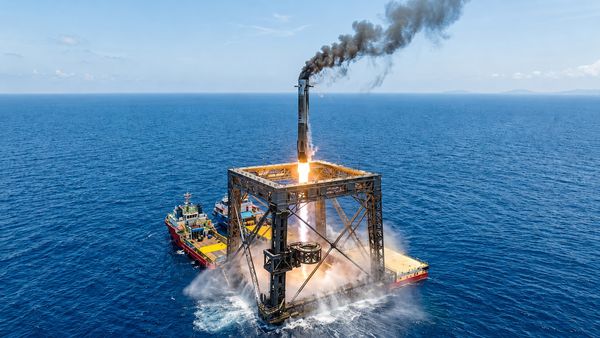 China's Long March 10B rocket booster makes a dramatic net-capture landing at sea, marking a pivotal moment in the 2026 space race.The image depicts a dramatic net-capture landing of China's Long March 10B rocket booster at sea, symbolizing a pivotal moment in the 2026 space race.
Here’s what’s blowing up across the global space sector — China's stunning mid-2026 orbital recovery has completely rewritten the playbook [1]. I mean, seriously, the traditional strategy of just yeeting multi-million dollar rocket boosters into the ocean? That's officially history [3]. This isn't just some minor update; it's a full-scale, physical evolution in orbital launch infrastructure, a total canon event for the space race [1]. And trust me, everyone's talking about it now. 🔥
The Legless Revolution: China's Net-Capture Flex 🚀
The global launch market just hit a major turning point, a true milestone for reusable infrastructure [1]. The successful recovery of the Long March 10B first stage over the South China Sea isn't just a win; it's a direct challenge to the long-standing monopoly on rocket reuse [2]. By securing an orbital-class booster without traditional landing legs, China has basically dropped the mic, proving there's more than one engineering solution to the reusability equation [7].
This legless design is pure genius, eliminating the deadweight of heavy deployable landing legs that have always been the default for rockets like SpaceX's Falcon 9 [7]. Those legs? They impose a severe performance penalty on flight hardware, eating into precious fuel margins [7]. China's engineers opted for a legless, hook-and-net recovery design, shifting the deceleration and impact-absorption loads from the rocket itself to a sea-based platform, preserving valuable fuel margins [2]. It's a structural optimization masterclass, maximizing raw launch performance [4].
The rocket body integrates four lightweight hooks that deploy near the top of the booster stage [2]. By transferring the physical docking mechanisms to the offshore platform, the booster maintains high structural rigidity without the structural mass of legs [7]. Chen Muye, a Technical Expert at the China Academy of Launch Vehicle Technology (CALT), put it perfectly: "Net-based recovery helps simplify the rocket's onboard structure, reduces vehicle mass and increases payload capacity. It is also highly adaptable to landing-point deviations, as coordinated net systems can effectively expand the capture window" [7]. Talk about a glow-up for space tech!
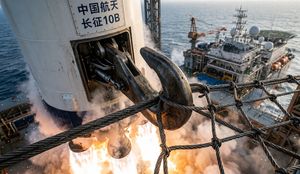 The intricate dance: Long March 10B's hooks meet the Linghangzhe Pathfinder's advanced net system for a flawless sea recovery.The image illustrates the intricate interaction between the Long March 10B's hooks and the Linghangzhe Pathfinder's net system during a sea recovery.
The Linghangzhe Pathfinder: A Mobile Landing Pad
The recovery vessel, Linghangzhe (Pathfinder), acts as a high-precision, mobile landing pad over the South China Sea, positioned more than 300 kilometers downrange from the Hainan launch site [1]. This absolute unit of a ship is 144 meters long and 50 meters wide, with a full-load displacement of 25,000 tonnes [4]. And get this: equipped with DP2 dynamic positioning capabilities, the platform automatically counters wave oscillations to remain stationary [4]. That's some serious stability, even when the ocean is giving main character energy of its own.
The platform hosts the world's first cross-shaped, high-strength buffered arresting net system [8]. When the booster descends propulsively, the net system actively coordinates with the rocket's guidance systems [4]. Once captured, automated auxiliary securing cables lock the booster's orientation against wind loads [2]. It's a ballet of precision and power, ensuring a flawless recovery every single time.
The Four-Phase Return Journey Through Reentry: A Brutal Descent
Returning from space at several times the speed of sound? That's a brutal thermodynamic process, no cap [4]. The Long March 10B booster completes this extreme descent through four distinct phases [4]. First, the coasting and attitude adjustment phase deploys grid fins, maintains orientation with attitude control systems, and activates the propellant settling management system [4]. It's like a cosmic dance, but with way higher stakes.
Next, the powered deceleration phase reignites the engines to apply a braking maneuver before the vehicle enters denser atmospheric layers, followed by the aerodynamic deceleration phase to utilize drag [4]. Finally, the landing phase manages a near-hover control strategy where the booster utilizes a cable-hooking mechanism to engage with the net system, rather than achieving precision alignment with a solid platform deck [2]. Ultimately, this leads to a successful net capture at sea rather than a traditional powered hover landing on deployable legs like SpaceX's Falcon 9 [2]. But here's an edge case you won't hear about everywhere: to keep the propellant from sloshing and causing combustion failures, a dedicated propellant settling management system is engaged during the glide phase [4]. This system directs the residual kerosene and liquid oxygen to collect at the tank bottoms, ensuring engine restart reliability [4]. That's the kind of technical nuance that makes this a true breakthrough [4].
Optimize for Reusability:
Launch operators should consider shifting structural weight penalties from flight vehicles to ground or maritime capture systems to reclaim critical fuel margins [7]. This engineering choice minimizes structural mass and maximizes orbital injection capabilities [7], leading to more efficient and cost-effective launches.
Long March 12B: The Dual-Brain Gamechanger for LEO Constellations 🧠
The debut of the Long March 12B on June 1, 2026, completely shook up the launch infrastructure [18]. This single-core powerhouse isn't just a rocket; it's an engineered response to the global bottleneck in heavy-lift launch options, designed to sustain high-density deployment of internet constellations [18]. Zhao Junqi, Chief Designer of the rocket at China Aerospace Science and Technology Corporation (CASC), confirmed, "We can deliver payloads of around 20 tons to low-Earth orbit" [18]. That's a serious amount of payload, fam.
The Dual-Brain System: Redefining Onboard Autonomy
Conventional multi-stage rockets? They're usually rocking a single, centralized flight computer housed in the upper stage [18]. But the Long March 12B? It completely throws out that playbook by utilizing a decentralized "dual-brain" flight control system [18]. Both the first and second stages carry independent flight-control centers capable of running autonomous flight algorithms [18]. This is a major technical advance designed to support autonomous booster recoveries, giving the rocket an unprecedented level of onboard autonomy [18].
This means each stage can independently process flight telemetry, execute real-time decisions, and communicate during separation [18]. If an unexpected anomaly occurs during ascent, the dual-brain architecture can dynamically reroute system functions [18]. It's like having two super-smart co-pilots, always ready to take the wheel. This redundancy is a game-changer for mission reliability and safety.
Structural Weight Minimization: The Kerosene-LOX Powerhouse
Every kilogram of structural deadweight eliminated from a rocket translates directly into payload capability [18]. The CASC development team achieved a massive 30 to 40 percent weight reduction in the power-distribution network [18]. How? By ditching traditional copper cabling for lightweight wiring, flexible cables, and integrated circuit boards [18]. It's all about that lean, mean, launch machine.
They also synthesized the engine bay, transition structures, and cabling into an integrated aft-section architecture [18]. This streamlined layout eliminates thousands of individual connection brackets, speeding up assembly times [18]. And the payload fairing? Fiberglass composite materials and a honeycomb sandwich structure for maximum rigidity [18]. It's a masterclass in making every gram count.
The Secret Edge of Automotive Radar Integration
Here's a wild card: testing advanced orbital hardware in real-world conditions often takes years of expensive qualification trials [18]. But the Long March 12B? It bypassed these bottlenecks by carrying an integrated, commercial-grade automotive radar system during its maiden flight [18]. This radar was tasked with collecting high-fidelity distance and velocity data during the rocket's return flight [18]. This experimental approach allows engineers to validate landing tracking algorithms on a non-recovery mission [18]. It's a genius move, using readily available tech to accelerate development without the full recovery risk.
The rocket also carries a time-sensitive networking system, supporting the real-time transmission of flight video to mobile devices [18]. By putting paying customers' satellites on a maiden flight, China proved that risk is just part of the velocity equation [21]. That's a serious flex, showing confidence in their tech even on a first run.
Innovate with Autonomy:
Avionics and structural engineers should integrate decentralized flight computers on multiple rocket stages to enable localized real-time algorithm execution and data exchange [18]. Additionally, utilizing commercial off-the-shelf tracking sensors during early flight phases can significantly accelerate algorithm maturation and reduce development costs [18].
CAS Space and Kinetica-2: Disrupting Launch Logistics from Zhejiang 🏭
Commercial integration with state space programs has officially reached a boiling point [22]. On March 30, 2026, CAS Space completed the successful maiden flight of Kinetica-2, carrying a prototype cargo craft [22]. This launch isn't just a win for CAS Space; it demonstrates that China's private market is ready for major cargo resupply initiatives [22]. Yang Haoliang, Vice President and Chief Commander of Kinetica-2 at CAS Space, emphasized, "Commercial rockets are not only needed to serve market demand, but to participate in major national missions under engineering-level standards" [22]. This is a vibe shift for the entire industry.
The Common Booster Core Architecture: Modular Power
Kinetica-2 is China's first launch vehicle to implement a Common Booster Core (CBC) configuration [23]. Standing 53 meters tall, the system features three identical core stages strapped together side-by-side [23]. These identical cores share the same 3.35-meter diameter and structural design, dramatically streamlining manufacturing [23]. It's a modular approach that makes production way more efficient, a true game-changer for scaling payload lift capacity without designing separate stages [23].
During the ascent phase, the side boosters remain attached to the central core as a single, rigid unit [23]. This structural design reduces the risk of separation failures, which are common failure modes in multi-core rockets [23]. It's a practical, robust path toward reliable, high-capacity launches, minimizing those heart-stopping moments during separation.
The Qingzhou Cargo Craft: Affordable Space Logistics
The primary payload of the maiden Kinetica-2 flight was the 4.2-tonne Qingzhou cargo spacecraft test vehicle [22]. Developed by the Chinese Academy of Sciences' Innovation Academy for Microsatellites, the Qingzhou is a low-cost, lightweight alternative to standard space station supply vehicles [23]. It's designed to carry small cargo batches to the Tiangong space station [23]. During the mission, the prototype executed in-orbit tests across altitudes of 200 to 600 kilometers [23]. It even carried 27 scientific and medical projects, including advanced space refrigerators for biological storage [23]. The successful deployment proves that commercial rockets can reliably handle national scientific logistics [22]. This is a major win for making space more accessible.
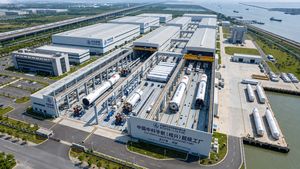 Inside the Shaoxing Super Factory: Where CAS Space is mass-producing Kinetica-2 rockets to meet the demands of the new space economy.The image provides an inside look at the Shaoxing Super Factory, where CAS Space is mass-producing Kinetica-2 rockets for the new space economy.
The Shaoxing Super Factory: Mass-Production Reality
High-frequency constellation deployment requires a massive industrial infrastructure to match launch cadence [26]. CAS Space addressed this by completing construction of its liquid-propellant rocket super factory in Shaoxing, Zhejiang Province, in April 2026 [26]. This dedicated facility features a planned annual production capacity of 12 rockets [26]. By shifting away from customized, one-off rocket manufacturing, the company has implemented a highly industrialized production model [23]. In its current non-reusable configuration, the launch cost of Kinetica-2 is already comparable to reusable competitors [22]. Shifting production to high-capacity commercial hubs is a key milestone for reducing regional constellation launch costs [23]. This is a serious power move, making space launches more affordable and frequent.
Streamline Manufacturing:
Industrialization and supply chain managers should establish localized manufacturing super factories featuring standardized structural architectures to bypass the supply bottlenecks of customized space structures [23]. This approach and transitioning to modular rocket designs maximizes raw production throughput [23], ultimately reducing costs and accelerating deployment schedules.
LandSpace and Zhuque-3: The Stainless Steel Orbital Flex 💪
The race for methane-powered reusability has created a massive competitive dynamic among Beijing’s elite aerospace startups [27]. LandSpace, already known for its pioneering Zhuque-2 launch vehicle, has now directed its strategic focus toward the massive, stainless-steel Zhuque-3 [29]. This rocket is designed to act as a direct, methane-fueled alternative to the Falcon 9 [30]. The official post-launch statement from LandSpace proudly declared, "The mission demonstrated high-mass payload launch capability and readiness for multi-satellite launch services" [32]. This is a serious contender, folks.
The Stainless Steel Advantage: Structural Thermal Protection
Traditional rockets often rely on expensive carbon fiber composites or aluminum-lithium alloys for their fuel tanks [29]. But the Zhuque-3? It breaks from this convention by employing a high-strength stainless steel structure [29]. This is a counter-intuitive finding that's actually brilliant: stainless steel provides exceptional thermal resistance during the brutal heating of atmospheric re-entry, minimizing the need for heavy ablative heat shields [16]. This material choice represents a major, long-term bet on operational reusability [16].
The first stage is designed to be recovered and reflown up to twenty times, drastically lowering the long-term amortized launch cost [29]. By relying on robust metallic alloys, LandSpace aims to bypass the complex, time-consuming structural inspections that slow down post-flight refurbishment [16]. It's a smart play, focusing on durability and rapid turnaround, which is key for frequent launches.
The 10-Kilometer Mid-Air Engine Restart Breakthrough
Before attempting full orbital launches, LandSpace executed high-altitude vertical takeoff and landing (VTVL) tests to validate its guidance algorithms [29]. On September 11, 2024, the Zhuque-3 VTVL-1 test stage achieved a historic 10-kilometer hop in northwest China [29]. During that flight, the prototype executed a successful mid-air engine shutdown and reignition sequence [29]. This engine cutoff and restart sequence represented an absolute first for any Chinese rocket program [29]. During the unpowered coast phase, the vehicle relied on a cold gas reaction control system and four grid fins to maintain stability [29]. The rocket landed within 1.7 meters of its nominal landing target, demonstrating high guidance accuracy [29]. Talk about precision!
Financial Underpinnings and the Shanghai Listing Ambitions
Developing heavy, liquid-propellant reusable rockets requires access to deep capital reserves [15]. LandSpace has secured substantial funding from venture capital firms like HongShan and state-backed investment vehicles [27]. In early 2026, the Shanghai Stock Exchange's STAR Market approved LandSpace for a public listing at a target valuation of $1 billion [30]. Despite reporting structural revenue losses due to heavy research and development spending, the company's revenue grew eightfold in early 2025 [30]. This financial pipeline allows LandSpace to accelerate its Zhuque-3 flight campaign [27]. Routine operations of the Zhuque-3 platform are projected to commence by the end of 2026 [33]. It's a major financial flex, showing confidence in the future of private space.
Invest in Durability:
Finance directors and capital allocators should prioritize investments in robust, high-thermal-margin metallic structures such as stainless steel [16]. This approach helps bypass the long refurbishment intervals associated with composite vehicles. Additionally, securing multi-stage public listings can significantly accelerate development velocity and market reach [3].
Brutal Lessons: Private Reusable Rocket Hard Landings 💀
The road to successful rocket recovery is paved with twisted metal and telemetry anomalies [30]. Private developers face severe technical hurdles as they transition from computer simulations to actual orbital flights [3]. These failures aren't just setbacks; they serve as the necessary ground truth for refining complex guidance algorithms [3]. Huo Liang, Founder & CEO of Deep Blue Aerospace, put it bluntly: "Our plan is to produce the Nebula-1 liquid rocket orbital launcher as early as possible. And we will start orbital recovery simultaneously" [36]. It's a tough game, but someone's gotta play it.
Nebula-1: 3D-Printed Alloy and the 10-Kilometer Anomaly
Deep Blue Aerospace has been pioneering the integration of additive manufacturing in its rocket production pipeline [35]. Over 90 percent of the main structural components of the Thunder-R engine are integrally formed using high-temperature alloy 3D printing [37]. This manufacturing innovation significantly reduces lead times and structural assembly costs [20]. However, the rocket's high-altitude recovery tests have been marked by structural setbacks [35]. During a 10-kilometer hop test on September 22, 2024, the Nebula M1 prototype experienced a hard landing during the touchdown burn [35]. Satellite imagery also suggested that subsequent tests in mid-2025 resulted in vehicle losses on the pad [35]. It's a stark reminder that even with cutting-edge tech, gravity is a harsh mistress.
Space Pioneer and the Accidental Gongyi Launch
The most dramatic developmental failure in China's private space sector occurred on June 30, 2024, at a test stand in Gongyi [38]. During a planned static fire test of the Tianlong-3 booster, the massive structural forces caused the rocket to detach from its stand [38]. The vehicle launched accidentally, flew for several seconds, and then, tragically, crashed into a nearby mountain range [38]. This was a major common mistake, a brutal lesson learned the hard way.
In response, Space Pioneer implemented 127 corrective engineering measures, including doubling the number of structural hold-down arms [38]. They also shifted subsequent tests to the HOS-1 sea launch platform to mitigate civilian risks [38]. Unfortunately, the rocket's official maiden orbital launch on April 3, 2026, suffered an in-flight anomaly and failed to reach orbit [39]. It just goes to show, space is hard, and sometimes, the universe has other plans.
iSpace and the Hydrocarbon Flight of Hyperbola-3
iSpace's reusable rocket development is centered around its liquid oxygen-methane engine, the JD-2 [41]. This 100-tonne thrust class engine has undergone intensive ground tests, demonstrating reliable secondary ignition and continuous variable thrust [41]. These capabilities are essential for executing the high-precision landing burns required for booster recovery [16]. To support its Hyperbola-3 launch vehicle, the company has completed construction of its autonomous landing ship, Qinglan [42]. The vessel was built in Yangzhou and is positioned off the coast of the Wenchang launch site [42]. The company has integrated flight data from its SQX-2Y test runs to prepare for sea-based recoveries in late 2026 [35]. They're learning from the past and pushing forward.
Prioritize Safety and Redundancy:
Risk management and flight safety officers must implement strict structural load margins and physical arrestors on test stands to prevent accidental launch detachments during engine firing [38]. Rerouting experimental operations to coastal or offshore vessels is crucial to insulate local populations from developmental risks [38], ensuring safety remains paramount during the rigorous testing phases.
The Battle for LEO Spectrum: An Unfolding Regulatory Drama 🌐
The orbital space between 300 and 1,200 kilometers has become a highly contested geopolitical front [6]. As nations race to establish sovereign internet coverage, the finite availability of radio spectrum has created a massive regulatory bottleneck [5]. This dynamic is driving China's urgent efforts to field high-capacity constellations [43]. The official 2026 Chinese Academy of Sciences Deployment Update stated, "Qianfan is no longer just an experiment, it is entering a phase of high-frequency, large-scale deployment as part of China's ongoing efforts to build a LEO satellite internet constellation" [5]. This isn't just about rockets; it's about global connectivity and digital sovereignty.
 The LEO real estate game: An infographic visualizing the intense competition for orbital slots and radio spectrum among global players.The infographic visualizes the intense competition for orbital slots and radio spectrum among global players in the LEO real estate game.
The First-Come, First-Served Real Estate Game
Low-Earth orbit orbits and radio spectrum are finite, non-renewable strategic resources [43]. Under the rules enforced by the International Telecommunication Union, these assets are allocated on a strict "first-come, first-served" basis [43]. Early entrants like SpaceX have already occupied more than 60 percent of active global slots [5]. This rapid occupancy has locked up nearly 70 percent of the prime orbital space between 500 and 600 kilometers [5]. Consequently, late-coming nations face severe limitations in securing clean frequencies [5]. To protect its orbital sovereignty, China must launch thousands of satellites within strict ITU regulatory windows [43]. It's a high-stakes real estate game in space, and the clock is ticking.
Guowang: Securing Scarce LEO Assets
The Guowang project represents China's first national mega-constellation initiative, planning a fleet of 12,992 satellites [44]. The program is divided into two sub-constellations: GW-A59 and GW-2, operating at altitudes ranging from 500 to 1,145 kilometers [44]. This sovereign network is intended to provide secure, global broadband coverage for government and military services [6]. To protect its spectrum filings, China must launch at least half of the constellation—roughly 6,500 satellites—by 2032 [47]. As of mid-2026, approximately 190 Guowang satellites have been successfully deployed [6]. Achieving the steep ramp required will demand an unprecedented surge in launch cadence [39]. This is a massive undertaking, a true test of China's space capabilities.
Qianfan: The Million-Dollar Cost Decline
Operated by Shanghai-based Spacesail Technologies, the Qianfan project aims to field 15,000 satellites by 2030 [5]. The constellation leverages a highly industrialized, mass-production model to slash manufacturing costs [5]. Traditional communication satellites can cost upwards of 300 million yuan to construct [5]. But Qianfan? By standardizing components and utilizing commercial off-the-shelf technologies, they've cut satellite costs by over 96 percent [5]. Despite these manufacturing breakthroughs, the constellation remains limited by rocket launch capacity [44]. Shifting to reusable commercial launchers like the Long March 12B is critical to completing global coverage [18]. It's a race against time and regulations, and China is pulling out all the stops.
Secure Orbital Assets:
National security and sovereign infrastructure planners must accelerate sovereign launch cadences to lock in strategic orbital slot filings before they are captured by early-market competitors under first-come regulations [5]. Transitioning to low-cost industrial manufacturing models is key to maintaining long-term deployment viability and ensuring national connectivity [5].
Trending Now: Your Top Questions on China's Space Breakthroughs Answered
How does China's legless net-capture system compare to SpaceX's landing legs?
Why does the Long March 12B rocket carry a decentralized dual-brain system?
How does Kinetica-2's Common Booster Core configuration streamline manufacturing?
What is the specific edge-case landing vessel used for the Hyperbola-3 rocket recovery?
How do ITU milestone timelines restrict China's SatNet deployment schedule?
Disclaimer: This article addresses trending topics and current events for general informational purposes only. The content may reflect public interest or opinion and has not necessarily been independently verified. Images and visuals are illustrative and may not depict real or official events. For complete details, please review our full disclaimer.