
Understanding AI Chip Shortages' Second-Order Effects (2026) | Essential Market Analysis
 The intricate web of AI chip scarcity and its far-reaching implications for global technology in 2026.Image for illustrative purposes only, depicting the intricate web of AI chip scarcity and its far-reaching implications for global technology in 2026.
The global hardware and semiconductor market in 2026 isn't just facing a few bumps in the road; it's grappling with a profound, structural imbalance that has fundamentally rewritten the rules of enterprise tech strategy [7]. This isn't some temporary cyclical blip we're talking about. No, this is a systemic infrastructure crisis that has permanently collapsed the traditional, modular technology stack [1]. Suddenly, physical assets—specifically backend chip packaging, high-bandwidth memory, and localized power grids—are the absolute governors of software capabilities and economics [1].
To survive this era of infrastructure determinism, technology leaders are realizing a stark truth: you can't optimize software code in isolation from the physical power plants and foundries that generate your tokens [2]. The global tech landscape has fractured, creating a chasm between headline-chasing AI startups and public software companies facing immense margin pressure and infrastructure allocation queues [5]. It's a brutal new reality where the physical world dictates the digital.
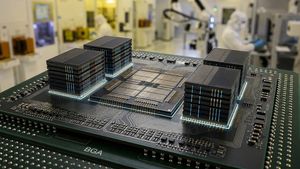 The CoWoS packaging process, now the critical bottleneck in AI chip production.Image for illustrative purposes only, depicting the CoWoS packaging process, now the critical bottleneck in AI chip production.
How the 2026 CoWoS Packaging Bottleneck Restructures the Global Semiconductor Supply Chain
Advanced chip packaging—specifically TSMC's Chip-on-Wafer-on-Substrate (CoWoS) technology—is no longer a mere downstream manufacturing footnote [5]. It has become the absolute, load-bearing constraint governing the execution of global artificial intelligence infrastructure [5]. The industry's central struggle has decisively shifted from raw silicon fabrication to the intricate world of backend assembly, where logic dies and high-bandwidth memory (HBM) stacks are meticulously integrated onto a microscopic silicon interposer [5]. Without this precise integration, even a flawlessly etched three-nanometer wafer is, quite frankly, nothing more than a collection of useless silicon dies [5].
Despite TSMC's aggressive expansion, with monthly CoWoS capacity growing at an eighty percent compound annual growth rate, demand continues to outpace actual supply [5]. The foundry is scaling its monthly CoWoS wafer output from approximately 35,000 in late 2024 to a projected 120,000 to 140,000 wafers by the end of 2026 [1]. However, Nvidia has aggressively locked down over fifty percent of this expanded allocation, leaving direct competitors facing a brutal bottleneck [1]. This capacity concentration has triggered immense friction across the entire hardware ecosystem [1].
A critical edge case illustrating this constraint is Google's predicament. Because of Nvidia's priority allocation, Google was forced to cut its 2026 custom Tensor Processing Unit (TPU) production target by twenty-five percent, dropping its roadmap from four million units to three million units [5]. This represents the first clear instance of a major cloud provider's internal hardware scaling plans being directly truncated by backend packaging scarcity [5]. It’s a stark reminder that even tech giants aren't immune to these physical limitations.
To survive, chipmakers are turning to alternative packaging roadmaps and outsourcing strategies [5]. TSMC, for instance, is sending overflow work to outsourced semiconductor assembly and test (OSAT) partners like ASE and Amkor, effectively doubling ASE's projected advanced packaging sales for 2026 [5]. Simultaneously, TSMC has accelerated its next-generation platform, Chip-on-Panel-on-Substrate (CoPoS), launching a pilot line at VisEra Technologies in June 2026. This aims to transition from round twelve-inch wafers to rectangular panels, boosting physical area efficiency from fifty-seven percent to over eighty percent [5]. As C.C. Wei, CEO at TSMC, stated, "Our CoWoS capacity is very tight and remains sold out through 2025 and into 2026" [11].
Data Highlights: TSMC CoWoS Capacity & Market Impact
| Metric | Late 2024 Baseline | End of 2025 Status | Target End of 2026 | 24-Month Capacity Growth |
|---|---|---|---|---|
| TSMC CoWoS Monthly Output | ~35,000 wafers [1] | ~75,000 wafers [12] | 120,000 – 140,000 wafers [10] | ~271% to 300% expansion [1] |
| OSAT Partner Monthly Output | Minimal spillover [5] | ~25,000 wafers [5] | 50,000 – 60,000 wafers [10] | Significant ecosystem lift [5] |
| Packaging Lead Times | ~30 weeks [14] | 52 – 78 weeks [9] | 52 – 78 weeks (remains tight) [9] | Prolonged procurement cycles [15] |
| Advanced Packaging Price Trend | Baseline cost [16] | +10% to 20% annual hike [12] | +10% to 20% annual hike [12] | Double-digit input cost inflation [1] |
Actionable Takeaway for Infrastructure Planners:
Procurement teams must immediately establish multi-year packaging slot commitments with alternative OSAT providers and model a baseline 52-to-78-week hardware delivery delay for any accelerators ordered outside of Nvidia's premium tier [5].
Why Hyperscalers Are Ditching General GPUs for Proprietary Custom ASICs
The crushing unit economics of general-purpose GPUs have pushed hyperscalers into a quiet, yet massive, architectural mutiny [5]. Buying merchant chips like Nvidia's Blackwell architecture demands a staggering premium, with prices ranging from $25,000 to $40,000 per processor [5]. For a cloud giant executing tens of billions of search ranking or recommendation inferences every single day, paying this "Nvidia tax" simply destroys the fundamental viability of their business models [5]. It's an unsustainable cost structure that forces a strategic pivot.
By abandoning general-purpose flexibility for custom, workload-specific Application-Specific Integrated Circuits (ASICs), hyperscalers are keeping lucrative infrastructure margins internally [5]. This isn't just about cost savings; it's about strategic control and long-term economic resilience. Data compiled by JPMorgan analysts demonstrates that the digital AI ASIC market is on track to hit $60 billion to $70 billion in 2026 [4]. This explosive market is dominated by two primary custom silicon design partners: Broadcom, which commands the high-end ASIC segment with an eighty to eighty-five percent market share, and Marvell, following in second with ten to twelve percent of the market [4].
These custom chips deliver a significant advantage: thirty to fifty percent lower total cost of ownership (TCO) at scale [5]. For example, Google's TPU v7 Ironwood, designed with Broadcom, offers raw performance close to Nvidia's Blackwell GPU, yet carries an estimated unit cost of $13,000—slashing the upfront capital required for massive production deployments [4]. Because of this compelling cost-performance gap, JPMorgan expects that by 2027, annual unit shipments of AI ASICs will hit 12.5 million, officially surpassing GPU shipments at 10.9 million units [4]. This is a profound shift, indicating a permanent re-architecture of AI compute.
This trend is splitting data center hardware strategies [5]. Hyperscalers continue to buy general-purpose GPUs for flexible frontier model training and highly dynamic workloads [5]. However, they are routing stable, predictable, high-volume production inference to internal custom silicon projects like Meta's MTIA, Amazon's Trainium 3, and Microsoft's Maia accelerators [4]. As Harlan Sur, Managing Director of Semiconductor Equity Research at JPMorgan, noted, "The digital AI ASIC market will reach around $60 billion to $70 billion by 2026, maintaining a compound growth rate of over 40% to 50% in the coming years" [4].
Data Highlights: Custom ASIC Market & Hyperscaler Adoption
| Design Partner & ASIC Product | Target Cloud Platform | Estimated Unit Cost | Projected FY26 Segment Revenue | Core Growth Catalysts |
|---|---|---|---|---|
| Broadcom Custom Silicon | Google (TPU), Meta (MTIA), OpenAI [4] | ~$13,000 (TPU v7 Ironwood) [4] | $60B+ (up from $20B in FY25) [4] | 7nm & 5nm custom accelerators, Tomahawk switches [4] |
| Marvell Custom Silicon | Amazon (Trainium), Microsoft (Maia) [4] | Custom contract-dependent [5] | $9.3B data center (tracking to $14.6B by FY27) [4] | Trainium 3, Maia, SmartNICs, optical DSPs [4] |
Actionable Takeaway for Financial Officers:
Organizations should aggressively reallocate their cloud workloads away from high-demand merchant GPU instances and toward cloud-native custom ASIC instances (like AWS Trainium or Google TPU) to capture an immediate 30% to 50% reduction in compute TCO [5].
How Power Grid Limitations and Nuclear Energy Contracts Are Shaping Data Center Megaprojects
In the Five-Layer AI Economy, physical limits flow directly downward, converting the thermodynamic demand for compute into a brutal battle for raw electrical power [2]. Every token generated is fundamentally the transformation of electricity into heat [2]. This isn't just an energy problem; it's a foundational constraint where the power grid has become the ultimate governor of tech scaling [2]. We're talking about a complete re-evaluation of where and how data centers are built.
A critical incident in July 2024 saw sixty Northern Virginia data centers simultaneously disconnect from the public grid due to localized power-draw strains [2]. This historic event prompted Dominion Energy to enact its first base-rate increase since 1992, unequivocally highlighting that the physical limits of traditional public grids are completely exhausted [2]. The common misconception that existing grids can simply absorb exponential AI growth has been shattered. Consequently, hyperscalers are taking the extraordinary step of bypassing regulated utilities entirely to act as direct, sovereign-scale energy buyers [2].
Microsoft pioneered this model by signing a twenty-year, $16 billion power purchase agreement (PPA) with Constellation Energy [6]. This deal is designed to fully restart the dormant Unit 1 of Three Mile Island (renamed the Crane Clean Energy Center), providing Microsoft's data centers with 835 megawatts of clean, 24/7 baseload power starting in 2028 [6]. Amazon Web Services followed with an even larger transaction, signing a 1,920-megawatt nuclear PPA with Talen Energy to pull power directly from the Susquehanna plant through 2042 [18]. To avoid transmission and grid interconnect queues that stretch all the way toward 2031, Amazon also purchased a 960-megawatt data center campus co-located directly next to the Susquehanna reactor for $650 million [2]. This is a significant edge case: direct co-location to bypass grid infrastructure entirely.
These nuclear-backed facilities are powering astronomical megaprojects [2]. Amazon's Project Rainier in New Carlisle, Indiana, is an $11 billion campus designed for a massive grid draw of 2.2 gigawatts [2]. Rainier ran nearly 500,000 Trainium2 chips at activation, illustrating that the modern AI laboratory must operate as a heavy industrial energy buyer, negotiating gigawatt-scale infrastructure years in advance [2]. As Mac McFarland, President and CEO at Talen Energy, stated regarding their deal with Amazon, "Our agreement with Amazon is designed to provide us with a long-term, steady source of revenue and greater balance sheet flexibility through contracted revenues" [18].
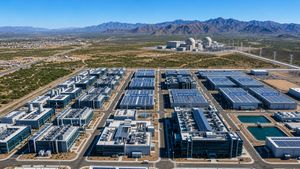 Hyperscalers are increasingly turning to sovereign nuclear power to fuel their energy-intensive AI data centers.Image for illustrative purposes only, depicting hyperscalers increasingly turning to sovereign nuclear power to fuel their energy-intensive AI data centers.
Data Highlights: Hyperscaler Nuclear Energy PPAs
| Hyperscaler | Energy Utility Partner | PPA Capacity & Duration | Financial / Infrastructure Scope | Operational Objective |
|---|---|---|---|---|
| Microsoft | Constellation Energy [6] | 835 Megawatts, 20-year duration [6] | $16 Billion contract value [6] | Reopen Crane Clean Energy Center (Three Mile Island) by 2028 [6] |
| Amazon (AWS) | Talen Energy [18] | 1,920 Megawatts, through 2042 [18] | $20B+ regional campus investments [6] | Core power source for Pennsylvania and regional Indiana megaprojects [18] |
| Kairos Power [6] | 500 Megawatts [6] | First corporate Small Modular Reactor (SMR) fleet [6] | Deploy 6 to 7 advanced SMR reactors, starting online by 2030 [6] | |
| Meta | Vistra Energy [17] | 1,121 Megawatts (plus SMR options) [17] | Multi-year PJM grid agreements [17] | Secure zero-emissions baseload power starting in June 2027 [19] |
Actionable Takeaway for Cloud Architects:
Organizations deploying large training models must geolocate their compute clusters directly adjacent to sovereign nuclear power or behind-the-meter generation zones to ensure continuous runtime and escape localized grid brownout liabilities [2].
Empirical Pricing Trajectories of Cloud GPU Instances and Direct Hardware Procurement
Cloud GPU instances are, at long last, descending from their historic, post-hype pricing peaks [14]. The manic supply squeeze of 2023 is gone, replaced in mid-2026 by a functional supply-demand balance [14]. But here's the catch: this pivot has redirected critical memory chip production away from consumer tech, causing a severe secondary squeeze [15]. It's a classic case of solving one problem only to create another, perhaps more insidious, one.
To feed high-performance AI accelerators, semiconductor manufacturers are aggressively shifting DRAM wafer starts toward High Bandwidth Memory (HBM) [15]. According to downside risk scenarios compiled by the International Data Corporation (IDC), this memory reallocation could trigger sharp contractions of up to 5.2% in global smartphone sales and 8.9% in PC sales in 2026 [20]. This DRAM capacity crunch has fundamentally reshaped memory valuations [13]. For example, the massive global demand for AI-related storage infrastructure recently pushed Kioxia past Toyota to temporarily become Japan's most valuable publicly listed company, boasting a market cap of $275 billion [13]. This is a counter-intuitive finding: a memory chip company briefly outranking an automotive giant.
To bypass these memory constraints, AMD acquired the storage optimization startup MEXT, integrating its AI-driven memory tiering technology that forces enterprise NAND flash storage to run with DRAM-like latency from the OS perspective [13]. This is an innovative edge case, demonstrating how software-defined memory solutions can mitigate hardware scarcity. Meanwhile, cloud GPU pricing cards have normalized significantly [14]. On-demand hourly rates for an Nvidia H100 SXM have dropped from $8.00 in early 2023 to $1.80 to $3.50 in Q2 2026, with spot pricing dipping to $1.20 [14]. The newer Blackwell B200 is entering the market at $4.50 to $7.00 per hour, though it remains under tight allocation-only supply across major hyperscale clouds [14]. As Jensen Huang, Founder and CEO at Nvidia, put it, "Every factory, every HBM supplier, is gearing up" [2].
Data Highlights: Cloud GPU Pricing & Lead Times (Q2 2026)
| GPU SKU / Accelerator | On-Demand Rate (/hr) [14] | Spot Rate (/hr) | Typical Lead Times (Q2 2026) | Primary Market Position |
|---|---|---|---|---|
| Nvidia H100 SXM | $1.80 – $3.50 | $1.20 – $2.00 | 6 – 12 weeks (Down from 50+ weeks) | High-performance, widely available |
| Nvidia H200 | $3.00 – $4.50 | ~$2.50 | 8 – 14 weeks | Enhanced HBM capacity |
| Nvidia B200 (Single) | $4.50 – $7.00 | N/A (Highly constrained) | 16 – 26 weeks | Next-gen, limited allocation |
| GB200 NVL72 Equivalent | $8.00 – $14.00 | N/A | Tight allocation | Integrated system, ultra-high performance |
| AMD MI300X | $1.20 – $2.50 | ~$0.90 | 4 – 8 weeks | Cost-effective alternative |
Actionable Takeaway for Infrastructure Buyers:
For sustained, highly predictable training and fine-tuning workloads running over sixty percent utilization, enterprises should purchase and operate physical H100 systems on-premises, as direct capital investments now amortize favorably over cloud rentals in six to fourteen months [14].
How Variable Inference Costs Are Driving SaaS Margin Compression and Pricing Shifts
The pre-AI software paradigm of "build once, sell infinitely at near-zero marginal cost" has utterly collapsed [21]. This is a common misconception that many traditional SaaS companies are still grappling with. Now, every prompt, every image generation, and every retrieval-augmented database search incurs a persistent, variable cost in GPU compute and token consumption [21]. If you're running a flat subscription model, a handful of high-volume power users will quickly turn your most active accounts into a cash-draining success disaster [21]. It's a fundamental shift in the economics of software.
SaaS margins are feeling a brutal squeeze as a direct consequence [21]. According to ICONIQ's 2026 State of AI survey, average gross margins for AI-native software products have compressed to approximately fifty-two percent [3]. This represents a massive degradation compared to the standard eighty to ninety percent gross margins of the traditional SaaS era [21]. This new reality has wiped out basic horizontal wrappers whose third-party API costs represent forty to seventy percent of their total revenues [22]. The days of easy, high-margin software are over for many.
To protect their bottom lines, software vendors are abandoning seat-based subscription tiers in favor of hybrid, consumption-driven, and outcome-based pricing models [21]. Enterprise platforms are now pricing software based on actions successfully resolved by autonomous agents [21]. For example, Salesforce Agentforce charges a flat two dollars per conversation, Zendesk charges per autonomous resolution, and Microsoft Copilot for Security costs four dollars per hour of active use [23]. This pricing shift requires surgical control over API unit economics [24]. Teams are deploying dedicated API cost intelligence metrics to track cost-per-request directly to customer features and prevent margins from eroding mid-contract [24]. As Matt Garman, CEO at Amazon Web Services, succinctly put it, "We control the whole process, the whole stack" [2].
Data Highlights: AI SaaS Pricing Strategies
| Pricing Strategy | Core Billing Metric | Vendor Examples | Economic Impact on SaaS Margins |
|---|---|---|---|
| Outcome-Based Billing | Per successful resolution or autonomous action | Zendesk, Intercom FinAI Agent ($0.99) | High predictability; scales revenue directly with delivered value [21] |
| Per-Conversation Unit | Flat fee per conversation block | Salesforce Agentforce ($2.00) | Insulates margins from internal model latency or multi-step token overhead [21] |
| Usage-Based Hourly | Raw hourly infrastructure consumption | Microsoft AI Copilot for Security ($4.00) | Complete pass-through of ongoing GPU cost-to-serve [21] |
| Credit-Based Hybrid | Subscription base plus flexible credit buckets | Clay, Bardeen AI, Zapier | Encourages upfront payments; simplifies multi-feature variable COGS [21] |
Actionable Takeaway for SaaS Product Leaders:
Product teams must immediately transition away from flat, unlimited seat models, integrating granular consumption credits and usage-based overrides directly into their pricing models to prevent margin degradation from compute-heavy power users [21].
Geographic Concentration of Backend Packaging and National Technology Sovereignty
A profound, structural hypocrisy sits at the very heart of Western technology policy [5]. Governments are pouring tens of billions of dollars into funding advanced logic fabs on their own soil, yet they're leaving the backend packaging loop entirely dependent on a single physical chokepoint [5]. The uncomfortable truth, an undeniable edge case, is that even if a chiplet is fabricated in Phoenix, Arizona, it must still cross the Pacific to be packaged in Taiwan [5]. This isn't just inefficient; it's a glaring strategic vulnerability.
This "Phoenix-to-Taiwan" shipping loop leaves Western national security and technological supply chains dangerously exposed [5]. TSMC currently sends one hundred percent of its fabricated logic dies back to Taiwan for advanced CoWoS packaging [5]. This means that in the event of a geopolitical crisis in the Taiwan Strait, the entire global AI hardware supply chain would halt completely [8]. Arizona packaging facilities, despite significant investment, are not scheduled to reach commercial-scale operation until late 2028 or 2029 [5]. This delay creates a critical window of vulnerability that cannot be overstated.
To counter this vulnerability, the Intel Terafab Project in Austin, Texas, represents a massive $25 billion vertically integrated manufacturing mega-complex [5]. Officially announced on April 7, 2026, by Intel and Tesla, the project consolidates design, 1.8nm (18A node) fabrication, and advanced packaging under a single, domestic roof [5]. The Terafab aims to output one terawatt of aggregate AI compute capacity annually by 2027, manufacturing both Tesla's AI5 autopilot engine and specialized, radiation-hardened orbital AI chips for SpaceX's Starlink V3 constellations [5]. This shift bypasses the traditional, geographically fragmented supply chain and represents the most aggressive effort toward domestic semiconductor self-sufficiency in modern American history [5]. As Emmanuel Macron, President of the French Republic, declared, "This is our fight for sovereignty, for strategic autonomy" [2].
Data Highlights: Geopolitical Chokepoints in Semiconductor Manufacturing
| Manufacturing Step | Geopolitical Hub | Chokepoint Risk | Sovereign Response Program |
|---|---|---|---|
| Silicon Logic Fabrication | Taiwan (72% leading-edge output) [8] | Direct physical exposure to regional conflict | US CHIPS Act, Intel 18A Austin Terafab [5] |
| High Bandwidth Memory (HBM) | South Korea (88% market share) [8] | Highly concentrated fab allocation issues | Localized DRAM wafer reallocation programs [5] |
| Advanced Backend Packaging | Taiwan (100% TSMC logic loop) [5] | Single-point-of-failure shipping loops | Arizona packaging fabs, Intel Austin CoWoS equivalent [5] |
| Compute Superclusters | US Cloud Platforms (71% control) [8] | Global asymmetric dependency on 5 hyperscalers | State-backed European AI supercomputing clusters (3 to 44) [8] |
Actionable Takeaway for Sovereign IT Directors:
National security and government procurement officers must mandate that all sensitive or defense-related AI workloads transition to hardware packaged domestically within secure closed-loop facilities to eliminate Pacific shipping loop vulnerabilities [5].
Technology Insights: Addressing AI Chip Shortage Queries
Why did Google slash its 2026 TPU target?
How does the Phoenix-to-Taiwan shipping loop impact US chip security?
What is the Intel Austin Terafab Project?
How do memory chip shifts affect the broader electronics market?
Why is flat subscription pricing failing for generative AI products?
Disclaimer: This article discusses technology-related subjects for general informational purposes only. Data, insights, or figures presented may be incomplete or subject to error. Images and diagrams are for illustrative purposes only and may not represent exact products, interfaces, or official designs. For further information, please consult our full disclaimer.