
Non-Toxic Air Fryers: The 2026 Culinary Revolution Beyond PFAS
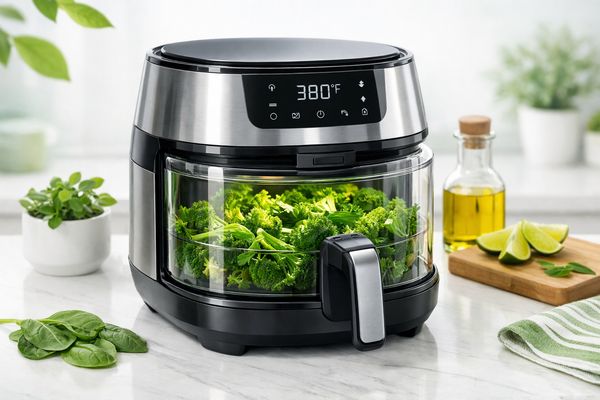 Embrace a healthier future with the next generation of non-toxic air fryers.Image for illustrative purposes only. Actual product appearance may vary.
The inviting aroma of crispy, healthier meals prepared in air fryers has cemented its place in kitchens across the globe. What initially emerged as a convenient and less oily alternative to traditional deep-frying has rapidly evolved into a significant global culinary phenomenon. This transformation is driven by a heightened consumer awareness, prompting a shift beyond mere cooking methods to a deep concern for the materials that come into direct contact with our food.
This escalating movement is far more than a passing trend; it signifies a profound embrace of the 'Non-Toxic Air Fryer Craze,' fundamentally propelled by an increased understanding of 'forever chemicals' and the critical regulatory shifts anticipated for 2026. Navigating this revolution demands a comprehensive grasp of intricate material science and the upcoming legislative deadlines. Such knowledge is essential for every individual committed to cultivating a healthier environment for home cooking.
Central to this sweeping transformation is the ubiquitous presence of Per- and Polyfluoroalkyl Substances (PFAS). These synthetic compounds, characterized by their remarkable resistance to heat, water, and oil, have been a pervasive, albeit often unrecognized, component in a vast array of kitchen appliances for decades. Specifically, Polytetrafluoroethylene (PTFE), a well-known PFAS variant used in non-stick coatings, has been a silent fixture in countless cooking tools.
However, an ever-growing body of scientific evidence has illuminated the persistent nature of PFAS and their associated potential health risks. This revelation has ignited a powerful consumer-led demand for safer, more transparent alternatives in kitchen technology. The crucial consideration now extends beyond simply avoiding immediate exposure, necessitating a thorough understanding of the entire lifecycle and potential degradation pathways of these materials, especially when subjected to the high thermal stresses inherent in air frying processes.
The Health-First Consumer Shift: Driving 2026 Market Valuations
The global air fryer market is presently experiencing a phase of robust and accelerating expansion. Projections indicate a substantial increase in global valuations, from 1.26 billion USD in 2025 to an estimated 1.62 billion USD by 2030 [2]. This impressive growth trajectory is supported by a compound annual growth rate (CAGR) of 5.12% [2]. This expansion is not solely attributed to the undeniable convenience air fryers provide, but increasingly stems from a heightened consumer awareness regarding health and material safety.
Consumers are now critically evaluating the well-advertised benefit of an 80% reduction in fat content compared to traditional deep-frying [2]. This benefit is being weighed against the potential chemical risks inherent in the appliance's construction materials, particularly concerning traditional non-stick surfaces [2]. The demand for healthier cooking solutions extends beyond just oil reduction, encompassing a desire for chemically inert cooking environments.
A particularly notable aspect of this market evolution is the disproportionately high demand for non-toxic kitchen gear observed in emerging economies. For example, the Indian market for eco-friendly and non-electric kitchen appliances is expanding at an impressive 11.45% CAGR, significantly outpacing the global average [2]. This trend signifies a deeper societal transition towards comprehensive sustainability and a proactive stance against 'forever chemicals' at a fundamental level across diverse demographics.
Globally, consumers are actively seeking appliances that perfectly balance 'convenience without compromise.' This strong demand is directly fueling the rapid proliferation of advanced smart air fryers equipped with sophisticated sensor arrays. These intelligent systems are capable of optimizing cooking processes while simultaneously ensuring stringent material safety standards are met, particularly in regions like North America where such appliances have become a structural necessity [2].
"Despite financial pressures associated with cost-of-living, cooking and entertaining at home remains robust. However, consumers are becoming more discerning, opting for multi-functional appliances that offer innovative technology."
The fundamental shift observed in the market is not merely about avoiding harmful substances; it is about embracing a holistic approach to overall well-being. This extends seamlessly from the nutritional quality of the food we consume to the safety and integrity of the very tools we utilize to prepare it. Such growing discernment among consumers directly translates into tangible market value for brands that prioritize unwavering transparency and material integrity.
These forward-thinking brands are chosen over those that rely on vague, unsubstantiated 'eco-friendly' claims. As the market continues to mature and evolve, the critical competitive advantage will increasingly reside with manufacturers who can demonstrably prove their steadfast commitment to developing truly non-toxic alternatives. This commitment is vital for building and sustaining long-term consumer trust and loyalty in a rapidly changing landscape.
 The market for non-toxic air fryers is experiencing accelerated growth driven by health-conscious consumers.Image for illustrative purposes only. Actual market data may vary.
Prioritize Transparent Sourcing for Long-Term Value
When evaluating market trends and making purchasing decisions, always prioritize brands that explicitly disclose their full material lists. This transparency is a leading indicator of long-term brand stability and consumer trust, significantly more reliable than vague 'eco-friendly' labels [4].
Beyond PFOA-Free: Navigating the PFAS Landscape
For a considerable period, the designation 'PFOA-free' was widely regarded as a benchmark for safety in non-stick cookware. However, this has been revealed as a pervasive misconception and a critical technical nuance that the appliance industry is now actively confronting. While Perfluorooctanoic Acid (PFOA) was indeed phased out in the United States in 2016, many manufacturers subsequently transitioned to alternative shorter-chain fluorinated compounds, such as GenX (HFPO-DA).
The fundamental issue with this transition is that emerging toxicological assessments from regulatory bodies, like the EPA, now suggest that GenX may pose toxicity concerns equal to, if not greater than, its predecessors [2]. These concerns are significant even at substantially lower exposure levels, with potential links to immune system suppression and an increased risk of various cancers [2]. This highlights the ongoing challenge of truly eliminating hazardous substances.
The industry's historical reliance on proprietary coating formulations has regrettably fostered a veil of secrecy around material compositions. This opacity allowed many manufacturers to strategically leverage the 'PFOA-free' label as a marketing shield, even when the underlying coating remained a PTFE-based polymer. Such practices often obscured the continued presence of a broader class of PFAS chemicals, perpetuating consumer misinformation.
An alarming and critical aspect, which starkly underlines the inherent risks of these persistent coatings, is their susceptibility to mechanical degradation. Extensive emerging research now unequivocally demonstrates that common abrasive cleaning methods or even general wear and tear can severely compromise these non-stick surfaces [5]. Specifically, a single mechanical crack in a PTFE-based coating can lead to the release of approximately 2.3 million microscopic plastic particles, including both microplastics and nanoplastics, during just one cooking cycle [5].
These minute particles subsequently migrate directly into the food being prepared, introducing a concerning pathway for ingestion [5]. This raises profound concerns about chronic exposure to such microscopic foreign particles, whose long-term effects on human health and physiological systems are still not fully understood. The scientific community continues to study the implications of ingesting these degraded synthetic polymers.
"Scientific research has uncovered numerous harmful effects of PFAS on our bodies and well-being, including suppression of the immune system and an increased risk of cancer."
The overarching takeaway for consumers is exceptionally clear: merely being 'PFOA-free' is no longer a sufficient guarantee for truly discerning individuals seeking safety. A comprehensive and nuanced understanding of the entire PFAS chemical family, encompassing all its variants, and their potential for hazardous release is absolutely paramount. This deeper knowledge is essential for ensuring genuinely non-toxic and health-conscious cooking practices in modern kitchens.
Demand Comprehensive PFAS-Free Certifications
Actively seek out 'PFAS-free' certifications (denoting the absence of Per- and Polyfluoroalkyl Substances) rather than relying solely on older 'PFOA-free' labels. The latter inadvertently permits the inclusion of thousands of other potentially harmful fluorinated chemicals, whereas a true 'PFAS-free' certification ensures a far broader and more robust commitment to safety [4].
The Heat Barrier: What Happens to Coatings Above 260°C?
The inherent safety profile of any air fryer is inextricably linked to the precise relationship between its operational temperature settings and the specific thermal degradation thresholds of its internal coatings. While the majority of air-frying recipes typically recommend temperatures ranging between 175°C and 200°C (equivalent to 350°F and 400°F), a crucial, often overlooked, technical consideration arises. Internal hot spots within the appliance can, under certain conditions, cause localized surface temperatures to significantly exceed these recommended limits [3].
This phenomenon is particularly prevalent during the preheating phase or when there is uneven distribution of food within the air fryer basket. Such elevated localized temperatures can push coating materials beyond their stable operating range, initiating chemical changes that pose potential health risks. Understanding these nuances is critical for safe appliance usage.
The Physics of Depolymerization
Polytetrafluoroethylene (PTFE), the polymer widely recognized by its trade name Teflon, is scientifically acknowledged for its thermal stability up to approximately 250°C (482°F) [3]. However, once temperatures surpass this critical threshold, the polymer commences a gradual process known as depolymerization [3]. This involves the breakdown of its long molecular chains into smaller, potentially hazardous components. This process is slow initially, but accelerates with increasing heat.
As temperatures further escalate, reaching around 350°C (662°F), the material undergoes a more significant and rapid thermal transformation [3]. This accelerated breakdown leads to the unfortunate release of various volatile organic compounds (VOCs) and highly acidic gases into the surrounding environment [3]. These chemical byproducts, not the inert polymer itself, constitute the primary concern for both environmental and human health and safety.
Clinical Implications and Avian Sensitivity
The inhalation of these toxic thermal byproducts can unfortunately lead to a recognized condition in humans known as 'polymer fume fever,' often colloquially referred to as 'Teflon flu.' This illness is typically characterized by a constellation of flu-like symptoms, including shaking chills, an elevated fever, headaches, and a tightness in the chest [6]. These symptoms usually manifest approximately 4 to 8 hours following exposure to the fumes, highlighting a common misconception among users who are often unaware of the delayed onset of these health implications.
However, the most acutely sensitive population to these particular fumes comprises pet birds. Due to their extraordinarily efficient respiratory systems, which are designed for rapid gas exchange, even minuscule trace amounts of overheated fluoropolymer fumes can induce severe and rapid hemorrhagic damage to their delicate lungs [7]. This often results in sudden death, a tragic phenomenon widely known as 'Teflon toxicosis' or acute respiratory distress in avian species [7].
This profound sensitivity among birds serves as a stark and potent warning regarding the potential risks these gases pose to all household members, albeit with varying degrees of susceptibility based on physiological differences and exposure levels. The invisible nature of these fumes makes awareness and prevention paramount for all.
"Thermal decomposition of PTFE starts at around 400 degrees Celsius."
 Scratched non-stick coatings can release harmful microplastic particles and pose a severe risk to avian health.Image for illustrative purposes only. Actual particle release may not be visible to the naked eye.
Preheat with Caution & Ensure Thermal Mass
To prevent the release of harmful fumes, never preheat an empty non-stick air fryer. Always ensure the basket contains at least a partial load of food to provide sufficient thermal mass, which helps prevent the coating from reaching dangerous depolymerization temperatures [6].
The Regulatory Tsunami: 2026 PFAS Bans and Disclosure Requirements
The year 2026 unequivocally marks a definitive compliance horizon for the entire kitchen appliance industry. This period is characterized by a coordinated wave of state-level regulations poised to mandate the comprehensive reporting, clear labeling, and eventual outright prohibition of products containing Per- and Polyfluoroalkyl Substances (PFAS) [1]. This significant legislative push represents a direct and assertive response to escalating public health concerns and is specifically designed to drastically reduce environmental contamination stemming from these persistent chemicals [1].
United States: The State-Level Vanguard
Within the United States, several states are at the forefront of this regulatory transformation, actively implementing stringent new mandates. Both Colorado and Maine, for example, have enforced a total ban on the sale and distribution of cookware that contains intentionally added PFAS, with this prohibition taking effect on January 1, 2026 [1]. This legislative action effectively renders any air fryer featuring a PTFE or other PFAS-based coating illegal for sale within these specific states.
Similarly, Minnesota has introduced its pioneering 'Amara's Law,' which stipulates that manufacturers must submit exhaustive data and chemical reports for all PFAS-containing articles by a deadline of July 1, 2026. This initiative is designed to generate an unprecedented level of material transparency across consumer products. Furthermore, Connecticut is also implementing new and rigorous reporting and labeling requirements for cookware containing PFAS, with these regulations taking effect on July 1, 2026 [1].
"With Maine's strong laws, we need to continue to reduce the amount of PFAS that contaminates our air, soil, water and some everyday items — ultimately putting our health at risk."
These comprehensive regulatory changes are not merely administrative or bureaucratic hurdles for manufacturers; they represent foundational shifts that will profoundly redefine various critical aspects of the industry. This includes fundamentally altering product development cycles, optimizing complex supply chain management practices, and significantly reshaping consumer expectations concerning kitchen appliances. The collective impact will necessitate a complete re-evaluation of current manufacturing paradigms.
For brands that operate on an international scale, navigating this intricate and evolving patchwork of state and federal laws will present a considerably complex, yet absolutely necessary, undertaking. Proactive engagement with these regulations is essential to effectively avoid significant financial penalties and to maintain crucial market access in an increasingly stringent regulatory environment. Compliance is no longer optional but a core business imperative.
Conduct Immediate Supply Chain Audits
Manufacturers selling products into North American markets are advised to conduct immediate and thorough audits of their entire supply chains. Proactive compliance with the new regulatory landscape is a financial and ethical imperative, as failure to meet these standards can lead to significant penalties and market disruption [1].
The Material Showdown: Ceramic, Stainless Steel, and Glass in 2026
As the market decisively moves away from fluoropolymers, three primary material categories have distinctly emerged as the leading contenders for establishing the 'non-toxic' standard in modern air fryer construction. These include advanced ceramic coatings, robust stainless steel, and pristine borosilicate glass. Each material offers a unique set of advantages and inherent drawbacks, directly influencing factors such as overall durability, operational performance, and the user's comprehensive cooking experience. A thorough understanding of these differences is paramount for making an informed and confident decision regarding your next air fryer purchase [14].
Ceramic: The Sol-Gel Compromise
Air fryers featuring ceramic coatings typically employ a silica-based 'sol-gel' technology. These coatings are applied and subsequently cured at high temperatures, usually ranging between 250°C and 400°C. Initially, these ceramic surfaces deliver excellent non-stick performance, which greatly facilitates the cleaning process. Furthermore, ceramic coatings are inherently free of PFAS and PTFE, offering a non-toxic initial solution [14].
However, a significant consideration and common misconception regarding ceramic lies in its long-term durability. While thermally stable up to 450°C, industrial testing indicates these coatings are particularly brittle. They are highly vulnerable to thermal shock, which can lead to cracking or chipping after repeated use and exposure to rapid temperature fluctuations [14]. Their typical effective non-stick lifespan ranges from a mere 6 to 36 months before their non-stick properties begin to degrade and micro-fractures proliferate, potentially exposing underlying layers.
Stainless Steel and Glass: The Inert Standard
Polished stainless steel, particularly high-grade alloys such as Grades 304 or 316, stands out as arguably the most durable non-toxic option currently available in the market. These premium materials are widely renowned for their exceptional longevity, frequently performing reliably for over 10 years without exhibiting signs of peeling, chipping, or degradation [14]. Stainless steel is inherently inert, meaning it will not leach any chemicals into food, even when subjected to consistently high cooking temperatures, providing a truly safe cooking surface.
Its inherent robustness also makes it highly resistant to scratches and corrosion, offering a long-term, low-maintenance, and hygienic cooking solution. Borosilicate glass represents another pinnacle of chemical inertness, offering an exceptionally pristine and transparent cooking environment. A key advantage of glass is its 360-degree visibility, which empowers users to monitor their food's progress without the necessity of opening the air fryer, thereby maintaining consistent temperatures and cooking efficiency.
While borosilicate glass is extremely chemically stable, it typically exhibits lower thermal conductivity, approximately 1.1 W/m·K, when compared to stainless steel’s 15 W/m·K [11]. This difference can slightly influence heating efficiency and overall cooking times. Nevertheless, its complete non-reactivity and unparalleled ease of cleaning make it an outstanding choice for consumers who prioritize health, purity, and aesthetic appeal in their kitchen appliances.
Ultimately, the optimal choice between these advanced materials often depends on a careful balance of desired features and priorities. Ceramic offers initial non-stick ease but with a shorter lifespan, stainless steel provides unmatched durability and chemical inertness, while glass delivers ultimate transparency and chemical purity for discerning home chefs [14].
Invest in Durable, Inert Materials
For achieving long-term value and ensuring unwavering health assurance, select air fryers that feature interiors constructed from either stainless steel or glass. If a ceramic-coated air fryer is preferred for its initial non-stick convenience, ensure to hand-wash it exclusively and diligently avoid exposure to extreme temperature fluctuations to prevent the propagation of micro-fractures and premature degradation of the coating [14].
The Future of Heat: Carbon Fiber and Induction Technology
The ongoing evolution of non-toxic air fryers extends far beyond merely selecting appropriate coating materials; it is also fundamentally revolutionizing the internal heating mechanisms themselves. The next generation of these innovative kitchen appliances is decisively moving away from conventional resistive nichrome coils. Instead, there's a clear trend towards integrating more advanced, highly efficient, and innovative infrared-based systems, and even sophisticated induction heating technologies.
Carbon Fiber Heating (Infra-Heat™)
A landmark innovation, gaining substantial traction particularly in 2025, is the widespread adoption of carbon fiber heating elements. These state-of-the-art heaters represent a significant leap forward in cooking technology. Carbon fiber elements are capable of reaching impressive surface temperatures of 750°F in a remarkable 45 seconds, as exemplified by T-fal’s "Infra-Heat" technology [12]. This exceptionally rapid heating capability virtually eliminates the traditional need for a lengthy preheat cycle, thereby saving valuable time and significant energy consumption for home cooks.
The core advantage of this cutting-edge technology lies in its intelligent utilization of far-infrared radiation. This distinct method of heat transfer cooks food effectively from the inside out, rather than relying solely on surface heating. This approach is significantly more effective at sealing in natural moisture and simultaneously creating a uniformly crisp and desirable exterior texture, a notable improvement compared to traditional convection-only heating which primarily relies on circulating hot air [12].
"Bolstered by these successes, we are approaching 2025 with ambition and confidence. We anticipate another year of organic sales growth and a further increase in Operating Result from Activity."
Furthermore, induction-heated air fryers are steadily emerging as a premium, high-end option within the market, offering an even greater degree of precision and superior energy efficiency. While these models are currently less common, they ingeniously leverage electromagnetic fields to directly heat the cooking vessel itself. This innovative process results in exceptionally fast and highly responsive temperature control, providing unparalleled culinary flexibility.
Both carbon fiber and induction technologies collectively represent not just a significant upgrade in cooking performance, but also embody a profound commitment to enhanced energy efficiency and a fundamentally different, often healthier, cooking experience. They achieve this by substantially reducing reliance on potentially problematic traditional heating elements and focusing on direct, precise heat application.
Embrace Next-Generation Heating Technologies
When considering an upgrade for your air fryer, actively seek out models that proudly feature 'Infrared' or 'Carbon Fiber' heating elements. These advanced systems demonstrably offer superior cooking speed and are significantly more energy-efficient, as they directly and effectively heat the food itself rather than solely relying on heating the surrounding air within the cooking chamber [12].
The Global Culinary Revolution: A Healthier Future
The burgeoning interest in non-toxic air fryers transcends the definition of a mere fleeting trend; it represents a profound and fundamentally necessary evolution within our global culinary landscape. This significant shift is powered by a confluence of escalating health awareness among consumers, increasingly stringent regulatory changes, and groundbreaking technological advancements in appliance design. As a result, consumers are now more empowered than ever to make informed choices that directly align with their personal well-being and deeply held environmental values [2].
The ongoing transition away from pervasive 'forever chemicals' such as PFAS is not solely about proactively avoiding potential harm or mitigating health risks. Rather, it signifies a forward-looking embrace of a future wherein essential kitchen appliances are intrinsically synonymous with enhanced safety, superior energy efficiency, and complete material transparency. This comprehensive re-evaluation of kitchen tools is reshaping industry standards and consumer expectations.
The journey towards establishing a truly non-toxic kitchen is inherently multifaceted, requiring a nuanced understanding of several complex aspects. This spectrum encompasses accurately distinguishing between 'PFOA-free' and the more comprehensive 'PFAS-free' certifications, grasping the critical thermal degradation points of various appliance coatings. Furthermore, it involves appreciating the innovative promise and benefits offered by cutting-edge heating technologies, such as advanced carbon fiber systems.
As the year 2026 ushers in a new era defined by heightened compliance and increased accountability, manufacturers across the industry are being compelled to innovate at an accelerated pace. Simultaneously, discerning consumers are better equipped than ever before to actively demand products that meet the absolute highest standards of safety, integrity, and performance. This transformative movement is fundamentally reshaping not only what culinary dishes we prepare, but also how we fundamentally perceive and construct the very foundation of our home kitchens. It ultimately ensures that modern convenience no longer necessitates a compromise on health.
Stay Informed and Demand Transparency
To remain at the forefront of this culinary revolution, consistently educate yourself on new material science and regulatory updates. Prioritize brands that offer complete transparency in their product specifications and material sourcing, ensuring your kitchen choices contribute positively to your long-term health and a sustainable future [4].
Non-Toxic Air Fryer FAQs: Your Health-First Guide to Safe Cooking
Is "PFOA-free" the same as non-toxic?
Can air fryers kill pet birds?
What happens if a non-stick air fryer basket is scratched?
Are ceramic air fryers safer than Teflon?
When do PFAS air fryer bans start?
Disclaimer: This article addresses trending topics and current events for general informational purposes only. The content may reflect public interest or opinion and has not necessarily been independently verified. Images and visuals are illustrative and may not depict real or official events. For complete details, please review our full disclaimer.