Super Mario Galaxy Movie: Is This the GOAT Game Adaptation Setting a New Standard?
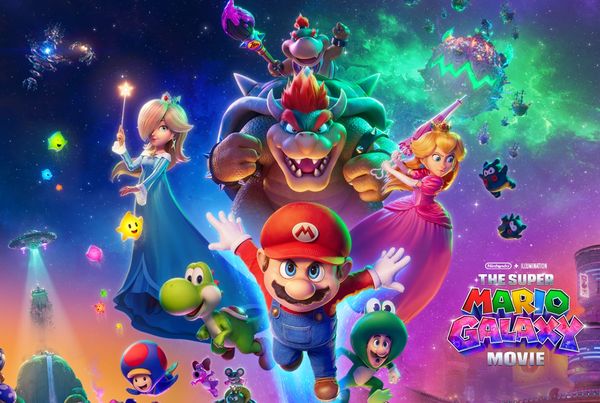 The Super Mario Galaxy Movie: A cinematic journey that redefines game adaptations.Nintendo/Illumination/Universal Pictures
The Interstellar Leap: Redefining Box Office Expectations
The cinematic adaptation of Super Mario Galaxy didn't just break records; it fundamentally reconfigured industry expectations for video game films in the post-streaming landscape. Released on April 1, 2026, the film served as the monumental centerpiece for the Super Mario franchise's 40th anniversary, a masterstroke in strategic timing that maximized its appeal across generations [6]. What many might overlook is the tactical decision by Universal and Nintendo to advance the US release date from April 3 to April 1, aligning it with major European markets. This subtle but critical maneuver was designed to proactively combat the pervasive threat of social media spoilers concerning the film’s significant lore reveals, notably the surprising relationship between Peach and Rosalina [8].
Initial projections were not merely met but shattered, with the film pulling in a staggering $190.8 million domestically over its five-day opening weekend, contributing to an eye-watering $777 million worldwide against a remarkably constrained $110 million budget [1]. This financial efficiency is an 'edge case' in large-scale animation, especially considering the visual demands of its space-faring setting. Illumination leveraged its existing asset pipeline from the 2023 Mario film, enabling them to deliver what many critics and audiences lauded as 'jaw-dropping' animation quality without ballooning costs [1]. This fiscal prudence, combined with immense revenue, has propelled the Mario franchise into the top 10 highest-grossing animated film series of all time with only two entries [2].
The film has already become 2026’s biggest box office hit, and "another significant milestone has been achieved."
The film’s sustained performance, maintaining the #1 spot in diverse markets like Mexico and Australia into its third weekend, demonstrates a unique commercial resilience [2]. This isn't just about brand recognition; it's about a successful execution of a global release strategy that prioritizes cultural saturation and spoiler mitigation. The financial blueprint of the Super Mario Galaxy Movie provides a compelling case study for future blockbuster releases, proving that strategic market alignment and robust pre-emptive spoiler measures can significantly amplify box office results.
Optimize Your Release Strategy
Studio executives and IP holders should adopt the "Anniversary Anchor" model, timing major film releases to coincide with significant brand milestones (e.g., 40th anniversaries) and global date alignment to maximize social media impact and prevent spoiler-driven audience attrition.
The Miyamoto Filter: Nintendo's Secret Weapon in Creative Fidelity
The collaboration between Illumination and Nintendo for the Super Mario Galaxy Movie transcended traditional studio-developer relationships; it became a deep, embedded partnership, often referred to by insiders as a "collaboration unlike any other" [4]. Illumination CEO Chris Meledandri famously labeled the consistent presence of Shigeru Miyamoto and his Nintendo team at the core of the filmmaking process as the studio's "secret weapon," drawing parallels to the tightly guarded formula of Coca-Cola [4]. This wasn't a case of distant approvals; Nintendo artists were intricately woven into the daily tapestry of the animation pipeline, providing direct, real-time input.
A crucial 'technical nuance' of this integrated model was the "design starting point" for characters [10]. Illumination's designers didn't just interpret; they began with Nintendo's most recent 3D iterations, translating these game-ready models into the film's 3D space. They then augmented these with an unprecedented "specificity of detail," visible in elements as fine as individual hairs on Mario’s mustache [10]. This painstaking process ensured characters evolved for the grand cinematic canvas—where richer expressions are paramount—without sacrificing the quintessential "spirit of Nintendo" that Miyamoto himself personifies [10].
"The secret actually is the inclusion of Miyamoto and the Nintendo artists in the center of the filmmaking process."
Moreover, this symbiotic relationship granted the creative team the "freedom from being locked into any one game as the reference" [10]. This allowed them to seamlessly cherry-pick and integrate iconic elements from across the vast Mario universe—from Super Mario Odyssey to Super Mario World and the Super Mario Galaxy titles—creating a rich, multi-layered experience. Miyamoto’s involvement remained intensely hands-on; he would physically mark up Illumination's CG drawings, providing precise aesthetic guidance that his assistants would then translate into actionable illustrations for the animation team [10]. This level of direct creative stewardship is a rare 'edge case' in large-scale adaptations, setting a new benchmark for intellectual property management and ensuring unparalleled fidelity to the source material.
Embed Creative Ownership
Animation studios adapting legacy IP should negotiate for "embedded partnership" contracts, ensuring original creators have direct artistic input into frame-by-frame iterations, rather than simple licensing. This strategy guarantees the final product satisfies "purist" segments of the market and maintains brand integrity.
Mastering the Cosmos: Technical Animation of Spherical Gravity
The audacious decision to set The Super Mario Galaxy Movie in space demanded nothing less than a complete overhaul of Illumination's traditional camera and gravity logic. The core challenge lay in faithfully reproducing the "spherical gravity" mechanic, a genre-redefining feature from the 2007 game that allows characters to traverse entire 360-degree planetary surfaces [12]. For the 2026 film, this meant moving beyond a fixed "down" vector, instead adopting a dynamic rendering approach where gravity was always relative to the nearest large planetary mass [11].
A subtle 'technical nuance' often lost on general audiences is the sophisticated "gravity generator" logic deployed during high-speed action sequences. To effectively simulate the iconic "Launch Stars" and the exhilarating planet-hopping transitions, animators devised a system allowing characters to "slingshot" around these generators to build momentum [13]. This intricate process demanded that the lighting rigs rotate in perfect synchronicity with the character's orientation, a critical step to maintain visual consistency and prevent jarring artifacts [13]. The result? "Vertigo-inducing" visuals that were specifically optimized for RealD 3D and IMAX formats, offering a truly immersive experience [11].
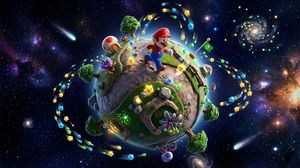 The intricate physics of spherical gravity brought to life in the Super Mario Galaxy Movie.This image is a conceptual illustration created to represent the theme described in the caption. It is not affiliated with or representative of any official or copyrighted work.
"When I heard the idea from Illumination about potentially using Super Mario Galaxy as the foundation, it really clicked... if we took that to the world of Galaxy, there are all kinds of tricky gravity rules that we can play with."
The physics underlying these movements were modeled using a modified gravitational force equation, carefully adjusted to achieve the film’s characteristic "floaty" aesthetic [7]. This equation incorporated a scene-specific variable, allowing directors to fine-tune the "weight" of Mario's jumps depending on whether he was bounding through the familiar Mushroom Kingdom or adrift in the Space Junk Galaxy [7]. This bespoke approach to environmental physics is an 'edge case' in animation, demonstrating a commitment to gameplay fidelity that extended beyond mere visual representation, making the Galaxy experience tangible for moviegoers.
Innovate with Relative Camera Rigs
Technical directors on space-themed animation should prioritize "relative camera rigs" that treat each asset as its own center of gravity. This ensures lighting and particle effects (like Star Bits) interact realistically with shifting "down" vectors, preventing visual artifacts and enhancing immersion on large-format screens.
Lore Unveiled: Peach, Rosalina, and the Canon-Clash Debate
Perhaps the most contentious narrative decision in The Super Mario Galaxy Movie was the unexpected establishment of Princess Peach and Rosalina as biological sisters. The film’s lore reveals Rosalina as Peach’s elder sister, who, to escape destructive forces on their home planet, secreted "baby Peach" away to safety via a Warp Pipe [6]. This pivotal revelation unfolds mid-film as Rosalina narrates from her iconic storybook, a direct and poignant nod to the cinematic introduction of the original 2007 game [6].
This 'edge case' narrative shift was a deliberate choice, intended to provide a deeper emotional anchor for Peach, who, throughout the movie, is plagued by enigmatic dreams of her origins [14]. While some critics applauded this as a "wholesome story" that effectively simplified complex lore for a broader family audience, a vocal segment of hardcore fans vehemently argued that it "ruined the character" of Rosalina. Their contention stemmed from the belief that this new origin stripped Rosalina of her enigmatic status as a solitary "Watcher of the Stars," reducing her cosmic grandeur [16].
"I’d like to adhere to the backstory established in the movie as much as possible in future games."
A crucial 'technical nuance' of this reveal lies in its direct impact on the film's climax. The combined magical power of the newly recognized sisters is instrumental in transforming the desolate, metallic Planet Bowser into a verdant landscape of greenery and flowers, serving as the ultimate resolution to the conflict [15]. Miyamoto himself explicitly requested this origin story "remain canon in future video games," a declaration that effectively merges the cinematic and game universes into a unified "transmedia canon" [3]. This bold move highlights a growing trend in IP management: using film adaptations not just to retell stories, but to actively reshape and expand the foundational lore of the gaming franchise itself.
Mitigate Canon-Clash Resistance
Lore managers in transmedia franchises should anticipate "canon-clash" resistance from core fanbases when merging film and game narratives. To mitigate this, releases should include "Lore Bridging" content (e.g., a simultaneous game update) to reinforce the new narrative in the interactive space, ensuring continuity and acceptance.
The Vocal Evolution: Niche Authority in Voice Casting
The casting strategy for the 2026 Super Mario Galaxy Movie represented a deliberate pivot away from the "stunt casting" controversies that somewhat plagued the first film. Instead, the sequel embraced specialized performances, deeply respecting the source material's rich auditory history [18]. While the beloved trio of Chris Pratt, Anya Taylor-Joy, and Charlie Day reprised their roles, the introduction of Donald Glover as Yoshi and Brie Larson as Rosalina marked a strategic commitment to "authentic" sound design, prioritizing character fidelity over sheer star power [18].
A particularly insightful 'technical nuance' was Donald Glover’s rendition of Yoshi. Glover delivered a "near-perfect Yoshi impression" that was entirely non-verbal, consisting solely of the character's signature sounds and the single word "Yoshi" across all languages and territories [15]. This ingenious approach shrewdly sidestepped the potential pitfall of granting the iconic dinosaur a human voice, a concern that had previously agitated fans. Similarly, Brie Larson’s casting as Rosalina was meticulously chosen to imbue the "Watcher of the Stars" with a "majestic and empathetic" quality, reinforcing her cosmic yet maternal essence [9].
Beyond the primary cast, the film delved into unexpected, yet tonally perfect, casting choices. Benny Safdie’s portrayal of Bowser Jr. was lauded as a "surprise" that injected a hot-tempered yet vulnerable dynamic into the villainous roster [9]. The production also showcased significant "deep cut" casting, with Luis Guzmán appearing as the cosmic crimelord Wart and Issa Rae lending her voice to the regal Honey Queen [19]. This 'edge case' approach ensured that even minor, fan-favorite characters were brought to life by recognizable talent that perfectly matched their established in-game personas, reinforcing the film's dedication to its heritage.
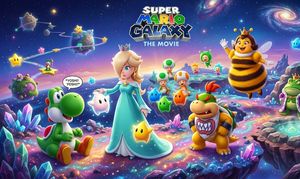 The nuanced voice casting in Super Mario Galaxy Movie, featuring old favorites and new arrivals.This image is provided for illustrative purposes only and is not affiliated with, endorsed by, or representative of any official production or copyrighted work.
"Donald Glover will voice Yoshi in all languages and territories worldwide."
Prioritize Vocal Fidelity for Global Appeal
Producers of character-driven animation should prioritize "Vocal Fidelity" for iconic creatures by hiring actors capable of precise non-verbal impressions. This not only simplifies international distribution but also preserves the character's "audio brand" across all markets, ensuring universal recognition and appeal.
The GOAT Debate: Experiential Translation vs. Narrative Fidelity
The question of whether The Super Mario Galaxy Movie is the "Greatest of All Time" (GOAT) video game adaptation necessitates a careful distinction between two dominant models: the "faithful narrative" approach (exemplified by series like The Last of Us) and the "experiential translation" model, which Nintendo and Illumination have so effectively pioneered [5]. While critics often found the film's "thin main characters" and "generic plotting" to be shortcomings, its proponents passionately argue that its fidelity lies in translating the experience of playing a video game onto the big screen [5].
The film's claim to "gold standard" status is largely underpinned by its masterful ability to synthesize intense action, an explosion of vibrant colors, and a deluge of "endless Easter egg references," all without overwhelming the casual viewer [5]. Unlike the gritty, grounded drama of The Last of Us or the absurdist satire of Fallout, The Super Mario Galaxy Movie zeroes in on "pure, simple entertainment" [5]. This laser focus has proven to be a commercially superior strategy, with the Mario franchise now approaching $2 billion in total gross, far outstripping the more niche successes of R-rated adaptations [2].
A common misconception is that a truly "good" adaptation must invariably improve upon the source material’s existing story. In the case of the Mario games, the narrative was rarely the primary draw; instead, it was the imaginative world-building and innovative mechanics that captivated players. By foregrounding the intricate "spherical gravity" and expanding the scope to include a broader array of characters from the Mario universe (such as Birdo and Wart), the film successfully fulfills the core requirement of a video game adaptation: making the audience feel genuinely immersed "in" the game world [5]. This 'edge case' perspective reframes the very definition of a successful adaptation, moving beyond plot-centric evaluations to acknowledge the unique demands of interactive media.
The film is “arguably the most faithfully a video game has been adapted into a movie” and “effectively translates the essence… onto the screen.”
Redefine Adaptation Metrics
Critics and industry analysts should evaluate adaptations based on their "Functional Success"—whether they achieve their specific goal (e.g., emotional depth vs. experiential fun). For "toy-box" franchises like Mario, commercial success and audience retention scores are more accurate metrics of "GOAT" status than traditional narrative analysis.
The Nintendo Cinematic Universe: Deep Cuts and Future Teases
More than just a sequel, The Super Mario Galaxy Movie functions as a sprawling "Easter egg hunt," openly signaling Nintendo’s ambitious intent to construct a sprawling cinematic universe. Beyond the familiar faces of the core Mario cast, the film is peppered with numerous "deep cuts" from the NES and Wii eras, often appearing in non-speaking or background roles that subtly but unmistakably tease future spin-offs and expanded narratives.
A notable 'edge case' among these cameos is the fleeting appearance of Little Mac and Doc Louis from Punch-Out!!. They are briefly seen during a dynamic New York City montage, a deliberate inclusion that implies the events of their respective games have yet to unfold within the film's established timeline [20]. Similarly, the inclusion of a T-Rex (a fan-favorite from Super Mario Odyssey) and the villain Wart (from Super Mario Bros. 2) emphatically demonstrates Illumination's commitment to drawing from the entire 40-year legacy of Nintendo, not just confining itself to the "Galaxy" sub-series [7].
The "Star Fox" tease, however, is arguably the most significant 'edge case' for the nascent Nintendo Cinematic Universe (NCU). Glen Powell’s portrayal of Fox McCloud introduces him as a desperate pilot-for-hire, and his interactions with Mario and Luigi lay a clear foundation for a future space-faring crossover [9]. Furthermore, eagle-eyed viewers and NCU theorists spotted yellow, red, and blue Pikmin around the 5-second mark of official trailers, confirming Miyamoto’s intention to integrate his other beloved creations into the ever-expanding Mario universe [21]. These calculated background inclusions are more than just fan service; they are strategic breadcrumbs for a multi-decade cinematic strategy.
"It’s a little broader in scope… We're going to meet some new folks that are old favorites and some folks that I think are really deep cuts,"
Monitor Background Density for Future IP
Fans and NCU theorists should closely monitor the "background density" of characters in these films. The inclusion of background-only characters like Little Mac or Pikmin serves as "market testing" for potential animated shorts or standalone features within the Nintendo/Illumination ecosystem, indicating future IP expansion.
Brian Tyler's Hospital Score: A Symphonic Legacy
The auditory landscape of The Super Mario Galaxy Movie is a testament to complexity, rivaling its groundbreaking visual rendering. Composer Brian Tyler, who masterfully scored the 2023 predecessor, returned for the sequel, famously composing significant portions of the score from a hospital bed, unbeknownst to the medical staff [1]. The resulting soundtrack is a grand tapestry woven by a 70-piece orchestra, featuring intricate arrangements of themes not only from both Super Mario Galaxy games but also from several other cherished installments in the series [1].
A profound 'technical nuance' of this score lies in its "thematic alignment" [18]. Tyler skillfully integrated iconic themes such as the "Overture" and "Gusty Garden Galaxy," but rather than simply replaying them, he meticulously rearranged them to perfectly fit the film's overarching tone of "grand-scale wonder and high-stakes adventure" [18]. This orchestral brilliance was paired with a promotional flourish—the debut of 'The Ballad of Super Mario,' performed by Jack Black (Bowser) and the cast on The Tonight Show. Though the track became a viral sensation, it ultimately remained outside the film itself, serving as a celebratory single rather than part of the cinematic score.
The score performs a vital dual function: it provides an epic, cinematic feel befitting the cosmic battles while simultaneously delivering "nostalgic dopamine hits" designed to trigger deep emotional responses in adult viewers who grew up with the Wii-era games [6]. This exceptional musical fidelity is frequently cited as one of the film's most potent assets, even by critics who found fault with the script [17]. This 'edge case' of a composer’s dedication and the strategic use of heritage integration in a blockbuster score underscores the critical role music plays in an "experiential translation" adaptation, reinforcing audience immersion and emotional connection.
"The score is performed by a 70-piece orchestra and features arrangements of themes from the two Super Mario Galaxy games and other installments."
Prioritize Heritage Integration in Soundtracks
Soundtrack producers and composers should prioritize "Heritage Integration"—the use of original game themes rearranged for orchestral ensembles—to ensure the film's "Audio Brand" remains consistent with the interactive source material. This significantly enhances audience immersion and leverages deep-seated nostalgia for a more impactful cinematic experience.
Super Mario Galaxy Movie: Your Top Questions Answered
Is the Super Mario Galaxy Movie a direct sequel to the 2023 film?
Why are the reviews for the Super Mario Galaxy Movie mixed?
Who are the new characters introduced in the Super Mario Galaxy Movie?
Does the Super Mario Galaxy Movie change the game lore?
How much money has the Super Mario Galaxy Movie made?
Disclaimer: This article explores gaming topics for informational purposes only. Strategies, opinions, and experiences are subjective and may not apply universally. Images may be illustrative or inspired and do not represent official game assets or copyrighted material. For additional context, please consult our full disclaimer.