Tesla Robotaxi Launch 2026: Navigating Autonomous Trust and Technical Realities
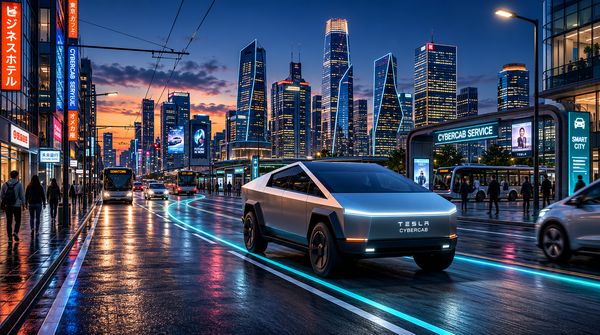 The Tesla Cybercab: A vision of autonomous urban mobility in 2026.Image for illustrative purposes only, depicting a vision of autonomous urban mobility in 2026.
The advent of fully autonomous vehicles, particularly Tesla's much-anticipated Robotaxi service, represents a pivotal—and often contentious—frontier in modern technology. While the promise of ubiquitous, self-driving transport captivates imaginations, the underlying technical architecture and regulatory landscape present complex challenges, especially concerning the bedrock of consumer trust. A critical technical nuance lies in Tesla's steadfast commitment to a vision-only system, a design choice that fundamentally diverges from most competitors who integrate multiple sensor modalities. This singular reliance on optical cameras, while offering potential cost efficiencies, introduces specific edge cases and vulnerabilities that directly influence public perception and regulatory oversight.
The 2026 launch of the Cybercab, Tesla’s purpose-built robotaxi, brings these debates to a head. It’s not just about getting a car to drive itself; it’s about convincing millions of people that it’s safe, reliable, and trustworthy, even when the technology operates in conditions that challenge human perception. The stakes are incredibly high, encompassing not only technological innovation but also public safety, economic transformation, and the very definition of liability in an increasingly automated world.
 Vision-only systems face significant challenges in adverse weather, contrasting with the robustness of multi-sensor fusion.Image for illustrative purposes only, depicting the challenges of vision-only systems in adverse weather, contrasting with the robustness of multi-sensor fusion.
How Does Tesla's Vision-Only Approach Build or Erode Consumer Trust?
Tesla’s distinctive technical strategy for its 2026 autonomous fleet hinges on a design philosophy that has sparked considerable debate: the complete exclusion of physical LiDAR and radar sensors in favor of an optical camera-only suite [3]. This architecture processes environmental data through eight high-resolution cameras, feeding a unified, end-to-end neural network [3]. The system endeavors to estimate structural depth and recognize object geometry by dynamically analyzing visual data, mimicking human visual perception [3]. However, a crucial distinction emerges: unlike human cognition, these cameras inherently lack the contextual understanding to instantaneously resolve optical anomalies.
This absence of sensory redundancy introduces significant technical limitations, particularly in low-contrast environments. When a vision-only vehicle encounters intense sun glare, heavy fog, dense dust, or direct headlight reflections, its neural network can demonstrably struggle to differentiate flat images from tangible physical hazards [3]. In stark contrast, competing autonomous platforms employ active sensor fusion, where LiDAR and radar units emit physical signals to map distances with sub-centimeter precision [9]. Without these active signals, a camera-heavy platform remains acutely vulnerable to optical occlusion [3].
The table below highlights the inherent strengths and vulnerabilities of different autonomous sensor modalities:
| Sensor Modality | Primary Strength | Primary Vulnerability |
|---|---|---|
| Optical Camera | Identifies color and text | Struggles in glare |
| Active LiDAR | Direct time-of-flight depth | Degrades in heavy rain |
| Active Radar | Continuous velocity tracking | Lacks edge definition |
Source: Compiled from Industry Sensor Specifications
Consumer trust, unsurprisingly, mirrors these architectural vulnerabilities, remaining highly fragmented despite years of intensive marketing efforts. Data compiled by the American Automobile Association (AAA) reveals a persistent skepticism: only 13% of U.S. drivers would confidently trust riding in a fully self-driving vehicle [11]. Furthermore, a substantial 61% of consumers actively report a palpable fear of riding in an autonomous vehicle [11]. This pervasive hesitation is frequently exacerbated by high-profile crashes and erratic driving incidents that are widely publicized and captured on camera [12].
Missy Cummings, Professor of Engineering and Computing at George Mason University, articulates this fundamental challenge succinctly: "If you can't see the world correctly, you can't plan and move and actuate to the world correctly" [10]. To counteract this deep-seated skepticism, Tesla leverages its unparalleled data flywheel, meticulously collecting billions of miles of real-world driving data to continuously train and refine its neural networks [3]. The company asserts that visual perception alone represents the only financially viable and scalable pathway to widespread autonomous technology adoption [3]. However, federal safety regulators remain largely unconvinced [7]. The National Highway Traffic Safety Administration (NHTSA) continues its extensive probe into over 2.8 million Tesla vehicles, specifically assessing the safety performance of Full Self-Driving (FSD) in conditions of poor visibility [8].
Autonomous Trust Directive:
Fleet administrators must restrict vision-only operations during severe weather events and extreme low-contrast conditions, limiting deployment until multi-sensor validation can be achieved [3].
How Does the Tesla Cybercab Unboxed Manufacturing Process Change Production Economics?
Traditional automotive assembly lines are characterized by a sequential, linear flow, where a stamped steel monocoque progresses along a continuous line, receiving manual or robotic component installations at each stage [2]. Tesla’s revolutionary "unboxed" manufacturing process, however, fundamentally departs from this legacy setup. It embraces a parallelized assembly strategy, wherein vehicle sub-assemblies are constructed in isolation [6]. These modular units—such as the integrated battery pack, the complete cabin interior, and the drive unit—are fully completed before converging at the final assembly node [6]. By simultaneously finishing these complex components, Tesla aims to achieve a dramatic reduction in the physical factory footprint, targeting a 50% decrease [6].
This parallel construction methodology is absolutely critical for driving down the per-mile operating cost of future autonomous fleets [15]. By executing multiple assembly steps concurrently, Giga Texas can theoretically cycle a completed Cybercab off the line at an unprecedented pace [2]. Tesla has consistently articulated an ambitious long-term objective: to eventually produce one vehicle every ten seconds at full operational scale [2]. This extraordinary manufacturing efficiency is designed to drastically lower the total cost of autonomous operations, ultimately making robotaxis a more economically attractive option than traditional private car ownership [5].
Here are the key engineering specifications for the Tesla Cybercab:
| Specification Metric | Certified Value |
|---|---|
| Battery Pack Capacity | 48 kWh |
| Single Motor Power Output | 163 kW (219 Horsepower) |
| Curb Weight | 3,113 lbs (1,412 kg) |
| Unadjusted EPA Certified Range | 418 Miles |
| Projected Real-World Operating Range | ~300 Miles |
The physical design of the Cybercab itself is meticulously stripped of consumer-centric complexities to further streamline these innovative production lines [2]. The vehicle features an upward-opening butterfly door design, which not only optimizes passenger ingress and egress but also minimizes the side clearance required in densely packed urban environments [2]. By eliminating traditional manual steering columns, brake pedals, and physical side-view mirrors, the assembly lines require fewer specialized installation steps, reducing both complexity and potential points of failure [1]. These deliberate design choices unequivocally prioritize cost-effectiveness and production speed over conventional driving performance metrics [2].
Lars Moravy, Vice President of Engineering at Tesla, emphasizes the broader strategic shift: "In an era of autonomy, you have to start thinking about us as moving to providing transportation as a service more than the total addressable market for the purchased vehicles alone" [4]. This profound transition to a transportation-as-a-service model demands a dramatic recalibration of investor expectations [4]. While traditional automotive sales margins have eroded to approximately 17% due to escalating global competition, software-enabled fleet services present the tantalizing prospect of high-margin, recurring revenues [6]. If Tesla can successfully scale this modular unboxed production, it possesses the potential to saturate metropolitan regions with affordable, highly specialized autonomous vehicles [5]. However, scaling physical AI platforms remains an inherently capital-intensive gamble, consuming billions in cash reserves [6].
Autonomous Trust Directive:
Investment managers must evaluate vehicle production rates alongside localized municipal permit approvals, as excess factory output cannot generate revenue without active commercial operating licenses [2].
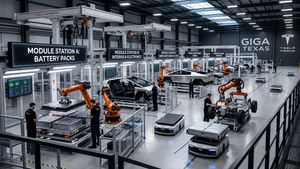 Tesla's 'unboxed' manufacturing revolutionizes production economics by parallelizing sub-assembly construction.Image for illustrative purposes only, depicting Tesla's 'unboxed' manufacturing revolutionizing production economics by parallelizing sub-assembly construction.
Why Is Tesla's Self-Published Safety Data Under Intense Regulatory Scrutiny?
Tesla’s primary defense against the escalating concerns surrounding autonomous safety is anchored in its colossal real-world testing database [13]. In July 2026, the company proudly announced that its FSD Supervised users had collectively surpassed an astounding 8 billion cumulative miles, with drivers logging over 20 million miles daily [13]. Tesla's internal safety telemetry purports that FSD-guided vehicles experience one major collision approximately every 5,300,676 miles [14]. This figure is presented in stark contrast to the U.S. national average for all human-driven vehicles, which records one major collision every 660,164 miles [14].
However, federal safety investigators and independent transportation researchers have identified severe methodological flaws embedded within these statistics [7]. A critical common misconception is that Tesla's "major collision" definition aligns with broader federal datasets. In reality, Tesla defines a "major collision" almost exclusively by airbag deployment events, yet it compares this metric to expansive federal datasets that track any crash requiring a vehicle to be towed [7]. This unequal comparison systematically—and misleadingly—inflates FSD's apparent safety advantage by contrasting its most severe crashes against a much wider spectrum of minor human fender-benders [7].
The discrepancies in collision logging parameters are significant:
| Reporting Metric | Tesla Fleet Standards | NHTSA SGO Standards |
|---|---|---|
| Disengagement Window | 5 Seconds | 30 Seconds |
| Primary Crash Tracker | Airbag Deployment | Any Tow-away Event |
| Data Transmission | Requires Cellular | Physical Black Box [17] |
Another major statistical loophole lies in Tesla's five-second disengagement window [7]. If a driver manually intervenes to avert a hazard and, tragically, crashes a split-second later, Tesla’s telemetry system does not attribute that collision to FSD [7]. Conversely, the NHTSA’s Standing General Order (SGO) mandates that any collision occurring within a 30-second window of driver-assist engagement must be reported [7]. This localized reporting truncation effectively conceals instances where the software abruptly disengages in complex, high-risk scenarios, thereby forcing the human driver to absorb the blame for the subsequent crash [7].
Senator Edward Markey, a Democratic Senator at the U.S. Senate, has been a vocal critic, stating, "In fact, Tesla's safety claims appear to rest on methodological choices that systematically inflate FSD's apparent safety advantage" [18]. Furthermore, Tesla's automated telemetry relies heavily on active, real-time cellular connections [7]. This presents a critical edge case: if a high-speed collision is severe enough to destroy the vehicle's communication systems or battery arrays, no crash telemetry is transmitted whatsoever [7]. This inherent design vulnerability means that the most catastrophic crashes are structurally omitted from automated safety reports [7]. These systematic reporting gaps have directly led to formal Senate demands for a comprehensive federal audit of Tesla's self-published statistics [7].
Autonomous Trust Directive:
Underwriters must mandate the use of physical, post-crash onboard event data recorders (black boxes) to verify autonomous liability rather than relying on manufacturer-filtered cellular telemetry [7].
What Are the Legal and Liability Frameworks for Level 2 and Level 4 Systems?
The legal demarcation between driver-assist systems and truly autonomous vehicles is fundamentally defined by operational liability [3]. Tesla’s Full Self-Driving (FSD) is officially classified as an SAE Level 2 system, which legally necessitates constant, active human supervision [3]. Because the software does not legally absolve the driver of control, the human in the seat remains the "operator" under prevailing state vehicle codes [3]. Consequently, the individual’s personal insurance policy bears the liability for all damages incurred, effectively shielding Tesla from direct liability claims [3].
This structural liability shield stands in stark contrast to commercial SAE Level 4 deployments, such as those by Waymo [3]. At Level 4, the software platform itself is the legal operator of the vehicle, and human occupants are unequivocally categorized purely as passengers [3]. When a driverless Waymo causes a collision, Alphabet’s commercial insurance policy assumes direct, strict product liability [3]. Waymo, for instance, maintains a continuous $5 million commercial liability policy, thereby eliminating coverage tiers and potential insurance gaps for its users [21].
A comparison of SAE automation levels and their legal implications:
| Parameter | Tesla Level 2 System | Waymo Level 4 System |
|---|---|---|
| Legal Driver | Human Occupant | Autonomous Software |
| Crash Liability | Absorbed by Human | Absorbed by Vendor |
| State Reporting Rule | Standard Limousine | Strict AV Permit |
| Regulatory Audit | Minimal Oversight | Mandated Per-Trip Data |
To circumvent the stringent liability and safety reporting requirements imposed on certified Level 4 operators, Tesla has strategically utilized standard limousine permits [20]. In California, for example, the Public Utilities Commission regulates Tesla's ride-hailing fleet as a standard charter-party carrier (TCP) chauffeur service [20]. Because a human safety monitor is present in the driver's seat, the state legally perceives the vehicle as being manually driven [20]. This specific regulatory classification allows Tesla to market its "Robotaxi" service while remaining entirely exempt from reporting trip data, system disengagements, or detailed crash information [20].
Pat Tsen, Deputy Executive Director for Consumer Policy, Transportation, and Enforcement at the California Public Utilities Commission, clarifies this distinction: "Tesla is not operating an autonomous vehicle service... So in California we define autonomous vehicles to be those that are SAE level three — meaning that the onboard AI system is capable of navigating designated road conditions within an operational design domain on its own. Tesla is a level two system and so they do not have a permit with the California Public Utilities Commission and my understanding is that they do not have a permit with the DMV either" [20]. While Level 2 systems effectively limit corporate liability for the manufacturer, they impose a significant operational burden on commercial buyers [3]. Companies deploying supervised FSD fleets carry corporate exposure under standard employer duty-of-care obligations [3]. If an employee crashes while utilizing Supervised FSD, the employer's commercial general liability is directly exposed [3]. Conversely, opting for a certified Level 4 driverless network unequivocally shifts all operational risk directly to the autonomous vehicle provider [3].
Autonomous Trust Directive:
Corporate travel directors must prioritize certified SAE Level 4 services over supervised Level 2 fleets to legally insulate their enterprises from catastrophic driving liability [3].
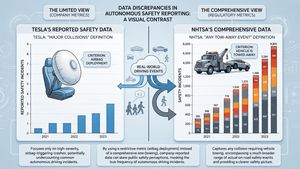 Discrepancies in collision reporting metrics can significantly alter perceived safety statistics.Image for illustrative purposes only, depicting how discrepancies in collision reporting metrics can significantly alter perceived safety statistics.
How Does the Cybercab's Emergency Architecture Handle Crash Response and First Responders?
The design of a steering-wheel-free vehicle, like the Cybercab, necessitates a completely re-imagined physical interaction interface for emergency rescue crews [2]. Tesla’s official Cybercab First Responder Interaction Plan meticulously details a highly specialized network of physical overrides engineered to manage system power and facilitate occupant egress during a crash event [2]. Given the absence of manual interior controls, the vehicle is designed to dynamically communicate its structural state and operational status to external rescue workers [16].
A significant structural edge case involves the physical doors of the two-seat cabin [2]. The Cybercab's distinctive upward-opening butterfly doors are electronically actuated via discreet buttons located on the physical B-pillars [16]. However, if a collision severely deforms the door struts or side frames, preloaded tension springs within the mechanism can violently pop out upon attempted opening [23]. Emergency dispatchers are explicitly advised to approach the doors from undamaged sides to prevent potential rescue injuries [23].
Key UI and power failure fallbacks for the Cybercab:
| Scenario | Mechanical Override | Operational State |
|---|---|---|
| Complete Power Loss | Door latch to detent 2 | Activates manual release |
| System Off-line | Double-speed hazard flash | Autonomous Mode disabled |
| Emergency Access | Windshield QR code scan | Pulls interaction plan |
Source: Compiled from Cybercab First Responder Interaction Plan [16] [19] [22]
During a crash, the Cybercab's system is meticulously engineered to automatically terminate Autonomous Mode and unlock all doors [19]. Should the onboard airbags deploy, the vehicle will automatically roll down its side windows and initiate a two-way emergency call with remote support staff [19]. If low-voltage power is completely lost, the touchscreen interface becomes entirely inoperable [19]. In such a critical scenario, occupants must manually pull the physical interior door latch up to its second detent to mechanically override the electronic locks [22].
Phil Koopman, Professor at Carnegie Mellon University, highlights a crucial limitation of current AI: "Machine learning has no common sense and learns narrowly from a huge number of examples... If the computer driver gets into a situation it has not been taught about, it is prone to crashing" [10]. This underscores the importance of robust emergency protocols. If the Cybercab detects the flashing lights or active sirens of an approaching emergency vehicle, it utilizes its exterior microphone array to precisely isolate the sound [2]. The software is programmed to slow down, yield, and pull over to the nearest safe parking location [2]. Once safely stopped, the hazard lights will flash rapidly at twice the standard speed, providing a clear visual confirmation that Autonomous Mode has been disabled and the vehicle is safe for responders to approach [16]. Responders are explicitly warned never to attempt to reconnect low-voltage power to a crashed vehicle, as this action carries the significant risk of sparking an immediate high-voltage battery fire [19].
Autonomous Trust Directive:
Municipal emergency response directors must mandate hands-on training for first responders to master the manual door override detent mechanics of the Cybercab [22].
Technology Insights: Addressing Key Queries on Autonomous Trust
What is the regulatory status of Tesla's robotaxi service in California in 2026?
How does the 5-second disengagement rule affect Tesla's safety reports?
What physical hazard does the Cybercab pose to first responders during extraction?
What is the unadjusted EPA range and battery capacity of the 2026 Tesla Cybercab?
How does the Cybercab signal that its autonomous mode has failed or disabled?
Disclaimer: This article discusses technology-related subjects for general informational purposes only. Data, insights, or figures presented may be incomplete or subject to error. Images and diagrams are for illustrative purposes only and may not represent exact products, interfaces, or official designs. For further information, please consult our full disclaimer.