AI Data Center Resistance: What Maine's Moratorium Reveals About Tech's Future
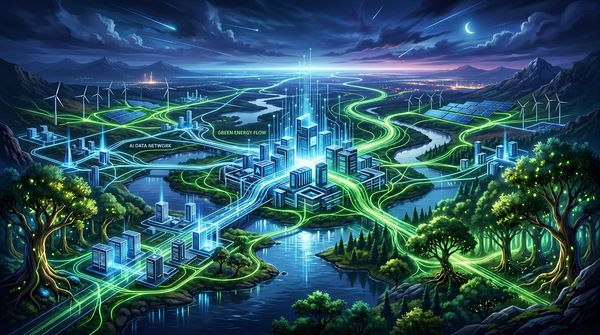 The complex interplay between burgeoning AI infrastructure and environmental sustainability.Visual representation of the complex interplay between burgeoning AI infrastructure and environmental sustainability. For illustrative purposes only.
For decades, the concept of "the cloud" existed as a convenient digital abstraction, a seemingly limitless realm where data resided without tangible consequence. However, the relentless march of generative AI has shattered this illusion, transforming these ethereal digital repositories into heavy industrial assets with colossal resource requirements. The proposed moratorium in Maine, LD 307, vividly illustrated this shift, seeking to halt new data center applications exceeding 20 megawatts (MW) until late 2027 [1]. This 20MW threshold, a crucial technical nuance, represents the precise point where a single client can drastically alter the load profile of a local substation in a predominantly rural state. It's not about blocking small-scale operations; it's about managing significant infrastructural shifts.
A critical edge case in this legislative drama was the $550 million redevelopment of the former International Paper mill in Jay, Maine. Governor Janet Mills explicitly cited the bill's failure to provide a specific "carveout" for this project as her reason for the veto [1]. This project is unique because it creatively reuses existing high-voltage infrastructure, originally designed for heavy manufacturing. This approach theoretically minimizes the need for new, ratepayer-funded transmission upgrades, presenting a model for sustainable industrial revitalization. It deftly tackles a common misconception: not all data centers are an unmitigated drain on the grid. Brownfield redevelopments, like the Jay mill, can stabilize local economies and absorb substantial power loads without the "sticker shock" associated with new greenfield developments in residential or agricultural areas [1].
The resistance wasn't unfounded, however. Representative Melanie Sachs, a key proponent of the moratorium, argued that without a pause, Maine's energy future risked being dictated by external tech giants rather than serving local needs [4]. The House's decisive 115-29 vote against the Jay carveout underscored a deep-seated legislative apprehension: that granting one-off exemptions could inadvertently open the floodgates to unregulated expansion [1]. This ongoing tension between immediate economic revitalization and long-term regional energy security defines the current debate.
"A moratorium is appropriate given the impacts of massive data centers in other states on the environment and on electricity rates. But the final version of this bill fails to allow for a specific project in [Jay] that enjoys strong local support from its host community and region."
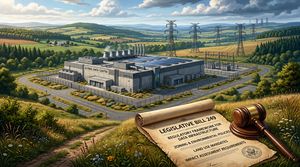 Maine's legislative challenges highlight the growing debate over data center expansion.Artistic rendition of Maine's legislative challenges highlighting the growing debate over data center expansion. For illustrative purposes only.
Cloud to AI Factory: The Grid's Tipping Point
The energy consumption profile of AI data centers is fundamentally different from the traditional cloud infrastructure we've come to expect. Traditional data centers were optimized for mixed workloads—think business applications, databases, and web services—which were predominantly CPU-centric and had relatively predictable, often weather-sensitive, energy demands [7]. This allowed for more manageable load balancing on existing grids. However, AI data centers are entirely different beasts: they are "GPU-centric factories," purpose-built for large-scale training of complex models and high-speed inference [8].
This creates a technical nuance known as "superlinear scaling," where the energy required to power a model grows at a faster rate than the model's capabilities themselves [9]. Consider the sheer density of power draw: a single modern AI rack can chew through 30kW to 100kW, a stark contrast to the 5kW to 15kW found in traditional enterprise racks [8]. This density creates "Thermal Walls," where air cooling becomes physically impossible because the volume of air required to maintain safe temperatures would necessitate fans that consume more energy than the servers themselves [9]. This necessitates advanced liquid cooling solutions, which bring their own set of infrastructure challenges.
The impact on grid reliability is immediate and often dramatic. A notable instance occurred in July 2024, when a voltage fluctuation in Northern Virginia caused 60 data centers to disconnect simultaneously. This abrupt event created a massive 1,500 MW power surplus, pushing the grid to the brink of a cascading blackout as operators scrambled to shed the excess generation [2]. This incident shatters the common misconception that data centers are "stable loads." While they operate continuously, their response to grid instability can be far more volatile and disruptive than that of traditional industrial consumers, demanding more sophisticated grid management and rapid response capabilities [2].
"Reasoning models can consume 100x more compute. Future reasoning can consume much more compute"
Optimize for Compute Efficiency
Enterprise IT directors should prioritize "Power Compute Effectiveness" (PCE) as a primary vendor metric. As power becomes the ultimate constraint, facilities unable to demonstrate high compute-per-watt efficiency will face increased operational surcharges and potential "curtailment" during periods of peak grid stress [10].
The Compute Paradox: Water, Air, and Noise Under Siege
The physical footprint of AI infrastructure extends far beyond electricity, encroaching on finite natural resources like water and air, creating a multifaceted environmental crisis. While a mid-sized data center might consume around 300,000 gallons of water daily for cooling, a large hyperscale facility can guzzle up to 5 million gallons a day—the equivalent of a city with 50,000 residents [3]. This creates a severe edge case in already water-stressed regions, such as Arizona and the Colorado River Basin, where a staggering two-thirds of all data centers built since 2022 are now located [3].
A technical nuance often overlooked is the "Indirect Footprint" of water usage. Because a significant portion of U.S. electricity is still generated by steam-producing fossil fuel plants, every kilowatt-hour consumed by a data center indirectly accounts for another 1.2 gallons of water used at the power plant [12]. This means a data center in an arid climate might be more water-intensive than its local utility bill suggests. Furthermore, the industry's move toward "Behind-the-Meter" gas turbines for enhanced reliability introduces new air quality risks. In Memphis, xAI's Colossus facility faces a lawsuit over the planned installation of 30 gas turbines, which will emit nitrogen oxides (NOx) into a region already grappling with high asthma rates [3].
Noise pollution, however, is the most visceral "shadow-change" driving local resistance. While urban dwellers are accustomed to background noise, the constant 24/7 low-frequency "hum" from cooling fans, reaching 85 to 100 decibels, is causing sleep deprivation and lowering property values in previously quiet rural areas [3]. Families living near data center clusters in Northern Virginia describe a constant humming noise from cooling systems that never stops, even at night [13]. Residents in Loudoun County report that this continuous sound becomes more noticeable when surrounding noise levels drop, contributing to sleep disruption and negatively affecting their quality of life [13][23].
"Wherever they choose to put a data center, it is like a giant soda straw sucking water out of that basin. And when you take water from a place, you have to reduce demand or put water back."
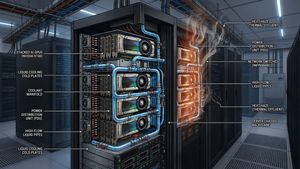 High-density AI racks demand advanced liquid cooling to manage immense thermal loads.Illustrative graphic of high-density AI racks demanding advanced liquid cooling to manage immense thermal loads. For illustrative purposes only.
Embrace Zero-Water Cooling
Developers should transition to "Zero-Water" cooling technologies, such as closed-loop liquid cooling or indirect evaporative systems. These can reduce water consumption by up to 90% [11], and while initially more expensive, they often prove to be the only viable pathway to navigate environmental moratoriums in water-stressed aquifers.
The Sensory Danger Zone: AI's Unseen Impact on Wildlife
The relentless expansion of AI data centers into historically rural and conservation-heavy areas has given rise to a novel ecological concept: the "Sensory Danger Zone." Pioneering research by scientists at the University of Michigan and the National Parks Conservation Association (NPCA) indicates that the combined assault of artificial light and incessant noise from 24/7 industrial operations is pushing many species beyond their "fitness threshold" [14]. This represents a significant information gain, shifting the debate beyond mere land use. Even if a data center occupies a relatively small physical footprint, its "sensory footprint" can extend for miles, disrupting ecological balance far beyond its immediate boundaries [14].
A critical technical nuance in understanding wildlife impact is "Acoustic Masking." High-end cooling towers, essential for AI facilities, emit persistent low-frequency noise (50-70 dB) that travels remarkably efficiently, particularly over water bodies [15]. For sensitive species like the Sandhill Crane, this pervasive hum can mask the intricate calls they rely on to form and maintain pair bonds, potentially leading to a staggering 30-50% displacement of migratory populations [15]. Similarly, indicator species such as the Great Blue Heron and Snowy Egret have been documented abandoning their nesting sites (rookeries) if industrial noise sources are located within 800 to 1,000 meters [15].
Beyond acoustic disturbances, the NPCA's report, "A Smarter Path Forward," issues a stark warning: the industry's current trajectory could convert up to 100,000 acres of crucial green space into industrial complexes, directly impacting revered natural treasures like the Appalachian Trail and Manassas National Battlefield [16]. An additional environmental threat identified is "Visual Fragmentation" – the requirement for towering 200-foot-tall high-voltage transmission lines, necessary to feed these power-hungry facilities, which permanently alter the pristine "viewshed" of historical and natural sites [16].
"The rapid and unchecked pursuit of new technologies must not come at the expense of our national parks, which were set aside for the intrinsic values they hold for all Americans."
Mandate Acoustic Buffers
Conservationists and local planning boards must push for "Acoustic Buffers" as a mandatory prerequisite for data center permits. A minimum 1-mile industrial-to-wetland setback should be enforced to shield sensitive avian rookeries from the extensive, long-range propagation of low-frequency cooling noise [15].
The Economic "Gold Mine": A Myth for Many Towns?
The primary allure for communities considering hosting data centers is the promise of substantial property tax revenue coupled with minimal demand on public services. Loudoun County, Virginia, offers a compelling case study, where data centers generate nearly $900 million in annual property taxes, enabling the county to maintain significantly lower residential tax rates than neighboring regions [6]. A key technical nuance here is the "Equipment refresh cycle." Unlike a shopping mall or warehouse that depreciates slowly, AI data centers house billions of dollars worth of GPUs that typically require replacement every three years [17]. This constant cycle of high-value investment ensures a perpetually robust tax base, a lucrative proposition for local governments [17].
However, a common misconception exists regarding job creation. While constructing a data center is a multi-billion dollar endeavor (typically $2 billion to $5 billion), it only creates a relatively small number of permanent staff positions, usually between 50 and 200 [6]. The true economic benefit lies not in direct employment but in the property tax levied on "Tangible Personal Property" (TPP)—the servers and associated equipment themselves. This can account for over 20% of the facility's total tax burden [17]. In states like Georgia, the value of servers and electrical equipment alone added $1.8 billion to property values on sites previously assessed at a mere $26 million [6].
The most significant economic risk is the "Stranded Asset" scenario. Imagine a utility company investing a billion dollars into a new substation and transmission line solely to serve a single hyperscale client. If that client relocates or if technology renders the facility obsolete, the utility might be forced to pass those immense infrastructure costs onto residential ratepayers [2]. This legitimate concern has spurred the emergence of "Large Load Tariffs," exemplified by AEP Ohio, which now mandates data centers to pay for at least 85% of their subscribed energy capacity, regardless of actual consumption [3]. This ensures a baseline recovery of infrastructure investment, protecting public funds.
"Data centers provide more tax revenue relative to service demands than virtually any other land use."
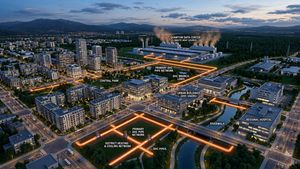 Harnessing waste heat from data centers for urban district heating systems.Visual concept of harnessing waste heat from data centers for urban district heating systems. For illustrative purposes only.
Negotiate Community Benefit Agreements
Small towns should prioritize negotiating "Community Benefit Agreements" (CBAs) that include guaranteed funding for local grid hardening and wastewater treatment upgrades. This approach ensures that the data center's presence directly enhances the resilience of the town's physical infrastructure, moving beyond mere financial transactions to tangible community improvements.
Waste-Heat Reuse: From "Energy Hogs" to "Grid Assets"?
As public resistance to data centers intensifies, one of the industry's most promising "shadow-changes" is the increasing adoption of waste-heat reuse. Data centers, by their very nature, convert nearly 100% of their electricity consumption directly into heat [18]. Historically, this heat was considered "low-grade" (around 28°C or 82°F), making it challenging to transport and repurpose efficiently [20]. However, the advent of modern AI clusters employing advanced liquid cooling technologies has dramatically changed this equation. These systems can reject heat at much higher temperatures, often 50°C (122°F) or even higher, transforming what was once a waste product into a valuable resource for district heating systems [19].
An excellent edge case success story is Amazon's Seattle headquarters, which ingeniously leverages waste heat from a neighboring third-party data center to warm 3 million square feet of office space [21]. This sophisticated system employs an underground heat exchanger that traverses a major city street, effectively turning the data center into a "mini-utility" for the surrounding urban landscape [21]. Similarly, in Finland, Microsoft has partnered with Fortum to heat the entire city of Espoo using waste heat from a new data center, a move that directly displaces the need for coal and gas heating, showcasing a powerful model for urban decarbonization [19].
The primary barrier to widespread adoption of this "Circular Energy" model isn't technical, but rather "Spatial and Regulatory." Most data centers are strategically located where land is inexpensive and abundant, typically in rural areas, rather than in dense urban environments conducive to district heating networks [18]. Furthermore, North America currently lacks comprehensive policies mandating heat reuse, a stark contrast to Europe where the EU’s revised Energy Efficiency Directive, effective after 2026, mandates a specific percentage of energy reuse for new data centers [22]. This regulatory disparity creates a significant hurdle for widespread implementation, even as the technology is readily available.
"Re-using waste heat from data centers helps avoid using fossil fuels to heat buildings... and can also reduce the burden on the electric grid."
Incentivize Heat Credits
For colder climates like Maine and Appalachia, state policymakers should implement "Heat Credits" for developers who co-locate data centers with greenhouses or manufacturing facilities. This policy transforms a waste product into a valuable regional economic driver, significantly helping to mitigate public backlash concerning energy consumption [18].
The Global Trajectory: Regulating AI Infrastructure in 2026 and Beyond
Maine's moratorium, despite its eventual veto, is not an isolated incident; it's a piece of a much larger global "Synchronized Resistance" to unchecked data center expansion. Between 2019 and 2022, Singapore implemented a nearly three-year pause on new data center permits, seeking to align demand with its ambitious carbon reduction goals [5]. Amsterdam imposed an 18-month moratorium in 2019 due to grid capacity concerns, and Ireland's EirGrid has declared it will not accept new applications for large-scale facilities near Dublin until at least 2028 [5]. These international precedents highlight a growing recognition of the need for regulatory oversight.
A significant technical nuance emerging in 2026 is the crucial shift from focusing on "Facility Efficiency" to prioritizing "Computation Efficiency." Regulators are moving beyond the traditional Power Usage Effectiveness (PUE) metric towards a more holistic "Power Compute Effectiveness" (PCE), which precisely measures how much actual AI "work" is performed per watt consumed [10]. This paradigm shift directly addresses a common misconception: that a highly efficient data center building is inherently sustainable. If the building is efficient but the AI models it trains are wasteful in their computational demands, the net environmental impact remains unacceptably high [10]. This underscores the need for a granular understanding of efficiency at the workload level, not just the facility level.
Looking ahead, we can anticipate the accelerated rise of "Sovereign AI Infrastructure." Major tech players like Microsoft and Amazon are already acquiring entire power plants, such as the Crane Clean Energy Center (formerly Three Mile Island), to bypass public grid limitations [2]. This strategy allows them to circumvent the "Regulatory Bottleneck" of state moratoriums while simultaneously removing reliable baseload power from the public pool. This strategic maneuver is likely to trigger a new wave of federal "behind-the-meter" taxation, as governments seek to regain control and revenue from these increasingly self-sufficient, yet publicly impactful, operations [2]. The future of AI infrastructure will undoubtedly be shaped by these power plays and the subsequent regulatory responses.
"As of 2025–2026, the pendulum has swung, and AI opportunity, not AI risk, is driving many political decisions... but we are considerably closer to real danger in 2026 than we were in 2023."
Adopt a Local-First Infrastructure Strategy
Global tech firms must pivot towards a "Local-First" infrastructure strategy. Instead of constructing monolithic, isolated campuses, modular and "distributed" data centers that can integrate seamlessly into existing urban heat and power grids will encounter significantly less regulatory resistance compared to sprawling, isolated hyperscale gigawatt-clusters.
Nuanced Conclusions on the Future of AI Infrastructure
The saga of Maine's moratorium, though ultimately vetoed, serves as a powerful testament to the current state of play: the economic allure of data center investment often still outweighs regulatory caution in many U.S. jurisdictions. Yet, the sheer intensity of the public and legislative resistance signals a critical turning point. The industry has reached a point of diminishing social returns, where the transition from an "invisible cloud" to an "industrial neighbor" necessitates a fundamental re-evaluation of the data center's role within society.
The truly successful projects of the late 2020s won't be those that merely optimize for Power Usage Effectiveness (PUE) in isolation. Instead, they will be defined by their commitment to a more integrated, sustainable, and community-conscious approach:
- Industrialize the Brownfield: Prioritizing the revitalization of derelict manufacturing sites, leveraging existing high-voltage interconnections to minimize new land use and infrastructure strain [1].
- Export Thermal Value: Actively providing free or subsidized heat to local communities through integrated district heating networks, transforming a waste product into a valuable resource [19].
- De-couple from the Aquifer: Implementing advanced closed-loop immersion cooling systems that achieve zero local water consumption, thereby alleviating pressure on precious water resources [11].
- Pay for Resilience: Accepting and planning for large-load tariffs that directly fund upgrades and modernization of residential grid infrastructure, ensuring the community benefits directly from the data center's presence [3].
Maine's experience demonstrates that while a governor's veto can protect specific projects, it cannot silence the escalating conversation. The "Maine Data Center Coordination Council," established by Governor Mills' executive order, is poised to become a template for other states. This body will undoubtedly navigate the complex task of balancing the relentless AI arms race with the very tangible realities of energy grids, environmental conservation, and local community well-being [1]. The future of AI infrastructure demands not just technological innovation, but also unprecedented levels of foresight, empathy, and integrated planning.
AI Data Center Resistance: Your Top Technology Questions Answered
Why did Maine’s Governor veto the data center moratorium in 2026?
How do AI data centers impact local electricity rates for residents?
What is the 'Sensory Danger Zone' for wildlife near data centers?
Is it possible to repurpose waste heat from data centers to warm buildings?
How much water does a typical AI hyperscale data center consume daily?
Disclaimer: This article discusses technology-related subjects for general informational purposes only. Data, insights, or figures presented may be incomplete or subject to error. Images and diagrams are for illustrative purposes only and may not represent exact products, interfaces, or official designs. For further information, please consult our full disclaimer.