Telemedicine's Breakthrough: Bridging Rural Health Education Gaps Globally
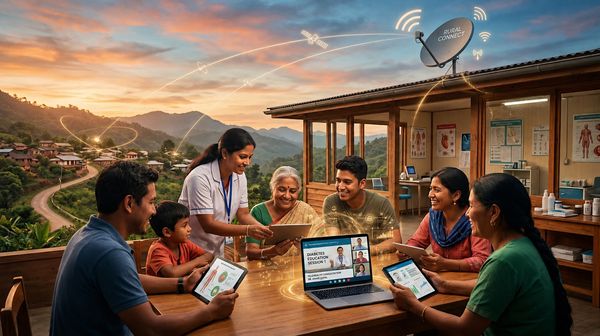 Bridging the divide: Telemedicine connects remote communities to vital health education, fostering healthier futures.Image depicts a conceptual representation of telemedicine connecting remote communities to vital health education, fostering healthier futures.
The $50 Billion Catalyst: Reshaping U.S. Rural Health Education
The landscape of rural healthcare in the United States is undergoing a monumental shift, spearheaded by the $50 billion Rural Health Transformation (RHT) Program. This initiative, authorized by Section 71401 of Public Law 119-21, isn't just about throwing money at a problem; it's a meticulously structured plan to stabilize and modernize rural healthcare delivery over five fiscal years, kicking off with $10 billion annually starting in 2026.[2]
What many might miss in the headlines is the intricate statutory funding split: a critical nuance ensuring equitable distribution. Half of the funds are equally distributed among all approved states as a baseline, preventing larger states from dominating. The other 50% is allocated based on complex variables, including the proportion of rural health facilities and hospital distress scores. This careful allocation ensures that even smaller states, such as New Jersey, receive at least $147 million annually to address their specific rural pockets.[1]
Current state initiatives focus on four key areas: modernizing health IT, expanding virtual care through remote patient monitoring (RPM), scaling artificial intelligence, and seeding innovation via rural technology catalyst funds. States can gain additional funding by committing to specific policy actions, like joining interstate licensure compacts such as the Psychology Interjurisdictional Compact (PSYPACT). This strategic policy lever aims to dismantle administrative barriers that currently prevent urban specialists from educating and treating rural populations across state lines.[1]
"Rural Health Transformation Program reflects a shared, (and long overdue) recognition that the more than 60 million Americans living in rural areas deserve the same access, efficiency, and coordinated specialty care as individuals living in any other community."
A crucial technical constraint within the program is the 5% spending cap on replacing HITECH-certified Electronic Health Records (EHRs). This isn't a limitation but a directive, forcing states to prioritize "targeted enhancements" and interoperability rather than costly, wholesale system replacements. By emphasizing the Trusted Exchange Framework and Common Agreement (TEFCA), the RHT Program ensures seamless communication between rural clinics and regional specialty hubs, eliminating manual data entry errors and fostering genuine data exchange.[1][7]
The program's phased rollout from 2026 to 2030, with distinct goals each year, demonstrates a long-term commitment to rural health equity. From initial IT and workforce investments to AI scaling and catalyst fund testing, the RHT Program is designed to build a sustainable, future-ready healthcare ecosystem for rural America.[1]
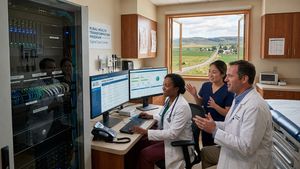 The Rural Health Transformation Program is injecting $50 billion to modernize IT infrastructure and expand virtual care in rural clinics.Image depicts a conceptual representation of the Rural Health Transformation Program injecting $50 billion to modernize IT infrastructure and expand virtual care in rural clinics.
Strategic Alignment for Rural Health Leaders
Health system administrators should proactively audit their existing IT infrastructure to ensure full compliance with TEFCA standards. This critical alignment is a prerequisite for unlocking "Rural Technology Catalyst Funds," which allow up to 10% of state funding to be channeled into testing innovative, consumer-facing health literacy tools.
The Mental Health Paradox: Telemedicine's Unforeseen Challenges in Underserved Areas
While telemedicine rapidly expanded during the 2020-2024 period, recent 2026 data reveals a surprising edge case: it hasn't significantly improved mental health access for new rural patients. A revealing study by researchers from Brown University, Harvard Medical School, and McLean Hospital, analyzing Medicare billing records for 17,742 mental health specialists, found that high telemedicine users treated only 0.9 percentage points more rural patients than those who used it least.[6]
This "retention effect" is a critical insight. Most modest increases in distant patient visits were actually existing patients who moved to rural areas and continued their care virtually. This suggests telemedicine is currently more effective as a tool for maintaining established relationships rather than a bridge for expanding access to new patients in underserved communities.[6]
Even more startling was the unintended consequence: specialists who heavily adopted telemedicine actually saw 3.6 percentage points fewer new patients overall. This indicates that the administrative and logistical overhead of managing a virtual practice might be inadvertently reducing the total capacity of the mental health workforce. Without targeted policy interventions to ease cross-state licensing, telemedicine's technical potential to solve the rural access crisis remains largely theoretical.[6]
"The potential of telemedicine can't be ignored. But simply offering telemedicine will not address the barriers that many rural patients face in obtaining mental health care. For telemedicine’s potential to be reached, we need policy interventions to address those barriers. Improving how we license physicians is a critical first step."
These findings underscore that merely providing a video platform doesn't address the fundamental issue of "Workforce Health Professional Shortage Areas" (HPSAs). As of 2024, a staggering 66.33% of primary care HPSAs were in rural areas. To combat this, the Health Resources and Services Administration (HRSA) has poured over $1.4 billion into health professions training grants, specifically encouraging clinicians to practice in these high-need regions.[8][9]
The data paints a clear picture: while telemedicine is invaluable for continuity of care, its current implementation isn't a panacea for the rural mental health crisis. Overcoming this paradox requires a multi-pronged approach that tackles both technological deployment and systemic policy reform.
Diversifying the Mental Health Strategy
Rural clinics should prioritize "Tele-mentoring" models like Project ECHO over direct-to-consumer video visits for new patient expansion. Tele-mentoring enables urban specialists to train and empower local primary care providers, effectively expanding the community's internal mental health capacity rather than solely relying on the often-limited availability of external psychiatrists.
High-Stability Rural Video Engineering: Beyond a Fast Connection
Achieving clinical-grade video in rural settings is far more complex than simply having a fast internet connection; it demands real-time systems engineering. In 2026, the benchmark for reliable telemedicine is an end-to-end latency of under 150 ms with less than 1% packet loss. This isn't just a technical ideal; it's critical. Miscommunication during a diagnosis or an interrupted mental health session can lead to significant clinical errors and erode patient trust.[10]
The choice of video codec—the software compressing and decompressing video—is a lesser-known but crucial factor. While VP8 and VP9 are common defaults for their balance of quality and CPU usage, the AV1 codec offers superior compression for ultra-low bandwidth environments. However, AV1 necessitates hardware acceleration (like VideoToolbox or MediaCodec) to prevent CPU spikes that can paradoxically increase latency, making its implementation an edge case of careful optimization.[10]
For areas reliant on mobile networks, "Simulcast" and "Adaptive Streaming" are indispensable. These technologies allow the client to send multiple video qualities simultaneously, enabling the Selective Forwarding Unit (SFU) to dynamically select the optimal stream for each viewer without needing to renegotiate the connection. This ingenious approach mitigates the sudden quality drops and freezing that typically plague rural video calls, preserving critical continuity.[10]
"Low latency and high stability in telehealth video calls are not achieved through SDK defaults or UI tweaks. They are the result of intentional real-time engineering decisions across encoding, networking, signaling, and infrastructure."
Furthermore, the deployment of Fog-5G Latency Optimization (F5GLO) is transforming remote monitoring. By processing healthcare data at local "fog nodes" rather than a distant centralized cloud, systems can achieve up to an 87% reduction in end-to-end latency. This technical nuance is particularly vital for emergency medical services (EMS), where every millisecond counts during the transmission of critical vital signs.[4]
The emphasis here is on proactive engineering. Techniques like Forward Error Correction (FEC) for recovering lost packets without retransmission, Trickle ICE for reducing call setup times, and Transport-CC for precise bandwidth estimation are all crucial components of a robust rural telemedicine infrastructure. These aren't just features; they're foundational elements for reliable and effective remote care.[10]
Optimizing Client-Side Hardware
Providers should actively recommend that patients in known low-bandwidth areas utilize devices equipped with hardware-accelerated video decoding. This seemingly minor technical step significantly reduces "Encoder Queue Delay," a frequently overlooked source of latency that can add 50-100 ms to a call, dramatically impacting the quality and responsiveness of real-time interactions.
LEO Satellite Technology: Breaking the Connectivity Barrier in Dark Zones
For the most remote rural regions, where terrestrial broadband and 5G remain pipe dreams, Low-Earth Orbit (LEO) satellites like Starlink have emerged as the primary backhaul solution. This is a game-changer, especially when you consider that traditional Geostationary (GEO) satellites suffer from a debilitating 600 ms latency, rendering them virtually unusable for real-time clinical interactions. LEO satellites, operating at a much lower altitude of 550 km, achieve latencies of a mere 20-50 ms.[5]
A systematic review published in 2026 highlights the transformative impact: in areas with LEO coverage, rural telemedicine consultations surged by over 300%. These systems deliver download speeds of 50-250 Mbps, more than sufficient for the high-fidelity video required for remote diagnostics and even surgical mentoring. This technology is a "true equalizer," dramatically bridging the digital divide where only 48% of rural populations currently have internet access, compared to 83% in urban centers.[5]
The cost-effectiveness of LEO technology is another driving factor. While a GEO satellite link could previously cost between $500 and $2,000 per month, LEO services are now available for as little as $110 to $500 per month. This significant price reduction makes high-speed connectivity financially feasible for small rural clinics and even mobile medical units, democratizing access to crucial health education and care.[5]
"Rural and hard-to-reach communities are usually the most served by our technology; it's a true equalizer for health access... Kids love to see drones take off. We open our hubs for community visits and school tours."
Beyond the technical specifications, there's a fascinating "human interface" aspect. LEO distribution centers and drone hubs are increasingly becoming community centers, hosting robotics workshops and STEM tours for local youth. This inadvertently boosts long-term health literacy by demystifying the technology and fostering engagement, creating a powerful ripple effect.[11]
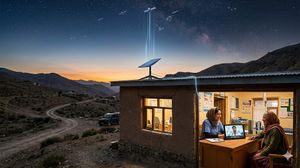 Low-Earth Orbit satellites like Starlink are providing crucial high-speed internet to the most remote rural areas, enabling real-time telemedicine.Image depicts a conceptual representation of Low-Earth Orbit satellites like Starlink providing crucial high-speed internet to the most remote rural areas, enabling real-time telemedicine.
Deployment of Satellite Backhauls
Rural health clinics situated in connectivity "dark zones" should actively investigate LEO satellite subsidies available through the RHT Program's "Rural Infrastructure Grants." Integrating a Starlink backhaul, for instance, can provide the crucial 50 Mbps minimum threshold required for HIPAA-compliant, low-latency video streaming in locations where traditional fiber optic installation is neither feasible nor cost-effective.
AI Diagnostics in Africa: Leapfrogging Physical Infrastructure
In Sub-Saharan Africa, a region grappling with over 1.4 billion people and immense gaps in physical healthcare infrastructure, Artificial Intelligence is enabling a remarkable leapfrog over traditional delivery models. By 2026, smartphone penetration is projected to exceed 75%, allowing mHealth tools to fill the void left by an insufficient number of doctors. These tools are not just providing care; they are delivering "on-the-job" education to community health workers, democratizing medical knowledge at the grassroots level.[3]
The diagnostic accuracy of these AI tools is now rivaling specialized machines. Consider the Ubenwa app in Nigeria, which uses a smartphone microphone to analyze a newborn's cry, detecting lung problems with an impressive 90% accuracy. In Rwanda, AI models analyze X-rays for Tuberculosis (TB) with 95% accuracy in rural clinics that lack a resident radiologist. These innovations provide high-quality care with minimal physical equipment, fundamentally reshaping access to health education and diagnosis.[3]
Drone logistics, championed by companies like Zipline, further integrate AI to optimize medical delivery. In covered areas of Rwanda, Zipline has achieved a 51% reduction in maternal deaths by ensuring timely delivery of blood and vaccines to remote health posts. This "last-mile" solution seamlessly integrates with telemedicine platforms such as Rocket Health in Uganda, which manages 25,000 patients monthly through a virtual ecosystem of doctors, labs, and pharmacies.[3]
"We don't think the exciting potential for that technology is delivering burritos or pizza. We think the exciting potential for that technology is providing universal access to health care to every human on the planet."
The African mHealth market is projected to reach $1.8 billion by the end of 2025, driven by the urgent need for universal health coverage. A critical success factor, an often-overlooked edge case, is the strategic use of "Voice Messages" and local languages (e.g., Swahili or Hausa) to significantly improve accessibility for populations with low literacy. This localization ensures that health education is not merely accessible but also deeply understandable and actionable for rural residents, fostering true health empowerment.[3][12]
Leveraging mHealth for Education
Public health campaigns in Sub-Saharan Africa should pivot towards utilizing SMS-based "Triage Systems" and voice-guided health reminders. In Nigeria, apps delivering HIV pill reminders have demonstrated a 40% jump in adherence rates, unequivocally proving that simple, mobile-based education can lead to profound improvements in long-term health outcomes and patient compliance.
Indigenous Knowledge: The Missing Link in Culturally Relevant Health Education
A crucial edge case in the global push for telemedicine and health education is the often-neglected integration of "Indigenous Knowledge" (IK). For many rural indigenous populations, Western medicine is viewed with historical skepticism, a legacy of past injustices. Digital health education initiatives that fail to respectfully integrate local worldviews frequently face low adoption rates and high attrition, proving that technology alone cannot bridge cultural divides.[13][14]
The concept of "Two-Eyed Seeing" has emerged as a 2026 best practice for indigenous digital health. This innovative approach aims to improve youth mental health by embedding culturally appropriate digital initiatives directly into school curricula within remote indigenous communities. By embracing "Two-Eyed Seeing," educators can combine traditional teachings with contemporary medical knowledge, making health education inherently more relevant, resonant, and engaging for the community.[14][15]
Technically, this translates into "Culturally Interoperable" UI/UX design. For example, telehealth games can leverage familiar formats like traditional narratives or storytelling to significantly enhance the cultural resonance of the technology. These "Participatory Design" approaches ensure that technology doesn't just deliver a service; it empowers the community to maintain their unique identity while effectively navigating the modern medical system, fostering genuine self-determination.[13]
"The co-design of an Indigenous-led virtual health service model provides an innovative approach to creating digital primary health care models. A virtual health service should prioritize a consumer-centered model."
Research consistently demonstrates that online learning can significantly improve achievement levels among Native American students when culturally relevant materials are utilized. In the healthcare sector, telemedicine platforms that connect rural indigenous populations with culturally-matched providers can dramatically reduce barriers to care, particularly for crucial mental health support and preventive services, where trust and understanding are paramount.[14]
Implementing Co-Design Protocols
Technology vendors developing solutions for indigenous regions must adopt a "Bottom-Up" co-design protocol. This involves actively hiring local indigenous consultants to rigorously audit software for "cultural safety" and language accuracy before deployment. This crucial step ensures the platform genuinely resonates with the target audience and avoids inadvertently alienating the very communities it aims to serve.
Surgical Telementoring: Closing the Global Specialist Gap, One Operation at a Time
Telemedicine's evolution is now extending beyond routine consultations and into the high-stakes environment of the operating room. "Surgical Telementoring" allows expert surgeons in urban hubs to provide real-time remote guidance to trainees in rural or low-income hospitals. This is a critical development for regions where surgical conditions often go untreated due to a severe lack of local specialists.[16]
The progression of telementoring has seen four distinct stages of technological advancement:
- Live Video/Audio: Basic one-way or two-way communication, the foundation.[16]
- Telestration: The ability for a mentor to draw directly on a live video feed, highlighting anatomical structures or critical areas for trainees.[16]
- Teleassistance: Integration of robotics and haptic feedback, allowing the mentor to "feel" tissue consistency remotely, providing a more immersive and precise guidance.[16]
- Extended Reality (XR): Utilizing VR, AR, and MR to overlay digital instructions, patient data, and anatomical images directly onto the real surgical field, offering unprecedented visualization and guidance.[16]
In 2026, the primary barrier in Low- and Middle-Income Countries (LMICs) remains fundamental infrastructure challenges, particularly electrical power constraints and networking issues. However, cutting-edge developments in "Edge-Computing" based systems are helping to circumvent these. By performing AI-powered skill assessment and performance analytics locally at the edge, these systems significantly reduce the bandwidth requirements for high-fidelity mentoring, making advanced surgical training accessible even in resource-limited settings.[16]
"The implementation of telementoring solutions in LMICs promises to enhance access to surgical care, optimize healthcare delivery, and reduce the disease burden."
The proposed standard for scaling these surgical training programs in underserved settings is "Hybrid Connectivity"—a combination of low-cost 5G deployments with robust satellite backhauls. This ensures that even if one network fluctuates, critical elements like the "force feedback" used in robotics remain stable enough for the mentor to guide the trainee's hands safely, preventing errors and improving surgical outcomes.[16]
Adopting the Telestration Minimum
Rural hospitals and training centers operating with limited budgets, unable to invest in full robotics and haptic feedback systems, should prioritize implementing "Telestration" platforms. These systems require significantly less bandwidth than full teleassistance but still provide an impressive 80% of the educational value by enabling mentors to annotate and point out critical surgical landmarks on a live video feed in real-time.
Critical AI Health Literacy: Emancipating Patients from Institutional Bias
The final, perhaps most crucial, frontier of rural health education is fostering "Critical AI Health Literacy." As AI becomes increasingly integrated into patient diagnostics and treatment pathways, there's a significant risk that "black-box" algorithms could inadvertently perpetuate historical biases against marginalized populations. In 2026, experts are advocating for "algorithmic resistance"—the essential ability for patients to interrogate the systems behind AI and challenge outputs that prioritize institutional interests over individual health values.[17][18]
To mitigate these inherent risks, industry leaders are urgently calling for "Equity Allocations" in AI funding. This ensures that under-resourced clinics have equitable access to the same high-quality, diverse datasets that are often only available to well-funded urban centers. Without this, an AI model trained exclusively on urban, affluent patient data could generate dangerously inaccurate diagnostic recommendations for a rural farmer with vastly different environmental exposures and socio-economic realities. This represents a significant edge case in AI deployment.[17]
Another crucial technical nuance is distinguishing between "Generative AI" (like chatbots offering general health information) and "Machine Learning" (used for precise risk prediction). Many rural providers are now leveraging ML algorithms to extract actionable insights from "unstructured data" within EHRs—such as nurse progress notes—to identify high-risk patients who might otherwise be overlooked by traditional billing systems. This proactive approach helps to bridge gaps in care that static data alone cannot.[17]
"It's really important that we think through some sort of equity allocations now, as we're on the verge of huge breakthroughs and all of these wonderful wins and gains for artificial intelligence."
Education is the primary tool to overcome the "fear of the new." Experts suggest that "Trusted Messengers"—individuals who have already established a heart-to-heart connection and credibility within a community—are far more effective at explaining the nuances of AI than purely technical experts. Only through this human-centered education can the transformative potential of AI as a "great equalizer" truly be realized, ensuring it serves all populations equitably.[17]
Implementing the "Equity Audit"
Organizations deploying AI for rural health applications must conduct a rigorous "Equity Audit" of their data sources. If the training data does not accurately represent the specific demographic variables of the rural community (including race, ethnicity, language, and geography), the AI model should be re-validated against localized datasets before being used for any clinical decisions, preventing algorithmic bias and promoting equitable care.
Workforce Retention: The Ultimate Goal of Telemedicine and Rural Health Grants
Ultimately, technology, including telemedicine, is a powerful tool designed to support the human workforce, not replace it. In the 2024-2026 period, the Health Resources and Services Administration (HRSA) has significantly amplified its focus on the "Rural Residency Planning and Development" (RRPD) Program. This crucial program has successfully accredited 47 rural residency programs, with a projected creation of 587 new residency positions specifically for clinicians committed to practicing in underserved areas.[19]
A common misconception is that rural providers are somehow "lesser-trained" than their urban counterparts. In reality, rural clinicians often must practice at the "top of their license," handling a much broader array of medical needs due to the scarcity of specialists. To bolster this crucial capacity, HRSA invested $47.2 million into the Rural Public Health Workforce Training Network (RPHWTN), which has successfully trained over 5,151 rural health professionals, including community health workers and EMTs.[2][19]
Economic barriers also play a significant role in workforce retention. Rural nurses, for instance, typically earn lower salaries ($51,361) compared to their urban counterparts ($55,807), despite possessing similar educational backgrounds. Telemedicine can help bridge this disparity by enabling rural providers to function as "Care Navigators," connecting their local patients to a broader network of global experts and significantly increasing the billing efficiency of the local clinic, making rural practice more financially sustainable.[20][21]
"Telehealth can help retain rural healthcare workers by facilitating contact with other providers, decreasing feelings of isolation, and offering opportunities for continuing medical education."
The strategic integration of AI in "Charting" and "Billing" processes is emerging as a major retention tool. Younger providers, who expect modern technological support, are far more likely to remain in a rural clinic if they are not burdened with 20+ hours of manual documentation each month. By reducing amended encounters by 48% and improving same-day encounter close rates by 25 points, AI makes the rural practice environment more efficient, sustainable, and less prone to the burnout that often drives clinicians away.[22]
These investments, coupled with technological advancements, highlight a holistic approach where telemedicine and AI serve as enablers, ultimately aimed at strengthening the human element of rural healthcare, ensuring long-term sustainability and quality of care.
Leveraging Loan Repayment Programs
Prospective rural clinicians should proactively explore and utilize the National Health Service Corps (NHSC) and Nurse Corps loan repayment programs. In fiscal year 2024 alone, HRSA awarded over $491 million in loan repayment to clinicians who committed to practicing in high-need rural and urban areas, providing a significant financial incentive to serve underserved communities and address critical workforce shortages.[9]
FAQ: Navigating Rural Health Education Access with Telemedicine
Can Starlink satellites effectively support high-fidelity medical video in extremely remote areas?
Why hasn't telemedicine dramatically improved *new* rural mental health access as expected?
What is "Two-Eyed Seeing" and why is it important for indigenous rural health education?
How does AI diagnostic accuracy in Sub-Saharan Africa compare to traditional diagnostic methods?
What are the primary technical hurdles for surgical telementoring in developing nations, and how are they overcome?
Disclaimer: This article discusses educational topics for informational purposes only. The content is not intended to serve as professional academic counseling or career guidance. Images and examples are illustrative and may be simplified for explanation purposes. Please consult our full disclaimer for more information.