Cold Plunge Tubs in 2026: Decoding the Mental Health Hype and Hidden Dangers
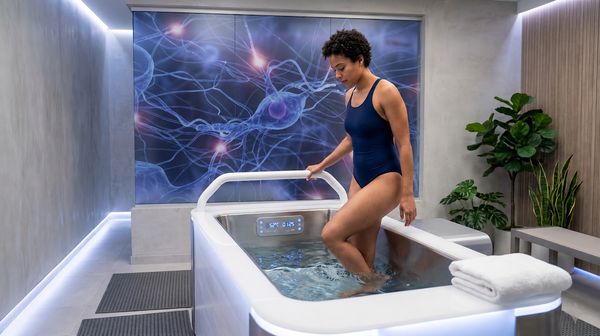 Navigating the deep freeze: Balancing the mental health promises of cold plunges with scientific caution in 2026.This image is a visual representation and should not be interpreted as actual medical advice or endorsement of specific products.
The global wellness landscape in 2026 finds itself at a truly fascinating crossroads, where ancient thermal therapies collide head-on with cutting-edge, technology-driven self-optimization. Among the many practices vying for our precious attention and hard-earned dollars, deliberate cold-water immersion (CWI)—more commonly known as "cold plunging"—has surged from a niche athletic recovery tool into an undeniable mainstream cultural phenomenon [1]. The growing popularity of cold-water immersion has contributed to increasing consumer adoption of cold plunge tubs, reflecting the practice’s emergence as a mainstream wellness trend [3]. But beneath the shiny, often deceptive, surface of commercial success, a tension simmers: are these cold plunges truly a mental health miracle, or are we witnessing another fleeting, potentially dangerous, fad?
Historically, whole-body cooling has been embraced by diverse cultures for centuries [1]. What was once a communal, often free, experience—think winter swimming in natural bodies of water—has been meticulously re-engineered into a premium, isolated residential offering [1]. This seismic shift isn't accidental; it's a direct, calculated response to a broader societal hunger for self-help mental health practices, perfectly synergizing with advancements in home hydrotherapy equipment [3]. Modern automated tubs boast sophisticated cooling systems, sleek digital interfaces, and smart controls, eliminating the messy need for ice and delivering a controlled, repeatable physiological stressor directly to your backyard, or even your garage [2]. 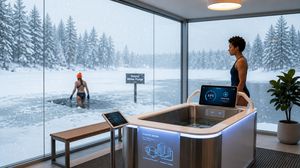 The evolution of cold therapy: from rugged wild swims to sophisticated home wellness systems.This image is a visual representation and should not be interpreted as actual medical advice or endorsement of specific products.
The core question for 2026 isn't just about market size or technological prowess. It's about efficacy: do these practices deliver sustained, clinically meaningful improvements to psychological well-being? Or are the perceived benefits merely transient neuroendocrine surges, powerful placebo effects, and the confounding variables of the very outdoor environments from which the therapy was originally derived [1]? To discern scientific substance from marketing hyperbole, and trust me, there's a lot of hyperbole, we need to peel back the layers and examine the complex neurobiological cascades, functional neuroimaging data, clinical trial outcomes, and environmental factors that truly shape our physiological responses to extreme cold.
Neurobiological Architectures: The Acute Hormetic Cascade
Understanding the psychological impact of cold-water immersion demands a deep dive into the acute, multi-system physiological responses triggered by rapid, whole-body thermodynamic cooling. Let's be frank: humans are, evolutionarily speaking, tropical animals, optimally adapted for warm ambient temperatures [6]. So, plunging into cold water—typically defined as 15°C (59°F) or below—is, by definition, an extreme environmental stressor. Your body responds immediately, activating a primal, survival-oriented adaptation [1].
The skin acts as the primary interface. Upon contact with cold water, specialized voltage-gated ion channels within peripheral somatosensory neurons spring into action [11]. Specifically, transient receptor potential (TRP) channels, particularly the cold-sensing receptor TRPM8, detect temperatures between 8°C and 28°C [11]. This activation dramatically increases the firing rate of cold-sensitive afferent nerves, sending a high-frequency torrent of electrical signals through the dorsal root and trigeminal ganglia directly to your central nervous system [11].
These peripheral sensory inputs converge on the hypothalamus, the brain's central thermoregulator, which orchestrates a profound autonomic response [11]. The hypothalamus vigorously stimulates key arousal centers in the brainstem, unleashing a massive surge in the sympathetic nervous system [13]. This sympathetic burst signals the adrenal medulla to flood the bloodstream with substantial quantities of catecholamines—epinephrine and norepinephrine—while simultaneously activating the locus coeruleus, the brain’s primary source of central norepinephrine [13]. 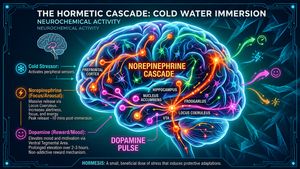 Unlocking the brain's resilience: How cold plunges trigger a powerful neurochemical surge.This image is a visual representation and should not be interpreted as actual medical advice or endorsement of specific products.
The sudden, systemic release of these neuroactive substances under cold stress is far more pronounced than what we observe in typical daily activities [13]. Clinical data reveals that whole-body immersion in 14°C (57.2°F) water triggers a massive, prolonged elevation of plasma neurotransmitter concentrations, fundamentally altering the neurochemical landscape in ways that directly influence mood, focus, and pain perception [11]. This neurochemical surge provides a clear biochemical explanation for the immediate hyper-alertness, cognitive clarity, and elevated mood that many individuals report right after a cold plunge [15]. It's worth noting that deficits in norepinephrine and dopamine are core pathophysiological features of major depressive disorder, generalized anxiety, and chronic fatigue [14]. By triggering the release of dopamine, serotonin, cortisol, norepinephrine, and beta-endorphins, cold-water immersion produces a pronounced neurochemical response that modulates neural responses to stress and emotion-related circuits, with norepinephrine and dopamine playing important roles in attention, arousal, mood regulation, motivation, and reward [14].
Furthermore, the temporal dynamics of the stress hormone cortisol are quite telling. While the initial cold shock can cause a transient spike in cortisol for those unacclimated, longitudinal tracking shows that serum cortisol levels significantly drop by 180 minutes post-immersion [13]. This delayed neuroendocrine suppression suggests that the acute stress of the cold plunge is followed by a prolonged period of physiological calm, effectively resetting the Hypothalamic-Pituitary-Adrenal (HPA) axis and potentially mitigating the chronic, low-grade cortisol elevations often associated with modern psychological distress [11].
Optimize Your Neurochemical Response
To maximize the beneficial neurochemical surge, focus on short, intense exposures within the recommended temperature range (10-15°C or 50-59°F) for 1-2 minutes. This targets the acute norepinephrine and dopamine release without overstressing the system, promoting a sustained post-plunge calm.
Structural and Functional Neuroimaging: Mapping Brain Connectivity Shifts
While biochemical analyses paint a picture of systemic hormone and neurotransmitter fluctuations, functional neuroimaging (fMRI) has provided the first actual structural maps, illustrating how cold-water immersion fundamentally alters the functional architecture of the human brain [10]. Historically, investigating the neural mechanisms of whole-body CWI was challenging due to the lack of viable, MRI-compatible experimental protocols, with much early research relying on localized limb cooling [10]. However, recent methodological breakthroughs now allow researchers to scan participants immediately before and after whole-body immersion, revealing robust changes in large-scale brain network connectivity [10].
A landmark clinical neuroimaging study involved healthy, unhabituated adults undergoing structural and resting-state functional MRI scans right before and after a 5-minute head-out immersion in water maintained at a moderately cold temperature of 10°C (50°F) [10]. This specific temperature was chosen carefully to avoid inducing severe, painful cutaneous sensations that could confound resting-state neural activity, while still effectively triggering an authentic, measurable autonomic response [10]. The protocol was rigorously standardized for reproducibility: participants were scanned pre-CWI, completed the 5-minute immersion, and were immediately re-scanned post-CWI [10].
The functional connectivity analyses revealed a significant increase in neural interaction and synchronization between key nodes of the brain's primary networks, specifically the prefrontal cortex (PFC), the left anterior insula, and the anterior cingulate cortex (ACC) [11]. The prefrontal cortex is the command center for top-down cognitive control, working memory, and emotional regulation. The left anterior insula serves as a core node of the salience network, vital for interoception and emotional awareness. Meanwhile, the anterior cingulate cortex is deeply involved in conflict monitoring, error detection, and the cognitive modulation of pain and distress [11].
During acute cold exposure, the intense sensory inputs from the somatosensory cortex excite the amygdala and the locus coeruleus, generating a powerful urge to escape the cold stimulus [13]. To endure the plunge, individuals must actively engage the prefrontal cortex to exert top-down inhibitory control over the hyper-aroused amygdala and hypothalamus, effectively suppressing the reflexive panic response [13]. The fMRI data clearly demonstrates that this acute, conscious effort to maintain composure under stress results in a highly integrated, synchronized state across these large-scale networks post-immersion [10]. This neural synchronization directly correlates with objective, self-reported improvements in emotional affect, as tracked by the Positive and Negative Affect Schedule (PANAS) [10]. Post-CWI, there's a significant elevation in positive affect and a marked reduction in negative affect, shifting the affective ratio towards a threshold associated with flourishing mental well-being [14].
Enhance Cognitive Control and Emotional Regulation
By intentionally focusing on calm, controlled breathing during the initial cold shock, you can actively engage your prefrontal cortex. This practice strengthens the neural pathways responsible for emotional regulation, allowing you to build resilience to stress beyond the tub.
Clinical Efficacy vs. Commercial Hype: A Critical Analysis of the Literature
The meteoric rise of cold plunge tubs has been significantly fueled by sweeping claims positioning the practice as a validated treatment for clinical depression, chronic anxiety, and even immune dysfunction [1]. However, a rigorous investigative review of the published scientific literature in 2026 paints a far more nuanced picture [1]. While numerous small observational studies and anecdotal reports indeed show profound subjective improvements, large-scale, randomized controlled trials (RCTs) reveal a highly complex, time-dependent, and dose-sensitive clinical reality [1].
A definitive systematic review and meta-analysis published in PLOS One critically evaluated the psychological, cognitive, and physiological effects of cold-water immersion in healthy adults [1]. The analysis synthesized data from 11 randomized trials, involving a total of 181 participants, with a respectable mean Physiotherapy Evidence Database (PED) score of 6.4, indicating moderate-to-high methodological quality [1]. The interventions varied, utilizing water temperatures ranging from 1°C to 20°C (33.8°F to 68°F), with exposure durations spanning from a brief 30 seconds to a prolonged 2 hours [1].
The meta-analysis yielded several critical, and frankly, unexpected findings that directly challenge the popular "mental health miracle" narrative. It demonstrated that the psychological and physiological benefits of CWI are profoundly dependent on the temporal window of measurement and the specific clinical endpoints being evaluated [1]. For instance, contrary to popular belief, there was no statistically significant immediate effect on acute mood states in randomized controlled settings [1]. Similarly, while stress reduction is a major selling point, a highly significant and robust stress reduction was detected exclusively at 12 hours post-CWI, not immediately after [1].
Perhaps most surprisingly, the meta-analysis found a significant acute increase in inflammatory markers immediately and 1 hour post-CWI, rather than an instant reduction [1]. This finding is crucial: it suggests that cold exposure initially acts as a physical stressor, triggering an acute immunological defense response. This response then gives way to long-term cellular adaptation and immune resilience [1]. This temporal delay is highly critical for clinical prescription, as it implies that the immediate post-plunge state is characterized more by physiological strain than by restoration [1]. While there were no immediate shifts in immune markers, long-term adherence to cold-water immersion did correlate with a reduction in sickness absence, indicating a chronic adaptive benefit [1]. Long-term improvements in sleep quality and general quality of life index were also noted [1].
Manage Expectations for Delayed Benefits
Don't expect an instantaneous cure for acute mood issues. The true benefits of cold plunging, particularly for stress reduction and immune function, manifest hours after immersion or with consistent long-term practice. Frame your expectations around delayed, adaptive responses rather than immediate fixes.
The Dose-Response Profile: Delineating the Inverted U-Shaped Curve
One of the most critical scientific developments in 2026 is the clearer delineation of the relationship between cold plunge frequency and mental health outcomes [3]. Popular wellness culture often operates under a misguided assumption: that more exposure—colder temperatures, longer durations, daily frequency—will inevitably yield superior health benefits. Environmental physiologists, however, emphatically warn that this belief is both scientifically incorrect and potentially physically dangerous [6].
A large-scale, cross-sectional epidemiological study meticulously investigated this relationship, comparing data from 1,000 regular cold-water plungers with 1,000 healthy controls [3]. The study utilized the validated 28-item General Health Questionnaire (GHQ-28), which measures somatic symptoms, anxiety and insomnia, social dysfunction, and depressive symptoms [3]. Crucially, the statistical analysis controlled for several critical confounding variables, including biological sex, age, multimorbidity, baseline mindfulness levels, and temperament (evaluated through Gray's Reinforcement Sensitivity Theory) [3].
The statistical results were highly revealing: the relationship between cold plunge frequency and mental health parameters unequivocally resembles a strict, non-linear inverted U-shaped curve [3]. This means the therapeutic benefits peak at a moderate frequency, while excessive exposure actually degrades psychological and physiological health. Specifically, the optimal frequency for achieving therapeutic benefits was found to be twice per week [3].
For individuals plunging twice weekly, the study observed the lowest overall depressive symptom scores on the GHQ-28 scale, the shortest duration of upper respiratory tract infections (URTI), and reduced sick leave days due to active viral infections [3]. Furthermore, this frequency correlated with an optimal reduction in the overall somatic anxiety, insomnia, and social dysfunction components of the General Mental Health Index [3]. However, the data starkly showed that increasing the frequency of cold plunges beyond twice per week was linked to a progressive worsening of both psychological and physical health metrics [3].
This critical finding demonstrates that excessive cold exposure overwhelms the body’s adaptive capacity, transforming a beneficial, mild hormetic stressor into a state of chronic, systemic exhaustion [3]. Such exhaustion can exacerbate somatic anxiety, worsen sleep architecture, and deplete immune defenses, underscoring that thoughtful, moderate dosing is absolutely required to achieve therapeutic success [3]. It's an important edge case that many commercial entities overlook: more is not always better when it comes to stress adaptation. 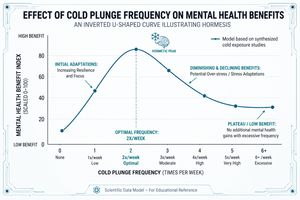 The sweet spot: Understanding the inverted U-shaped curve for cold plunge frequency and its impact on mental well-being.This image is a visual representation and should not be interpreted as actual medical advice or endorsement of specific products.
Adopt a Moderate, Consistent Practice
Resist the urge for daily or over-frequent cold plunges. Aim for a maximum of two sessions per week to optimize mental health benefits and avoid physiological exhaustion. Consistency with moderate dosing is key, not extreme exposure.
The Confounding Context: Isolated Tubs vs. Natural Wild Environments
A critical investigative question in 2026 is whether the isolated, residential cold plunge tub can truly replicate the therapeutic benefits so extensively documented in historical cold-water research [1]. This is a significant edge case often ignored by marketers. Crucially, a substantial portion of the scientific literature that supports the benefits of CWI was conducted on outdoor, wild-water swimmers, whose experiences are deeply embedded in natural ecosystems [1].
In natural settings, the cold-water stimulus isn't just a raw physiological shock; it's accompanied by powerful, independent therapeutic co-factors that are entirely absent in the sterile environment of a home tub [1]. Think about it: wild swimming involves active exercise, a well-established intervention for cardiovascular health and mood elevation, independently stimulating the release of endorphins and brain-derived neurotrophic factor [9]. This is in stark contrast to static sitting in a tub. Furthermore, wild swimming leverages the psychological benefits of ecotherapy, often termed the "Blue Mind" effect [22]. Exercising in or near natural bodies of water has been shown to calm the wandering mind, reduce cognitive fatigue, and lower autonomic arousal, effectively helping to clear the mind of worries [21].
Beyond the physical and natural elements, wild swimming is frequently a highly social, community-driven activity [1]. It brings together groups of swimmers who share the vulnerability and exhilaration of facing the cold. This social camaraderie is precisely the kind of therapy a doctor or social prescriber might recommend, acting as a powerful buffer against the isolation that so often accompanies clinical depression and anxiety [9]. These crucial psychological and social variables are entirely eliminated when an individual sits in a premium, automated cold plunge tub isolated in a garage, basement, or backyard [1]. The therapy is reduced solely to the raw, physical shock of the cold water [1].
This distinction helps explain why highly controlled clinical trials of isolated cold plunges often struggle to replicate the dramatic, immediate antidepressant and anti-anxiety effects reported in wild swimming cohorts [1]. The modern commercial trend has, in essence, isolated the most abrasive element of wild swimming—the freezing temperature—while discarding the very natural and social environment that makes the experience profoundly healing [1].
Integrate Holistic Wellness Elements
If you're using a home cold plunge, consider consciously adding back some of the missing therapeutic co-factors. Incorporate mindful breathing, engage in physical activity before your plunge, and seek out social connection in other areas of your life to enhance overall well-being.
Cardiovascular, Neurological, and Thermal Hazards: A Rigorous Safety Audit
As cold plunge tubs have rapidly saturated the consumer market, a dangerous trend of minimizing or outright ignoring the acute, clinically documented hazards of rapid cold-water immersion has regrettably emerged across social media platforms [5]. Far from being a risk-free wellness routine, cold plunging represents one of the most intense, immediate physiological stressors a human can experience, carrying profound risks that must be carefully evaluated [6].
The Cardiovascular Shock Cascade
The initial contact of cold water with the skin triggers the immediate "cold shock response," a survival reflex designed to preserve core body temperature. However, this reflex places immense, sudden strain on the cardiovascular and respiratory systems [18]. This response causes an instantaneous, involuntary gasp reflex, followed by profound hyperventilation, with the respiratory rate spiking by 600% to 1000% [26]. If an individual plunges head-first or experiences a wave over their face during this initial phase, the involuntary gasp can lead to immediate inhalation of water, crossing the lethal threshold for drowning in a matter of seconds [5].
Simultaneously, the sympathetic nervous system triggers widespread peripheral vasoconstriction, effectively shutting down blood flow to the skin and extremities to conserve core heat [20]. This rapid redistribution of blood shunts vast fluid volumes away from the limbs and directly toward the center of the body, forcing the heart to pump against dramatically elevated resistance [5]. To maintain circulation, cardiac output must spike by 30% to 40% [26]. This autonomic tug-of-war drives a massive, immediate elevation in both heart rate (increasing by 60-100 beats per minute) and blood pressure (with systolic pressure spiking by 30-50 mmHg) within the first few seconds of immersion [18].
Plaque Rupture, Pulmonary Edema, and Arrhythmias
For individuals with established or even subclinical cardiovascular disease, this sudden shock can be catastrophic [5]. As preventive cardiologist Dr. Hanna Slim explains, "The rapid, dramatic rise in heart rate and blood pressure can easily destabilize an already existing, vulnerable atherosclerotic plaque in the coronary arteries, causing it to rupture and trigger an immediate heart attack" [5]. Furthermore, the sudden shift of fluids toward the core can overwhelm the left ventricle of the heart, particularly in those with mild or undiagnosed heart failure, causing fluid to back up into the lungs and triggering acute pulmonary edema [5]. The intense adrenaline surge, combined with the co-activation of both the sympathetic (from cold shock) and parasympathetic (from face immersion or breath-holding) nervous systems, can disrupt the heart's delicate electrical pathways [7]. This autonomic conflict can trigger severe, potentially fatal cardiac arrhythmias, such as atrial fibrillation or ventricular fibrillation, leading to sudden cardiac arrest in vulnerable individuals [7].
Neurological, Renal, and Tissue-Level Hazards
Beyond the cardiovascular risks, prolonged or excessively cold plunges present severe neurological and tissue-level hazards. Environmental physiologist Professor Mike Tipton debunks the common myth that hypothermia is the primary danger, clarifying that it takes at least 30 minutes for an adult human core temperature to drop to hypothermic levels (below 35°C or 95°F) [12]. Instead, the immediate, lethal hazard is drowning from the cold-shock gasp reflex [5]. There's also the risk of Non-Freezing Cold Injury in temperatures under 15°C (59°F) or exposures over 8 to 10 minutes, which can destroy small nerves and blood vessels in the extremities and lead to chronic neuropathic pain [20]. Dr. Prashant Rao, a sports cardiologist at Harvard-affiliated Beth Israel Deaconess Medical Center, warns that post-exercise cold therapy can blunt the natural inflammatory pathways required for muscular adaptation, potentially detracting from long-term gains in muscle power and strength [7].
Prioritize Safety and Medical Clearance
Before ever attempting a cold plunge, obtain rigorous medical clearance from a physician, especially if you have any pre-existing cardiovascular conditions. Never plunge alone, and be acutely aware of the immediate dangers like the gasp reflex and cardiovascular strain. Your safety must always come first.
Market Economics: The Industrialization of Contrast Therapy
The transformation of cold-water immersion from a simple environmental exposure into a highly commercialized, premium wellness trend has fueled a massive expansion of the global cold plunge tub market [2]. This commercial growth is characterized by several distinct consumer and technological trends, reflecting the rapid capitalization of the cold exposure phenomenon [2].
By 2025, the global market for dedicated cold plunge tubs had already reached USD 350.3 million [4]. Moving through 2026, the global cold plunge tub market is projected to grow at a CAGR of 3.76% from 2026 to 2034, reaching USD 488.5 million by 2034 [4]. A broader market analysis by Spherical Insights places the global cold plunge pools market at USD 787.1 million in 2025, with the market projected to reach USD 1.36 billion by 2035 at a CAGR of 5.63% from 2026 to 2035 [8]. Persistence Market Research estimates the mid-point valuation of the cold plunge tub market will reach USD 512.9 million in 2026, scaling to USD 1.09 billion by 2033 at a CAGR of 13.3% [2].
This robust commercial growth is segmented across various attributes. Residential end-users represent the market segment leader, driven by a post-pandemic interest in home wellness and luxury recovery installations [2]. The B2B/Commercial procurement segment is the fastest growing, fueled by large-scale contracts with gyms, athletic centers, rehabilitation facilities, and resorts [2]. Online distribution remains the primary sales pathway, leveraging direct-to-consumer strategies, e-commerce penetration, and video-based product demonstrations [2]. Temperature-controlled tubs are the dominant product category, offering precise cooling between 3°C and 15°C with automated filtration and safety certifications [2].
The commercial journey of a leading brand like Plunge (originally registered as thecoldplunge.com) perfectly encapsulates this rapid capitalization [28]. Co-founded in 2020 by Michael Garrett and Ryan Duey out of a California garage during the COVID-19 pandemic, the company originated from a need for affordable, aesthetically pleasing at-home cold therapy options [28]. Following the mandatory closure of their brick-and-mortar float spas, the founders designed and built their first cold plunge prototype [28]. The firm scaled rapidly, generating USD 1 million in revenue in its first year post-launch, and surpassing USD 25 million in revenue in 2024, with cumulative sales exceeding USD 75 million [29]. The brand masterfully utilized organic influencer marketing, seeding products with prominent figures such as Andrew Huberman, Tony Hawk, and Rich Roll, and leveraged a high-profile appearance on Shark Tank to build a massive consumer footprint [29]. By 2026, Plunge operates a manufacturing warehouse in Sacramento, California, and maintains enterprise-level partnerships with major institutional B2B buyers like Equinox, the New York Yankees, the Four Seasons, the United States Army, and the UFC [29]. Backed by significant venture capital, the company is on track for sustainable, 8-figure profitability by 2026, firmly establishing the cold plunge tub not as a temporary novelty but as a highly capitalized, technologically sophisticated luxury asset class [29].
Understand the Investment Landscape
Recognize that the cold plunge market is booming, attracting significant investment and innovation. While this brings advanced products, it also means a higher emphasis on marketing. Research beyond the hype to understand the core science and ensure any investment aligns with proven health benefits, not just trend appeal.
Clinical Guidelines and Safe Exposure Protocols
For healthy individuals looking to navigate the cold plunge landscape in 2026, separating clinical fact from wellness fiction is absolutely essential. This isn't just about maximizing psychological and physical benefits; it's crucially about mitigating serious cardiovascular and neurological risks [6]. Environmental physiologist Professor Mike Tipton emphasizes that if your goal is to trigger the beneficial, hormetic cold-shock response—the one that prompts the release of dopamine and norepinephrine—the duration of exposure does not need to exceed 1 to 2 minutes [6].
The initial cutaneous shock response peaks within the first 30 seconds and largely stabilizes within 2 minutes [27]. Staying in the water beyond this window doesn't yield additional neuroendocrine benefits; instead, it rapidly escalates the risk of hypothermia, peripheral nerve damage, and Non-Freezing Cold Injury [5]. Furthermore, the water doesn't need to be near-freezing for efficacy [6]. Entering water at 10°C to 15°C (50°F to 59°F) is entirely sufficient to trigger a robust autonomic shock response and achieve the full spectrum of psychological benefits [6].
To avoid the lethal hazard of the involuntary gasp reflex and sudden hyperventilation, a highly structured entry protocol must be followed:
- Obtain Medical Clearance: Prior to commencing any CWI protocol, consult with a physician to determine whether cold-water immersion is safe and appropriate, particularly for individuals with cardiovascular conditions or risk factors [5].
- Never Plunge Alone: Always ensure a companion is present to monitor for signs of distress, cognitive confusion, or loss of consciousness [5].
- Controlled, Incremental Entry: Never jump, dive, or slide rapidly into the tub [6]. Walk in slowly and deliberately, pausing at waist depth for 30 to 60 seconds [27]. This pause allows the initial cutaneous cold-shock response to peak and begin to stabilize before full chest immersion [27].
- Regulate Breathing: Breathe slowly through the discomfort, using structured breathing techniques alongside cold exposure to help manage perceived stress [14]. Consciously take slow, deep diaphragmatic breaths, signaling the prefrontal cortex to exert top-down control over autonomic arousal and avoiding rapid, shallow hyperventilation [13].
- Keep Head and Hands Clear: Your head should remain entirely above water. Avoid face immersion combined with breath-holding, as this is a primary trigger for cardiac arrhythmias [13]. Keep hands out of the water or minimized to protect the vulnerable microvasculature of the fingers from Non-Freezing Cold Injury [20].
Warming up after a cold plunge requires equal caution. A common, yet dangerous, practice is to immediately step from a freezing cold plunge directly into a hot shower, bath, or high-heat sauna [20]. This sudden transition suppresses natural shivering and causes rapid peripheral vasodilation, forcing cold, highly acidic, and metabolically stagnant blood from the limbs back to the central core [20]. This sudden shift triggers the "after-drop phenomenon," where the core body temperature drops even lower after exiting the cold water, potentially causing a sudden fall in blood pressure, severe dizziness, fainting, or cardiovascular collapse [20]. Instead, the safe rewarming protocol requires wrapping yourself immediately in warm, dry, and windproof outer layers [20]. Allow your body to warm up naturally, utilizing its own metabolic engine through mild muscular shivering [20]. Avoid driving or operating machinery for at least 20 to 30 minutes post-plunge, as the ongoing rewarming process can temporarily impair fine motor skills, muscular strength, and overall reaction times [20].
Implement a Safe & Gradual Rewarming Protocol
After your plunge, resist the urge for immediate intense heat. Instead, dry off, layer up in warm clothing, and allow your body to rewarm naturally through mild shivering. Avoid rapid temperature shifts to prevent the dangerous after-drop phenomenon and ensure full recovery.
Conclusion: The Investigative Verdict
The investigative verdict on cold plunge tubs in 2026 is clear: they are neither a magical cure-all for psychological suffering nor are they merely a fleeting wellness fad. Rather, cold plunging is a highly potent, biologically active physical intervention that indeed yields genuine neurochemical and functional changes in the human brain. However, these changes are strictly governed by the laws of thermodynamics, dose-dependent limits, and individual safety boundaries [3].
The "miracle" narrative heavily promoted by the commercial wellness sector is undeniably oversimplified. The immediate mental clarity and euphoria experienced post-plunge are indeed driven by profound, temporary surges of norepinephrine and dopamine, alongside functional resting-state neural synchronization across emotional regulation networks [10]. Yet, systematic reviews of randomized controlled trials demonstrate that these immediate shifts do not consistently translate to sustained mood elevation across broad populations [1]. Instead, the true psychological benefit of cold plunging is a long-term, delayed phenomenon—characterized by an inverted U-shaped dose response that peaks at just twice per week [1].
Furthermore, isolating the cold stimulus in a residential tub strips away the powerful, historically proven therapeutic benefits of open-water wild swimming—namely natural light, exercise, ecotherapy, and crucial social connection [1]. For healthy individuals who approach the freeze with scientific humility, respecting the minimum effective dose of 1 to 2 minutes at 10°C to 15°C (50°F to 59°F), the cold plunge serves as an excellent physical and mental training tool for nervous system resilience [6]. However, for those who treat it as a high-stakes competition of extreme endurance, ignoring absolute cardiovascular and tissue-level contraindications, the cold plunge remains a high-risk gamble with potentially catastrophic medical consequences [5]. As the commercial market continues its technological expansion, the ultimate clinical recommendation for 2026 remains unchanged: the power of the cold must be harnessed through precise, safe dosing, and an understanding that when it comes to the human nervous system, more is not always better [3].
Cold Plunge Tubs: Your Top Health and Wellness Questions Answered
What are the immediate mental benefits of cold plunging?
How frequently should one use a cold plunge tub for optimal mental health benefits?
Are home cold plunge tubs as effective as wild swimming for mental health?
What are the primary cardiovascular risks associated with cold plunging?
What is the 'after-drop phenomenon' and how can it be avoided?
Disclaimer: This article addresses health-related topics for informational purposes only. It does not constitute medical advice and should not replace consultation with a licensed healthcare professional. Images are for illustrative purposes only and should not be interpreted as medical guidance. For complete guidance, please review our full disclaimer.