
Pickleball's Intergenerational Power Play: Why All Ages Are Hooked on the Hottest 'Canon Event'
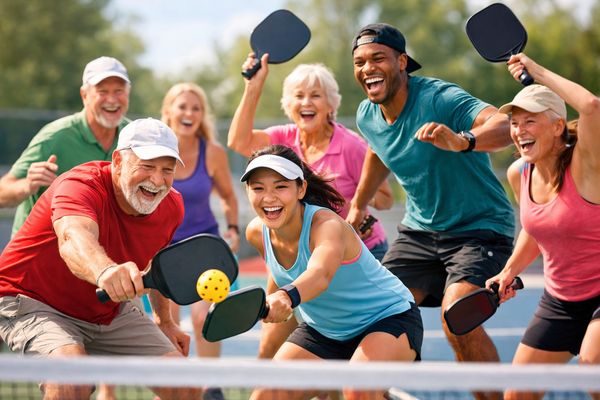 Pickleball: Bringing Generations Together on the Court.Image is a representation of the article's content and not a direct depiction of specific individuals or events.
The Unstoppable Ascent: Pickleball's Paradigm Shift
Pickleball has transcended its origins as a casual backyard pastime, evolving into a global phenomenon that has fundamentally reorganized how society approaches fitness, space, and community. What was once predominantly a retirement activity has, between 2024 and 2026, cemented itself as a multi-billion-dollar industry and a potent driver of intergenerational social cohesion [1]. This isn't merely a fleeting trend; it represents a significant institutional maturation of the recreational landscape. By mid-2025, an estimated 22.7 million active players graced courts across the United States, a staggering 311% increase over a three-year window, solidifying its position as America’s fastest-growing sport for the fourth consecutive year [1].
The current era, from 2024 to 2026, marks a normalization of this explosive growth, with participation rising by a steady 14.7% in the first half of 2025 [4]. This stabilization has ushered in a period of professionalization, underscored by the merger of the Professional Pickleball Association (PPA) and Major League Pickleball (MLP), now operating under the United Pickleball Association (UPA). This strategic consolidation, fueled by $75 million in new investment, signals institutional capital's long-term commitment to the sport as a significant media and real estate asset [7]. However, this rapid institutionalization also brings unique challenges, such as the pressing need for sophisticated noise-mitigation technologies to address escalating community concerns.
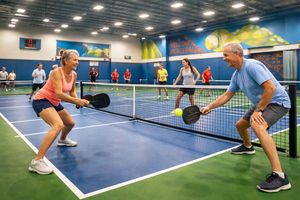 Indoor pickleball courts are becoming dynamic 'third spaces' for all ages to connect and compete.Image is a representation of the article's content and not a direct depiction of specific individuals or events.
Actionable Insight: Strategic Investment Assessment
For investors and urban planners, observing the sport's 'normalization' of growth rather than its initial 'explosion' is critical. Focus on infrastructure development, especially the conversion of underutilized commercial spaces, and invest in noise-reduction technologies to capitalize on sustainable growth and mitigate potential community friction.
The Demographic Metamorphosis: From Senior Craze to 'Canon Event'
Perhaps the most compelling development in pickleball’s recent history is its dramatic demographic shift. While the sport’s foundation was built on the 'senior craze,' a vital intervention against sedentary lifestyles and social isolation for the 65-and-over demographic [6], its appeal has broadened significantly. By the end of 2024, the average player age in the U.S. plummeted to 34.8 years, with the 25–34 age bracket now representing the largest single participant segment [1].
This generational shift is largely driven by Gen Z and Millennials, who have embraced pickleball as a 'canon event'—a term borrowed from digital culture to describe an unavoidable, character-building milestone [8]. Unlike sports that demand high technical mastery before enjoyment, pickleball offers an immediate 'success loop,' providing an instant payoff that deeply resonates with younger generations who prioritize experiential wellness and 'social-media-ready' activities [3]. This accessibility transforms the pickleball court into a contemporary 'third space,' blurring the lines between traditional gym culture and social leisure [2]. The table below illustrates this profound demographic diversification:
| Participant Demographic | 2024 Population | 2025 Mid-Year Trend | 2026 Projection |
|---|---|---|---|
| Youth (Under 18) | 1.0 Million | 2.0 Million | 2.5 Million |
| Young Adult (18–34) | 5.7 Million | 6.8 Million | 7.4 Million |
| Mid-Life (35–54) | 4.0 Million | 4.6 Million | 5.1 Million |
| Seniors (55+) | 9.1 Million | 9.3 Million | 10.0 Million |
| Total U.S. Players | 19.8 Million | 22.7 Million | 25.0 Million |
Despite the influx of younger players, the 65-and-over demographic remains a critical anchor, with approximately 20% of regular players aged 55 or older [6]. For these individuals, pickleball is more than a game; it's a vital tool for 'healthy aging.' The smaller court dimensions (20 x 44 feet) and underhand serve mechanics significantly reduce physical strain compared to other racquet sports, enabling sustained engagement even for those managing chronic conditions like arthritis or hypertension [5].
"For seniors, pickleball is not merely a game but a vital intervention against sedentary lifestyles and social isolation."
Actionable Insight: Cultivating Cross-Generational Appeal
To maximize pickleball's growth, communities and marketers should emphasize its 'canon event' status for youth while continuing to highlight its 'healthy aging' benefits for seniors. Promote mixed-age play and 'open play' sessions to foster genuine intergenerational connections.
The Biopsychosocial Payoff: Health, Mind, and Connection
The healthcare community has increasingly recognized pickleball as a high-value exercise modality, offering a comprehensive suite of cardiovascular, musculoskeletal, and neuroprotective benefits. Extensive studies between 2022 and 2025 highlight its profound impact on overall well-being [9].
Cardiovascular Health and Metabolic Impact
Pickleball effectively serves as a moderate-to-vigorous aerobic exercise. Research from the Journal of Aging and Physical Activity indicates that both singles and doubles formats maintain heart rates at levels consistent with American Heart Association guidelines for cardiovascular health [11]. This physiological mechanism involves the dilation of blood vessels, which aids in regulating hypertension and blood sugar for up to two hours post-play [9]. For seniors, regular participation (three times weekly for six weeks) has been clinically linked to reductions in LDL cholesterol and improvements in cardiorespiratory fitness [9].
Cognitive Function and Fall Prevention: The 'Kitchen' Zone Advantage
The cognitive benefits of pickleball are particularly intriguing, stemming from the rapid decision-making and strategic thinking demanded during play, especially within the 'kitchen' zone where delicate 'dink' rallies unfold [9]. A 2021 study published by the NIH demonstrated that consistent play improves body-brain-eye connections, sharpening reflexes and reducing the risk of falls among players over 65 by approximately 30% [9]. This mental engagement, navigating court positioning and shot placement, acts as a form of 'neuro-rehabilitation,' potentially delaying the onset of dementia and Alzheimer's disease [6]. The synergistic effect of aerobic activity and social connectivity further boosts cognitive flexibility and memory processing speed [6].
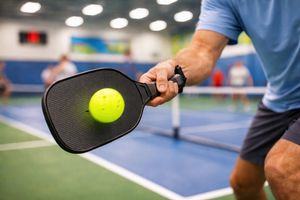 The rapid decision-making in pickleball’s 'kitchen' zone provides significant cognitive benefits for players of all ages.Image is a representation of the article's content and not a direct depiction of specific individuals or events.
Musculoskeletal Integrity and Injury Management: The 'Pickleball Elbow' Edge Case
While often considered low-impact, 2024–2026 data shows an increase in activity-related 'overuse' injuries [12]. A notable edge case is 'Pickleball Elbow' (lateral epicondylitis), frequently caused by the use of solid paddles that lack the flex provided by stringed tennis racquets [15]. Younger athletes tend to experience soft tissue injuries, while older adults are more prone to fractures or joint trauma from falls [13]. Prevention strategies emphasize proper grip measurement (allowing space for an index finger between fingers and thumb base) and specific strengthening exercises for the forearm and core [14].
Actionable Insight: Maximizing Health Benefits Safely
To optimize physical and cognitive gains while minimizing injury, seniors should opt for 19mm core paddles for vibration absorption and incorporate resistance training to prevent sarcopenia. All players should prioritize proper warm-ups, appropriate footwear, and technique, especially concerning 'Pickleball Elbow' prevention.
The Communal Glue: Intergenerational Social Buzz
One of the most profound secondary effects of the pickleball boom is its capacity to restore intergenerational bonding in an increasingly fragmented social world [3]. The sport provides a rare shared space where different age cohorts interact on equal footing, dismantling ageist stereotypes and fostering mutual respect [10].
The 'Third Space' and Loneliness Mitigation
The Surgeon General has identified loneliness and social isolation as a major public health epidemic, linked to a 50% increase in mortality risk [6]. Pickleball’s 'open play' culture, where players frequently cycle through partners and opponents regardless of skill level or age, creates organic opportunities for new social bonds. For seniors, this provides a vital sense of purpose and belonging post-retirement; for youth, it offers mentorship and a breakdown of ageist barriers [6]. The intergenerational dynamic manifests in specific interaction types:
- Grandparent Mentorship: Seniors often introduce grandchildren to the sport, imparting values of patience and resilience alongside technical skills [16].
- Parent-Teen Bonding: The casual rhythm of the game facilitates natural conversation and cooperation, making it one of the few activities where teenagers willingly engage with parents [17].
- Community Socialization: Public courts function as essential neighborhood hubs, reducing isolation in underserved populations and fostering cross-cultural and cross-generational understanding [6].
Actionable Insight: Fostering Community Through Play
Community leaders and event organizers should prioritize 'open play' formats and intergenerational tournaments. Create dedicated 'third spaces' within recreational facilities to harness pickleball's unique power to combat social isolation and build stronger, more cohesive communities.
Technical Innovations: Beyond the 'Pop' – The Acoustic Crisis and Material Science
As the pickleball market matures toward a projected $9.1 billion by 2034 [1], technical innovation has pivoted from pure performance to specialized engineering focused on noise reduction and sustainability. This shift addresses both player experience and community integration.
Paddle Engineering and Core Technology
The 2026 paddle market is characterized by a material science arms race. Manufacturers have moved beyond basic polymer honeycomb cores, incorporating aerospace-grade composites and vibration-dampening layers [18]. Core thickness has emerged as a crucial variable for tuning play style:
- Thicker Cores (16mm to 20mm): Favored by control-oriented players, these provide greater 'dwell time' and superior sound absorption [18].
- Thinner Cores (13mm to 15mm): These prioritize swing speed and 'pop,' targeting aggressive 'power bangers' [19].
Acoustic Engineering and Noise Mitigation: Addressing the '1.2k Hz Problem'
The most significant existential threat to pickleball's expansion is noise pollution. A standard pickleball impact generates a sound frequency of approximately 1.2k Hz, which is four times louder than a tennis impact and falls within the most sensitive range of human hearing [21]. This sharp, impulsive 'pop' is psychologically intrusive, leading to widespread zoning disputes and court bans, a critical edge case for urban planning [21].
In response, the industry has introduced the 'Quiet Category' of equipment. The OWL paddle, a gold standard, reduces noise by 50% and delivers hertz levels below 600, significantly lower than the 1,100–1,200 hertz emitted by traditional gear [20]. These innovative paddles utilize 'felt-like' surfaces, proprietary Acoustene edges, and closed-cell foam cores to 'soak up' acoustic energy instead of reflecting it as a sharp crack [18].
Actionable Insight: Embracing Quiet Technology
Players in residential areas, and all facility owners, should actively seek out 'Quiet Category' paddles with core thicknesses of 16mm or more and foam-core balls. Prioritize equipment that shifts the acoustic profile from a 'crack' to a 'thump' to ensure community peace and sustainable growth.
Legal and Environmental Edge Cases: The Friction of Popularity
The rapid proliferation of pickleball courts has unfortunately outpaced existing urban planning and environmental frameworks, leading to a series of legal and ecological challenges that demand immediate attention.
Zoning Bans and Civil Litigation: The Carmel Ordinance
In 2025, cities like Carmel-by-the-Sea and Lake Oswego became focal points for the 'noise war' [23]. Carmel was the first California city to implement a permanent ban on pickleball at public facilities, citing an ordinance designed to protect residents from 'raucous' noise, with violators facing fines of up to $1,000 [24]. This highlights a common misconception: noise ordinances based solely on decibel readings often fail to account for the 'impulsive' nature of pickleball sound, which causes disturbance even at low decibel levels [22].
Urban planners are now developing a three-tier zoning framework for court siting:
- Prohibited Zone (< 250-500 ft): No courts allowed near residential property lines [21].
- Conditional Use Zone (500-800 ft): Courts allowed only with mitigation (sound walls, quiet paddles, limited hours) [21].
- Approved "By Right" Zone (> 1000 ft): Courts permitted without special conditions, as noise energy dissipates naturally over distance [21].
The Environmental Footprint: 77 Million Pounds of Plastic Waste
The sport’s explosive growth has created a substantial environmental burden, a significant edge case often overlooked. Approximately 500 million pickleballs are manufactured annually, translating to an astonishing 77 million pounds of plastic waste [26]. Crucially, because pickleballs are made from non-standard plastic blends engineered for high-velocity impact, they are largely rejected by municipal recycling centers [26].
However, sustainable initiatives are emerging in 2026:
- Specialty Recycling Pilots: Partnerships between pro tours and waste firms like Veolia convert worn-out balls into alternative fuels or upcycled trophies [27].
- Green Manufacturing: Brands like Revolin Sports are utilizing fibers derived from volcanic rock to reduce emissions by up to 98% compared to traditional carbon fiber production [29].
- Take-Back Programs: Manufacturers are beginning to implement 'circular' lifecycle models where players return used paddles for component recycling [28].
Actionable Insight: Sustainable Pickleball Advocacy
Municipal planners must prioritize spatial separation and mandate 'Quiet Category' equipment for all new and existing facilities. Players and club owners should transition to more durable balls and actively participate in specialty recycling and 'take-back' programs to significantly reduce the environmental footprint.
Economic Impact and Global Expansion: The Future of the Court
The commercial infrastructure surrounding pickleball has professionalized at a staggering rate, signaling a robust and expanding economic ecosystem. The merger creating the United Pickleball Association (UPA), fueled by substantial investment, solidifies the sport as a long-term media and real estate asset [7].
Real Estate and Infrastructure Investment: Repurposing 'Dead' Malls
The sport's biggest bottleneck remains the shortage of dedicated courts. Industry analysts estimate the U.S. needs 24,500 new courts, requiring an investment of nearly $900 million over the next five to seven years [1]. This demand has sparked an innovative real estate trend: the conversion of 'dead' commercial spaces into vibrant pickleball hubs. A landmark case study is 'Pickleball America' at the Stamford Town Center mall in Connecticut [30]. Developers transformed 80,000 square feet of vacant space, including a former food court, into 28 indoor courts, a remarkable edge case in urban revitalization. This strategy not only saved the mall from extinction but created a 'wellness wing' attracting thousands of high-spending families [30].
The Global Professional Frontier
The professional pickleball circuit is rapidly expanding beyond the United States. In 2025 and 2026, brands like JOOLA and Selkirk broadened their global tours to Asia and Europe, targeting emerging markets in China, India, and Spain [5]. This 'brick-by-brick' building of a global player base is essential for securing future media rights deals and, ultimately, Olympic inclusion.
"This 'brick-by-brick' building of a global player base is essential for securing future media rights deals and eventual Olympic inclusion."
Actionable Insight: Capitalizing on Global Growth
Real estate developers should actively identify and acquire 'dead' commercial properties for pickleball court conversion, leveraging the success of models like 'Pickleball America.' Brands and investors should continue expanding into global markets, prioritizing grassroots infrastructure development to build a sustainable international player base.
Social Buzz & Pickleball: Your Top Questions Answered
What is the "Canon Event" trend in pickleball, and why is it viral among Gen Z?
How does pickleball contribute to longevity and cognitive health for seniors?
Why are some cities banning pickleball while its popularity is reaching record heights?
What are the specific environmental impacts of pickleball equipment?
What technical specs should a player look for in a noise-dampening paddle?
Disclaimer: This article highlights social buzz and online trends for informational purposes only. Content may reflect public commentary or opinion rather than verified information. Images may be illustrative or symbolic and not tied to real individuals or events. For additional context, please refer to our full disclaimer.