
Exosome Serums: The 2026 Deep Dive into Biotech Skincare's Cellular Revolution
 The microscopic world of exosomes, driving the future of biotech skincare in 2026.Image for illustrative purposes only. Actual product appearance may vary.
The year 2026 marks a watershed moment in the history of regenerative dermatology, signaling a definitive transition from passive topical moisture to active biological signaling. At the vanguard of this revolution are exosome serums—nanoscale extracellular vesicles that serve as the fundamental unit of intercellular communication. These aren't just fancy new ingredients; they're the biological equivalent of a finely tuned cellular messenger system, designed to communicate directly with your skin cells and tell them how to repair, renew, and regenerate. The global exosome skincare market is rapidly moving into a central position within the professional beauty industry, expanding from $685.27 million in 2025 to $775.45 million in 2026, with projections indicating growth to $1.98 billion by 2032 [1]. This isn't just about bigger numbers; it represents a fundamental shift in the "Science of Longevity," where the aim is no longer the temporary masking of senescence but the biological reprogramming of aged or damaged tissue. As of 2026, 62% of dermatology clinics in North America had incorporated exosome-based therapies into their offerings, while over 60% of dermatologists reported patient preference for exosome-based therapies over traditional growth-factor serums [3].
Economic Architecture and Market Dynamics: The 2026 Horizon
The exosome sector in 2026 is defined by rapid market expansion, with the global exosomes skincare market projected to grow at a robust 16.36% CAGR through 2032, driven by increasing consumer awareness, advancements in biotechnology, and rising demand for innovative skincare solutions [1]. This economic acceleration is underpinned by rising consumer awareness and a growing preference for minimally invasive aesthetic treatments, as increasing adoption of exosome-based therapies continues to expand demand across the skincare market [3].
Market dominance in 2026 remains concentrated in North America, which accounts for 35% of the global exosome skincare market share, supported by advanced healthcare infrastructure, strong R&D capabilities, and early adoption of exosome-based therapies [3]. However, the Asia-Pacific region is emerging as a rapidly expanding market, accounting for 20% of global exosome skincare market share, with China, Japan, and South Korea identified as key markets driving regional growth [3]. The competitive landscape is increasingly consolidated, with the top five companies controlling 80% of market units. ExoCoBio maintains a leading 22% market share, specializing in clinical-grade formulations, followed by Kimera Labs at 18% and Xollent Biotech at 15% [3]. This concentration of power is largely due to the prohibitive barriers to entry, specifically the high production costs associated with purified exosome isolation, which make clinical-grade exosome production more challenging for manufacturers [3].
"Exosome-based skincare represents a revolutionary advancement... By working at the cellular level and addressing root causes of skin aging and damage, it offers more comprehensive, long-lasting, and transformative results."
A significant trend in 2026 is the industrialization of exosome workflows, moving away from manual, labor-intensive lab techniques toward standardized, automated platforms. This shift is critical for reducing production variability and accelerating time-to-market. The integration of artificial intelligence (AI) and machine learning (ML) algorithms into characterization workflows has enabled manufacturers to detect subtle biomarker signatures and automate quality control processes [7]. This transition is essential to moving exosome research from bench-scale exploration to commercial production, supported by advancements in scalable manufacturing and purification technologies [8].
Future-Proofing Your Skincare Investment:
When considering exosome serums, prioritize brands with transparent sourcing and manufacturing processes. Look for indications of GMP compliance and advanced characterization to ensure product efficacy and justify the investment in this high-growth biotech segment.
Biological Mechanics: The Cargo of Cellular Instruction
To truly understand the efficacy of exosome serums in 2026, we must first examine their role as the "paracrine effectors" of the body. Exosomes, measuring between 30 and 150 nm, are not living cells but acellular lipid-bilayer vesicles that act as nature's group chat for biological systems [9]. Their primary function is to deliver a complex cargo of growth factors, proteins, lipids, and genetic material, including RNA, to recipient cells, where it can influence cellular behavior and regeneration [9].
The biogenesis of exosomes is a complex intracellular process where the endosomal membrane invaginates to form intraluminal vesicles (ILVs) within multivesicular bodies (MVBs) [14]. These MVBs then fuse with the plasma membrane, releasing the ILVs as exosomes into the extracellular space [13]. This process is regulated by the ESCRT (Endosomal Sorting Complex Required for Transport) machinery, though ESCRT-independent pathways also exist [15]. Once released, exosomes can interact with target cells through several mechanisms:
- Direct Membrane Fusion: The exosome phospholipid bilayer can merge directly with target cells, releasing functional cargos into the receiving cells [13].
- Endocytosis: The target cell engulfs the exosome into a vesicle, a regulated uptake common for targeted delivery [9].
- Receptor-Ligand Interaction: Surface markers (e.g., tetraspanins) bind to cell receptors, facilitating targeted signaling without full internalization [13].
"Unlike other ingredients that work on the skin's surface or require conversion to active forms, exosomes penetrate deeply to restore cellular communication at its source," explains a clinical review from 2025 [11]. This deeper penetration is attributed to their nano-sized structure and biocompatible lipid membranes, allowing exosomes to penetrate deeper into the skin and support efficient cellular signaling [10].
Optimizing Topical Delivery:
For enhanced absorption, consider applying exosome serums after procedures that temporarily compromise the skin barrier, such as microneedling. For daily at-home use, seek formulations with penetration enhancers to maximize the delivery of these cellular messengers.
Transcriptomic Engineering: The Power of miRNA
In 2026, the focus of exosome research has intensified on microRNAs (miRNAs), which are small non-coding RNA molecules typically 19-25 nucleotides in length [18]. These molecules are capable of post-transcriptional gene regulation, effectively silencing specific mRNA and thereby controlling protein production [15]. The efficacy of an exosome serum is directly proportional to the integrity and specific profile of this miRNA cargo. Without these precise instructions, the skin lacks the signal to move from a state of chronic inflammation to one of active regeneration.
Key miRNA signatures found within exosomes play crucial roles in 2026 skincare:
- miR-21: Directly targets PTEN and PDCD4, influencing cell survival and proliferation [12].
- miR-146a: Promotes M2 macrophage polarization and may contribute to tissue repair by regulating macrophage differentiation [18].
- miR-155: Inhibits NF-κB signaling, effectively reducing inflammation [18].
- miR-203: Targets TNF-α and IL-24, contributing to the alleviation of skin inflammation [19].
- miR-29b: Regulates Type I & III Collagen remodeling, preventing excessive scarring [18].
"Exosomes are like messaging to your cells. So think about it like text messages... you have thousands of exosomes in your body that send all kinds of different signals. There's one in particular that's this repair, renew, regenerate signal."
Understanding Your Serum's Signals:
When selecting an exosome serum, look beyond generic claims. Inquire about the specific miRNA profile, if disclosed, to understand the targeted biological effects. A well-formulated serum will boast a diverse cargo optimized for specific skin concerns.
Clinical Validation: Benchmarking Efficacy Against Tradition
The defining clinical characteristic of exosome therapy in 2026 is its ability to produce results that are quantitatively superior to traditional gold-standard treatments like retinol and hyaluronic acid.
Recent Korean clinical trials have reported significant wrinkle reduction with exosome-based treatments compared with retinol after 8 weeks of use [11]. Furthermore, the same studies showed greater improvement in pigmentation issues with exosome-based treatments, highlighting their potential to address skin aging through multiple pathways rather than the single mechanism of traditional actives [11]. These results are further supported by positive GAIS (Global Aesthetic Improvement Scale) assessments, indicating measurable improvement in aesthetic outcomes following exosome-based treatment[9].
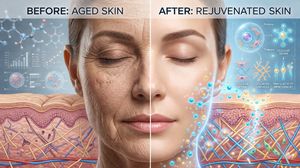 Visualizing the remarkable difference: Exosome-induced skin regeneration versus traditional treatments.Image for illustrative purposes only. Results may vary.
Unlike retinol, which can cause significant irritation, peeling, and redness due to its aggressive stimulatory nature, exosomes are inherently anti-inflammatory and barrier-reinforcing, making them suitable for even the most sensitive or compromised skin [4]. Perhaps the most significant clinical finding of 2026 is the durability of exosome-induced changes. A landmark case study evaluating topical exosome therapy combined with superficial microneedling reported significant improvements in pore size, erythema, and pigmentation that were sustained at the 21-month follow-up without further treatment [21]. This suggests that exosomes are inducing a fundamental biological remodeling rather than a transient cosmetic correction. "The sustained effects over 21 months suggest biological remodeling rather than transient cosmetic correction," supporting further investigation into the durability of exosome-based treatment outcomes [21].
Choosing Your Anti-Aging Arsenal:
While retinol remains a powerful ingredient, consider exosome serums for a more gentle yet potentially more profound and long-lasting regenerative effect, especially if you have sensitive skin or seek durable improvements in texture and tone.
Information Gain: 5 Unique Edge Cases in 2026 Biotech Skincare
The 2026 exosome landscape is best understood through five unique edge cases that illustrate the technology's versatile application and its ability to solve previously intractable dermatological challenges.
1. The Vascular Stability Edge Case: Rosacea and Erythema
Traditional treatments for rosacea often rely on vascular lasers or topical vasoconstrictors, which can lead to rebound redness. In 2026, exosomes have emerged as a superior modality for vascular stability. Red fluorescence mapping revealed that topical exosome application can normalize inflammatory vascular responses without the inflammatory downtime of lasers [21]. The mechanism involves the modulation of local immune responses and the inhibition of NF-κB nuclear translocation via miRNAs like miR-146a and miR-155, which effectively silences the inflammatory "smoke alarm" in sensitive skin [19].
Managing Redness with Biotech Precision:
For individuals struggling with rosacea or persistent erythema, explore exosome-based therapies as a non-ablative option. Consult with a dermatologist to integrate them into a comprehensive treatment plan focused on vascular normalization.
2. The Bio-Safety Edge Case: Nucleus-Free Platelet Exosomes
A significant barrier to consumer adoption has been the fear of oncogenic transfer. In 2026, the rise of platelet-derived exosomes has provided a compelling answer. Unlike exosomes derived from MSCs or immortalized cell lines, platelets lack a nucleus [22]. This means their exosomes are inherently nucleus-free and cannot replicate, eliminating the theoretical risk of tumor formation often discussed in older medical literature [22].
"Platelets do not have a nucleus — and exosomes derived from them are also nucleus-free. Without a nucleus, they cannot replicate."
This “nucleus-free” characteristic is highlighted by Plated Skin Science as part of its discussion of exosome safety in skincare [22].
Prioritizing Safety in Exosome Selection:
When choosing a human-derived exosome product, specifically look for "Platelet-Derived" on the label. This ensures a higher safety profile by mitigating concerns about unwanted cellular proliferation, a critical factor for informed consumers.
3. The Scalability Edge Case: Phyto-Exosomal Biomimicry
While human-derived exosomes are highly potent, they face severe scalability and regulatory constraints. The 2026 "edge case" for mass-market democratization is the use of Plant-Derived Exosome-Like Nanoparticles (PENs). Derived from plant sources, including ginger, these plant-derived extracellular vesicles offer advantages for large-scale production because of their lower production costs and high scalability [16]. Although they may have a slower absorption rate, their high bioavailability and "green" sustainability make them the primary choice for over-the-counter (OTC) formulations that prioritize safety and volume over clinical-grade intensity [16].
Navigating OTC Exosomes:
For daily maintenance and preventative care, consider plant-derived exosome serums. While less potent than clinical-grade human exosomes, their affordability and sustainability make them an accessible entry point into exosome technology for at-home use.
4. The Follicular Niche Edge Case: Alopecia Management
The application of exosomes has successfully transitioned from skin texture to the hair follicle niche, with emerging clinical evidence investigating exosome-based treatments as a potential approach to hair restoration [9]. These exosomes function by stimulating the dermal papilla cells and extending the anagen phase of the hair growth cycle [23]. This provides a regenerative, cell-signaling approach to hair restoration by targeting the hair follicle niche [23].
Addressing Hair Thinning Holistically:
If you're experiencing hair thinning or alopecia, discuss exosome-based therapies with your physician. This non-hormonal option offers a promising avenue for stimulating natural hair growth and extending the hair's active growth phase.
5. The Microbiome Edge Case: Postbiotic Signaling
The convergence of microbiome science and exosome technology has created a new category: postbiotic signaling. In 2026, formulations are moving away from live probiotics toward fermentation-derived metabolites and exosomes that can modulate the skin's immune-aware environment [4]. These fermentation-derived metabolites and exosome-based approaches offer alternatives to live probiotics, with a focus on supporting skin barrier health and modulating the skin’s immune-aware environment [4].
Cultivating a Balanced Skin Microbiome:
For sensitive or post-procedure skin, explore exosome serums that incorporate postbiotic signaling. These formulations support a healthy skin microbiome, reduce inflammation, and accelerate barrier recovery without the challenges associated with live probiotic applications.
Manufacturing and Purity: The Battle for Standardization
A core challenge in 2026 remains the need for robust, shared standards for exosome isolation and characterization, as the lack of standardized production methods continues to present a significant restraint on market development [3].
The industry is currently divided between traditional ultracentrifugation (UC) and modern Tangential Flow Filtration (TFF). While UC is considered the "gold standard" for small-scale research, it is time-consuming and can damage the fragile lipid membranes of the vesicles [8]. TFF is among the advanced purification techniques being adopted for exosome production, with such methods supporting improvements in purity, yield, scalability, and exosome quality [6].
 The intricate process of exosome manufacturing, ensuring purity and potency for optimal skincare results.Image for illustrative purposes only. Manufacturing facilities may vary.
In an effort to rectify misleading marketing based on simple particle counts, which can include inert debris, the industry has adopted the "Ru" (Ross Unit). Developed by Kimera Labs, this standard focuses on exosomal miRNA cargo and protein concentration rather than relying on gross quantification of extracellular vesicles and other species in solution [24]. This allows practitioners to verify the actual biological potency of a finished product, ensuring that what they are administering is not just a "bag of mixed nuts marketed as pistachios" [17].
Precise characterization shows that storage conditions can affect exosome recovery, with storage at room temperature associated with reduced exosome recovery over time [25].
- Cryopreservation (-80°C): The only method that ensures 95% bioactivity for up to 24 months. However, it requires a complex and expensive cold chain [26].
- Lyophilization (Freeze-Drying): Emerging as the viable consumer solution. By extracting water under vacuum, these exosomes can be stored at room temperature for 1-2 years, though they require meticulous optimization to avoid structural degradation during the drying process [26].
Demanding Transparency in Exosome Quality:
For consumers and practitioners alike, always demand lot-specific documentation, including a Certificate of Analysis (CoA) with Ru-verified potency. Prioritize products produced using TFF for purity and, for clinical use, insist on liquid cryopreserved exosomes to ensure maximum bioactivity.
Regulatory Complexity: The Zero-Approval Reality
The most critical factor in the 2026 exosome landscape is the "Zero-Approval" reality. As of mid-2026, the FDA has not approved any exosome product for injection, systemic administration, or even as an approved "drug" for skin regeneration [5].
Under U.S. federal law, exosomes are regulated as biological products under Section 351 of the Public Health Service Act [5]. Because exosome production involves "more than minimal manipulation," these products cannot qualify for the less stringent Section 361 pathway used for some tissue grafts [5]. This means that any product making therapeutic claims—such as "cures acne" or "regenerates hair"—is technically an unapproved drug.
"The potential is real, but regulation hasn't caught up."
Dr. Mona Gohara highlights that while exosome serums are legal to sell as cosmetics (which do not require FDA approval), their therapeutic use in clinical settings exists in a regulatory grey zone [17]. The FDA has issued multiple warning letters to companies like Kimera Labs and Chara Biologics for failure to validate sterility and marketing unapproved biologics [5]. The only legal pathway for therapeutic administration is through FDA-authorized Investigational New Drug (IND) applications [5]. Clinical trials must progress through Phases I, II, and III, a process that typically spans 8-10 years and costs hundreds of millions of dollars [5]. By 2026, the exosome therapy market was transitioning toward commercialization, with industry growth increasingly driven by clinical translation, manufacturing scalability, and progress toward FDA commercialization [2].
Navigating Regulatory Ambiguity:
Practitioners must ensure informed consent, clearly communicating that exosome treatments are investigational and lack specific FDA therapeutic approval. Consumers should be wary of any product making explicit disease-curing claims outside of authorized clinical trials.
Conclusion: The Future of Biologic Skincare
As we look toward the remainder of 2026 and beyond, the exosome paradigm is poised to become the new "infrastructure" of professional beauty. The convergence of AI-driven characterization, automated manufacturing, and a deeper understanding of miRNA signaling is rapidly closing the gap between speculative science and validated clinical reality. While regulatory hurdles remain significant, the overwhelming data suggesting that exosomes can induce long-term dermal remodeling and superior aesthetic outcomes is undeniable. The most successful clinical strategies of the next decade will be those that respect skin biology, prioritize barrier health, and utilize the sophisticated communication power of extracellular vesicles to turn back the biological clock.
"Exosomes are skin care gold for brands looking to market innovation. The potential is real."
For the first time in the history of dermatology, we are not just treating the skin; we are talking to it. The future of skincare is truly biological, and exosomes are leading the conversation.
Exosome Skincare FAQ: Understanding Biotech Beauty in 2026
Are exosomes more effective than traditional growth factors?
At what age should I start using exosome serums?
How do exosome serums compare to PRP (Platelet-Rich Plasma)?
Can exosomes be used at home, or are they only for clinical use?
Are there any side effects to exosome treatments?
Disclaimer: This article discusses technology-related subjects for general informational purposes only. Data, insights, or figures presented may be incomplete or subject to error. Images and diagrams are for illustrative purposes only and may not represent exact products, interfaces, or official designs. For further information, please consult our full disclaimer.