Why Artemis II Matters NOW: Space Race Lessons for Earth's Future
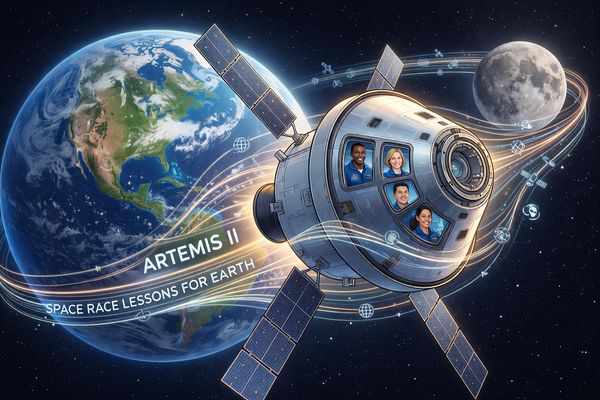 The Artemis II mission: a journey to the Moon, a mirror for Earth's future challenges and triumphs.This image is an artistic visualization of the Artemis II mission and not an official NASA rendering.
The Artemis II mission is more than just a grand orbital ballet around our nearest celestial neighbor; it's a profound mirror reflecting humanity's current trajectory, both in space and on Earth. Launched on April 1, 2026, this pioneering flight marks the triumphant return of humans to deep space after a 54-year hiatus, pushing the boundaries of what's technically feasible while challenging us to confront our societal aspirations and ethical dilemmas. This journey isn't merely about reaching the Moon; it's about drawing vital Space Race lessons crucial for navigating today's complex world.
As the Orion capsule, carrying NASA astronauts Reid Wiseman, Victor Glover, Christina Koch, and Canadian Space Agency (CSA) mission specialist Jeremy Hansen, cruises a staggering 100,000 miles from Earth, the mission actively tests innovative technologies and human resilience. A critical technical nuance defining its initial phase was the 'proximity operations demonstration,' where the crew manually controlled Orion around the detached Interim Cryogenic Propulsion Stage (ICPS) [13]. This simulated docking maneuver is an 'edge case' scenario designed to verify manual piloting capabilities in the event of autonomous system failures, a lesson steeped in decades of spaceflight experience.
Current Mission Status: Beyond Earth's Embrace
The return of humanity to deep space officially commenced at 6:35:12 p.m. EDT on Wednesday, April 1, 2026, when the Space Launch System (SLS) Block 1 rocket ignited its four RS-25 engines at Launch Complex 39B [2]. This launch, which carried its diverse crew, was the culmination of years of meticulous technical remediation following the uncrewed Artemis I flight. The initial ascent was fully automated, though Commander Wiseman vigilantly monitored the trajectory from the left seat, prepared to issue abort commands if the flight deviated from its strict safety corridors [9].
A crucial technical nuance of the mission’s first 24 hours was the aforementioned 'proximity operations demonstration.' After the ICPS performed a perigee raise maneuver to reach a safe altitude of 100 miles, it separated from the Orion capsule [11]. The crew then assumed manual control of the vehicle, flying Orion toward and around the detached ICPS to simulate the docking maneuvers that will be required for future missions to the Lunar Gateway and commercial landers [13]. This manual handling test was vital because it verified that the spacecraft could be piloted safely in the event of a failure in its autonomous systems [14]. By Flight Day 3, April 3, 2026, the mission had successfully transitioned into its translunar cruise phase. The translunar injection (TLI) burn, executed 25 hours after liftoff, was so precise that flight controllers elected to skip a planned trajectory correction maneuver on Friday afternoon [1].
"Crazy that we're seeing 105,000 miles and it's still going up pretty quick."
The crew is currently inhabiting the Orion capsule in plainclothes, having removed their orange Pressure Suits (Orion Crew Survival System) following the stabilization of the cabin environment [12]. They are on a 'free-return' trajectory, a ballistic path that uses Earth-Moon gravity to ensure the spacecraft returns to Earth naturally even if its primary propulsion system fails during the outbound leg [6]. This safety-first trajectory is a direct lesson from the Apollo 13 mission, ensuring that the crew is never 'stranded' without a path home [1].
A common misconception about space travel is that every aspect is meticulously planned down to the millisecond, leaving no room for human intervention. However, as demonstrated by the proximity operations, the Artemis II mission explicitly incorporates manual overrides and human piloting skills as a critical layer of safety and contingency planning.
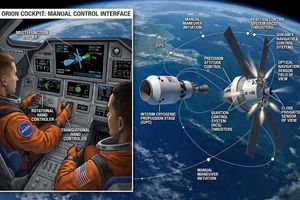 Artemis II astronauts demonstrating crucial manual control during proximity operations.This image is a conceptual artistic visualization of Orion’s manual maneuver around the ICPS, not an official NASA depiction.
Implement Fail-Safe Project Planning
For the general public, the 'free-return' trajectory serves as a metaphor for robust project planning. When designing high-stakes workflows, always include a 'fail-safe' path that allows for a safe return to baseline operations if primary resources or momentum fail midway through the project [6]. This proactive risk mitigation is essential for any complex endeavor.
Engineering Resilience: Addressing the Unforeseen
The road to April 2026 was marked by a rigorous investigation into the 'spallation' of the Orion heat shield observed after the Artemis I mission [9]. During the 2022 reentry, the AVCOAT ablative material chipped away in more than 100 locations, leaving unexpected pits and cracks in the thermal protection system [16]. This was an 'edge case' phenomenon that pre-flight computer models had failed to predict [9]. Extensive laboratory testing revealed that the material was not allowing internal gases—produced as the shield chars—to vent properly, causing pressure to build up until chunks of the shield were literally blasted off [16].
Instead of the originally planned 'skip' reentry—where the capsule dips into the atmosphere to shed velocity before bouncing back out and performing a final descent—NASA elected to use a direct, steeper reentry profile for Artemis II [4]. This modification is a critical technical nuance: by entering the atmosphere more directly, the period of peak thermal heating is shortened, which is expected to minimize the time available for gas pressure to build up within the AVCOAT blocks [4]. This decision was made after a year-long independent review and over 100 tests at unique facilities across the United States [16].
"If we stick to the new reentry path that NASA has planned, then this heat shield will be safe to fly."
While some experts expressed concern that flying with a known, un-fixed hardware issue was a gamble, NASA Administrator Jared Isaacman and the Office of Inspector General (OIG) concluded that the 'damage tolerance evaluations' proved the capsule’s underlying structure would remain watertight and safe even if significant chunks of AVCOAT were lost [17].
The mission also faced secondary risks related to the Space Launch System’s fueling infrastructure. During a Wet Dress Rehearsal (WDR) in February 2026, engineers detected a hydrogen leak at the tail service mast umbilical, a recurring problem that also plagued the shuttle era [4]. Technicians had to roll the 322-foot rocket back to the Vehicle Assembly Building (VAB) to replace seals and address an interruption in helium flow to the ICPS [18]. These setbacks highlight the immense logistical difficulty of maintaining a high launch cadence with the SLS architecture [3].
Embrace Iterative Improvement Over Perfection
The 'Back to Basics' hardware decision suggests that in complex engineering, 'perfect is the enemy of the good.' When faced with delays in a next-generation component (like the EUS), consider standardizing and refining legacy hardware (the ICPS) to build operational consistency and reduce the 'learning curve' risks [7]. This pragmatic approach can often accelerate progress more effectively than waiting for an elusive ideal solution.
The "Back to Basics" Overhaul: Redefining the Lunar Timeline
In February 2026, NASA Administrator Jared Isaacman announced a major programmatic overhaul that acknowledged the 2028 lunar landing goal was unattainable under the existing flight architecture [7]. This strategic shift, nicknamed 'Back to Basics,' focuses on increasing the 'muscle memory' of the NASA and contractor workforce by accelerating the pace of launches while breaking the missions into smaller, more manageable steps [3]. This approach directly addresses the concerns of the Aerospace Safety Advisory Panel, which warned that the program carried too many 'firsts' for a single mission [8].
A significant technical nuance of this overhaul is the re-tasking of Artemis III. Originally intended to be the first crewed lunar landing since 1972, Artemis III has been redefined as a 2027 mission focused on a 'rendezvous in low-Earth orbit' [3]. During this flight, an Orion crew will dock with either SpaceX’s Starship or Blue Origin’s Blue Moon lander (or both) while still in Earth orbit [7]. This allows for integrated testing of the landers’ life support, communication, and docking systems in a safe environment before committing astronauts to a landing on the lunar South Pole [8]. This 'edge case' approach of decoupling landing from docking is a direct response to the complexity of the original plan.
This overhaul is a departure from the 'leap-frog' strategy previously pursued, which would have seen a multi-year gap between the Artemis II flyby and the Artemis III landing [19]. Isaacman stressed that three-year gaps between missions cause skills to atrophy and institutional knowledge to fade [3].
"Launching every three years, your skills atrophy, you lose muscle memory. We need to start getting back to basics and moving in this direction."
Under the new plan, the first lunar landing is now slated for Artemis IV in 2028 [3]. To support this faster cadence, NASA is standardizing the SLS rocket, halting development on more complex upper stages like the EUS to focus on a 'standardized' version that minimizes changes between flights and utilizes the same launch infrastructure [7]. This stabilization of hardware is intended to move NASA from a 'development' phase into an 'operational' phase, similar to the transition seen during Projects Mercury and Gemini [3].
Prioritize Consistent Operational Tempo
Management professionals should view the 'muscle memory' concept as a call for consistent 'operational tempo.' In any high-skill field, long gaps between major projects increase the risk of errors; maintaining a steady, incremental pace of execution is often safer and more efficient than waiting for 'perfect' conditions for a massive breakthrough [3].
Life Support and Environment Control: Sustaining Humanity in Deep Space
Artemis II is the first mission to fly with the full Environmental Control and Life Support System (ECLSS) required to sustain four people in deep space for 10 days [4]. A key technical highlight is the new air purification system, which supplies oxygen while removing the carbon dioxide and humidity generated by the crew’s breathing [4]. This system relies on three regenerable Carbon Dioxide and Humidity Control (CHC) units that use an ammonia-derived solvent [4].
Unlike the Space Shuttle, which used expendable chemical canisters to scrub CO2, Orion’s CHC units are designed to be 'vented' to the vacuum of space to release the trapped carbon and moisture [4]. This technical nuance—exposing the scrubber to vacuum to regenerate it—means the system requires far fewer consumables, saving 100 pounds of weight and occupying 90% less volume than previous systems [4]. This 'edge case' innovation is a testament to sustainable engineering in extreme environments.
"Orion's system will take up the space of only 16 basketballs and weigh 100 pounds less."
However, the first 48 hours of flight have already tested the limits of these systems. Shortly after reaching orbit, the crew encountered a 'space plumbing' crisis when the Orion toilet (Universal Waste Management System) malfunctioned [15]. Mission Specialist Christina Koch was forced to perform an in-flight repair under the guidance of Mission Control, using contingency urine storage bags while the system was offline [15]. Additionally, a faulty valve in the potable water dispenser led NASA to order the crew to preemptively fill 7 liters of water into backup pouches using straws and syringes, an 'insurance policy' against a total dispenser failure [15].
Orion’s cockpit also represents a shift toward modern 'glass cockpit' technology. The flight deck features only 62 physical buttons and switches, a drastic reduction from the 2,000 switches found on the Space Shuttle [4]. Most operations are conducted through three large screens that integrate telemetry, navigation, and manual control interfaces, allowing the crew to manage complex maneuvers like the proximity operations demonstration with greater situational awareness [4].
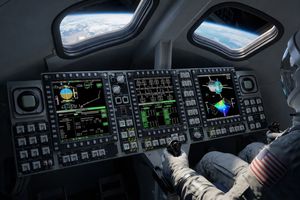 The streamlined 'glass cockpit' of Orion, a leap in spaceflight interface design.This image is an artistic visualization of Orion's cockpit and crew interaction, not an official NASA depiction.
Build Technical Redundancy into Critical Systems
The 'water pouch' backup is a vital lesson in technical redundancy. When relying on a single, complex delivery system (like an automated water dispenser or a centralized server), always maintain an 'analog' or manual fallback (like storage bags or local data backups) that the team can deploy in a crisis [15]. This ensures operational continuity even when primary systems fail.
Deep-Space Health Research: Pioneering for Planetary Inhabitants
Artemis II is a milestone for space medicine because it takes humans beyond the Earth’s magnetosphere, which provides a protective bubble against solar and galactic radiation [5]. The crew will experience radiation levels significantly higher than those on the International Space Station (ISS) [5]. To study this, the crew is participating in the AVATAR (A Virtual Astronaut Tissue Analog Response) study, which uses 'tissue-on-chip' technology [5].
This study is an 'edge case' in biological research: the crew donated their own bone marrow cells before launch to create these miniature organ analogs, which are housed in USB-sized chips within the Orion capsule [5]. Bone marrow is highly sensitive to radiation, and by observing how these chips respond to the deep-space environment, researchers can track cellular damage and immune system changes without having to perform invasive procedures on the astronauts mid-flight [5]. This data is crucial for developing the biological 'countermeasures' needed for 900-day missions to Mars [5]. A common misconception is that astronauts are passive subjects of medical research; in reality, they are active participants, even providing their own biological samples for advanced studies like AVATAR.
Beyond radiation, the crew is studying the psychological and physiological effects of extreme confinement and microgravity through the 'Standard Measures' and 'Archer' projects [5].
"The Archer Project will examine how astronauts sleep in space, since microgravity, confinement, and disrupted day and night cycles can significantly affect sleep."
The crew also uses wristbands to monitor movement and sleep patterns and carries six radiation-detecting sensors placed throughout the 'Integrity' (the Orion crew module) [13]. These sensors provide a 3D map of how radiation penetrates the spacecraft’s shielding, informing future designs for the Lunar Gateway and Mars transit vehicles [13]. To manage potential medical emergencies where communication with Earth is delayed by minutes, CU experts are testing AI-enabled clinical decision support systems that can guide non-expert crew members through ultrasound diagnostics and emergency procedures [20].
Leverage AI for Remote Healthcare Solutions
The development of AI-guided medical support (AMOS) is a powerful tool for global healthcare. Organizations involved in occupational health or remote industrial operations (like mining or maritime) should explore these 'space-certified' AI diagnostic tools to improve safety for workers in isolated environments [20]. The lessons from space medicine are directly applicable to enhancing care in underserved or hazardous areas on Earth.
Commercial Partnerships: Navigating Technical and Management Hurdles
NASA’s Human Landing System (HLS) program relies on SpaceX and Blue Origin to provide the vehicles that will take astronauts from Orion to the lunar surface [22]. However, as of early 2026, both companies are facing technical and schedule 'overruns' that prompted the Isaacman overhaul [22]. SpaceX, for instance, is still working through the 'manual control' requirement. NASA and SpaceX currently disagree on whether the Starship lander meets the Agency’s intent for manual control, which is a critical element of human-rating and crew survival strategy [22].
SpaceX also faces significant hurdles in developing 'propellant transfer' in orbit. To get Starship to the Moon, it must be refueled by multiple 'tanker' Starships in LEO [22]. This cryogenic fluid management (CFM) is an 'edge case' technology that has never been performed at this scale [21]. The challenges involved highlight the extreme engineering complexity required for sustainable deep-space missions.
"According to the HLS Program, SpaceX needs additional time to complete development of Starship’s third version. ... vehicle-to-vehicle cryogenic propellant transfer test"
This delay is a primary reason why Artemis III was shifted to an Earth-orbit docking test—to verify these refueling and docking procedures earlier in the timeline [3].
Blue Origin, the developer of the 'Blue Moon' lander, is also facing a projected 11-month delay to its Critical Design Review (CDR), now expected in July 2026 [22]. Engineers are working to address 'shortcomings in its propulsion system, mass reduction, and propellant margins' identified during their Preliminary Design Review [22]. Specifically, Blue Origin’s storage of cryogenic hydrogen over long periods is a high-risk technical gap that could impact the aggregation schedule for Artemis V [22].
The OIG found that NASA lacks a formal process for managing 'Government Task Agreements' (GTAs), which allow private companies to use NASA facilities [22]. This led to a work pause in early 2025 and a subsequent $1.5 million decrement from SpaceX’s contract in 2026 [22]. This highlights the administrative friction that arises when government and commercial 'NewSpace' cultures collide, revealing an 'edge case' in public-private partnership management.
Define a Clear Human-in-the-Loop Strategy
The disagreement over 'manual control' vs. 'automation' is a fundamental debate in AI and robotics. Leaders should define a 'Human-in-the-Loop' (HITL) strategy that ensures human operators can override autonomous systems in high-risk scenarios, even if the primary goal is full automation [20]. This balance is critical for safety and trust in increasingly automated environments.
Artemis as a "Mirror": Societal Progress and Ethical Reflections
The Artemis program is often framed as a 'mirror' because it reflects the current state of global diversity, environmental ethics, and international cooperation [23]. For the first time in history, a lunar mission includes a woman, a person of color, and a non-American, signaling that deep-space exploration is no longer the exclusive domain of American male test pilots [10]. This demographic shift is intended to inspire a 'global' audience, moving space from a 'distant government frontier into a shared home for all' [25].
This sense of shared purpose is reflected in the 'Overview Effect'—the cognitive shift experienced by astronauts when they see the Earth from space [26].
"Seeing the Earth from the perspective of the moon, it's going to touch my soul. ... it's incredible that we live on this rock hurtling through space with this tiny atmosphere, and there's eight billion of us."
However, the 'Mirror' also reflects more uncomfortable truths. The Vatican Observatory has voiced concerns about the 'commercialization' of space and the potential for exploration to exacerbate Earth-bound inequalities [24]. Father Richard D'Souza, director of the Vatican Observatory, warns that space technologies must 'lead to the benefit of all and not to further inequality and injustice' [24]. There is also a philosophical concern regarding 'environmental stewardship' in space; as we move toward building lunar bases, there is a risk of replicating the pollution and debris-congested environments we see on Earth [24]. This 'edge case' ethical consideration highlights the need for proactive governance.
Psychologically, the mission is an 'extremely unusual event' that can evoke contrasting reactions in the global public [26]. While many feel awe and transcendence, some experience 'cosmic insignificance,' a sense of dread or powerlessness when faced with the limitlessness of the universe [26]. This underscores the importance of 'dignity-based governance' in space—ensuring that as we expand into the cosmos, we do so with a focus on human emotional security and identity [27]. A common misconception is that space exploration is solely about scientific discovery; it also has profound psychological and societal impacts.
Integrate Ethics into Corporate Social Responsibility
The 'Mirror' concept is a powerful tool for corporate social responsibility (CSR). Organizations should ask how their internal diversity and environmental practices 'mirror' the values of their global customers. Adopting a 'win-win' or 'multi-sum' approach to competition—as suggested by neurocognitive research—can enhance long-term stability and trust [27] and ensure broader societal benefit.
Economic Implications: The Cost of Ambition, the Spark of Innovation
The financial scale of Artemis is unprecedented in the modern era, with NASA planning to invest approximately $74 billion in its major projects in fiscal year 2025 alone [28]. A significant technical nuance is that Artemis projects now account for nearly half of all cost overruns in NASA’s portfolio [28]. Three specific Artemis projects have collectively experienced over $7 billion in overruns since their inception [28]. The Orion program itself accounted for $360 million in annual cost growth in the last reporting period [28].
Despite these costs, the program is a major driver of aerospace infrastructure and job creation. NASA’s partnership with international agencies and private companies like SpaceX and Blue Origin has created a 'lunar economy' that didn't exist a decade ago [30]. For example, the 'Lunar Gateway' station has created a demand for new technologies in space logistics, robotics, and autonomous systems [30].
"The Lunar Gateway will need supplies, equipment, and services to function. Businesses specializing in space-based manufacturing... could become key players."
To manage these costs, NASA has established the 'Moon to Mars Office' for increased oversight [28]. However, the 2026 budget foreshadows reductions in both funding and the civil servant workforce, following a 'deferred resignation' offer made in early 2025 [29]. This fiscal uncertainty is a major driver behind the Isaacman overhaul: by simplifying the SLS hardware and re-tasking missions, NASA hopes to make the program more 'affordable and sustainable' for the long term [7]. The 'edge case' of Artemis projects dominating cost overruns underscores the immense financial challenges of deep-space exploration.
Adopt the Insight/Oversight Model for Capital Projects
The fiscal oversight of Artemis provides a case study in 'Acquisition Management.' Organizations facing high-risk capital expenditures should adopt the 'Insight/Oversight' model: allow vendors room for innovation but maintain a small, highly skilled 'oversight' team to track technical focus areas and ensure safety and compliance at every milestone [22]. This structured approach helps manage complex external partnerships effectively.
Conclusion: Synthesizing the Lessons of Artemis II for a 2026 Reality
The successful launch and ongoing cruise of Artemis II mark a definitive end to the 'era of silence' that began after Apollo 17 in 1972 [10]. As of April 4, 2026, the mission has already provided critical insights into the resilience of human systems—both mechanical and biological—under the stress of deep-space flight [1]. The successful repair of the 'Integrity' capsule's life support systems and the high-precision execution of the translunar injection burn are testaments to a revitalized NASA workforce and its commercial partners [1].
The 'Mirror' of Artemis II teaches us that progress is not a straight line but an iterative process of 'muscle memory' and risk mitigation [3]. The programmatic shift toward a 'Back to Basics' architecture in early 2026 demonstrates that true leadership involves acknowledging technical and fiscal realities before they become failures [7]. By breaking the return to the Moon into manageable docking and flyby milestones, NASA is ensuring that the 2028 landing is not just a symbolic event but the start of a 'sustainable' lunar economy [3].
Ultimately, Artemis II matters NOW because it forces Earth to look upward while reflecting inward. The 'Overview Effect' and the diversity of the crew remind us of our shared vulnerabilities and the necessity of international, multi-sum cooperation [26]. Whether it is through the development of 'circular' water systems that can be used in drought-stricken regions or AI-guided medical tools for rural healthcare, the technologies being field-tested 100,000 miles from home are the very tools we need to navigate the challenges of today’s world [20]. The voyage around the Moon is a giant leap for humankind, but its most profound impact will be found in the mirror it holds up to our own planet [24].
Artemis II Mission: Your Trending Now Questions Answered
How will the Artemis II mission return to Earth?
What is the 'AVATAR' health study on Artemis II?
Why was the Artemis III mission changed from a lunar landing?
How are the Artemis II astronauts dealing with the toilet and water failures?
What are the primary differences between Artemis and Apollo?
Disclaimer: This article addresses trending topics and current events for general informational purposes only. The content may reflect public interest or opinion and has not necessarily been independently verified. Images and visuals are illustrative and may not depict real or official events. For complete details, please review our full disclaimer.