Cyber Operations & Deepfakes: AI's Blended Warfare Reshaping Modern Conflicts
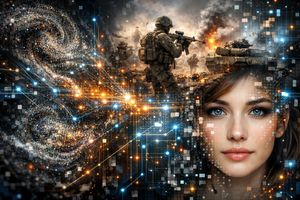
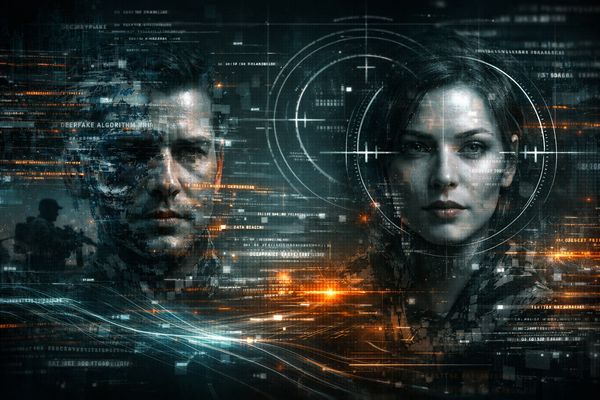 The new front: AI-driven cyber operations and deepfakes blur the lines of truth in modern conflicts.The image above is a visual representation of AI-driven cyber operations and deepfakes, and it does not depict actual events or individuals.
In the intricate tapestry of modern conflict, the lines between traditional warfare and digital skirmishes have not merely blurred; they have effectively dissolved. The convergence of cyber operations, sophisticated propaganda techniques, and the insidious rise of AI-generated deepfakes has ushered in an era of 'blended warfare' that challenges foundational tenets of trust, truth, and strategic advantage. This isn't just about misinformation; it's about the industrialization of synthetic reality, where AI doesn't merely create fake content but orchestrates entire digital ecosystems designed to manipulate perceptions and achieve strategic objectives.
Understanding this new frontier requires a deep dive into the technical nuances that underpin these advancements, the strategic applications being witnessed in ongoing global conflicts, and the profound implications for national security, corporate integrity, and individual identity. The rapid evolution from rudimentary face-swapping to hyper-realistic, real-time synthetic environments represents a fundamental architectural shift in AI, rendering many legacy defenses obsolete and demanding a radical re-evaluation of how we perceive and verify digital information.
The Evolving Technical Frontier of AI-Driven Blended Warfare
The rapid escalation in deepfake sophistication is fundamentally rooted in a pivotal architectural shift within generative AI. For years, Generative Adversarial Networks (GANs) were at the forefront, operating on a zero-sum game principle where a generator created synthetic content, and a discriminator attempted to identify it as fake [7]. However, GANs were consistently plagued by 'mode collapse,' a technical limitation that frequently produced discernible pixel-level artifacts, making their creations identifiable upon close inspection.
The technical frontier has since transitioned decisively to Latent Diffusion Models (LDMs). These advanced models operate by systematically reconstructing high-resolution scenes from Gaussian noise, a process that enables the generation of hyper-realistic combat footage that is virtually indistinguishable from genuine reality [8]. This architectural leap has profound implications, as it bypasses the inherent limitations of GANs, allowing for the creation of far more convincing and diverse synthetic media.
This transition to LDMs has effectively rendered many legacy detection tools obsolete. A critical technical nuance emerging in this landscape is the presence of 'spectral frequency anomalies' within synthetic audio. These subtle distortions can bypass traditional voiceprint identification systems, which were primarily designed to detect human vocal characteristics rather than AI-induced alterations [9]. Consequently, effective detection now necessitates multi-modal cross-verification, analyzing a confluence of biological signals—such as subtle blood flow patterns in video—alongside cryptographic provenance to establish an unbroken chain of custody for digital evidence [10].
 Latent Diffusion Models represent a significant leap in deepfake sophistication, creating hyper-realistic synthetic media.The image above is an abstract representation of Latent Diffusion Models and their capabilities in generating synthetic media. It is for illustrative purposes only.
"Real-time video deepfake detection could not have arrived at a more crucial time. As more high-profile incidents of fraud involving video conferencing occur around the world, teams need to know that they are indeed talking to real people,"
Upgrade Your Forensic Capabilities:
Organizations must move beyond human vigilance and deploy multi-modal forensic systems that cross-reference audio, video, and metadata simultaneously to detect inconsistencies in real-time communication, ensuring comprehensive threat detection.
The Meliorator System: Industrializing State-Sponsored Propaganda
The Russia–Ukraine war stands as a stark and seminal case study in the integration of AI-driven disinformation into long-term military strategy. In July 2024, international agencies unequivocally confirmed that Russian state-sponsored actors had begun deploying "Meliorator," a sophisticated software package engineered to mass-produce authentic-looking online personas en masse [1]. These artificially intelligent constructs, colloquially termed "souls" within the software's architecture, are meticulously programmed to mimic human dialogue behavior and engage in social interactions, thereby cultivating a deceptively natural tone and online presence [1].
The quantifiable scale of this automation is staggering. The "Pravda" network, a key component of this operation, was responsible for releasing approximately 3.5 million AI-produced articles in 2024 alone [1]. The primary objective of this deluge of synthetic content is twofold: to deliberately confuse AI chatbots and to systematically overwhelm and manipulate global audiences. Researchers investigating these campaigns found that a staggering 45% of accounts actively discussing Russian politics were, in fact, bots, achieving a concerning 33% success rate in disseminating falsified information across platforms [12]. This industrialization of persona-creation allows for the generation of "tailored content" meticulously designed to exploit specific demographic vulnerabilities across multiple languages simultaneously, creating a highly potent and pervasive propaganda apparatus [1].
"Meliorator was designed to be used on social media networks to create 'authentic' appearing personas en masse, allowing for the propagation of disinformation, which could assist Russia in exacerbating discord and trying to alter public opinion,"
Implement Bot-Detection Platforms:
Entities should prioritize utilizing advanced bot-detection platforms capable of mapping incidents to known distribution paths and campaign clusters, rather than expending resources attempting to filter individual messages, for more effective counter-disinformation efforts.
Cognitive Warfare and Deepfake Geography in the Taiwan Strait
In the highly contested geopolitical theater of the Taiwan Strait, the People’s Liberation Army (PLA) has pioneered a sophisticated strategy known as "Cognitive Warfare" (认知战). This doctrine systematically leverages big data analytics and advanced AI capabilities to manipulate adversary perceptions well before any kinetic conflict commences [13]. This strategic application of AI was notably evident during the 2024 Taiwanese election, where hyper-realistic audio deepfakes were meticulously crafted and deployed to fabricate private conversations between prominent political leaders, including Lai Ching-te and Tsai Ing-wen [3]. Such campaigns are designed with the explicit intent to erode institutional trust, sow discord, and ultimately demoralize both the military and the civilian population, thereby weakening resolve and preparedness [13].
A critical edge case that exposes significant vulnerabilities in this theater is the phenomenon of "weaponized privacy violations." Here, AI-generated intimate imagery is maliciously used to silence and discredit influential pro-Taiwan advocates, exemplified by cases targeting figures such as businessman Robert Tsao [3]. Furthermore, the burgeoning threat of "deepfake geography" represents another profound challenge. This involves the sophisticated creation of fictitious satellite images depicting non-existent troop movements, fabricated destroyed infrastructure, or even phantom military facilities [7]. If the authenticity of a satellite image—historically regarded as unbiased evidence—can be easily dismissed as a deepfake, it severely compromises its power and credibility in international courts and strategic military assessments [15]. This erosion of trust in geospatial intelligence (GEOINT) creates a dangerous ambiguity that can be exploited to great strategic effect.
 Deepfake geography and weaponized privacy violations pose critical threats to intelligence and individual reputations.The image above is a conceptual representation of deepfake geography and weaponized privacy violations. It is for illustrative purposes only.
"Taiwan's experience demonstrates how deepfake technology can be manipulated for a range of harmful purposes, including election interference, reputational damage, and privacy violations,"
Establish Digital Sovereignty Protocols:
Government and defense agencies must establish "Digital Sovereignty" protocols and cryptographic "chains of custody" for all official visual evidence to effectively counter state-sponsored synthetic imagery and maintain credible intelligence.
The "First AI War" Reshapes Middle East Conflict Doctrine
The June 2025 escalation between Israel and Iran is now widely recognized by analysts as the world's first true "AI war," a conflict where synthetic media was systematically employed to fabricate an entire combat environment [8]. Iranian-aligned networks expertly leveraged advanced generative tools, such as Google’s Veo 3, to broadcast algorithmically generated footage purportedly showing Israeli F-35s being shot down. This deceptive content quickly amassed over 100 million views, demonstrating the immense reach and persuasive power of AI-generated narratives [8]. This conflict vividly highlighted the "Liar's Dividend"—a phenomenon where both authentic and fabricated content are strategically used by belligerents to evade responsibility for collateral damage or to shape public opinion in their favor.
Following significant US-Israel strikes in February 2026, the conflict evolved further, shifting its operational nexus to an "Electronic Operations Room," which was officially established on February 28, 2026 [13]. This centralized hub was designed to coordinate retaliatory cyber-information attacks, directing diverse proxy groups such as "Handala Hack" and "DieNet" to execute synchronized DDoS attacks against critical regional infrastructure, including airports and financial institutions [14]. Despite a near-total internet blackout imposed in Iran, which saw connectivity plummet to a mere 4% capacity, these state-aligned actors demonstrated remarkable tactical autonomy, maintaining operational effectiveness through pre-existing footholds and robust distributed networks within the region [13].
"Although the Israeli foreign minister's video depicted a clean precision strike, in reality, the attack on Evin was far from that; Israel's bombs resulted in significant collateral damage,"
Implement Active Defense Strategies:
Infrastructure operators in conflict-adjacent zones must implement "Active Defense" strategies, including immediate crisis-themed social engineering training to counter WhatsApp-based malware and vishing attempts designed to exploit vulnerabilities during times of heightened tension.
Corporate Identity: The New Battleground for AI-Driven Fraud in 2026
The industrialization of "Deepfake-as-a-Service" (DaaS) has fundamentally transformed identity fraud from a niche, technically demanding threat into a pervasive and mainstream criminal business model. Between 2024 and 2026, the unprecedented accessibility of sophisticated voice cloning tools—some requiring as little as three seconds of audio input to achieve an alarming 85% accuracy—contributed directly to a staggering 1,740% increase in deepfake fraud attempts across North America [5]. The high-profile 2024 Arup case, where a sum of $25 million was illicitly siphoned through a meticulously orchestrated deepfake Zoom call, served as a stark demonstration that even highly sophisticated organizations remain acutely vulnerable to human-centric social engineering tactics amplified by AI [3].
By early 2026, this threat had further evolved into a state of "identity chaos," largely propelled by the advent of agentic AI. These autonomous AI entities are now capable of outnumbering human identities by an astounding ratio of 100 to 1 [4]. These advanced agents possess the capability to autonomously initiate financial transactions and make critical operational decisions, frequently circumventing traditional security checks that were initially designed solely for human interactions [5]. This escalating threat has compelled enterprises to abandon antiquated "simple flat image document checks" in favor of far more robust verification methods, including spatial liveness detection and out-of-band verification (OOBV), which provide a more secure and multi-faceted approach to identity authentication [3].
"Every defensive tool in the market today is designed for humans at the center—and every one of them will be rendered obsolete,"
Strengthen Corporate Verification Protocols:
Organizations should implement verbal codeword protocols for high-stakes requests and adopt "Zero Trust" architectures that mandate continuous, multi-factor verification of both human and machine identities to mitigate the risks posed by agentic AI and deepfake fraud.
International Governance and Mitigation Strategies Against Blended Warfare
The regulatory environment surrounding AI-generated synthetic media reached a watershed moment in February 2026, when 61 data protection authorities globally issued a unified joint statement through the Global Privacy Assembly [2]. This collective declaration delivered a "blunt warning" to AI providers: cease replicating identifiable individuals without explicit consent or face immediate and stringent enforcement under existing privacy laws [2]. This unprecedented, coordinated alignment effectively established a de facto global standard for AI data protection, signifying a critical shift from non-binding ethical principles to active, legally enforceable regulatory frameworks.
Concurrently, the comprehensive EU AI Act is scheduled for full enforcement of certain provisions in 2026, with Article 50 (effective August 2026) specifically mandating that deepfakes and AI-generated public-interest text must be clearly and conspicuously labeled [18]. To bolster these regulatory efforts and provide a robust technical solution, the C2PA standard has rapidly emerged as the cornerstone of media verification. This standard provides a "digital chain of custody" for digital content, enabling content creators to cryptographically sign their media at the point of capture [11]. By late 2026, media lacking these essential "content credentials" is increasingly being treated as high-risk or entirely unverified by major digital platforms, emphasizing the growing importance of provenance in a deeply synthetic information environment [11].
"Stop replicating real people without their consent, or face the consequences,"
Adopt Media Provenance Standards:
Content creators and newsrooms should adopt the C2PA provenance standard immediately to digitally sign their media at the point of capture, ensuring authenticity and building trust in an increasingly synthetic and deceptive information environment.
The convergence of cyber operations, propaganda, and AI-generated deepfakes represents not just an evolution, but a fundamental transformation of modern warfare. From the industrialized deceit of systems like Meliorator to the cognitive manipulation in the Taiwan Strait and the real-time synthetic battlefields of the Middle East, AI is reshaping how conflicts are fought, perceived, and governed. The implications extend beyond military strategy, deeply affecting corporate security and individual trust. As AI advances, so too must our defenses—moving towards multi-modal verification, digital sovereignty, and global regulatory alignment. The battle for truth in the digital age is paramount, demanding vigilance, innovation, and unwavering commitment to securing our shared reality.
Technology Deep Dive: Cyber Ops & Deepfakes in 2026
Can deepfakes bypass biometric security in 2026?
What is 'deepfake geography' in modern conflict?
How does agentic AI change the cybersecurity landscape?
What were the 'Electronic Operations Room' tactics during the 2026 escalation?
How can organizations detect a 2026-generation voice clone?
Disclaimer: This article discusses technology-related subjects for general informational purposes only. Data, insights, or figures presented may be incomplete or subject to error. Images and diagrams are for illustrative purposes only and may not represent exact products, interfaces, or official designs. For further information, please consult our full disclaimer.