Nepal Travel 2026: 7 Unique Reasons It Captivates Every Soul
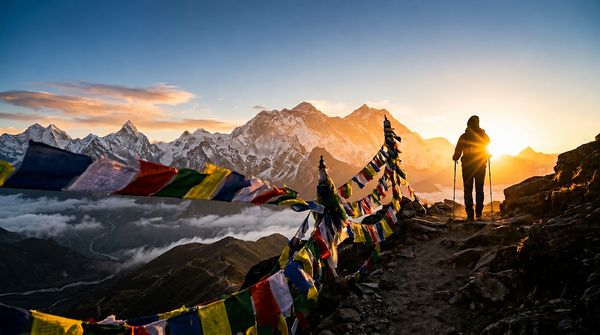 The majestic Himalayas at dawn, an iconic representation of Nepal's enduring allure.Image for illustrative purposes only. Actual travel experiences may vary.
Deep in the Himalayan embrace, where ancient myths cling to icy peaks and the scent of juniper smoke mingles with the roar of glacial rivers, Nepal whispers a promise. It’s a promise of untamed adventure, profound spirituality, and a resilience that defies expectation. Forget what you thought you knew; in 2026, Nepal isn't just a destination—it's an evolution. It's a land meticulously recalibrating its welcome, ensuring that every soul who journeys here leaves not just with memories, but with a piece of its magic woven into their very being.
This isn't a quick stopover for the faint of heart; it’s an immersive narrative waiting to unfold. From the strict new mandates safeguarding its majestic trails to the silent resurgence of its apex predators, Nepal is carving a future that prioritizes sustainability, community, and an unparalleled depth of experience. The landscape is changing, both physically and philosophically. What remains, however, is the undeniable captivation, a gravitational pull that draws you into its unique orbit.
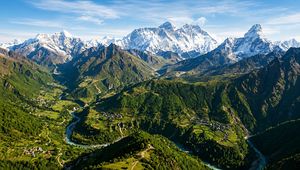 Nepal's breathtaking tapestry of valleys and peaks, inviting exploration.Image for illustrative purposes only. Actual natural conditions may vary.
Here are 7 unique reasons why Nepal in 2026 will captivate every soul, transforming travelers into lifelong advocates.
1. The High Passes Now Demand Guided Exploration: A New Era for Himalayan Trekking
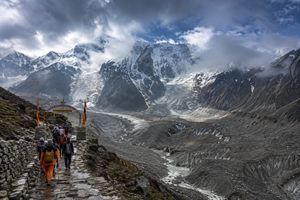
The high passes of the Himalayas are changing fast. You can't just throw a map in your bag and wander into the wild anymore. The silence of the peaks is now monitored by digital checkpoints and mandatory permits, including digital TIMS (Trekkers' Information Management System) cards, a testament to a nation prioritizing safety and community support over unchecked individualism [5]. Since April 2023, the Nepal Tourism Board (NTB) has strictly enforced a ban on unguided independent trekking across approximately 95% of the country's classic mountain trails. This means every trekker must hire a licensed guide and carry an e-TIMS card issued by a registered agency [3].
This isn't merely about bureaucracy; it's a critical safety measure. Certified guides are trained in high-altitude first aid, able to identify early symptoms of Acute Mountain Sickness (AMS), High Altitude Pulmonary Edema (HAPE), and High Altitude Cerebral Edema (HACE) [3][4]. They monitor trekkers daily, suggest acclimatization pacing, and coordinate emergency helicopter evacuations when necessary [6]. The enforcement is swift and unyielding: hikers caught without a certified guide face immediate fines of NPR 12,000, permit confiscation, and an escort back to the road [3]. Checkpoints at Monjo, Dhunche, and Birethanti are actively scanning credentials [5].
Edge Case: The Upper Mustang Single-Traveler Relaxation. A unique policy shift in late 2025 has relaxed restrictions for solo travelers heading to Upper Mustang and Tsum Valley [24]. Previously, these fragile border regions required a minimum group size of two foreign nationals. Now, a single traveler can secure a permit, provided they hire a registered guide and book through an authorized agency [3]. This adjustment acknowledges the unique appeal of these regions while still ensuring traveler safety and local economic benefit.
Actionable Advice: Vet Your Trekking Partner Meticulously
Trekkers must verify that their chosen agency holds active memberships with the Trekking Agencies’ Association of Nepal (TAAN) and the Nepal Tourism Board (NTB). Before starting, ensure your travel insurance specifically covers high-altitude search-and-rescue and helicopter evacuation up to 6,000 meters. Always carry printed copies of your permits, as remote mountain checkpoints do not accept digital QR codes.
2. Greater Lumbini: From Stopover to Sustained Spiritual Pilgrimage
Lumbini wants you to stay. The birthplace of Buddha is shedding its old identity as a quick stopover, transforming into a comprehensive spiritual destination [2]. Beneath the ancient peepal trees where the Maya Devi Temple sits in quiet reflection, the air hums with the low chanting of orange-robed monks while the surrounding dust is kicked up by heavy machinery carving out a multi-million dollar spiritual corridor designed to link long-forgotten archaeological ruins into a unified pilgrimage network [2].
The World Bank has approved an $85 million loan to support the Greater Lumbini Area Development Project [2]. This initiative targets a severe economic disconnect where pilgrims spend an average of only $15 per day, far below the national average visitor spend of $41 [2]. Most of the funding—$66 million—is earmarked for climate-resilient tourism infrastructure across Tilaurakot, Devdaha, and Ramgram [2]. The Gautam Buddha International Airport has been upgraded to Category 4E to accommodate massive Boeing 777 flights, ensuring direct access for international pilgrims from East Asia [7].
Edge Case: The Mahendra Highway Overland Bottleneck. While long-haul international pilgrims holding passports registered a 26.54% increase in 2025, domestic and Indian visitor numbers declined due to road infrastructure issues [8]. The primary east-west overland corridor, the Mahendra Highway, suffered from severe congestion, delays, and road damage, preventing short-haul and cross-border pilgrims from accessing the sacred site [8]. The project addresses this by building comprehensive transit links and a modern closed-loop transportation network, reducing Sonauli border customs clearance times from three hours to just 20 minutes [7].
Actionable Advice: Deepen Your Spiritual Journey Beyond the Core
Travelers visiting Lumbini should expand their itineraries beyond the Maya Devi Temple to explore the surrounding ruins of Tilaurakot and the unexcavated relic stupa of Ramgram. To avoid overland transport delays caused by ongoing expansions on the Mahendra Highway, plan arrivals via domestic or international flights directly into Gautam Buddha International Airport.
3. Nepal's Nationwide Tiger Census: A Conservation Triumph with Unique Challenges
The grasslands are alive. Deep in the Terai lowlands, the apex predators are reclaiming their ground. Nepal has achieved the impossible [9]. Through the dense sal forests and elephant grass of Chitwan and Bardia, where dawn mist hangs thick over the Rapti River, the stealthy tread of Bengal tigers has multiplied over a decade of intense anti-poaching operations, community forest policing, and transboundary coordination that has successfully tripled their wild population from a mere 121 in 2009 to 355 today [9].
Nepal launched its fifth National Tiger Census on December 16, 2025, deploying over 1,100 camera traps across five national parks [9]. This scientific effort tracks stripe patterns to identify individual animals, with final results expected on World Tiger Day [9]. While this ecological victory is celebrated, it has introduced intense human-wildlife conflicts near forest borders [9]. Currently, 18 problematic tigers are kept in enclosures across the country to protect local communities, leading to growing government costs for their care [9]. This is a crucial "cost of success" often overlooked.
Common Misconception: Tiger conservation is solely about protecting the animals. While true, the success of conservation efforts, particularly in a densely populated region, inevitably leads to increased human-wildlife conflict. This necessitates comprehensive strategies for coexistence, including alternative livelihoods for forest-dependent families [10]. By involving communities directly in eco-tourism, local residents become active defenders of the wildlife, ensuring that tiger conservation remains economically viable for the local population [9].
 A glimpse of Nepal's thriving tiger population, a testament to dedicated conservation.Image for illustrative purposes only. Wildlife sightings are not guaranteed.
Actionable Advice: Safari with a Purpose for Optimal Sightings
Travelers planning a jungle safari in Chitwan or Bardia National Parks should book guided walking safaris with licensed nature guides. To increase the likelihood of tiger sightings while minimizing human-wildlife conflict, visit during the dry winter months, specifically focusing on early dawn and late dusk when the animals are most active.
4. Pokhara's Paragliding Renaissance: Soaring Over Phewa Lake Once More
The skies of Pokhara are clear again. After years of airspace conflicts, a compromise has been struck, and the paragliders have returned [12]. With the dramatic white peaks of the Annapurna range acting as a silent backdrop, hundreds of colorful nylon wings are once again launching from the steep grassy ridge of Sarangkot and spiraling gently downward through the thermal columns before touching down on the soft banks of Phewa Lake [11].
The opening of the Pokhara International Airport in 2023 initially forced paragliding out of Sarangkot to Mandredhunga to avoid flight paths [11]. This relocation displaced over 150 tandem pilots and devastated the local industry, which holds NPR 1 billion in investments [12]. However, in May 2025, the Civil Aviation Authority of Nepal (CAAN) restored the original routes with strict safety rules and a daily flight limit [12]. Standard tandem flights now cost between NPR 6,500 and NPR 9,500, with an additional fee for video [13]. Pilots must undergo airspace discipline training and use GPS tracking to maintain safe separation from commercial airliners [12].
Technical Nuance: The Physics of Pokhara's Thermal Columns. Pokhara is recognized globally as a premier paragliding destination due to its unique geography [13]. The valley floor sits at 827 meters, while the Annapurna peaks rise sharply to over 8,000 meters just a short distance away [13]. This dramatic elevation change creates strong, steady rising currents of warm air, known as thermal columns, which lift gliders naturally and keep tandem flights exceptionally stable [13]. This natural phenomenon is what makes Pokhara’s paragliding experience so distinct and reliable.
Actionable Advice: Optimize Your Flight for Clarity and Stability
When booking a paragliding flight in Pokhara, verify that the operator possesses a current CAAN license and uses GPS trackers. Plan your flight for the morning, specifically between 9:00 AM and 11:00 AM, when thermal columns are most stable and mountain visibility is at its peak.
5. The Community Homestay Network: A Global Model for Sustainable, Locally-Led Travel
The kitchen smells of ginger and cardamom. In rural homestays, women are running the show, redefining hospitality in Nepal [3]. Inside the traditional red-clay homes of Panauti, where the sound of the morning stone mill blends with the laughter of local grandmothers, travelers are invited to sit on hand-woven mats and roll momos under the guidance of women who have found complete financial independence through a grassroots network that was recently named one of the world's greatest places [14].
The Community Homestay Network (CHN) has expanded to over 380 households across 50 communities, shifting tourism revenue directly to local families [14]. A central bank study of Dallagaon homestays revealed that the program covers roughly 80% of household expenses, with hosts achieving a remarkable saving rate of 45.1% through this sustainable tourism model [16]. This locally owned system preserves indigenous heritage, such as the Tharu culture in the Khata corridor, and successfully redirects traveler funds from corporate hotel zones to rural neighborhoods [16].
Information Gain: Decentralizing the Tourism Dollar. Historically, urban hotels dominated the tourism trade, concentrating benefits in Kathmandu and Pokhara [15]. The CHN model, by contrast, sources food, handicrafts, and guiding services from neighboring families, creating a circular economy that strengthens small-scale businesses and builds community resilience [15]. This direct economic impact is a powerful, counter-intuitive finding for sustainable development.
Actionable Advice: Immerse Yourself in Authentic Cultural Exchange
Travelers seeking an authentic connection to Nepal should replace standard hotel stays with a CHN booking in historic Newari settlements like Patan or Panauti. Always coordinate meals directly with your host family, as sharing a traditional "suku bhwe" feast or participating in a momo-making workshop provides a meaningful cultural exchange.
6. Kathmandu's UNESCO World Heritage Sites: A Delicate Balance of Ancient and Modern
The brick temples of Patan glow gold at dusk. Kathmandu is a living museum, where ancient history is woven into the chaos of the modern city [15]. Through the labyrinthine alleyways of Bhaktapur, where wood carvers chisel intricate deities into black sal-wood frames beneath multi-tiered pagodas that have weathered centuries of seismic tremors, the vibrant pulse of Newari life continues to flow around crumbling shrines and sacred water tanks [15].
To balance rapid urban development with heritage preservation, local municipalities charge entry fees to foreign visitors, directly funding the structural restoration of temples damaged in the 2015 earthquake [15]. Patan and Kathmandu Durbar Squares charge foreign nationals NPR 1,000, while Bhaktapur charges USD 18 [17]. The challenge in 2026 is maintaining the residential character of these ancient squares amid tourism growth. Local zoning codes require new buildings to use traditional Newari brickwork to maintain aesthetic harmony, preventing unchecked modernization [15].
Edge Case: Balancing Heritage with Residential Life. Many historic properties in Patan and Bhaktapur are located within active Newari settlements, where the intersection of residential life and ancient architecture makes strict conservation rules difficult to enforce [15]. To support local homeowners, municipalities are introducing light-touch regulations that offer financial incentives for using traditional wood-carving and brickwork techniques during home repairs [15]. This innovative strategy keeps these historic neighborhoods lived-in and vibrant, rather than turning them into sterile tourist attractions.
Actionable Advice: Experience Sacred Sites with Respect and Strategic Timing
When exploring the Kathmandu Valley, purchase multi-day heritage passes where available to ensure your entry fees directly support archaeological preservation. To experience these sacred sites without the crowds, plan your visits for the early morning, when local devotees gather for daily rituals and prayers.
7. Overland Journeys: Navigating India-Nepal Borders and Financial Realities
The border is a dusty bridge. Crossing overland from India to Nepal requires preparation, with strict immigration steps to follow [19]. As the early morning light breaks over the Mechi River, illuminating the distant snow-capped peak of Kanchenjunga, a line of cargo trucks and cycle rickshaws slowly filters through the immigration checkpoint connecting the tea fields of West Bengal with the lowlands of eastern Nepal [20].
The crossing from Panitanki to Kakarbhitta is favored by travelers from Siliguri, Darjeeling, and Sikkim [19]. Foreign nationals must walk or take a rickshaw across the bridge to secure a visa on arrival [18]. A critical edge case here: these visas must be paid for in crisp, undamaged physical US Dollar bills, as credit card systems routinely fail [21]. Damaged or pre-2006 notes are routinely rejected [21].
Common Misconception: Digital payments are universally accepted. Once in Nepal, digital payments like eSewa and UPI are common in cities, but cash remains mandatory for trekking [22]. ATMs are easily found in cities but are non-existent or unreliable on mountain trails, often running out of cash during peak seasons [22]. Standard transaction fees for international cards are around NPR 500 to NPR 850, making large single withdrawals necessary to minimize cumulative fees [22].
Actionable Advice: Prepare Your Finances and Border Crossing Strategy
Overland travelers must secure physical US Dollar bills in pristine condition before reaching the border, as damaged or pre-2006 notes are routinely rejected [21]. If crossing at Panitanki-Kakarbhitta, time your arrival between 6:00 AM and 5:00 PM to ensure the immigration offices on both sides are open, avoiding an overnight stay in the border zone.
Nepal in 2026 is a kaleidoscope of experiences, meticulously curated for the discerning traveler. It's a land that promises not just sights, but profound shifts within. From the thrilling, now-sanctioned flights over Pokhara’s serene lake to the deep cultural immersion offered by its community homestays, every facet of this nation is designed to captivate. It’s a journey not just across its stunning landscapes, but into the very soul of a resilient and evolving culture. So, pack your bags, prepare for transformation, and let the Himalayas etch their timeless story onto your spirit.
Nepal Travel FAQs: Essential Answers for Your 2026 Journey
Is travel insurance covering high-altitude helicopter rescue mandatory for trekking in Nepal?
Can Indian citizens enter Nepal using an Aadhaar card?
Can you trek solo in Nepal in 2026?
How does the relaxed Upper Mustang permit rule work for solo travelers?
Are credit cards and Wise accepted in remote Himalayan villages?
Disclaimer: This article discusses travel-related topics for informational purposes only. Travel conditions, costs, and availability are subject to change without notice. Images are illustrative and may not reflect current or exact locations. For further details, please see our full disclaimer.