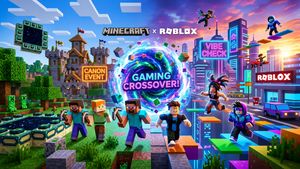
Is YOUR Game Truly Yours? Blockchain Says YES! 🚀 The 2026 Deep Dive into Digital Ownership
 Your digital world, finally secured and truly yours.The image is a visual representation and does not depict actual product features or guarantees from any specific game or blockchain platform.
Here’s what’s blowing up in the gaming world, fam! 🔥 For years, we’ve been shelling out our hard-earned cash for games, building epic empires, collecting rare skins, and thinking, “Yeah, this is mine!” But then, poof*—a server shuts down, a game gets delisted, and your entire digital life savings vanishes faster than a bad meme. Sound familiar? It’s a total canon event for gamers everywhere, forcing us to ask the ultimate question: Is YOUR game truly yours? Or have we been living in a virtual leasehold agreement all along?
The answer, my friends, is finally here, and it's riding in on the blockchain. 🚀 In 2026, we’re witnessing a seismic shift, a full-on glow-up in how we interact with our digital worlds. This isn't just about flashy NFTs; it's about reclaiming sovereignty over our avatars, our items, and our entire digital legacy. This deep dive is your definitive guide to understanding why blockchain isn't just a buzzword in gaming—it's the *only path to true ownership. Let’s get into it!
The Crisis of the Virtual Lease: Why Your Digital Kingdom Wasn't Yours (Until Now)
Remember 2024? The year Ubisoft pulled the plug on The Crew? 💀 That was more than just a game shutting down; it was a digital gut punch heard around the world. Players, even those with physical discs, saw their “purchased” game licenses revoked, their years of progress, their cars, their entire virtual experience, wiped clean. It was a harsh reminder that “buying” a digital game often meant little more than “renting access” to content stored on someone else’s servers [1].
This wasn't just a glitch in the matrix; it was a disturbing legal precedent. The subsequent class-action lawsuit in California became the battleground for digital ownership rights in 2026, with plaintiffs arguing that terms like “buy” and “own” were systematically deceptive [1]. Ubisoft, naturally, maintained that consumers were “explicitly notified” they were acquiring a license, not “unfettered ownership” [2]. It’s like buying a house, only for the landlord to evict you a decade later, claiming you only bought the right to live there for a bit. Wild, right?
Legislative bodies are finally waking up. California’s AB2426, effective 2025, now demands “clear and conspicuous” notices that you’re merely licensing content [3]. But let’s be real, that just codifies the problem, it doesn't solve it. It’s here, in this gaping void of ownership, that blockchain stepped in, offering a decentralized ledger where your assets actually belong to you, independent of any single corporate server [7].
Next Move to Consider
Before any major digital purchase, scan the EULA for keywords like 'license,' 'revocable,' or 'service agreement.' Understand that without blockchain, your digital collection is often a temporary rental. Prioritize games that explicitly offer true asset ownership.
The Global Shift: How Web3 Gaming Is Taking Over the World (Literally)
Okay, let’s talk numbers because they’re hitting different right now! The global Web3 gaming market? It’s not just growing; it’s in full beast mode. From approximately $39.65 billion in 2025, we’ve surged to a whopping $48.55 billion in 2026, boasting a compound annual growth rate (CAGR) of 22.4% [7]. Mordor Intelligence is even calling for a $0.62 trillion NFT gaming market cap by the end of 2026, as blockchain mechanics fuse with mainstream AAA titles [9]. That's not just growth; that's a whole new digital economy emerging!
And guess who’s leading the charge? Asia-Pacific (APAC), with a solid 42.1% to 46% market share [10]. Countries like Japan, South Korea, and China are on fire, fueled by massive mobile penetration, a deep culture of digital item trading, and governments that have moved past bans to structured integration [11]. North America is holding strong at 25.4%, still the hub for venture capital and tech infrastructure, bouncing back hard after the 2023-2024 “crypto winter” [10].
The 2026 market isn't about fleeting hype; it's about “efficiency and retention.” Studios are focused on “long-tail monetization” and designing games as “interconnected systems” [12]. Blockchain, with its automated secondary market royalties and player-driven economies, is the ultimate cheat code for this new paradigm. Plus, tariffs on traditional hardware are inadvertently pushing us towards mobile and cloud-based Web3 gaming, making it even more accessible [10]. It's truly a glow-up for the entire industry.
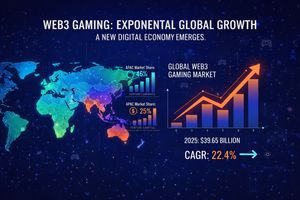 The global Web3 gaming market is exploding, with Asia-Pacific leading the charge.The image is a visual representation and does not depict actual product features or guarantees from any specific game or blockchain platform.
Fiscal Move to Make
Look into diversifying your gaming portfolio by investing time or resources into Web3 titles with robust, player-driven economies. Focus on games that offer tangible utility for NFTs beyond pure speculation, as these are built for long-term value and retention.
Under the Hood: The Tech Powering True Ownership (Unreal, Unity, and Layer 2s)
So, how does this “true ownership” actually work? It’s all about the architecture, baby! Traditional games are locked in centralized databases; if the database goes bye-bye, so does your item. Web3 games, on the other hand, use a hybrid model: game logic might live off-chain for performance, but asset ownership is anchored to public ledgers. That means your legendary sword isn’t just data on a server; it’s a verifiable NFT in your wallet, forever [8].
The Engine War: Unreal Engine 6 vs. Unity 6
In 2026, choosing a game engine isn’t just about pretty graphics; it’s about “Web3 readiness” [15]. Epic Games CEO Tim Sweeney is all in on Unreal Engine 6 building an interoperable metaverse where assets can flow between Fortnite, Roblox, and Minecraft [17]. Unreal’s tech delivers cinematic realism, making it the engine of choice for high-fidelity 3D Web3 projects like EV2 and Illuvium [18]. But, watch out for “medium-high” vendor lock-in risk with its complex C++ and Blueprint projects [16].
Unity 6, meanwhile, dominates mobile Web3 gaming with over 55% of the market [10]. It’s all about “iteration speed” and cross-platform scalability, super beginner-friendly with a massive asset store that accelerates production [15]. However, it still grapples with a “perceived volatility risk” from past licensing controversies [16]. The real flex is when a “sword” NFT can work consistently across both engines, thanks to organizations like OMA3 and Khronos Group integrating “3D Gaussian Splatting” into the glTF standard [19]. That's proper interoperability goals!
Scaling Solutions: The Rise of Layer 2s
Early blockchain gaming was a vibe killer with slow speeds and insane transaction costs on Layer 1s like Ethereum. But in 2026, we’ve got Layer 2 (L2) solutions and specialized gaming chains holding it down [7]:
- Polygon zkEVM: Ethereum-level security with tiny gas fees, perfect for mass-market titles [11].
- Immutable X: Zero gas fees for NFT minting and trading, with “enforceable royalties” guaranteeing developers get paid on every secondary sale [20]. That's a major flex for creators!
- Ronin Network: Sky Mavis’s own chain, optimized for the high-concurrency needs of the Axie ecosystem [11].
- Oasys: A gas-less blockchain built for AAA Japanese publishers like Ubisoft and Sega to launch huge NFT mints [21].
Key Lesson for Your Workflow
When evaluating new Web3 games, prioritize those built on robust Layer 2 solutions or specialized gaming chains. This ensures smoother gameplay, lower transaction costs, and a more seamless ownership experience, avoiding the friction of early blockchain iterations.
Monetization Metamorphosis: From P2E Hype to Sustainable Player Economies
Okay, real talk: the early “Play-to-Earn” (P2E) era? Mostly a flop era. Economies were inflationary loops, needing a constant stream of new players to prop up token prices [13]. And let's be honest, “the action in play-to-earn games is boring” if the gameplay isn’t the main draw [22]. But we’ve evolved, bestie! 2026 is all about “Play-and-Own.”
Case Study: The Pivot of Axie Infinity vs. the Rise of Immutable
Axie Infinity: Atia's Legacy is the perfect example of a glow-up. After its early token model went sideways, Sky Mavis restructured around “long-term player investment.” The 2026 version introduces story-driven missions and “token sinks” like land upgrades and NFT breeding, forcing players to reinvest [14]. This model prioritizes “retention over payouts,” stabilizing token value through internal utility, not external speculation [13]. It's giving sustainable economy, not pump-and-dump.
Immutable X is also crushing it with its “Passport” strategy, onboarding Web2 gamers by hiding blockchain complexity [20]. Their Immutable Passport is a single sign-on wallet that works across tons of games, handling private keys and gas fees in the background. Their monetization model? “Utility-driven NFTs” (items with actual in-game value) and recurring secondary market royalties [13]. It’s about making the blockchain invisible, making the gaming experience superior. We love to see it!
Insight You Can Use
When evaluating a Web3 game's economy, look beyond immediate earning potential. Focus on titles with strong gameplay, integrated token sinks, and utility-driven NFTs that encourage long-term engagement and reinvestment, rather than just quick payouts. This indicates a more robust and sustainable ecosystem.
The Great Normalization: Navigating the Global Crypto Regulatory Maze
The “Wild West” days of blockchain gaming are officially over, thank goodness! Now, we're in a “institutional framework” where digital assets are legitimate financial instruments. By 2026, major global powers have laid down their rules on crypto taxation, identity, and market oversight. It’s the great normalization, and it’s a total game-changer for mainstream adoption.
The United States: GENIUS, CLARITY, and “Project Crypto”
In the US, 2025 saw the GENIUS Act creating the first federal framework for stablecoins [5]. Then came the CLARITY Act in 2026, finally drawing lines between SEC (digital securities) and CFTC (digital commodities) [23]. And get this: the SEC’s “Project Crypto,” led by Chairman Atkins, aims to bring clear taxonomy and exemptions for developers, moving away from “enforcement by surprise” [23]. It’s a step towards clarity, even if private securities litigation is still out there like a lingering boss battle [24].
Japan’s 2026 Regulatory Overhaul: The Gold Standard?
Japan is absolutely flexing as the most Web3-friendly jurisdiction! As of April 2026, the Financial Services Agency (FSA) reclassified 105 major tokens (including Bitcoin and Ethereum) as “financial products,” not “miscellaneous assets” [6]. This means:
- Tax Reduction: Crypto gains tax slashed from 55% to a flat 20% [6]. That’s a major W!
- Loss Carryforward: Investors can finally offset crypto losses for up to three years [6].
- Insider Trading: Strict insider trading laws now apply, preventing execs from trading on non-public info [6].
Talk about a level-up!
The European Union: MiCA Compliance and DAC8 Reporting
The EU is going full “compliance-heavy.” By July 1, 2026, all crypto platforms had to be MiCA (Markets in Crypto-Assets) compliant [5]. Plus, DAC8, effective January 1, 2026, demands detailed transaction and user ID data for tax authorities [5]. Say goodbye to anonymous trading, but hello to institutional certainty! It’s all about creating a secure, regulated environment for digital assets.
South Korea and Southeast Asia: The Epicenter of Adoption
South Korea is still a leader in adoption, even with some stablecoin drama [5]. “Real-name bank accounts” for crypto trading mean the National Tax Service (NTS) can track everything, shutting down illicit activity [26]. And in Southeast Asia, especially the Philippines and Indonesia, Web3 gaming is a “financial lifeline,” with stablecoins bridging the gap to real-world purchasing power for those without traditional banking [27]. This is beyond gaming; it’s about financial inclusion and empowerment!
Social Strategy
Stay informed about regulatory changes in your region and any jurisdictions where you engage with Web3 games. Understanding tax implications and compliance requirements is crucial to avoiding future complications and maximizing the benefits of your digital assets.
Fortifying Your Digital Fortune: Battling Scams and Securing Your NFTs
Okay, real talk: with real-world value comes real-world threats. In 2026, fraud has officially eclipsed ransomware as the primary threat to digital asset holders [28]. The “Chainalysis 2026 Crypto Crime Report” revealed an astronomical 1,400% surge in AI-enabled impersonation scams [28]. It’s like a new level of boss battle, and you need to come prepared!
Smart Contract Vulnerabilities and Exploits (2025-2026)
Security audits are mandatory for any credible Web3 project. Researchers have ID’d five “critical defects” in NFT smart contracts [29]:
- Public Burn: Anyone can destroy an NFT they don’t own (major yikes!).
- ERC-721 Reentrancy: Attackers interrupt transfers to drain wallets.
- Risky Mutable Proxy: Developers can change your “legendary” item into a “common” one post-purchase.
- Unlimited Minting: Logic errors let attackers bypass minting limits, devaluing collections.
- Wash Trading Manipulation: “Flash loans” artificially inflate prices, tricking real buyers.
To combat this, the 2026 playbook includes ditching SMS-based 2FA for hardware-bound MFA (like YubiKeys) and integrating oracle-based price feeds to prevent manipulation [28]. Stay vigilant, fam!
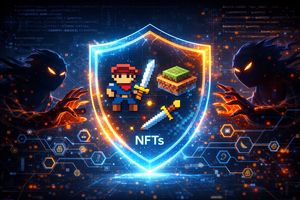 Fortifying your digital fortune against the ever-evolving landscape of cyber threats.The image is a visual representation and does not depict actual product features or guarantees from any specific game or blockchain platform.
"The 'Chainalysis 2026 Crypto Crime Report' revealed an astronomical 1,400% surge in AI-enabled impersonation scams."
Practical Steps You Can Apply
Implement strong security protocols for your digital assets. Use hardware-bound multi-factor authentication, be wary of suspicious links or offers, and only interact with audited smart contracts. Regularly verify the legitimacy of projects and platforms to protect your investments.
Your Digital Legacy: Ensuring Your Assets Live On (Even When You Can't)
This is an edge case many don’t think about, but it’s critical for true ownership: what happens to your digital kingdom when you’re AFK... permanently? If your assets are truly “yours,” they should be transferable to your heirs. In 2026, the legal framework for “Digital Inheritance” is finally catching up [30].
The UK’s Property (Digital Assets etc.) Act 2025 was a landmark, legally defining cryptocurrencies and NFTs as personal property that can be inherited [4]. But here’s the tea: there’s no “forgot password” for a private key. If you ghost without giving your heirs access to your seed phrases, those assets are gone forever, lost to the “Digital Fade” [30]. Oof. That’s a major sadge.
Families are increasingly using “Living Trusts” to manage these assets, avoiding lengthy probate [31]. It’s crucial to plan your digital legacy like you would your physical one. Don’t let your epic collection become a digital ghost!
Next Move to Consider
Create a comprehensive digital estate plan. Document all your wallets, seed phrases (stored securely offline, not in your will), and platform details. Appoint a tech-savvy digital executor to ensure your valuable digital assets can be smoothly transferred to your beneficiaries, preventing permanent loss.
Giants Divided: Where AAA Publishers Stand on the Blockchain Battlefield
While Web3-native studios are thriving, the OG AAA giants are still a bit split on the blockchain. The “First Penguins” who braved the early backlash are now reaping the rewards, building established ecosystems. It’s like a massive multiplayer online debate, but with billions on the line!
The Proponents:
- Ubisoft: After the initial drama, they’ve gone from “experimentation” to “ecosystem integration,” launching Champions Tactics on Oasys and Ghost Legacy on Immutable X [21]. Talk about a comeback arc!
- Square Enix: President Takashi Kiryu is “dead keen” on blockchain, restructuring the company to prioritize “experiential value” and digital asset persistence [32]. They’re not just playing; they’re investing.
- Epic Games: CEO Tim Sweeney continues to “welcome” blockchain titles on its store, a stark contrast to Valve’s old-school approach [21]. Epic is truly leading the charge for an open metaverse.
The Skeptics:
- Sega: While still “monitoring advancements,” Sega has benched its internal blockchain titles. Co-COO Shuji Utsumi famously asked, “What’s the point if games are no fun?” [22]. Fair point, but maybe they’re missing the bigger picture?
- Valve (Steam): Still enforcing a strict ban on blockchain games, worried about centralized profit models and “uncontrollable risk” in their marketplace [21]. It’s giving old-school gatekeeping vibes.
Insight You Can Use
Keep an eye on the stances of major publishers. Their embrace or rejection of blockchain technology can significantly impact the types of games available and the future of digital ownership within their ecosystems. Support developers who prioritize player ownership and transparency.
Conclusion: The Invisible Revolution – Ownership Wins, Blockchain Fades (into the Background)
As we wrap this up, the major flex of 2026 is the “invisibilization” of blockchain itself. For true digital ownership to reach its final form, the word “blockchain” needs to fade into the background, just like “MP3” isn’t a thing we say anymore when we listen to music [25]. Mainstream users aren't adopting Web3 because they're crypto enthusiasts; they’re adopting it because the services are simply superior.
Faster payments, verifiable rarity, and the peace of mind that your digital history can’t be erased by a corporate whim? That’s the aura we’re chasing [25]. The shift from a “license to play” to a “right to own” is a fundamental reset of the social contract between creators and consumers. In this mature market of 2026, the question is no longer whether your game is “yours.” The blockchain has already said a resounding YES. The only remaining question is which publishers will be brave enough to relinquish their centralized control and join the sovereign future.
Those who don't? They’ll likely end up as irrelevant as the businesses that ignored the internet thirty years ago. As Yat Siu famously put it, “Tokenize or die. That’s not a prediction... that’s the reality of 2026” [25]. Get ready, gamers, because the future of true ownership is now, and it’s looking absolutely lit! 🔥
Blockchain Gaming Ownership: Your Top Questions Answered
What is 'true digital ownership' in blockchain gaming?
How did the Ubisoft 'The Crew' incident highlight the need for blockchain ownership?
Are all blockchain games 'Play-to-Earn' (P2E), or has the model evolved?
What are Layer 2 solutions, and why are they crucial for blockchain gaming?
How can I ensure my digital assets are passed down to my heirs?
Disclaimer: This article explores gaming topics for informational purposes only. Strategies, opinions, and experiences are subjective and may not apply universally. Images may be illustrative or inspired and do not represent official game assets or copyrighted material. For additional context, please consult our full disclaimer.